

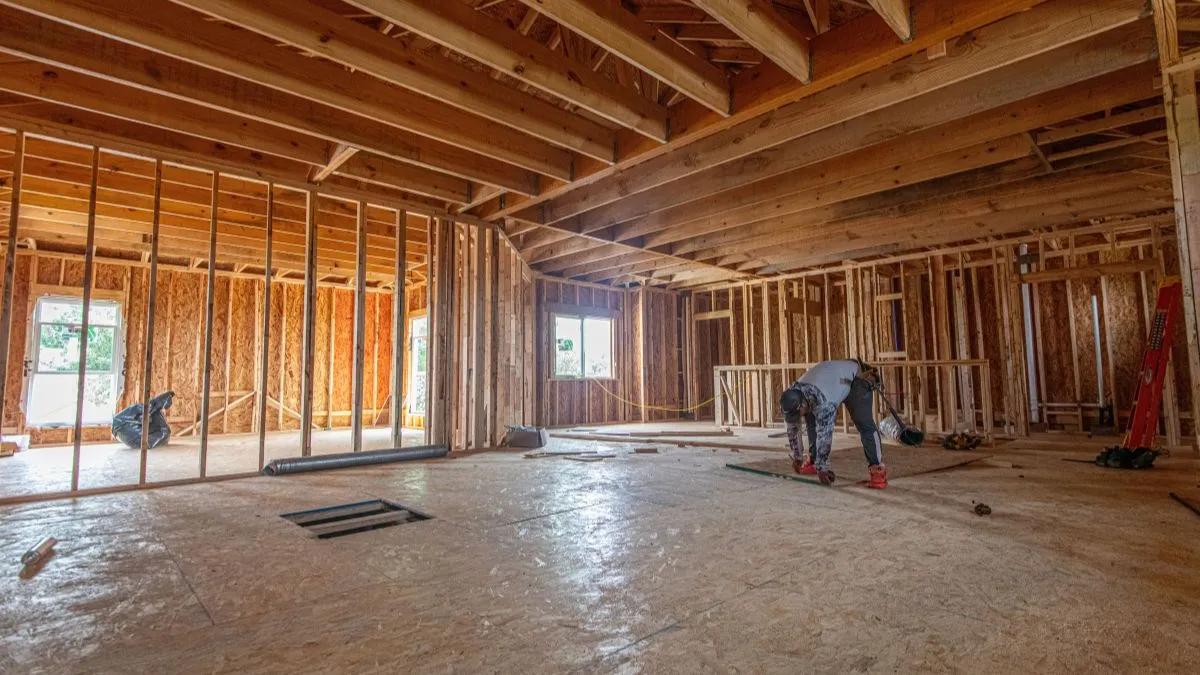
The United States homebuilding industry is currently grappling with a dual-pronged crisis as U.S. Immigration and Customs Enforcement (ICE) operations reached record levels during the summer of 2026. Data indicates that ICE arrests surged from 32,545 in May to a historic high of 49,571 in July, with the aggressive enforcement trend continuing well into August. For the residential construction sector, these actions have manifested as immediate disruptions to active job sites and a profound shift in long-term operational strategy. Executives report that the raids have not only removed undocumented labor but have also paralyzed a significant portion of the legally authorized workforce, who now avoid job sites due to the risk of being caught in broad enforcement sweeps.
The resulting environment is defined by a widening disconnect between federal immigration policy and the structural labor needs of an industry already facing a chronic shortage of skilled trades. While large, publicly traded homebuilders initially maintained a "wait and see" posture, the localized reality for many regional operators has shifted from theoretical risk to operational emergency. The disruptions are hitting at a critical juncture when cycle times—the duration from breaking ground to closing a sale—are paramount to maintaining business liquidity in a high-interest-rate environment.
A Chronology of Escalating Enforcement and Industry Response
The current friction between immigration enforcement and homebuilding operations traces back to the 2024 presidential campaign, where intensified border security and internal enforcement were prioritized. Following the inauguration in early 2025, many industry leaders adopted a cautiously optimistic outlook. Executives from major firms like Lennar, Taylor Morrison, and Meritage Homes suggested that the new administration’s background in real estate development might lead to a pragmatic approach to construction labor.
Throughout late 2024 and the first quarter of 2025, earnings calls were characterized by a "status quo" sentiment. Phillippe Lord, CEO of Meritage Homes, noted in April 2025 that while the industry was concerned about the labor pool in the South, immediate impacts had not yet materialized. This sentiment was echoed by Taylor Morrison CEO Sheryl Palmer, who acknowledged "a little bit of fear" among workers but maintained that it was too early to quantify the disruption.
However, the narrative shifted dramatically by mid-2026. As ICE activity intensified, the "wait and see" period ended, replaced by a volatile operational landscape. By July 2026, the surge in arrests began to tangibly impact production schedules. The geographical concentration of these raids—with nearly 40% occurring in Texas and Florida—created a patchwork of labor availability that defied national averages and confounded the projections of many public market analysts.
The Public-Private Divide: Divergent Financial Realities
The impact of heightened immigration enforcement is not being felt equally across the industry. A significant divide has emerged between large public homebuilders and smaller, privately held firms. Publicly traded companies, such as D.R. Horton and PulteGroup, possess diversified portfolios across multiple states and have access to lower-cost debt and public equity. This scale allows them to absorb localized shocks and smooth out labor cost spikes across their broader balance sheets.
In contrast, private builders, who account for a substantial portion of the 377,000 single-family units currently estimated to be under construction by non-public entities, operate with much narrower margins. These firms rely heavily on local bank financing and private credit. For these operators, a stalled construction cycle is more than an inconvenience; it is a financial threat. When a framing or roofing crew fails to show up, it triggers a cascade of delays that can lead to missed completion deadlines, breaches of bank covenants, and the potential for lenders to call in loans.
Mario Guerrero, Executive Director of the South Texas Builders Association, warned that these delays are forcing many regional builders into a deficit. In South Texas, where enforcement has been particularly aggressive, cycle times have doubled in some instances. "That negative is going to make companies go under," Guerrero stated, highlighting the existential risk to builders who lack the geographic cushion of their public counterparts.
Geographical Disparities and the "Bidding War" for Labor
The localized nature of ICE enforcement has created a fragmented market. While homebuilding associations in Phoenix, Kansas City, and Indiana report minimal disruptions, builders in the Sun Belt and the Appalachian region are facing severe labor contractions.
In Austin and San Antonio, Texas, senior managers at major building firms report that framing, roofing, landscaping, and masonry crews have been the hardest hit. The removal of undocumented workers, combined with the reluctance of legal residents to report to work, has shifted the bargaining power entirely to subcontractors. In Austin, framing labor costs have reportedly spiked by 25% to 50% in a matter of weeks. This adds an estimated $2,000 to $5,000 to the cost of a single home—an expense that builders find difficult to pass on to consumers in a market where the median home price has already hit an affordability ceiling.
The situation is even more acute in West Virginia’s Eastern Panhandle. In this submarket, ICE has utilized checkpoints at major intersections and state border crossings. This has deterred crews from Maryland and Virginia from entering the state, effectively "crippling the trade base," according to regional executives. Some builders in this area report that framing costs have tripled as they compete for a vanishing pool of available workers.
The Operational Cascade: Analyzing the Ripple Effect
Building a single-family home is a complex orchestration of roughly 24 different subcontractors, according to data from the National Association of Home Builders (NAHB). The efficiency of this process depends on a "just-in-time" delivery of labor and materials. When one link in this chain is broken by immigration enforcement, the entire project timeline is compromised.
- Foundation and Framing Delays: Executives in the West Virginia panhandle report foundations sitting idle for over 30 days because framing crews are unavailable.
- Inspection and Closing Stalls: Without concrete crews to finish sidewalks and driveways—many of whom have been affected by the raids—builders cannot obtain Certificates of Occupancy (CO).
- Customer Attrition: As completion dates become unpredictable, builders are losing "at-risk" closings. One executive noted the anticipated loss of approximately 40 closings because the homes simply could not be finished in time for the buyers’ mortgage locks or move-in dates.
- Inventory Costs: The longer a home stays under construction, the more interest accrues on the construction loan. For private builders, these carrying costs can quickly erode the entirety of the projected profit margin.
Macroeconomic Context: Slower Starts Masking a Structural Shortage
Paradoxically, the full weight of the labor crisis is currently being partially masked by a broader slowdown in the housing market. In July 2026, housing starts dropped 12.4% year-over-year, driven by high interest rates and oversupply in certain Sun Belt markets. This reduction in new activity has temporarily lowered the total demand for labor, allowing some large builders to negotiate lower trade pricing in the short term.
Ryan Marshall, CEO of PulteGroup, noted that the slowdown in start rates created a temporary "availability of labor" as trade partners squeezed their own profit margins to stay busy. However, industry analysts warn that this is a deceptive calm. If demand for new housing rebounds while the labor pool continues to shrink due to enforcement, the industry could face a "labor cliff" that would make the current disruptions look minor by comparison.
Broader Implications and Industry Outlook
The aggressive enforcement of immigration policy has introduced a level of unpredictability that the homebuilding industry is ill-equipped to manage. The "fear factor" is perhaps the most significant intangible impact. When citizens and legal residents of Hispanic or Latino descent feel targeted and choose to stay home, the industry loses its most experienced and reliable workers.
The long-term concern for the U.S. economy is the potential for a permanent reduction in the construction labor force. As one multi-regional private builder CEO noted, the industry has no clear answer for who will perform the "hard construction" work if the current labor base is dismantled.
The bottom line for the residential sector is a heightened state of uncertainty. While the national data might suggest a manageable impact, the ground-level reality in key markets like Texas, Florida, and West Virginia is one of surging costs and operational paralysis. As the Trump administration indicates plans to further intensify enforcement, homebuilders are left to navigate a landscape where the primary obstacle to building homes is no longer demand or materials, but the availability of the people required to build them. This localized disruption threatens to exacerbate the national housing shortage and further strain the financial stability of the private building community.
