

Southwest Airlines, a carrier historically renowned for its unique low-cost model and customer-friendly policies, on Wednesday formally announced its long-anticipated foray into the competitive realm of airport lounges, signaling a significant evolution in its brand strategy and customer experience offerings. The airline confirmed plans to establish its first dedicated lounges in four key markets: Austin-Bergstrom International Airport (AUS) in Texas, Baltimore/Washington International Thurgood Marshall Airport (BWI) in Maryland, Daniel K. Inouye International Airport (HNL) in Honolulu, Hawaii, and Nashville International Airport (BNA) in Tennessee. Construction has reportedly commenced at these inaugural locations, with the airline targeting a late 2027 grand opening for these premium facilities.
This strategic pivot positions Southwest, the dominant domestic carrier by passenger volume, directly alongside legacy airlines and prominent credit card issuers in the escalating "lounge arms race" designed to attract and retain high-spending travelers. The initiative is bolstered by a crucial partnership with Chase, leveraging the financial giant’s established expertise and network, particularly its highly regarded Sapphire Reserve Lounge Network. This collaboration underscores Southwest’s commitment to integrating a premium offering that aligns with existing high-tier travel benefits.
A Strategic Investment in Customer Loyalty and Premiumization
Tony Roach, Southwest Executive Vice President, articulated the airline’s vision in a recent statement, emphasizing the lounges as a natural extension of the customer journey. "Our lounges will be a natural extension of that experience, offering Customers a place to relax and experience the Southwest brand in a new way," Roach stated. He further highlighted the strategic importance of this venture, noting it represents "a strategic investment in Rapid Rewards and deepens our 30-year partnership with Chase." This statement points to a clear objective: to enhance the value proposition of Southwest’s loyalty program, Rapid Rewards, and to cultivate a more premium segment within its broad customer base.
Access to these forthcoming lounges will be facilitated primarily through a new, premium Southwest Rapid Rewards credit card, set to be issued by Chase. While specific details regarding the card’s features, annual fees, and eligibility criteria remain undisclosed, the airline confirmed its launch is slated for the coming year. Industry analysts widely interpret the introduction of a dedicated premium credit card as a dual-purpose strategy: to generate new revenue streams through card fees and interchange, and to solidify customer loyalty by tying lounge access directly to the Rapid Rewards ecosystem. Such co-branded credit cards are a cornerstone of modern airline loyalty programs, providing a consistent revenue source and powerful incentive for customer retention.
The initial quartet of lounge locations – Austin, Baltimore, Honolulu, and Nashville – were likely chosen for their strategic importance within Southwest’s network. Austin and Nashville are burgeoning business and leisure hubs experiencing significant growth, while Baltimore/Washington International serves as a major gateway for the airline on the East Coast. Honolulu represents a key leisure destination, underlining Southwest’s expanding footprint in the Hawaiian market. Following this initial rollout, Southwest plans to expand its lounge network with seven additional locations over the "next several years," targeting "high-demand business and leisure markets" across its extensive domestic network. This phased expansion suggests a measured approach, allowing the airline to refine its lounge concept and service delivery based on initial operational learnings and customer feedback.
The Evolution of Southwest’s Business Model: A Chronology of Change
This move into airport lounges is not an isolated incident but rather the latest, and perhaps most significant, in a series of strategic transformations undertaken by Southwest Airlines over the past year and a half. For decades, Southwest meticulously cultivated an image as the "everyman’s airline," characterized by its "bags fly free" policy, open seating, and a singular focus on point-to-point, low-cost domestic travel. This model fostered fierce customer loyalty and carved out a unique niche in the highly competitive aviation industry. However, market dynamics, competitive pressures, and increasing demands for revenue diversification have prompted the airline to re-evaluate fundamental aspects of its operating philosophy.
The chronology of these changes includes:
- December 2025: Southwest CEO Bob Jordan publicly acknowledges the airline is "actively pursuing" the possibility of developing an airport lounge network, telling CNBC that lounges would be "a huge, next benefit for our customers." This marked the first concrete public indication of the airline’s intent to move into this premium space.
- January 2026: Southwest Airlines announced the controversial decision to end its iconic open-seating policy, a hallmark of its brand for over 50 years. The airline transitioned to an assigned seating model, a move widely adopted by other carriers but a stark departure for Southwest. This change, while generating some customer backlash, was framed by the airline as a means to improve boarding efficiency and potentially offer new revenue opportunities through preferred seating options.
- March 2025 – May 2025: The airline began implementing new policies for checked bags, effectively ending its "bags fly free" policy for certain fare classes or under specific conditions. While initially maintaining its free checked bags for standard fares, subsequent adjustments and the introduction of new fare tiers have allowed the airline to charge for checked luggage in various scenarios, mirroring practices common among other U.S. carriers. This shift was explicitly aimed at increasing ancillary revenue streams, a critical component of modern airline economics.
- June 2025: CEO Bob Jordan reiterated the airline’s commitment to exploring airport lounges and potentially European flights, indicating a broader strategic realignment.
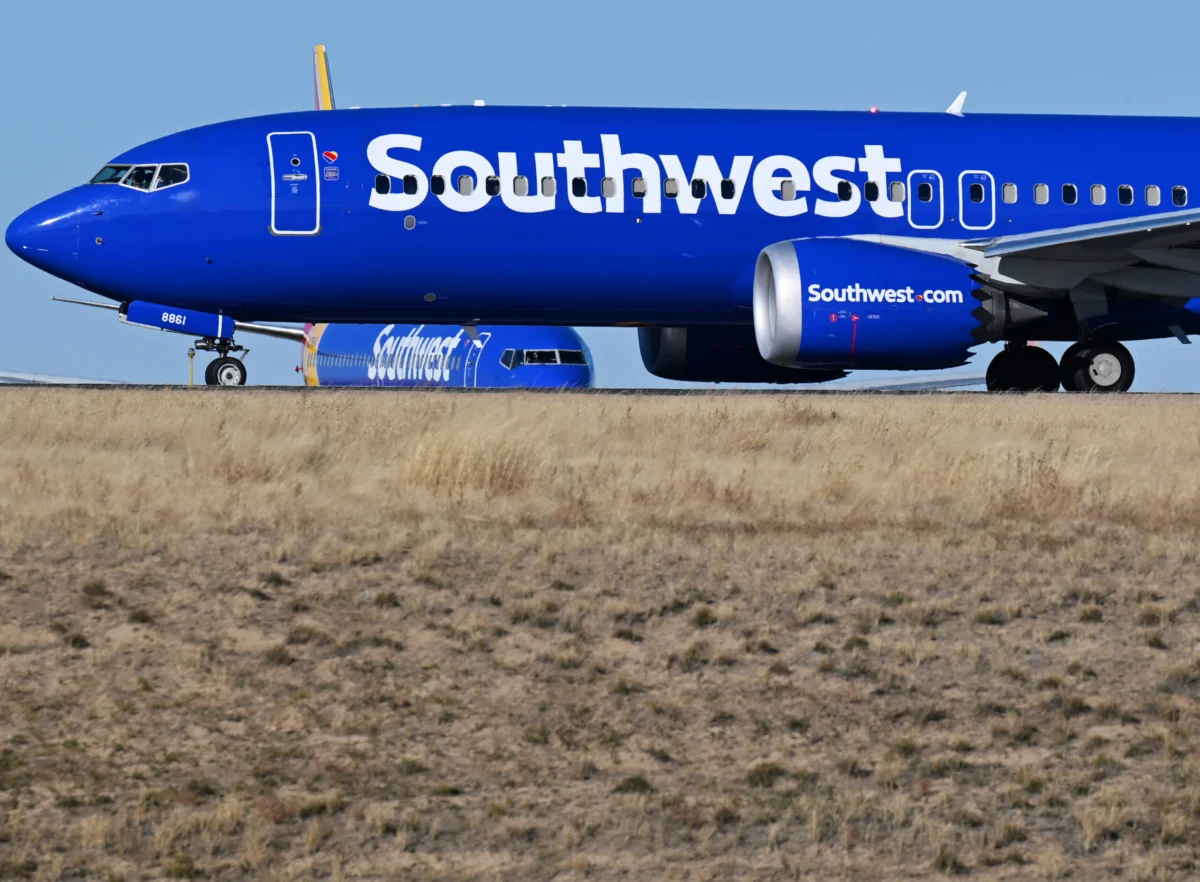
- November 6, 2025: The image of Southwest planes at Denver International Airport captures a snapshot of the airline’s operational scale amidst these strategic shifts.
- Wednesday (Current Announcement): Official unveiling of the lounge network plans, including specific locations, partnership with Chase, and target opening dates.
These changes collectively represent a systematic effort by Southwest to "premiumize" certain aspects of its offering and to diversify its revenue streams beyond ticket sales. The pressure to innovate and increase profitability has been particularly acute, intensified by the involvement of activist investor Elliott Investment Management. Elliott has advocated for significant strategic adjustments, including improvements in customer experience, technological infrastructure, and revenue optimization, positioning Southwest’s recent actions as a direct response to investor demands for enhanced shareholder value.

The Competitive Landscape: A "Lounge Arms Race"
Southwest’s entry into the lounge market is not merely a tactical adjustment but a direct response to a burgeoning trend across the airline and financial services industries. Major carriers such as Delta Air Lines, United Airlines, and American Airlines have long operated extensive networks of premium lounges (e.g., Delta Sky Club, United Club, American Airlines Admirals Club). More recently, even traditionally budget-focused airlines like JetBlue Airways have initiated plans to build their own lounges in key hubs like New York and Boston, further illustrating the perceived value of these amenities.
Beyond airlines, credit card companies have emerged as significant players in the lounge space, recognizing the immense power of premium travel benefits in attracting and retaining affluent customers. American Express, with its highly exclusive Centurion Lounges, and Capital One, with its rapidly expanding Capital One Lounges, have set new benchmarks for luxury and service within airport environments. Chase, with its Sapphire Reserve Lounge Network, is another formidable competitor, and its partnership with Southwest suggests a synergistic approach to expand reach and enhance loyalty for both brands.
The rationale behind this "lounge arms race" is multi-faceted:
- Customer Retention and Loyalty: Lounges offer a tangible, exclusive benefit that fosters brand loyalty among frequent flyers and premium cardholders. In an increasingly commoditized travel market, differentiated experiences are crucial.
- Revenue Generation: While direct revenue from lounge access fees can be modest, the primary financial benefit comes from increased spending on co-branded credit cards (annual fees, interchange revenue) and the ability to command higher fares for premium products that include lounge access.
- Brand Differentiation and Premiumization: Lounges allow airlines and card companies to cultivate a more sophisticated brand image, appealing to a demographic willing to pay more for comfort, convenience, and exclusivity.
- Improved Customer Experience: In an era of often stressful airport environments, lounges provide a much-needed sanctuary, offering amenities like complimentary food and beverages, Wi-Fi, comfortable seating, and sometimes even showers or spa services. This improves overall travel satisfaction, especially during delays or layovers.
Data from the global airport lounge market indicates robust growth, with projections often showing a compound annual growth rate (CAGR) exceeding 8-10% in the coming years. This growth is driven by rising disposable incomes, an increase in business travel, and a growing consumer demand for premium travel experiences. Southwest, by entering this market, is aiming to capture a share of this expanding segment and prevent its premium customers from migrating to competitors offering these perceived superior amenities.
Implications and Future Outlook
Southwest’s strategic shift carries several significant implications. Firstly, it marks a definitive step away from its foundational "no-frills" identity, embracing a more diversified service model. This could potentially alienate a segment of its traditional, price-sensitive customer base, who might perceive these changes as an erosion of the unique value proposition that initially attracted them to Southwest. However, it is also likely to attract new customers who prioritize convenience and comfort, or to solidify loyalty among existing Rapid Rewards members who frequently travel.
Secondly, the partnership with Chase is a powerful alignment. Chase’s Sapphire Reserve cardholders are precisely the demographic Southwest seeks to attract to its premium offerings. By leveraging Chase’s established network and marketing prowess, Southwest can rapidly scale its premium presence and gain credibility in a segment where it has historically been absent. The new co-branded credit card will be critical to this strategy, serving as the primary gateway to the lounges and a powerful incentive for card acquisition and usage.
Financially, the lounges are expected to contribute to Southwest’s ancillary revenue, which has been a key focus for the airline under pressure from investors. While the initial investment in construction and operation will be substantial, the long-term returns from increased credit card sign-ups, higher average ticket prices for premium fare classes, and enhanced customer lifetime value could be considerable. Industry experts suggest that successful lounge operations can significantly boost customer loyalty, leading to repeat bookings and higher spending across all airline products.
Challenges remain. Southwest will need to ensure that its lounges offer a genuinely premium experience that lives up to the expectations set by competitors like Amex Centurion and Delta Sky Club. Maintaining service quality, managing capacity, and integrating the lounge experience seamlessly with Southwest’s unique operational style will be crucial. Furthermore, the airline will need to carefully manage its brand perception, balancing its traditional appeal with its new, more premium aspirations.
Ultimately, Southwest Airlines’ entry into the airport lounge market represents a bold and calculated move to adapt to an evolving aviation landscape. It signifies a strategic embrace of premiumization and revenue diversification, aiming to secure its competitive position and deepen customer loyalty in the coming decade. As the construction progresses and the late 2027 opening approaches, the industry will be closely watching to see how Southwest navigates this significant transformation and how its new lounges reshape the airline’s future trajectory.
