

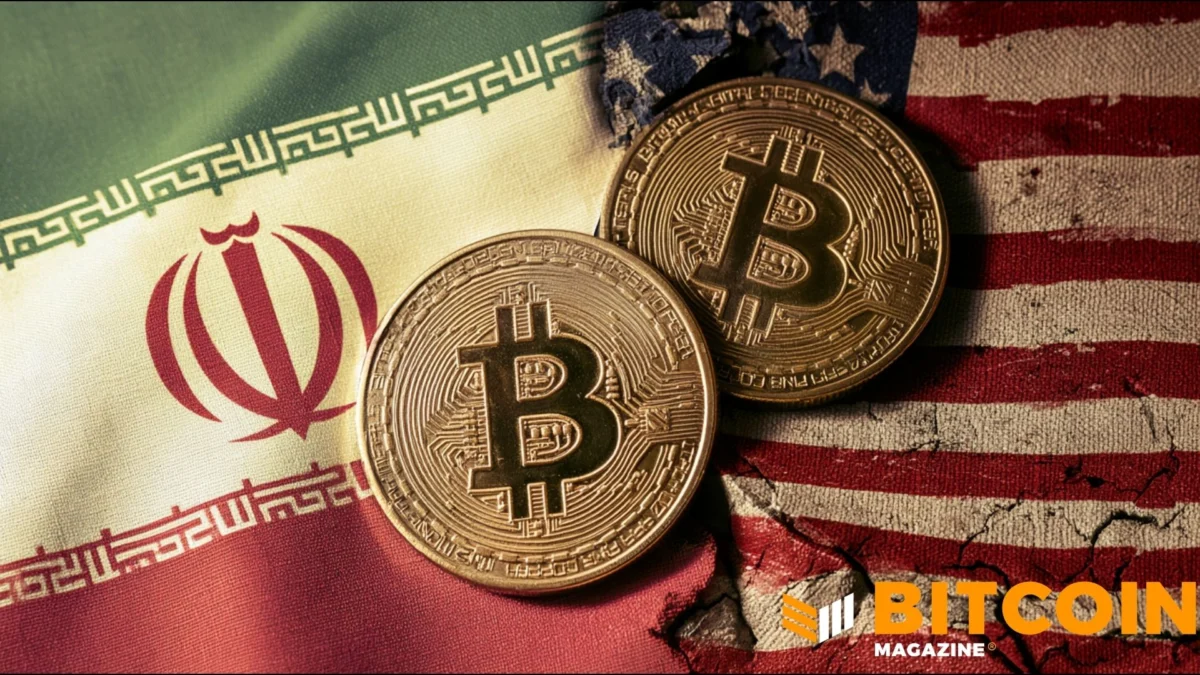
Bitcoin experienced a notable downturn on Tuesday, as investors adopted a "risk-off" stance in response to escalating geopolitical tensions between the United States and Iran. The cryptocurrency, which had initially shown resilience to President Donald Trump’s threats and early military actions, saw its price slide significantly as the situation intensified.
Geopolitical Developments Trigger Market Volatility
The digital asset market, often sensitive to global instability, reacted sharply to the latest developments in the Middle East. Bitcoin, the largest and most prominent cryptocurrency by market capitalization, was trading down more than 2% on Tuesday, settling around $77,363. This decline followed a period of strong performance, with the coin having reached a recent high of nearly $81,282 on Friday.
The catalyst for this shift appears to be a series of retaliatory actions. According to President Trump, U.S. forces initiated strikes in response to Iran’s alleged attempts to place mines in the Strait of Hormuz, a critical chokepoint for global oil trade, and an attack on an American military base in Jordan. Adding to the gravity of the situation, U.S. Central Command (CENTCOM) confirmed via its official X account that Iran had also engaged in attacks against commercial shipping vessels.
CENTCOM’s statement, posted on X, detailed the rationale behind the U.S. military actions. "Today at 12 p.m. ET, U.S. forces began striking Islamic Revolutionary Guard Corps (IRGC) targets in Iran," the post read. "The strikes follow recent attempted attacks by the IRGC against commercial shipping in the Strait of Hormuz and against American service members deployed to the region." The post, dated September 1, 2026, was accompanied by a graphic illustrating the identified targets and actions.
In response, Iranian media reported that Iran had launched a "decisive operation" against U.S. military bases. This escalation immediately impacted global markets, with oil prices surging on the news, reflecting concerns about potential disruptions to energy supply chains.
Bitcoin’s Historical Sensitivity to Geopolitical Events
This is not the first instance of Bitcoin’s price reacting to geopolitical instability. Throughout the year, the cryptocurrency has demonstrated a pattern of sensitivity to such events, particularly those involving Iran. Historically, news of conflict or heightened tensions in the region has often led to downward pressure on Bitcoin’s price. However, the narrative has also seen a reversal, with the cryptocurrency frequently rallying when hopes for a ceasefire or de-escalation emerge, often influenced by pronouncements from President Trump.
Despite periods of relative calm, Bitcoin has experienced more pronounced and volatile swings since mid-August. This recent volatility underscores the complex interplay of factors influencing digital asset prices, with geopolitical developments emerging as a significant, albeit unpredictable, driver.
Economic Factors and Bitcoin’s Performance
The immediate correlation between rising oil prices and a decline in Bitcoin’s value can be attributed to inflationary pressures. Higher energy costs typically translate into increased inflation, which in turn can prompt central banks, like the U.S. Federal Reserve, to delay or reconsider interest rate cuts. Such a monetary policy stance can restrict liquidity in the financial system, a condition that often hampers the momentum of assets like Bitcoin, which tend to perform better in environments of ample liquidity and low interest rates.
Further complicating the economic landscape, Federal Reserve Chair Kevin Warsh, in a significant speech last week, indicated that global inflation had not sufficiently decreased in the world’s largest economy. This assessment has led to a recalibration of market expectations. Traders are now reportedly less inclined to price in an interest rate cut for the current year, with some even anticipating a rate hike. This shift in sentiment contrasts with historical periods where Bitcoin has shown robust performance in low-interest-rate environments.
However, the narrative is not entirely negative for Bitcoin. In a notable counter-trend, the coin experienced one of its strongest rallies in August. This surge occurred shortly after the U.S. Treasury announced its intention to at least double the size of its liquidity-support buyback operations, a move designed to counteract surging borrowing costs. This announcement, while potentially impacting the U.S. dollar, provided a tailwind for non-yielding assets such as Bitcoin and gold, as investors sought alternatives to preserve value amidst rising credit expenses.
Chronology of Recent Events and Market Reactions
To better understand the current market dynamics, a chronological overview of the events leading up to Tuesday’s downturn is instructive:
- Late August – Early September: Persistent geopolitical tensions in the Middle East, including reports of Iranian-backed activities in the region and potential threats to maritime security in the Strait of Hormuz, create an underlying unease in global markets.
- Friday: Bitcoin reaches a recent peak of nearly $81,282, potentially reflecting a general market optimism or specific positive news within the crypto space, while seemingly unaffected by early geopolitical rumblings.
- Monday: Initial U.S. response to perceived Iranian provocations, including threats and potentially limited strikes. Bitcoin’s price remains relatively stable, indicating an initial dismissal of the immediate impact.
- Tuesday Morning (ET): Escalation of U.S. military action against IRGC targets in Iran, coupled with Iran’s reported retaliatory operations. This marked a significant increase in the conflict’s intensity.
- Tuesday (Throughout the day): Global markets react with increased volatility. Oil prices surge. Bitcoin’s price begins a noticeable decline, falling over 2% as investors shift towards safer assets and exit riskier positions. The price hovers around $77,363.
This timeline highlights how a sudden intensification of geopolitical conflict can rapidly alter market sentiment, overriding previous positive trends.
Broader Economic Context and Potential Implications
The current economic environment adds another layer of complexity to Bitcoin’s price action. The Federal Reserve’s stance on inflation and interest rates is a crucial determinant of liquidity within the financial system. Any indication of a prolonged period of higher interest rates or a delay in monetary easing can have a dampening effect on risk assets.
The U.S. Treasury’s decision to increase liquidity support operations in August served as a powerful reminder of the interconnectedness of fiscal policy, monetary conditions, and asset prices. By injecting liquidity, the Treasury aimed to ease borrowing costs and ensure market stability. This action, while benefiting assets like Bitcoin and gold by devaluing the dollar and increasing the attractiveness of non-yielding assets, is now being weighed against the backdrop of renewed inflationary concerns stemming from geopolitical instability.
The implications of the escalating U.S.-Iran tensions extend beyond the immediate financial markets. A prolonged period of conflict in the Middle East could lead to sustained increases in oil prices, further fueling inflation and potentially prompting more aggressive monetary policy from central banks globally. This, in turn, could create a more challenging environment for growth assets and cryptocurrencies.
Analysis of Bitcoin’s Response
Bitcoin’s reaction to the U.S.-Iran conflict can be analyzed through several lenses:
- Safe Haven vs. Risk Asset: While some proponents argue for Bitcoin’s potential as a digital gold or a safe haven asset, its price action in this instance aligns more closely with that of a risk-on asset. During times of heightened uncertainty and potential conflict, investors tend to divest from speculative assets and move towards traditional safe havens like gold or government bonds.
- Inflation Hedge: The argument for Bitcoin as an inflation hedge is often predicated on its limited supply. However, its short-term price movements appear more correlated with liquidity conditions than with long-term inflation expectations. The immediate impact of rising oil prices on inflation and subsequent monetary policy responses seems to be a more dominant factor in its recent performance.
- Market Psychology and Sentiment: The "risk-off" sentiment is a powerful driver of market behavior. When fear and uncertainty dominate, investors prioritize capital preservation, leading to sell-offs in assets perceived as more volatile or speculative. Bitcoin, despite its growing institutional adoption, is still subject to this psychological influence.
Future Outlook and Key Factors to Monitor
The trajectory of Bitcoin’s price in the coming days and weeks will likely depend on several interconnected factors:
- De-escalation of U.S.-Iran Conflict: Any signs of diplomatic resolution or de-escalation between the U.S. and Iran would likely reduce geopolitical risk premiums and could lead to a recovery in risk assets. Conversely, further military escalation would likely prolong the "risk-off" environment.
- U.S. Federal Reserve Policy: The Fed’s assessment of inflation and its future monetary policy decisions will remain paramount. Any indication of continued hawkishness or a delayed pivot to rate cuts would be a headwind for Bitcoin.
- Global Economic Conditions: Broader economic data, including inflation reports, employment figures, and growth indicators from major economies, will continue to influence investor sentiment and liquidity.
- Developments within the Cryptocurrency Market: While the current focus is on macro factors, significant developments within the cryptocurrency ecosystem itself, such as regulatory changes, technological advancements, or major institutional adoption news, could also influence Bitcoin’s price.
In conclusion, Bitcoin’s recent slide underscores its sensitivity to global geopolitical events and macroeconomic shifts. While the cryptocurrency market is constantly evolving, the interplay between international relations, inflation, and monetary policy remains a critical determinant of its short-to-medium term performance. Investors are closely watching for any indications of stabilization in the Middle East and clarity on the future path of interest rates to gauge the potential for a recovery in risk assets.
Mathew Di Salvo
Mathew is a reporter who’s covered the space since 2019, reporting on everything from Salvadoran president Nayib Bukele’s Bitcoin bet to crypto exchange FTX’s bankruptcy.
