

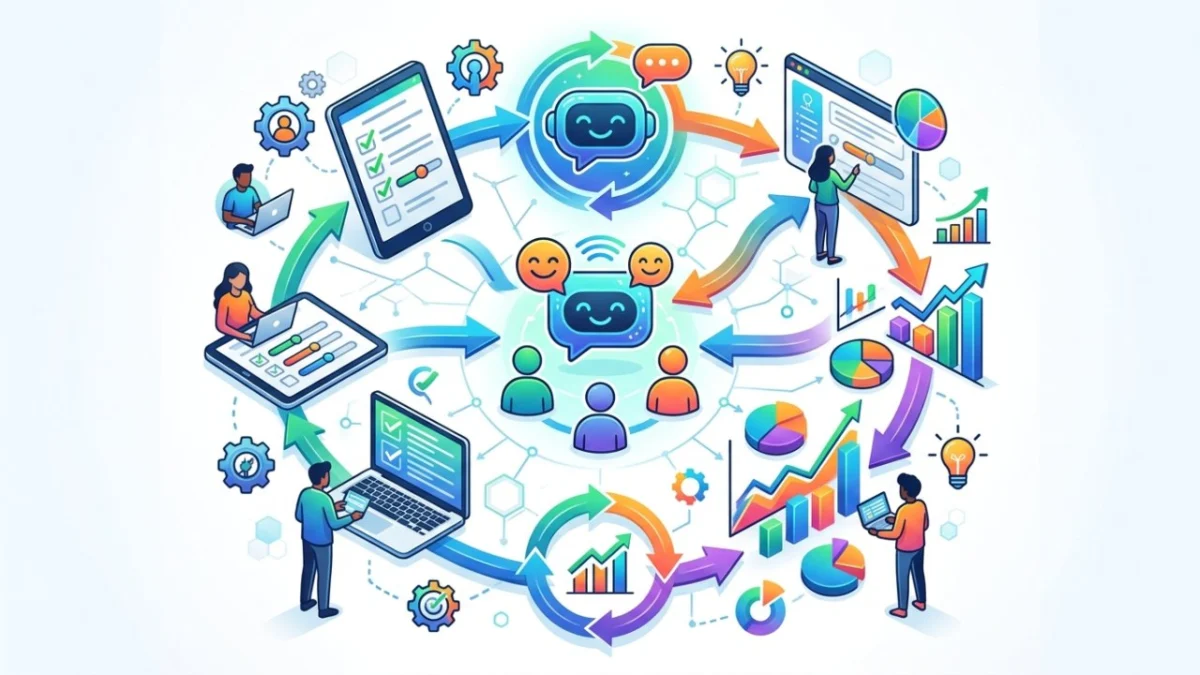
SurveyMonkey, a global leader in online survey development and data analytics, has officially launched a transformative integration with OpenAI’s ChatGPT, marking a significant milestone in the evolution of feedback technology for the small business sector. This innovative feature, branded as part of SurveyMonkey’s broader move toward artificial intelligence, allows users to leverage large language models (LLMs) to automate the traditionally labor-intensive process of survey design. By enabling a conversational interface for survey creation, the platform aims to eliminate the "blank page" syndrome that often stymies small business owners who lack formal training in market research or data science.
The integration functions as a collaborative assistant. Instead of manually selecting question types and drafting phrasing, users can now provide a simple description of their objectives—such as "I want to understand why customers are abandoning their carts" or "I need to gauge employee satisfaction following our recent office relocation." In response, the ChatGPT-powered engine generates a comprehensive, logically structured survey tailored to those specific goals. This development represents a shift from "software as a tool" to "software as a consultant," providing a strategic advantage to entrepreneurs operating in increasingly competitive markets.
The Mechanics of Conversational Survey Design
The core of this integration lies in its ability to interpret natural language prompts and translate them into scientifically sound survey methodologies. Crafting a survey is not merely about asking questions; it involves avoiding leading language, ensuring a logical flow, and selecting the appropriate scales for measurement. For a small business owner, these nuances can be the difference between actionable data and misleading noise.
Andrew McCarthy, Chief Marketing Officer at SurveyMonkey, emphasized the accessibility of the new tool during the launch. "The integration allows anyone to create a survey in minutes, even if they don’t know where to start," McCarthy stated. "Our goal is to empower businesses to focus on what truly matters: understanding their customers and improving their service."
By utilizing ChatGPT’s generative capabilities, SurveyMonkey provides users with multiple iterations of questions, allowing for rapid A/B testing of the survey instrument itself before it is deployed to a live audience. This agility is particularly crucial for startups and small firms that must pivot quickly based on consumer sentiment.
Historical Context: The Evolution of Survey Technology
To understand the impact of this integration, one must look at the trajectory of the market research industry. Founded in 1999, SurveyMonkey was a pioneer in the "Software as a Service" (SaaS) model, democratizing access to tools that were previously reserved for large corporations with massive research budgets. For over two decades, the platform evolved from a simple web-based form builder to a sophisticated ecosystem involving complex logic, branching, and advanced reporting.
However, the rise of "Big Data" in the 2010s created a paradox for small businesses. While they had more access to data than ever before, the complexity of analyzing that data grew exponentially. The introduction of generative AI in late 2022, led by the public release of ChatGPT, offered a solution to this complexity. SurveyMonkey’s decision to integrate this technology is a direct response to the growing demand for "no-code" and "low-effort" analytical tools. This move follows a series of AI-related updates from the company, including "SurveyMonkey Genius," which uses machine learning to predict survey performance and provide real-time suggestions for improvement.
Supporting Data: The Small Business Data Gap
The necessity for such a tool is underscored by current economic data regarding small business operations. According to a 2023 report on small business trends, approximately 46% of small business owners handle all marketing and research tasks themselves, without a dedicated team. Furthermore, research from the Small Business Administration (SBA) suggests that while 70% of small businesses recognize the importance of customer data, fewer than 30% feel they are using their data effectively to drive growth.
The primary barriers cited by these business owners are a lack of time and a lack of technical expertise. By reducing the time required to build a survey from hours to minutes, the SurveyMonkey-ChatGPT integration directly addresses the time constraint. By providing AI-generated questions that follow best practices in survey methodology, it addresses the expertise gap.
Industry analysts suggest that the "experience economy" is now the primary driver of brand loyalty. A study by Salesforce indicated that 80% of customers believe the experience a company provides is as important as its products. For small businesses, which often cannot compete with larger corporations on price or scale, the ability to provide a superior, personalized experience is their greatest competitive edge. This requires a constant, high-quality stream of feedback, which this new AI integration is designed to facilitate.
Addressing the Challenges: Accuracy and Brand Voice
Despite the efficiency gains, the integration of AI into market research is not without its hurdles. One of the primary concerns raised by early adopters and industry experts is the potential for "hallucinations" or the generation of irrelevant questions. AI, while sophisticated, lacks the specific context of a local business’s culture and history.
Andrew McCarthy acknowledged this limitation, advising a "human-in-the-loop" approach. "While the AI can generate questions rapidly, it’s vital for users to review and adjust the prompts to align with their brand’s identity," he noted. A survey sent by a luxury boutique should have a different tone than one sent by a local hardware store. The AI provides the skeletal structure, but the business owner must provide the "voice."
Furthermore, there is the issue of survey fatigue. Because it is now easier to create surveys, there is a risk that businesses will over-survey their audiences, leading to lower response rates and lower-quality data. Experts suggest that small businesses must remain strategic, using the AI to create shorter, more impactful "pulse" surveys rather than lengthy, exhaustive questionnaires that might alienate customers.
Privacy, Security, and Compliance
In an era of heightened awareness regarding digital privacy, the integration of an external AI like ChatGPT into a data-collection platform raises questions about information security. Small businesses are increasingly targeted by data regulations such as the General Data Protection Regulation (GDPR) in Europe and the California Consumer Privacy Act (CCPA) in the United States.
SurveyMonkey has addressed these concerns by emphasizing that the AI integration is focused on the creation phase of the survey, rather than the data collection phase. When ChatGPT generates questions, it does not necessarily need access to the sensitive personal information of the survey respondents. However, small business owners must remain vigilant. They are responsible for ensuring that the feedback process remains transparent and that they are not inadvertently feeding proprietary or sensitive business data into the AI prompts. Maintaining trust is paramount; if customers feel their data is being handled by an opaque AI system without safeguards, they are less likely to provide honest feedback.
Strategic Implications for Marketing and Growth
The broader implications of this technology extend into the realm of agile marketing. Traditionally, market research was a static, quarterly, or annual event. With AI-assisted tools, it becomes a continuous loop. This allows for "real-time" business intelligence.
For example, a restaurant owner who notices a dip in Tuesday night sales can immediately generate and deploy a survey to their loyalty program members on Wednesday morning. By Thursday, they could have enough data to implement a targeted promotion for the following week. This level of responsiveness was previously only available to enterprises with dedicated data science teams.
Moreover, the integration fosters a culture of experimentation. Small businesses can test new product ideas, pricing models, or branding messages with minimal overhead. If the AI-generated survey reveals that a new product concept is unpopular, the business has saved thousands of dollars in potential development costs. This "fail fast, learn fast" mentality is a hallmark of successful modern entrepreneurship.
Conclusion and Future Outlook
SurveyMonkey’s integration with ChatGPT is more than just a feature update; it is a signal of the "intelligence-first" future of the SaaS industry. For small business owners, the tool offers a pathway to professional-grade market research without the professional-grade price tag.
As the technology matures, we can expect further developments, such as AI-driven sentiment analysis that not only helps create the questions but also interprets the open-ended text responses in real-time, providing business owners with a summary of key themes and recommended actions. The democratization of these tools means that the competitive gap between "big" and "small" data is closing.
In a market where customer preferences evolve at the speed of social media, the ability to listen and respond with agility is no longer a luxury—it is a requirement for survival. SurveyMonkey’s latest move ensures that small businesses have the necessary equipment to stay in the conversation, leveraging the power of artificial intelligence to build deeper, more meaningful connections with their customers and employees alike. As businesses continue to navigate an era of digital transformation, those who effectively integrate these AI tools into their strategic planning will likely find themselves at a significant advantage.
