

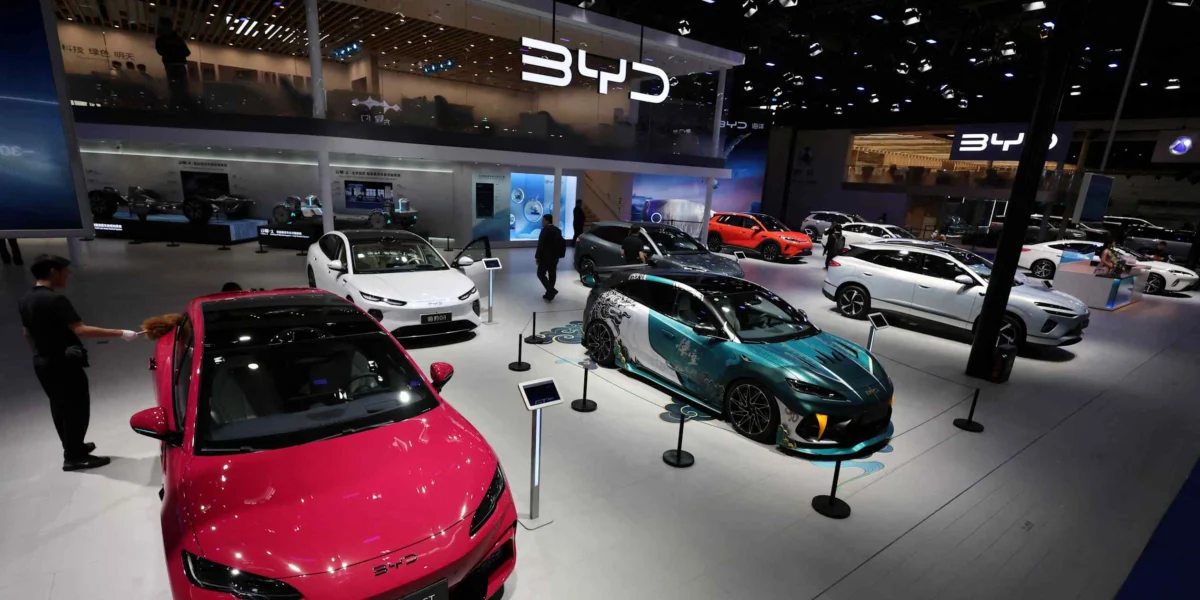
Chinese electric vehicle (EV) giant BYD experienced a notable profit rebound in the second quarter of 2026, a testament to its burgeoning success in international markets. This robust overseas performance has effectively counterbalanced a challenging domestic sales environment, where the company has seen its once dominant market share face increasing pressure from fierce competition. The dual-edged performance highlights BYD’s strategic pivot towards global markets as a crucial engine for growth, even as it navigates the complexities of its home turf.

International Surge Outpaces Domestic Slowdown
BYD’s financial results for the second quarter painted a picture of strategic resilience. While the precise profit figures were not detailed in the initial report, the statement indicated a significant upturn, largely attributed to the escalating demand for its vehicles outside of China. This international momentum is underpinned by BYD’s aggressive expansion into key global regions, including Europe, Southeast Asia, and Latin America. The company has been actively establishing local production facilities, forging strategic partnerships, and tailoring its product offerings to meet diverse consumer preferences.
In contrast, the domestic Chinese EV market, which has been the bedrock of BYD’s meteoric rise, is experiencing a period of intensified competition. A surge in new entrants, coupled with price wars initiated by both established players and emerging startups, has eroded market share for even the most dominant brands. Analysts point to a maturing domestic market where consumers have a wider array of choices, and the initial novelty of EVs is giving way to more discerning purchasing decisions based on price, performance, and brand loyalty. BYD, despite its technological prowess and comprehensive product lineup, has not been immune to these pressures.

The Hungary Plant: A Cornerstone of Global Ambition
A pivotal element in BYD’s international strategy, and a significant contributor to its second-half outlook, is the ongoing ramp-up of its manufacturing facility in Hungary. This plant, located in Szeged, represents BYD’s first vehicle production base in Europe and is slated to become a major hub for supplying the European market. The facility is expected to produce a range of BYD’s popular EV models, including sedans and SUVs, catering to the growing demand for sustainable transportation solutions on the continent.
The strategic importance of the Hungary plant cannot be overstated. It allows BYD to circumvent potential trade barriers, reduce logistics costs, and offer vehicles with shorter delivery times to European consumers. Furthermore, establishing a local manufacturing presence can enhance brand perception and foster stronger relationships with European customers and regulators. The company has invested heavily in state-of-the-art production technologies at the Szeged site, aiming to meet stringent European quality and environmental standards. The ramp-up of this facility is anticipated to significantly boost BYD’s production capacity for export markets, thereby solidifying its international growth trajectory.

New Models: Driving Future Growth and Market Appeal
Beyond production capacity, BYD’s commitment to innovation and the introduction of new models are crucial factors supporting its optimistic second-half outlook. The company has a robust product development pipeline, consistently introducing vehicles that incorporate advanced battery technology, enhanced driving dynamics, and cutting-edge digital features. For the international market, BYD is increasingly focusing on models that resonate with global consumer tastes, often featuring more sophisticated designs and premium finishes.
In Europe, for instance, BYD has launched models like the BYD Seal, ATTO 3, and Dolphin, which have garnered positive reviews for their performance, range, and value proposition. The company is also expected to introduce more premium offerings and potentially larger SUVs to cater to specific market demands. The success of these new models in overseas markets is not only driving sales but also helping to elevate BYD’s brand image from a budget-friendly option to a credible contender in the global automotive landscape.

A Timeline of Expansion and Adaptation
BYD’s journey to this point has been characterized by strategic foresight and rapid adaptation. Founded in 2003 as a battery manufacturer, the company vertically integrated into automobile production in 2003. Its early focus on plug-in hybrids and later on pure electric vehicles allowed it to capitalize on China’s supportive government policies for new energy vehicles.
- 2010s: BYD begins to gain traction in the Chinese market, benefiting from subsidies and a growing awareness of environmental issues. The company establishes a strong presence in the public transportation sector with its electric buses.
- Late 2010s: Recognizing the global potential of EVs, BYD intensifies its international ambitions. Initial forays into overseas markets are focused on regions with nascent EV adoption and supportive government incentives.
- Early 2020s: The global EV market experiences an acceleration, fueled by climate change concerns and technological advancements. BYD emerges as a leading global EV player, challenging established automakers. The company announces significant investments in international production, including the Hungary plant.
- 2023-2024: BYD overtakes Tesla in global EV sales for a quarter, signaling its growing dominance. However, the domestic Chinese market begins to show signs of saturation and intensified competition, leading to price wars.
- First Half of 2026: BYD experiences a slowdown in domestic market share growth but maintains strong sales momentum globally.
- Second Quarter of 2026: Profits rebound significantly due to strong international sales, offsetting domestic challenges. The Hungary plant continues its ramp-up, and new models are introduced to bolster global market penetration.
Supporting Data: Global Momentum vs. Domestic Headwinds
While specific figures for the second quarter’s profit rebound are not yet public, broader industry data provides context for BYD’s performance. Global EV sales continued to show robust year-on-year growth in the first half of 2026, with Europe and Asia (excluding China) being key drivers of this expansion. Reports from industry analysis firms indicate that BYD’s market share in Europe has seen a steady increase, reaching single-digit percentages in several key markets. This is a significant achievement considering the strong presence of established European automakers and the presence of other Chinese EV brands.

Conversely, in China, the competitive landscape has become increasingly fragmented. Data from the China Association of Automobile Manufacturers (CAAM) has shown that while overall EV sales in China remain strong, the market share distribution has become more dispersed. BYD’s dominance has been challenged by rivals like SAIC-GM-Wuling, Geely, and a growing number of EV startups that are aggressively innovating and competing on price. This has likely led to a reduction in BYD’s profit margins in its domestic market, necessitating a stronger reliance on its international operations.
Official Responses and Strategic Outlook
BYD’s leadership has consistently articulated a strategy focused on both global expansion and technological innovation. The company’s spokespersons have frequently emphasized the long-term vision of becoming a global leader in sustainable transportation. The emphasis on the Hungary plant’s ramp-up and the introduction of new models underscores this commitment.

While specific company statements regarding the Q2 earnings rebound are pending, the general tone from BYD has been one of confidence in its diversified growth strategy. The company has indicated its intent to continue investing in research and development, expanding its production capabilities both domestically and internationally, and exploring new markets. The focus on battery technology, a core competency of BYD, remains a key differentiator, with ongoing advancements in battery safety, energy density, and charging speed.
Broader Impact and Implications
BYD’s performance has significant implications for the global automotive industry. Its success demonstrates the viability of Chinese automakers as major international players, capable of competing on technology, quality, and scale. This poses a challenge to established Western and Japanese automakers, who are increasingly facing pressure to accelerate their own EV transition and adapt to a more competitive global market.

The strategic importance of BYD’s European manufacturing presence also highlights a broader trend of globalization within the EV sector. As trade tensions and geopolitical considerations become more prominent, companies are seeking to diversify their production bases to mitigate risks and ensure market access. BYD’s Hungary plant is a prime example of this strategy in action.
Furthermore, BYD’s ability to navigate a highly competitive domestic market while simultaneously achieving strong international growth underscores the importance of a diversified business model. For other automakers, this serves as a lesson in the need to not only develop compelling products but also to build resilient supply chains and flexible market strategies that can adapt to evolving global economic and political landscapes. The ongoing evolution of BYD’s market position will be a key indicator of the future direction of the global electric vehicle industry.
