

TOKYO — Japan is set to significantly overhaul its financial support program for technologies crucial to national economic security, with a primary objective of accelerating long-term efforts in deep-sea rare-earth mining. This strategic initiative aims to diminish Japan’s substantial reliance on China for these critical minerals, essential for advanced manufacturing and national defense. The revamped program is anticipated to channel hundreds of billions of yen into research, development, and eventual extraction, signaling a determined push towards resource independence.
The Strategic Imperative: Securing Critical Minerals
Rare-earth elements (REEs) are indispensable components in a vast array of modern technologies, including high-performance magnets for electric vehicles and wind turbines, advanced batteries, smartphones, defense systems, and medical imaging equipment. For decades, China has dominated the global supply chain for REEs, controlling approximately 60% of global mine production and 85% of REE refining capacity. This market dominance has raised significant economic security concerns for nations like Japan, which are heavily dependent on imports for these vital resources.
The geopolitical landscape has underscored the vulnerability of this reliance. Trade disputes, export restrictions, and the potential for supply chain disruptions have prompted a global race to diversify sources and develop alternative extraction and processing methods. Japan, with its advanced industrial base and high-tech manufacturing sector, has a particularly acute need to secure stable and reliable access to REEs.
Deep-Sea Mining: A Promising Frontier
Japan has been actively exploring the potential of deep-sea mineral resources, particularly polymetallic mud and nodules found on the seafloor. These deposits are known to contain significant concentrations of REEs, as well as other valuable metals like cobalt, nickel, and copper. The waters around Minamitorishima Island, a remote Japanese atoll in the Pacific Ocean, have emerged as a focal point for these exploration efforts.
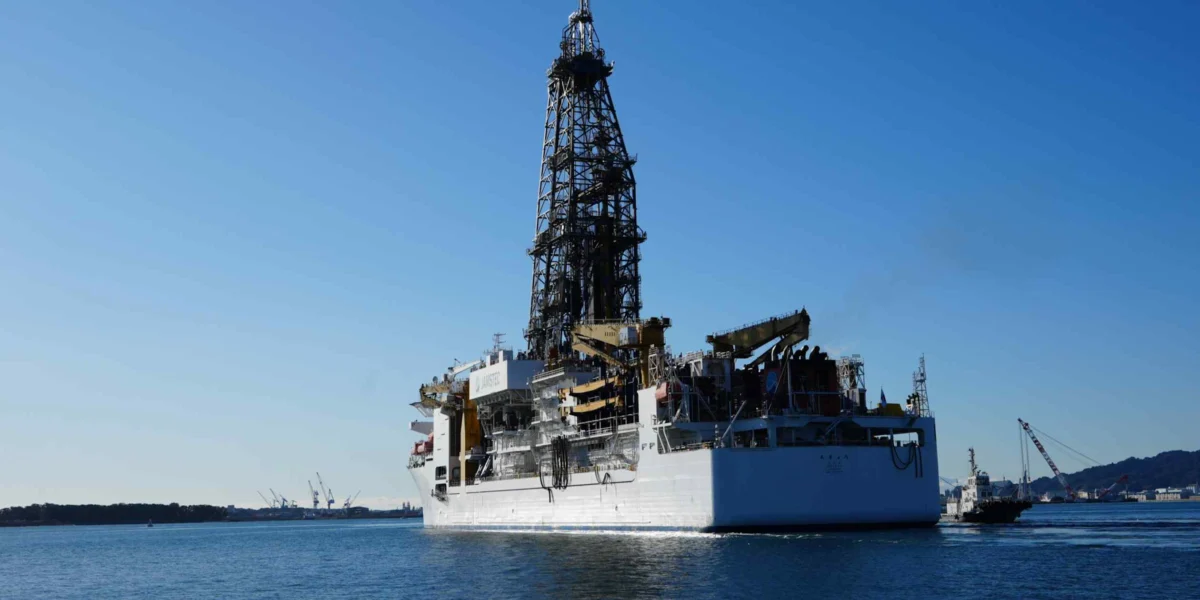
The deep-sea drilling vessel Chikyu, a state-of-the-art research vessel operated by the Japan Agency for Marine-Earth Science and Technology (JAMSTEC), has been instrumental in these endeavors. It possesses advanced capabilities for deep-sea drilling and sample collection, allowing scientists to assess the geological formations and mineral content of potential mining sites. Initial surveys suggest that the seafloor deposits near Minamitorishima could hold substantial quantities of REEs, potentially enough to meet a significant portion of Japan’s domestic demand for decades.
Revamping the Economic Security Funding Program
The current economic security funding program, designed to foster domestic technological innovation and reduce external dependencies, will be restructured to provide more robust and long-term financial backing for deep-sea mining projects. This includes:
- Increased Financial Allocations: The program’s budget is expected to be significantly expanded, with estimates suggesting potential support reaching hundreds of billions of yen over the next decade. This funding will cover various stages of development, from initial geological surveys and environmental impact assessments to the development of specialized extraction technologies and the establishment of processing facilities.
- Long-Term Commitment: Recognizing that deep-sea mining is a complex and capital-intensive undertaking that requires sustained investment, the revamped program will emphasize a long-term commitment. This will provide the necessary stability for research institutions and private companies to undertake the ambitious R&D required.
- Technological Innovation Support: A significant portion of the funding will be directed towards developing cutting-edge technologies for deep-sea extraction. This includes specialized robotics, efficient and environmentally conscious dredging or collection systems, and advanced processing techniques to separate and refine the extracted minerals. The challenges of operating in extreme deep-sea environments—high pressure, low temperatures, and remote locations—necessitate novel engineering solutions.
- Environmental Safeguards: A critical aspect of the revamped program will be the allocation of resources for comprehensive environmental impact studies and the development of technologies to minimize the ecological footprint of deep-sea mining. This is crucial for gaining public acceptance and adhering to international environmental regulations. Japan has expressed its commitment to responsible resource development, emphasizing that scientific understanding of the deep-sea ecosystem must precede any large-scale commercial extraction.
- Collaboration and Partnerships: The program will likely foster greater collaboration between government research institutions (such as JAMSTEC), universities, and private sector companies. This synergy is expected to accelerate the pace of innovation and bring practical extraction solutions to fruition more efficiently.
A Chronology of Deep-Sea Exploration and Development
Japan’s pursuit of deep-sea resources has been a gradual but persistent effort spanning several decades:
- Early Exploration (1970s-1990s): Initial geological surveys and academic research began to identify the potential of deep-sea mineral deposits around Japan’s territorial waters.
- Technological Advancement (2000s-Present): The development and deployment of advanced research vessels like the Chikyu enabled more detailed exploration and sampling. JAMSTEC and other research bodies conducted numerous expeditions to assess the quantity and quality of mineral resources.
- Focus on Rare-Earths (2010s-Present): As global awareness of REE supply chain vulnerabilities grew, Japan intensified its focus on deep-sea deposits as a potential source of these critical elements. Surveys around Minamitorishima gained prominence.
- Policy Initiatives (Late 2010s-Present): The Japanese government began to incorporate deep-sea resource development into its broader economic security strategies, leading to the establishment and subsequent expansion of funding programs.
- Current Revamp (2026): The announced enhancement of the economic security funding program signifies a new phase, moving from exploration and research towards the tangible development of extraction technologies and potential commercialization pathways.
Supporting Data and Projected Potential
While precise figures are still being refined, preliminary assessments suggest the potential scale of these deep-sea resources is substantial. Studies by JAMSTEC and the Japan Oil, Gas and Metals National Corporation (JOGMEC) have indicated that the seafloor areas around Minamitorishima could contain:
- Rare-Earth Elements: Estimates suggest that the area could hold enough REEs to meet Japan’s demand for approximately 80 years. Specific concentrations of elements like neodymium and dysprosium, crucial for high-strength magnets, are of particular interest.
- Cobalt: Deep-sea nodules are known to be rich in cobalt, a key component in lithium-ion batteries. Japan’s reliance on cobalt imports, primarily from the Democratic Republic of Congo, could be significantly reduced.
- Nickel and Copper: These base metals, also essential for industrial applications and energy storage, are found in significant quantities within these deep-sea deposits, offering further diversification of Japan’s mineral supply.
The projected cost of developing these resources is significant, with estimates for the entire development lifecycle, from research to commercial extraction, potentially reaching hundreds of billions of dollars globally. Japan’s commitment to investing hundreds of billions of yen through its enhanced program represents a substantial national effort to mitigate these costs and accelerate its own development pathway.
Official Responses and Stakeholder Reactions
The announcement of the revamped funding program has been met with cautious optimism from various stakeholders.
Government Officials: Representatives from the Ministry of Economy, Trade and Industry (METI) have emphasized the strategic importance of the initiative. They highlight that this move is not only about securing mineral resources but also about fostering domestic technological leadership in a nascent but critical industry. The focus will be on ensuring that Japan becomes a leader in responsible and sustainable deep-sea mining.
Research Institutions: JAMSTEC and other scientific bodies have welcomed the increased funding, which will enable them to continue their vital research into the geological, biological, and technological aspects of deep-sea mining. They stress the importance of continued scientific inquiry to ensure that any future exploitation is conducted with a thorough understanding of the marine environment.
Industry Leaders: Private sector companies involved in mining, shipbuilding, and advanced materials are expressing keen interest. They see the enhanced government support as a crucial catalyst for investing in the high-risk, high-reward field of deep-sea resource development. Collaboration between government and industry is seen as essential for translating scientific discoveries into viable commercial operations.
Environmental Advocates: While acknowledging the need for resource security, environmental organizations have voiced concerns regarding the potential impacts of deep-sea mining on fragile marine ecosystems. They are urging for stringent environmental regulations, robust monitoring, and a precautionary approach, emphasizing that the long-term ecological consequences are not yet fully understood. Their calls for transparency and independent environmental impact assessments are expected to be a significant factor in the program’s implementation.
Broader Impact and Implications
The success of Japan’s deep-sea rare-earth mining initiative could have far-reaching implications:
- Reduced Geopolitical Risk: A significant reduction in reliance on China for REEs would bolster Japan’s economic and national security, making it less vulnerable to external economic pressures or supply chain disruptions.
- Global Supply Chain Diversification: If Japan successfully develops and commercializes its deep-sea mining capabilities, it could emerge as a significant alternative supplier of critical minerals, contributing to global supply chain diversification and stability.
- Technological Advancement: The pursuit of deep-sea mining will spur innovation in robotics, marine engineering, materials science, and environmental monitoring technologies, with potential spin-off applications in other sectors.
- Economic Opportunities: The development of a deep-sea mining industry could create new jobs, stimulate investment, and foster the growth of related industries within Japan.
- Environmental Stewardship: The emphasis on responsible development and environmental safeguards could set a precedent for how deep-sea resource exploitation is conducted globally, promoting a more sustainable approach to ocean resource utilization.
However, the path forward is fraught with challenges. The technical complexities of deep-sea operations, the high upfront capital investment, the long lead times for development, and the crucial need to address environmental concerns are all significant hurdles. The effectiveness of Japan’s revamped program will ultimately depend on its ability to navigate these challenges, foster innovation, and ensure that the pursuit of resource security is balanced with environmental responsibility. The hundreds of billions of yen allocated represent a substantial commitment, signaling Japan’s resolve to secure its future in an increasingly resource-constrained world.
