

United Airlines finds itself at a critical juncture, grappling with a significant operational and financial challenge stemming from the protracted delays in the certification and delivery of the Boeing 737 MAX 10 aircraft. The airline has accumulated a substantial inventory of bespoke lie-flat premium seats, specifically designed for these highly anticipated jets, now languishing in storage with no immediate application for its existing fleet. This predicament underscores the far-reaching implications of manufacturing and regulatory hurdles in the aviation sector, forcing carriers like United to adapt their strategic plans and manage unforeseen costs.
The core of United’s dilemma was candidly expressed by its President and CEO, Scott Kirby, earlier this month during an interview at Newark Liberty International Airport. "We got a bunch of lie-flat seats that we don’t know what to do with," Kirby stated, emphasizing their incompatibility with other aircraft models. These specialized seats represent a significant capital investment and were intended to form the backbone of a premium cabin experience on the largest variant of the bestselling 737 MAX family, targeting lucrative transcontinental routes. The delay in the MAX 10’s entry into service, now expected more than six years beyond its initial projection, has left United with a costly storage problem and a re-evaluation of its future cabin strategies.
A Vision Grounded: The Unfolding Saga of the 737 MAX 10
The narrative of United’s MAX 10 plans dates back to August 2018, when Kirby, then president, unveiled an ambitious vision at an aviation conference in Denver. The airline intended to equip its new 737 MAX 10s with lie-flat, premium seats, positioning them to dominate key transcontinental corridors. At the time, the aircraft was projected to commence commercial flights by 2020, offering a significant enhancement to United’s premium offerings and revenue streams. This early commitment reflected the airline’s aggressive strategy to capture a larger share of the high-yielding business and leisure traveler market on routes connecting major hubs across the United States. The introduction of a dedicated lie-flat product on a single-aisle aircraft was seen as a game-changer, mirroring the luxury often associated with international long-haul travel.
However, the optimistic timeline quickly unraveled. The global grounding of the entire 737 MAX fleet following two catastrophic crashes in 2018 and 2019 plunged the program into an unprecedented crisis. While the MAX 8 and MAX 9 variants eventually returned to service after extensive software redesigns and regulatory scrutiny, the subsequent development and certification of the MAX 10, along with the smaller MAX 7, encountered further specific engineering challenges. A critical issue emerged around the anti-icing system, requiring a redesign that added significant delays to an already beleaguered timeline. This, coupled with heightened scrutiny from the Federal Aviation Administration (FAA) and international regulators, transformed a multi-year delay into a multi-generational one for the aircraft’s intended service entry.
Boeing’s Enduring Gauntlet of Scrutiny and Production Woes
The delays plaguing the 737 MAX 10 are not isolated incidents but rather symptoms of broader systemic issues at Boeing, which has been under intense pressure for years due to a series of safety and manufacturing crises. The aftermath of the Lion Air Flight 610 and Ethiopian Airlines Flight 302 tragedies fundamentally altered the landscape of aircraft certification, with the FAA adopting a far more rigorous and hands-on approach. This increased oversight, while critical for ensuring public safety, has undeniably lengthened the certification process for new and modified aircraft.
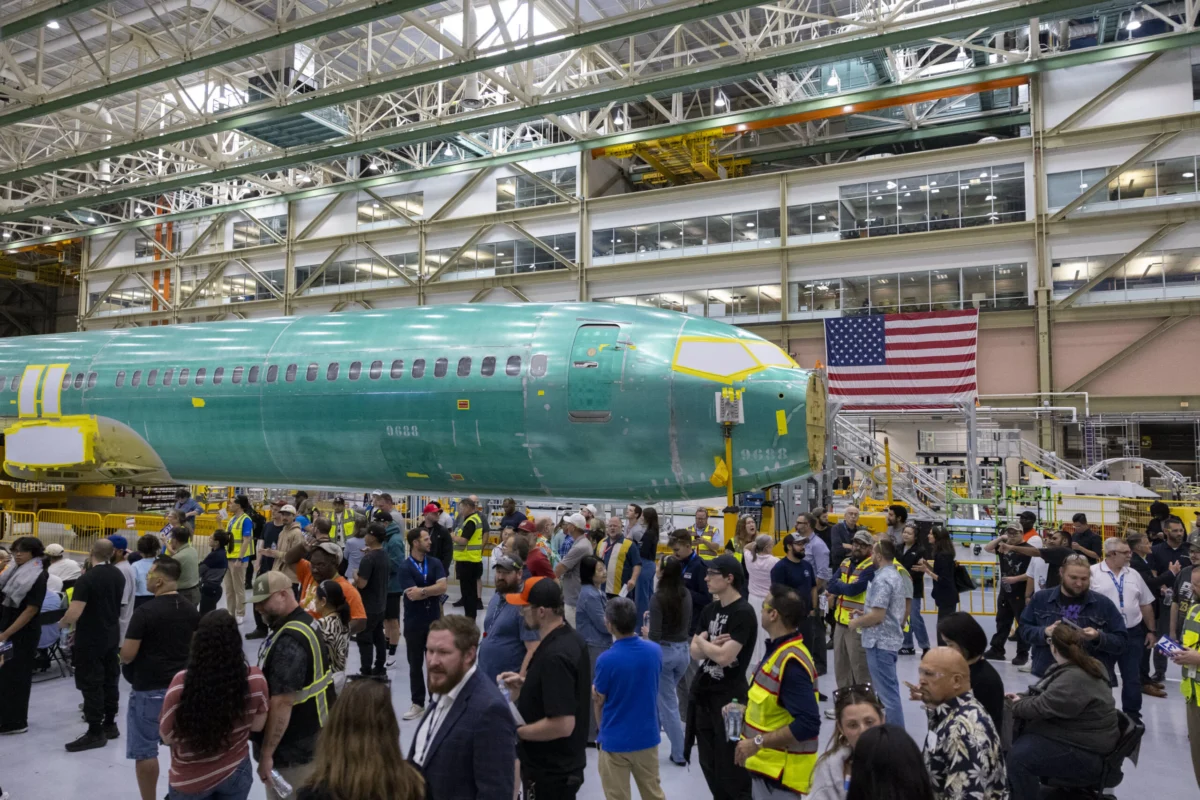
Beyond the initial MAX grounding, Boeing has faced a cascade of production quality lapses, particularly evident in recent years. Incidents such as the January 2024 door plug blowout on an Alaska Airlines 737 MAX 9 brought renewed federal scrutiny, leading to production rate caps imposed by the FAA and extensive audits of Boeing’s manufacturing processes and quality control systems. These events have not only impacted public confidence but also directly contributed to slower delivery rates across Boeing’s entire product line, creating a ripple effect for airline customers who rely on timely fleet expansion and modernization. The image of a 737 MAX 10 fuselage pictured during the opening ceremony for Boeing’s new North Line assembly line in Everett, Washington, on July 10, 2026, serves as a stark reminder of the physical progress in manufacturing contrasted with the persistent regulatory hurdles.
Certification Landscape: MAX 7 Achieves Approval, MAX 10 Awaits
In a significant, albeit delayed, development for the MAX family, Boeing secured approval for the 737 MAX 7 earlier this month. This smaller variant, designed for shorter routes and hot-and-high operations, is a crucial component of fleet plans for carriers like Southwest Airlines. Southwest, a major customer for the MAX 7, now anticipates taking delivery and commencing flights sometime in the first half of 2027. This milestone, while positive, underscores the arduous nature of the certification journey and the time investment required to satisfy stringent regulatory demands.
The MAX 10, however, continues its wait. Despite industry expectations that approval might be "soon," the FAA’s comprehensive review process, particularly given Boeing’s recent quality control issues, means that no definitive timeline can be assured. Analysts suggest that the FAA is unlikely to fast-track any certification without absolute certainty regarding the aircraft’s safety and the robustness of Boeing’s manufacturing quality system. This cautious approach, while frustrating for airlines, is paramount for restoring trust in Boeing’s products and the certification process itself.
United’s Proactive Pivot: The "Coastliner" Strategy
Faced with persistent uncertainties surrounding the MAX 10, United Airlines has strategically pivoted to mitigate the impact of the delays on its premium transcontinental ambitions. The airline recently unveiled its "Coastliner" subfleet, comprising a number of Airbus A321neo narrow-body aircraft. These planes have been specifically outfitted with 20 of United’s newly designed Polaris suites, alongside premium economy options and other enhanced seating. This move is a direct response to the industry-wide "race to add high-yielding seating" and secure a competitive edge on lucrative domestic routes.
The A321neo, with its longer range and comfortable cabin, provides a viable alternative for United to deploy a premium product on transcontinental routes. However, this adaptation comes with its own set of challenges. The dimensions and structural requirements of Airbus aircraft are inherently different from those of Boeing’s 737 family. This fundamental difference means that the lie-flat seats initially intended for the MAX 10 simply "don’t fit on other airplanes," as Kirby noted. The Coastliner subfleet, while addressing an immediate need, does not resolve the issue of the stored MAX 10 seats, nor does it perfectly replicate the originally envisioned product for the Boeing aircraft. Furthermore, the decision to invest in a dedicated Airbus subfleet for these routes highlights the operational complexities and capital expenditures involved in adapting to supplier delays.
Financial and Operational Ramifications
The financial implications of these delays for United are multifaceted and substantial. The cost of storing hundreds of specialized lie-flat seats represents a direct, ongoing expense that yields no revenue. Beyond storage, there’s the opportunity cost of lost revenue from not being able to deploy these high-value seats on profitable transcontinental routes as planned since 2020. The premium travel market is highly competitive, and delays in offering a superior product can lead to customers choosing rival carriers.
Moreover, the shifting delivery schedules complicate United’s long-term fleet planning, crew training, and maintenance programs. Airlines meticulously plan their aircraft acquisitions years in advance, integrating new types into their network, scheduling crew training, and building out maintenance capabilities. Unpredictable delays disrupt these intricate plans, potentially leading to inefficient asset utilization, increased operational costs, and the need to retain older, less fuel-efficient aircraft longer than intended. While United has 167 MAX 10 aircraft on order, according to its most recent quarterly filing, the deferral of these deliveries impacts not only its capacity growth but also its ability to modernize its fleet and achieve environmental targets associated with newer, more efficient aircraft.
Industry analysts estimate that for a major airline, the cost of a single lie-flat seat can range from $50,000 to over $200,000, depending on customization and features. Storing hundreds of such units, potentially worth tens of millions of dollars, represents a significant drain on capital that could otherwise be invested in other growth initiatives. Furthermore, the need to adapt existing aircraft or acquire new ones (like the A321neo for the Coastliner) to fill the capacity gap adds another layer of unplanned expenditure and complexity.
Broader Industry Impact and Future Outlook
United’s predicament with the MAX 10 is symptomatic of a broader challenge facing the global aviation industry, particularly regarding its reliance on a limited number of major aircraft manufacturers. Boeing’s ongoing struggles with production quality and certification delays have sent ripples across the entire sector. Airlines worldwide are re-evaluating their fleet strategies, diversifying orders between Boeing and Airbus where possible, and adjusting their expectations for new aircraft deliveries. The increased scrutiny from regulators, while essential for safety, also signals a more protracted and unpredictable future for new aircraft introductions.
For Boeing, the stakes are incredibly high. Its reputation, market share, and financial health are all intrinsically linked to its ability to resolve its production issues, deliver aircraft on schedule, and regain the full trust of airlines and the flying public. The successful and safe certification of the MAX 10 is crucial not only for its order book but also for demonstrating its commitment to quality and safety following years of turbulence.
Looking ahead, United Airlines expects to receive its first Boeing MAX 10s in the summer of 2027. However, this projection, like previous ones, remains subject to the FAA’s final certification timeline. Once the aircraft does arrive, United will face the critical decision of how to configure its interiors. The airline had not disclosed the specific layout it would use, nor where it would fly them, even before the significant delays and the introduction of its own premium economy section. This means a complete re-evaluation of its original 2018 plans will be necessary.
The resolution of the MAX 10 certification saga and United’s subsequent integration of these aircraft will be a significant test for both the manufacturer and the airline. It will determine the fate of hundreds of stored premium seats, reshape United’s transcontinental network, and serve as a bellwether for the future of aircraft development and airline-manufacturer relationships in a highly scrutinized and rapidly evolving global aviation landscape.
