

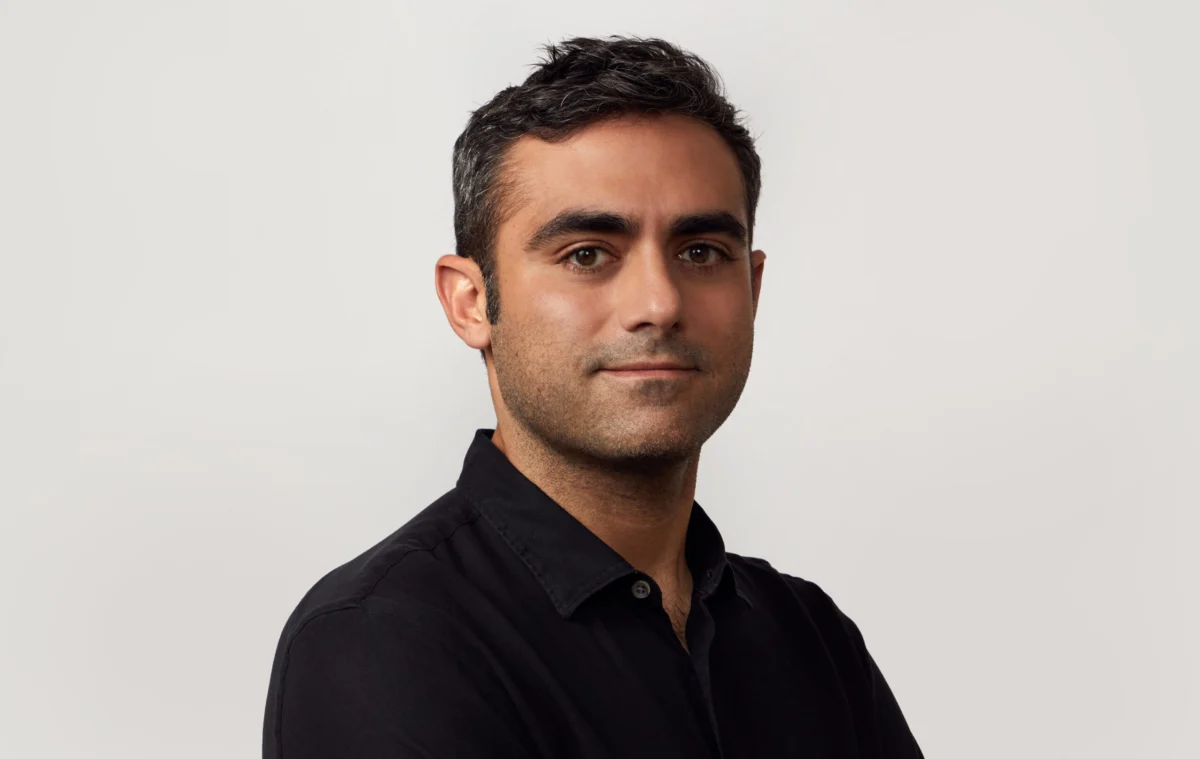
Michael Polansky, a figure remarkably unassuming for someone operating at the nexus of high finance, cutting-edge biotechnology, and global celebrity, has quietly emerged from years of stealth to reveal a groundbreaking venture poised to reshape dermatological and pharmaceutical research. Seated at a sun-dappled patio in Mill Valley, a picturesque town north of San Francisco, Polansky, with his bespectacled, youthful demeanor and friendly disposition, presents the image of an academic rather than a tech titan or a partner to one of the world’s biggest pop stars. Yet, this Harvard-educated polymath is both the co-founder and CEO of Outer Biosciences, an AI and biology startup that has achieved the unprecedented feat of sustaining living human tissue outside the body for over a month, and the creative, business, and romantic partner to Stefani Germanotta, globally known as Lady Gaga. This unique duality defines Polansky’s public persona and professional trajectory, seamlessly blending the demanding worlds of scientific innovation and A-list stardom.
A Trajectory from Wall Street to Silicon Valley’s Inner Circle
Polansky’s journey into the intricate world of biotechnology was neither direct nor entirely planned. His roots trace back to Minnesota, where he cultivated an early aptitude for quantitative analysis. This foundation led him to Harvard University, where he immersed himself in applied mathematics and computer science, graduating in 2006. His initial foray into the professional world was with Bridgewater Associates, the formidable hedge fund renowned for its unique culture and investment philosophy. Polansky describes his three years at Bridgewater as a "very unique place" and a "really good experience," acknowledging, however, that it wasn’t a realm that ignited his daily excitement.
A serendipitous encounter paved his path to Silicon Valley. In 2009, at a wedding in his home state, Polansky reconnected with a former neighbor who, coincidentally, was then Sean Parker’s assistant. Learning of Parker’s search for a collaborator, Polansky, already eyeing a move West, seized the opportunity. A dinner meeting in New York proved transformative; the two "hit it off immediately," leading Polansky to resign from Bridgewater the very next day and relocate to San Francisco.
His arrival in Silicon Valley placed him at the heart of its burgeoning ecosystem. He secured a principal role at Founders Fund, a venture capital firm then helmed by its original quartet of titans: Peter Thiel, Sean Parker, Luke Nosek, and Ken Howery. Sharing an office with another rising principal, Brian Singerman, Polansky describes this period as a "really, really great experience," absorbing the ethos of disruption and innovation that defined the firm. When Parker, having become financially liquid from his Facebook stock, decided to establish his own family office, he brought Polansky along. For years, Polansky meticulously managed Parker’s diverse business, investment, and philanthropic interests. This included playing a pivotal role in the establishment of the Parker Institute for Cancer Immunotherapy (PICI), where Polansky continues to serve as executive director. His decade-long immersion alongside Parker in cancer immunotherapy, a field he notes was "very fringe" at the time, inadvertently laid the groundwork for his future in life sciences. The onset of the COVID-19 pandemic marked a significant pivot, as his life "moved in a different direction," influenced by new personal and professional alignments.
The Unlikely Convergence: Love, Business, and Philanthropy
The "different direction" Polansky’s life took in late 2019 was largely shaped by his meeting with Stefani Germanotta. The charming origin story of their connection begins with Germanotta’s mother, Cynthia Germanotta, president of the Born This Way Foundation. Polansky had come to know Cynthia through his philanthropic work and, for months, she had playfully suggested setting him up with her daughter. Polansky, initially skeptical, recounts thinking, "I think you’re making fun of me." She wasn’t. The subsequent meeting, followed by a humorous anecdote of their mothers meeting and declaring it "all made perfect sense," cemented a relationship that quickly evolved into a profound personal and professional partnership. Their mothers, Polansky notes with a laugh, are now close friends.
This partnership extends far beyond personal affection. Germanotta, a formidable entrepreneur in her own right, sits on the board of Outer Biosciences, providing strategic insights and fostering collaborative opportunities. Polansky speaks glowingly of her business acumen, stating, "People really haven’t gotten to know a certain side of her publicly… She’s such a brilliant businessperson." This synergy is evident in projects like Germanotta’s cosmetics brand, Haus Labs, which Polansky describes as having been built "on her kitchen floor" rather than simply licensing her name. The brand, now a thriving operation with approximately 70 employees in El Segundo, California, also engages in collaborations with Outer Biosciences. For instance, Outer Biosciences’ chief scientist, Kyung-Jin Jang, serves on Haus Labs’ scientific advisory board, and the companies have undertaken joint projects, illustrating a seamless integration of their respective ventures. The scale of their collaboration is further highlighted by Polansky’s comparison of Germanotta’s recent world tour — a massive operation across three Boeing 747s — to running "a 200-person startup that travels around the world every day." This dynamic partnership underscores a shared ethos of innovation, ambition, and meticulous execution, whether on a global stage or in a cutting-edge biotech lab.
Outer Biosciences: A New Paradigm for Biological Discovery
The genesis of Outer Biosciences in 2022, co-founded by Polansky (CEO), Kyung-Jin Jang (chief scientist), Chris Hinojosa (CTO), and Stanley King (chief business officer), arose from a deep-seated frustration with the inherent limitations of biological and chemical innovation compared to the rapid advancements in software. A primary impediment has always been the ethical impossibility of directly experimenting on living humans for drug and cosmetic development. Scientists have historically relied on proxies such as animal models, simplified cell cultures, and lab-grown organoids. However, these models often fail to accurately replicate the complex behavior of a real human organ, leading to high failure rates in preclinical testing and prolonged development cycles.
Outer Biosciences has engineered a fundamentally different approach. Rather than attempting to create synthetic organs, the company focuses on ethically sourcing actual human skin tissue that would otherwise be discarded after plastic surgery. This tissue is obtained through rigorously vetted non-profit and commercial biobanks and brokers, operating under strict institutional review board (IRB) oversight and documented donor consent. Key partners include the National Disease Research Interchange (NDRI) and the Cooperative Human Tissue Network (CHTN), both recipients of federal funding from the NIH and the National Cancer Institute. Polansky emphasizes that Outer Biosciences pays only cost-recovery fees to these suppliers, not purchasing the tissue outright. The company invested approximately two years in establishing this intricate pipeline and the necessary protocols to receive the living tissue "within hours" of surgery, ensuring its viability. Privacy concerns are paramount, with every sample arriving pre-de-identified by the supplying organizations, stripped of all direct identifiers like names or contact information.
The core of Outer Biosciences’ innovation lies in its proprietary support system, which nourishes the tissue and removes metabolic waste, dramatically extending its viable life. The industry norm for keeping tissue alive for experimentation is a matter of days, sufficient only for acute toxicity tests. This limited timeframe precludes the study of slower, more complex biological processes crucial to dermatological understanding, such as collagen remodeling, pigmentation changes, or barrier repair, which unfold over weeks. Outer Biosciences’ system, in contrast, maintains tissue viability for up to a month. Polansky notes that this sustained tissue largely retains its "day-zero architecture and preserves its day-zero epidermal, stromal and immune-associated molecular programs." While not entirely indistinguishable from day-one tissue, its extended lifespan enables researchers to observe dynamic biological responses over medically relevant periods.
A compelling example of this extended capability is the study of sunburn. Outer Biosciences’ researchers can induce UVB damage in living tissue and then meticulously track the ensuing stress, inflammatory, and recovery responses over several weeks. This allows for an unprecedented level of information gathering about the biology of skin damage and repair. Polansky clarifies that the team isn’t "healing" the skin but rather observing the injury and its subsequent biological cascade over time, providing invaluable insights into cellular and molecular mechanisms.
The Synergistic Power of AI and Human Tissue
Outer Biosciences’ true disruptive potential emerges from the integration of this extended-life human tissue platform with advanced artificial intelligence. Polansky, anticipating potential skepticism from the scientific community, carefully frames the company’s achievements not as isolated breakthroughs but as a powerful, interconnected system. This system comprises ethically sourced human tissue sustained for weeks, a diverse donor pool subjected to controlled experimental conditions, and repeated molecular measurements captured throughout.
This wealth of data feeds into a closed, self-enforcing AI model. The AI predicts which untested chemicals are most likely to have a beneficial effect on a specific skin function. These promising candidates are then rigorously tested on the living tissue system. Crucially, the results—whether the prediction was accurate or not—are fed back into the AI model, continuously refining its predictive capabilities. This iterative feedback loop dramatically accelerates the discovery process. Polansky highlights the stark contrast to their early "brute force" approach, which involved mining scientific literature and collaborating with the National Cancer Institute on natural compounds, yielding only a couple of leads over 18 months. With AI integrated, the company is now generating a new candidate roughly every six weeks, with six leads currently active in its pipeline and dozens more "hits" identified.
This accelerated pace is particularly remarkable given the surprisingly small universe of known skin-active ingredients. While informal definitions abound, formally, the FDA approves only about 120 to 130 active ingredients across 13 categories of over-the-counter skin drugs (e.g., sunscreens, antifungals). Even when incorporating cosmetic ingredients backed by robust research, Polansky estimates the total number hovers around 200. This limited landscape presents immense opportunities for Outer Biosciences to discover novel, efficacious ingredients.
Commercialization Strategy and Market Impact
Outer Biosciences is primarily focused on discovering cosmetic ingredients, which bypasses the lengthy and expensive FDA drug approval process. The path to market involves two key steps: securing a standardized industry name for the ingredient, followed by safety testing under guidelines established by the OECD (Organisation for Economic Co-operation and Development). The OECD, a Paris-based international body, facilitates mutual acceptance of properly conducted studies among its 40-plus member countries, streamlining global market entry.
Rather than building its own consumer brand, Outer Biosciences plans to license or sell its finished ingredients to established beauty or pharmaceutical companies. These partners would then formulate the ingredients into actual products—such as serums or creams—and bring them to market under their own brands. Already, four of Outer Biosciences’ six current leads show strong potential for commercialization.
Beyond ingredient discovery, the company is generating revenue through collaborative research partnerships. One such partnership involves a pharmaceutical company studying why certain cancer drugs cause severe skin rashes, leveraging Outer Biosciences’ platform to understand these adverse reactions. Additionally, consumer beauty brands are collaborating to test whether Outer Biosciences’ data aligns with their own product development and marketing needs.
To date, Outer Biosciences has raised approximately $23 million from early backers including Wing Ventures, Initialized, and Polansky’s own investing firm, Hawktail. The company employs 19 individuals, with the majority of the scientific team based just outside Cambridge, Massachusetts, a hub for biotech innovation.
After years of operating in near-total silence, a period during which Polansky admits he "barely discussed it even with close friends," the decision to go public stems from a growing confidence in their accumulating data. As the Mill Valley bakery prepared to close for the day, Polansky shrugged, stating, "Trying to do this in private is hard… We kind of want to start working in public now." This openness signals a new phase for Outer Biosciences, moving from foundational research to broader industry engagement.
Navigating a Competitive Landscape and Future Vision
Outer Biosciences is not alone in its pursuit of advanced in vitro biological testing. Competitors like Vivodyne, a Philadelphia-based company developing lab-grown human organ tissue, recently announced raising close to $80 million, including a $38 million seed round and a $40 million Series A, both led by Khosla Ventures. Other rivals are exploring various iterations of "organ-on-a-chip" and microphysiological systems for preclinical testing.
Polansky, however, appears unfazed by the competition, not out of arrogance, but from a clear focus on Outer Biosciences’ unique differentiators and the sheer scale of the unmet need. Unlike AI companies that can "scrape the internet" for data, there is no equivalent "biology internet" to exploit. This means that Outer Biosciences’ generated data is proprietary and unique, making its position defensible, albeit requiring a slower, more deliberate build-out compared to traditional software-based AI startups. Furthermore, their approach is computationally modest, allowing all AI work to run on-premise, not in the cloud, to ensure stringent data security.
Looking ahead, Polansky acknowledges that the ultimate commercialization strategy—whether Outer Biosciences evolves into a standalone commercial-ingredients business, primarily licenses its discoveries, or centers around a single breakout compound—remains fluid. The more immediate and overarching goal is to perfect a predictive model accurate enough to identify promising directions in skin biology without requiring every experiment to be physically run first. This would usher in an unprecedented rate of discovery in dermatology.
Currently, the arduous process of transforming a promising compound into a marketable product—involving formulation, manufacturing scale-up, supply chain management, and extensive safety testing—is still largely manual, performed by the same scientists responsible for discovery. Building out a dedicated product-development team with specialized expertise is the next critical step on Outer Biosciences’ roadmap. Polansky concludes with a sense of excitement, anticipating the public’s eventual recognition of the profound work they have been undertaking: "I think it’s going to be fun to have people know that this is what we’ve been doing." Michael Polansky and Outer Biosciences represent a compelling confluence of visionary entrepreneurship, cutting-edge science, and a distinctive personal narrative, poised to leave an indelible mark on the future of biological discovery.
