

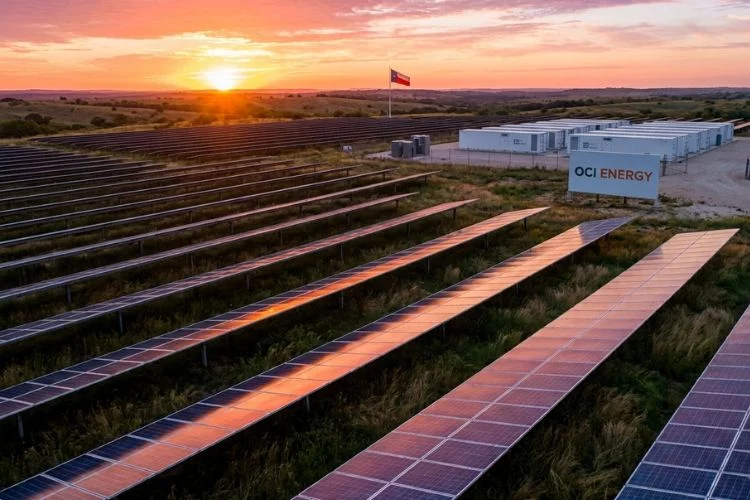
The United States energy landscape is currently defined by a profound paradox: while the demand for clean electricity is surging at an unprecedented rate, the infrastructure required to deliver that power remains mired in a multi-year regulatory and logistical stalemate. Driven largely by the exponential growth of data centers and the electrification of the broader economy, solar photovoltaic (PV) and battery energy storage developers find themselves at a critical juncture. Despite being technically and financially prepared to meet this demand, these developers are increasingly constrained by a national power grid that was never designed for the rapid integration of decentralized, renewable resources.
In a recent appearance on the Factor This podcast, Sabah Bayatli, President and CEO of San Antonio-based OCI Energy, provided a comprehensive look at the operational realities facing utility-scale developers in this high-stakes environment. OCI Energy, a major player in the Texas market and beyond, has carved out a unique position as an independent power producer (IPP) that leverages strategic partnerships with utilities, financial institutions, and technology providers to navigate a landscape fraught with interconnection delays and policy volatility.
The Interconnection Crisis: A Tale of Two Grids
The primary obstacle cited by Bayatli—and echoed by the wider industry—is the generator interconnection process. This is the mechanism by which new power projects are studied, approved, and physically linked to the high-voltage transmission system. Currently, the United States is split into two distinct realities: the Electric Reliability Council of Texas (ERCOT) and the rest of the country.
In the majority of the U.S., interconnection queues are managed under frameworks overseen by the Federal Energy Regulatory Commission (FERC). These processes are often characterized by a "Network Upgrade" model, where developers must wait for exhaustive impact studies that can take upwards of five to eight years to complete. According to data from the Lawrence Berkeley National Laboratory (LBNL), there were over 2,600 gigawatts (GW) of generation and storage capacity sitting in interconnection queues at the end of 2023—a volume nearly double the size of the existing U.S. generation fleet.
"From the interconnection perspective, there is ERCOT, and there is everybody else," Bayatli noted during his conversation with host Paul Gerke. "Across the board, outside ERCOT, interconnection is the number one challenge for any developer. If a project takes eight years just for interconnection to be studied, then I think there is no way you can bring supply to that market. It just does not work."
Texas stands as a notable exception due to its "Connect and Manage" approach. Because ERCOT’s grid is largely contained within state lines, it avoids much of the federal oversight that slows down multi-state regional transmission organizations (RTOs). This streamlined approach has allowed Texas to integrate 102 GW of solar, wind, and storage capacity. However, Bayatli warned that this speed comes with a trade-off: the risk of curtailment. In a "Connect and Manage" system, projects are allowed to plug in quickly, but if the transmission lines become congested, the grid operator may force certain plants to stop producing power. For OCI Energy, however, the risk of potential curtailment is far preferable to the certainty of a decade-long wait in a federal queue.
The Evolution of the U.S. Power Grid: A Chronology of Change
To understand the current bottleneck, it is necessary to look at the timeline of the U.S. energy transition over the last two decades.
- 2000–2010: The Baseload Era. The grid was dominated by centralized coal and nuclear plants. Interconnection was relatively straightforward because new capacity additions were infrequent and usually involved large, predictable thermal plants.
- 2010–2020: The Renewables Surge. Tax credits and falling technology costs led to a boom in wind and solar. Grid operators began to see the first signs of queue backlogs as hundreds of smaller, decentralized projects applied for connection.
- 2021–Present: The Data Center and AI Boom. The emergence of generative AI and the massive expansion of cloud computing have triggered a vertical spike in load growth projections. Simultaneously, the Inflation Reduction Act (IRA) of 2022 provided long-term certainty for renewable investments, leading to a record-breaking influx of new project applications.
- 2023–2024: The Regulatory Response. FERC issued Order No. 2023, a landmark ruling aimed at reforming interconnection procedures by moving from a "first-come, first-served" to a "first-ready, first-served" cluster study process. While intended to clear the backlog, the transition to these new rules has, in the short term, created additional administrative pauses.
Supporting Data: The Scale of the Challenge
The urgency of Bayatli’s message is supported by startling industry data. The 2,600 GW currently in U.S. queues is dominated by solar (over 1,000 GW) and battery storage (over 1,000 GW). Of the projects that entered the queues between 2000 and 2018, only about 19% have actually reached commercial operation.
Furthermore, the cost of interconnecting has skyrocketed. In some regions, such as the Midcontinent Independent System Operator (MISO) or PJM Interconnection, the costs assigned to developers for grid upgrades have doubled or tripled over the last five years. These costs often make projects economically unviable, leading to high withdrawal rates from the queues. This "death spiral" of applications and withdrawals further complicates the planning process for developers like OCI Energy.
Strategic Diversification: The "Eggs and Baskets" Philosophy
Given the volatility of regional markets, Bayatli advocates for a strategy of geographical and technological diversification. He describes this as a "portfolio of eggs" approach, where a developer must carefully distribute investments across different ISOs (Independent System Operators) to mitigate the risk of a single market’s failure.
"You strategize, and you lay your eggs and say: ‘I will have this number of eggs in this market. I will have this number of eggs in that market.’ You study the queue perfectly. You study what they are struggling with today. You make a judgment call on their next steps," Bayatli explained.
This strategy requires constant reevaluation. If a specific RTO implements a new rule that delays a project by three years, the developer must be agile enough to pivot resources to a market like ERCOT or the Western Interconnection where progress might be faster. For OCI Energy, this diversification isn’t just about geography; it’s about balancing short-term solar gains with long-term battery storage reliability.
Policy, Regulation, and the Risk-Sharing Model
Beyond the physical constraints of the grid, the industry is grappling with significant policy uncertainty. This includes fluctuating interest rates, supply chain disruptions, and the looming threat of new tariffs on imported solar components.
Bayatli emphasized that the complexity of modern energy projects means that no single entity can bear the full weight of these risks. In the past, developers might have absorbed certain costs to win a contract, but the scale of current "tariff risk" makes that impossible today.
"No single party will say, ‘I will take the entire tariff risk.’ It’s a huge risk," Bayatli said. He argued that the industry must move toward a collaborative model where developers, utilities, and corporate off-takers (such as the tech giants building data centers) share the burden of regulatory uncertainty. Without such partnerships, projects will remain in limbo as stakeholders wait for "perfect" clarity that may never come.
Broader Impact and Implications for the Five-Year Outlook
The implications of these bottlenecks extend far beyond the balance sheets of developers. If the U.S. cannot solve its interconnection and permitting challenges, several critical consequences are likely to emerge over the next five years:
- Grid Reliability Concerns: As older coal and gas plants retire, the failure to bring new solar and storage online quickly enough could lead to capacity shortfalls, particularly during extreme weather events.
- Economic Stagnation for Tech Hubs: Data centers require massive amounts of firm power. If developers cannot deliver this power, the "AI revolution" could be throttled by a lack of infrastructure, forcing tech companies to look for energy-abundant locations outside the U.S.
- Price Volatility: In markets where supply cannot keep up with load growth, wholesale electricity prices are expected to rise, impacting both industrial and residential consumers.
Despite these challenges, Bayatli remains optimistic about the role of energy storage. He views storage not just as a supplement to solar, but as the "glue" that will hold the future grid together. As grid operators become more comfortable with the dispatchable nature of large-scale battery arrays, the argument for faster interconnection becomes stronger.
Conclusion
The insights shared by Sabah Bayatli underscore a pivotal moment for the American energy sector. The transition to a clean, reliable grid is no longer a question of technology or capital—both are available in abundance. Instead, it is a question of "plumbing." The regulatory and physical pipes of the U.S. electricity system are clogged, and clearing them will require a fundamental shift in how grid operators, regulators, and developers interact.
For companies like OCI Energy, the path forward involves a mixture of tactical patience and strategic boldness. By diversifying their portfolios and insisting on shared risk models, developers can continue to advance projects even in an uncertain environment. However, as Bayatli concluded, the clock is ticking. With data center demand accelerating, the gap between the power we need and the power we can connect must be closed, or the U.S. risks a future where energy scarcity becomes the new normal.
