

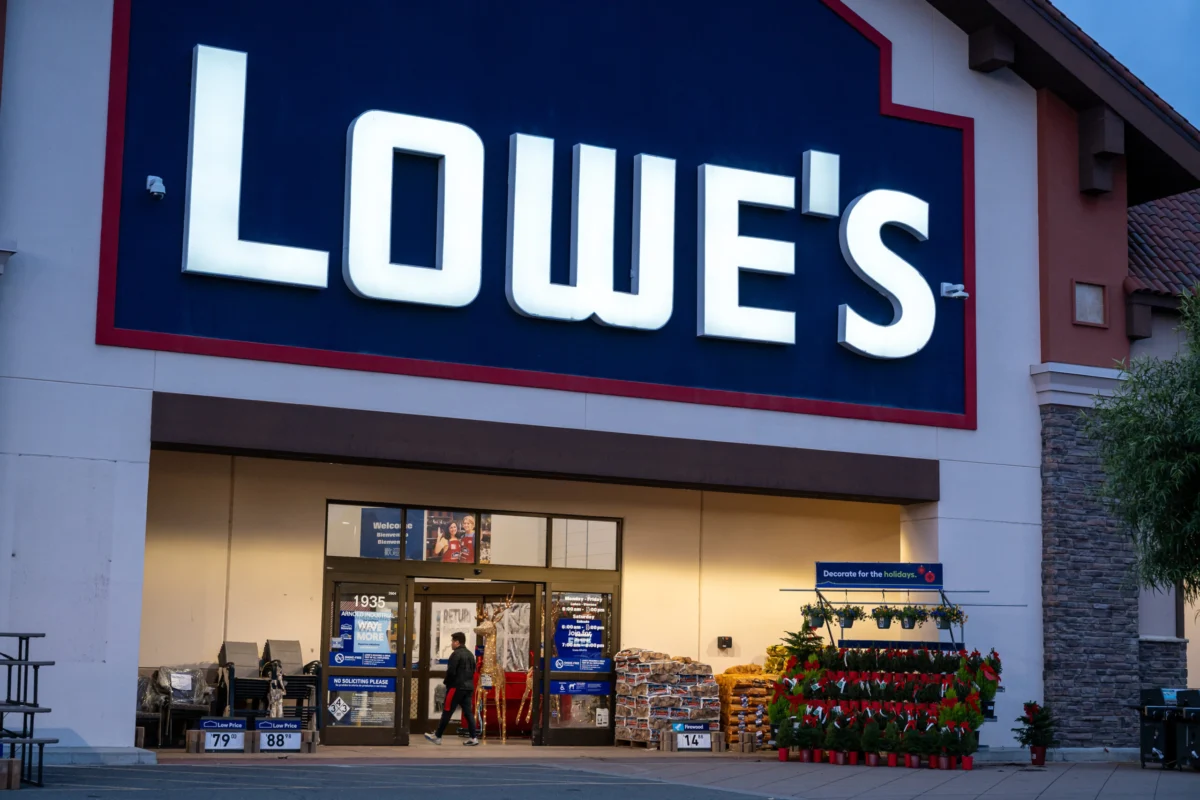
Lowe’s Companies, Inc. (NYSE: LOW) on Wednesday disclosed a mixed performance for its fiscal second quarter, revealing "pressure" on consumer spending for home improvement projects and subsequently revising its full-year financial guidance to the lower end of its previous projections. While the company’s shares experienced an unexpected rise of approximately 2% in midday trading despite the cautious outlook, the underlying report highlighted the ongoing challenges faced by the home improvement sector amidst a shifting macroeconomic landscape. The updated guidance now anticipates total sales of $92 billion, a reduction from the prior range of $92 billion to $94 billion. Similarly, comparable sales are now expected to be flat, narrowing the earlier projection of flat to up 2%. Adjusted earnings per share for the year have been refined to $12.25, down from the previous range of $12.25 to $12.75.
Navigating a Shifting Economic Landscape
For the fiscal quarter that concluded on July 31, Lowe’s reported net income of $2.4 billion, or $4.27 per share, a figure largely consistent with the performance observed in the corresponding period a year prior. When adjusting for one-time factors and incorporating the benefits derived from tariff refunds, the company’s adjusted earnings reached $4.40 per share. These tariff refunds played a notable role, providing an 11-cent boost to earnings per share for the quarter, with CEO Marvin Ellison specifying to CNBC that the company received approximately $80 million in such refunds.
Total sales for the quarter amounted to $25.96 billion, marking an increase from $23.96 billion reported in the prior year. Despite the challenging environment, comparable sales managed a modest rise of 0.2%. This growth was primarily attributed to robust performance within its "Pro" customer segment and its home services offerings, underscoring the effectiveness of Lowe’s diversified strategy. Online sales also demonstrated significant strength, climbing by 15.7%. However, the company acknowledged that this positive momentum was partially offset by broader macroeconomic pressures that continue to weigh on its do-it-yourself (DIY) customer base.
CEO Marvin Ellison expressed satisfaction with the company’s resilience, stating, "We’re really pleased to deliver our fifth consecutive quarter of positive sales comps with strong performance in pro, online and home services, which is our home installation businesses, and just the continued momentum in our total home strategy." This statement underscores Lowe’s commitment to its "Total Home Strategy," a multi-faceted approach designed to capture a wider share of the home improvement market across various customer types and service needs.
Revised Outlook Reflects Macroeconomic Headwinds
The decision to narrow and lower the full-year guidance reflects a pragmatic assessment of current and anticipated economic conditions. The home improvement sector, after experiencing an unprecedented boom during the COVID-19 pandemic, has been grappling with a confluence of factors, including elevated inflation, aggressive interest rate hikes by the Federal Reserve, and a subsequent slowdown in the housing market. These elements collectively contribute to a more cautious consumer sentiment, particularly concerning large discretionary home renovation projects.
The reduction in expected total sales to $92 billion and the flat comparable sales projection signal that Lowe’s anticipates these headwinds to persist through the second half of the fiscal year. This revised outlook, while conservative, aims to set realistic expectations given the prevailing economic uncertainties. The adjusted earnings per share guidance of $12.25 further corroborates this outlook, indicating a tighter margin for error and a heightened focus on operational efficiency and cost management. The company’s management appears to be preparing for a sustained period where consumers will be more discerning with their spending, prioritizing essential repairs over extensive discretionary upgrades.
CEO’s Cautious Tone Amidst Market Uncertainty
Marvin Ellison provided a candid assessment of consumer behavior, telling CNBC that he expects homeowners to remain watchful of their finances for the remainder of the year. "The good news is that we’re not seeing these customers trade down," Ellison remarked, indicating that while spending on projects may be deferred, consumers are not necessarily opting for lower-quality or cheaper alternatives. Instead, he characterized these customers as being "on the sidelines," suggesting a pause in activity rather than a permanent withdrawal. "We’re just anticipating this customer is going to remain cautious in the second half of the year," Ellison elaborated, emphasizing the need for continued strategic agility.
Ellison also touched upon the broader housing market, stating that Lowe’s expects it "is going to gradually recover." This measured optimism contrasts with the immediate challenges, acknowledging the cyclical nature of the real estate sector but also signaling that a robust rebound is not imminent. He stressed that a significant improvement in the company’s outlook hinges on a resurgence of confidence among its DIY customers regarding discretionary spending. "I make it more about that, less about interest rates, or less about housing turnover – we have no control over those things," he explained, underscoring the company’s focus on factors within its influence, such as customer engagement and strategic execution.
Strategic Pillars: Pro, Online, and Home Services Drive Growth
The strength in Lowe’s Pro customer segment, online sales, and home services is a testament to the company’s "Total Home Strategy." This strategy, which began to gain traction in the years leading up to the pandemic, aims to create a seamless experience for all types of customers, from professional contractors to casual DIYers. The Pro segment, which caters to contractors and skilled tradespeople, typically demonstrates greater resilience during economic downturns. These customers often undertake essential repairs, maintenance, and smaller renovation jobs that are less susceptible to fluctuations in consumer confidence or housing market volatility. Lowe’s has invested heavily in tailored services, dedicated Pro desks, and enhanced inventory for this crucial customer base, positioning itself as a preferred partner.
The significant increase in online sales, up 15.7%, highlights the enduring shift towards digital commerce in the retail landscape. Lowe’s has invested in improving its e-commerce platform, enhancing features like buy online, pick up in-store, and expanding its delivery capabilities. This digital acceleration allows the company to reach customers who prefer the convenience of online shopping, even as foot traffic to physical stores might vary. Home services, encompassing installation and other professional services, also proved to be a strong performer. This segment capitalizes on homeowners’ desire for professional assistance with complex projects, providing a full-service solution that extends beyond just selling products. These three pillars collectively demonstrate Lowe’s ability to adapt and find growth avenues even when the broader DIY market faces macroeconomic pressures.
Competitive Pressures and Tariff Refund Strategy
Ellison addressed "heightened competitive pressures" observed specifically in July, a period that likely saw increased promotional activity across the retail sector. He characterized this impact as "transitory" rather than a "new normal," attributing it to competitors utilizing tariff refund dollars to drive top-line growth through aggressive pricing. Tariffs, largely imposed on goods from China during previous administrations, have resulted in companies seeking and receiving refunds, creating a unique strategic decision point for retailers: use these funds to lower prices and gain market share, or retain them to bolster profitability.
Lowe’s, according to Ellison, chose not to engage in such aggressive pricing actions, deeming it not "prudent" to do so. "We feel strongly that we want to deliver strong profitability for our shareholders and make sure that we don’t follow any aggressive pricing action," he stated. This strategic choice underscores a commitment to maintaining healthy profit margins and delivering long-term shareholder value, even if it means foregoing short-term market share gains from price wars. However, Ellison did indicate a potential shift in strategy for the latter half of the year. As the company continues to receive its tariff refunds, he added, Lowe’s will "think first about how we’re going to share those with the customer," suggesting a possible future allocation of these funds to stimulate demand or reward loyal customers in a more controlled and strategic manner. This nuanced approach aims to balance competitive positioning with financial prudence.
The Broader Housing Market Context
Lowe’s results and outlook are inextricably linked to the broader health of the U.S. housing market. The market has been in a state of flux since the unprecedented boom of 2020-2021, which saw record low interest rates and surging demand drive home prices to historic highs. Beginning in early 2022, the Federal Reserve embarked on an aggressive campaign of interest rate hikes to combat inflation. The benchmark federal funds rate, which influences mortgage rates, rose from near zero to over 5%, pushing average 30-year fixed mortgage rates above 7% at various points. This rapid increase significantly impacted affordability, sidelining many potential homebuyers and leading to a substantial cooling of the market.
Existing home sales have plummeted, with many homeowners reluctant to sell and forfeit their low-interest mortgage rates, leading to historically low inventory levels. While new home construction has shown some resilience, it’s not enough to offset the overall slowdown. This "frozen housing market," as described by Lowe’s rival Home Depot, directly affects home improvement retailers. Fewer home sales mean fewer "move-in ready" projects, which traditionally drive significant spending on renovations and upgrades. Moreover, homeowners who stay put are also becoming more cautious, deferring large-scale discretionary projects in favor of essential repairs or smaller, more manageable updates, especially as their household budgets are squeezed by inflation and higher borrowing costs.
Home Depot, in its own earnings report the day prior, echoed Lowe’s sentiments, confirming that customers were not returning to big projects and that the company continued to operate in "frozen housing market conditions." This convergence of observations from the two industry giants highlights a systemic challenge, reinforcing the notion that the current pressures are market-wide rather than company-specific.
Consumer Behavior in a High-Inflation Environment
The cautious consumer behavior identified by Lowe’s CEO is a direct consequence of the persistent inflationary environment and the subsequent tightening of financial conditions. While the Consumer Price Index (CPI) has shown signs of moderation from its peak, prices for everyday goods and services, including food, energy, and housing, remain elevated compared to pre-pandemic levels. This persistent inflation erodes purchasing power, forcing households to allocate a larger portion of their budgets to necessities, thereby reducing the funds available for discretionary spending.
Higher interest rates not only impact mortgages but also make borrowing more expensive for other forms of credit, such as credit cards and personal loans, which many consumers use to finance home improvement projects. This increased cost of capital acts as a further deterrent to undertaking large-scale renovations. The "on the sidelines" behavior described by Ellison indicates that while consumers may still aspire to home improvement, they are delaying projects until economic conditions stabilize, inflation recedes further, or interest rates become more favorable. This wait-and-see approach underscores a broader shift in consumer psychology, prioritizing financial security and flexibility in an uncertain economic climate.
Analyst Reactions and Market Performance
The rise in Lowe’s shares by approximately 2% in midday trading, despite the trimmed guidance and cautious outlook, might initially appear counterintuitive. However, this market reaction can be interpreted in several ways. Firstly, it’s possible that the "mixed" quarterly results contained elements that exceeded analyst expectations, particularly in key strategic areas like the Pro segment and online sales. The fact that comparable sales managed a positive, albeit small, increase in a challenging environment could have been viewed as a sign of underlying resilience.
Secondly, the market may have already "priced in" a more severe downturn for the home improvement sector, given the well-publicized struggles of the housing market and the broader economic slowdown. Therefore, the revised guidance, while lower, might have been within the range of what more pessimistic analysts had anticipated, or even better than the worst-case scenarios. The clarity provided by the company, coupled with a commitment to maintaining profitability over aggressive price wars, could also have reassured investors about management’s strategic discipline. Analysts from firms like LSEG, who typically survey expectations, likely adjusted their models to account for these macroeconomic realities. The stock’s performance could suggest that investors are valuing Lowe’s strategic execution in a tough environment and its focus on shareholder returns, rather than solely reacting to a conservative near-term outlook.
Outlook and Future Implications
Looking ahead, Lowe’s faces a delicate balancing act. The company must continue to leverage the strengths of its "Total Home Strategy," particularly its robust Pro and online channels, to offset the slowdown in DIY discretionary spending. The gradual recovery of the housing market, as anticipated by Ellison, remains a critical factor for a more significant rebound in the sector. However, the timeline and pace of this recovery are subject to macroeconomic variables beyond Lowe’s control, including the Federal Reserve’s monetary policy decisions and broader economic growth trends.
The strategic decision regarding tariff refunds in the second half of the year will also be closely watched. A carefully executed plan to "share those with the customer" could provide a targeted stimulus to demand without sacrificing profitability. Ultimately, Lowe’s resilience will depend on its ability to adapt to changing consumer preferences, maintain operational efficiency, and continue innovating its offerings. While the immediate outlook is marked by caution, the company’s performance in its strategic growth areas suggests a foundational strength that could position it well for when consumer confidence and the housing market eventually regain their momentum. The insights from Lowe’s, mirrored by its key competitor, offer a crucial barometer for the health of the American consumer and the broader economic landscape.
