

The recent announcement of a strategic collaboration between Japanese automotive giant Honda and a prominent Tata Group company signals a pivotal moment for the Indian automotive landscape, underscoring a growing trend of global automakers forging local partnerships to navigate the complexities and immense potential of this rapidly expanding market. This move, mirroring successful strategies previously employed in China, highlights the increasing criticality of such alliances in managing substantial capital expenditures and accelerating market penetration within the fiercely competitive South Asian arena. The collaboration is not merely a handshake between two industry titans; it represents a calculated maneuver to leverage complementary strengths, share the burgeoning costs of electrification and technological advancement, and ultimately, capture a larger share of India’s burgeoning vehicle market.
The Evolving Automotive Landscape in India
India’s automotive sector has long been a focal point for global manufacturers, driven by its vast population, a burgeoning middle class with increasing disposable income, and a government actively promoting domestic manufacturing and electric vehicle adoption. However, this growth trajectory is not without its challenges. The capital investment required for research and development, particularly in the transition to electric mobility, is astronomical. Furthermore, establishing a robust manufacturing and distribution network across a country as geographically diverse and economically varied as India demands significant financial commitment and local market understanding.
For international players, breaking into and expanding within India has historically involved substantial investments in wholly-owned subsidiaries, joint ventures with varying degrees of control, or licensing agreements. While these models have yielded success for some, the escalating pace of technological change, coupled with intense domestic and international competition, has necessitated a more agile and cost-effective approach. The Honda-Tata alliance appears to be a direct response to this evolving reality, prioritizing shared risk and accelerated market access.
Unpacking the Honda-Tata Collaboration
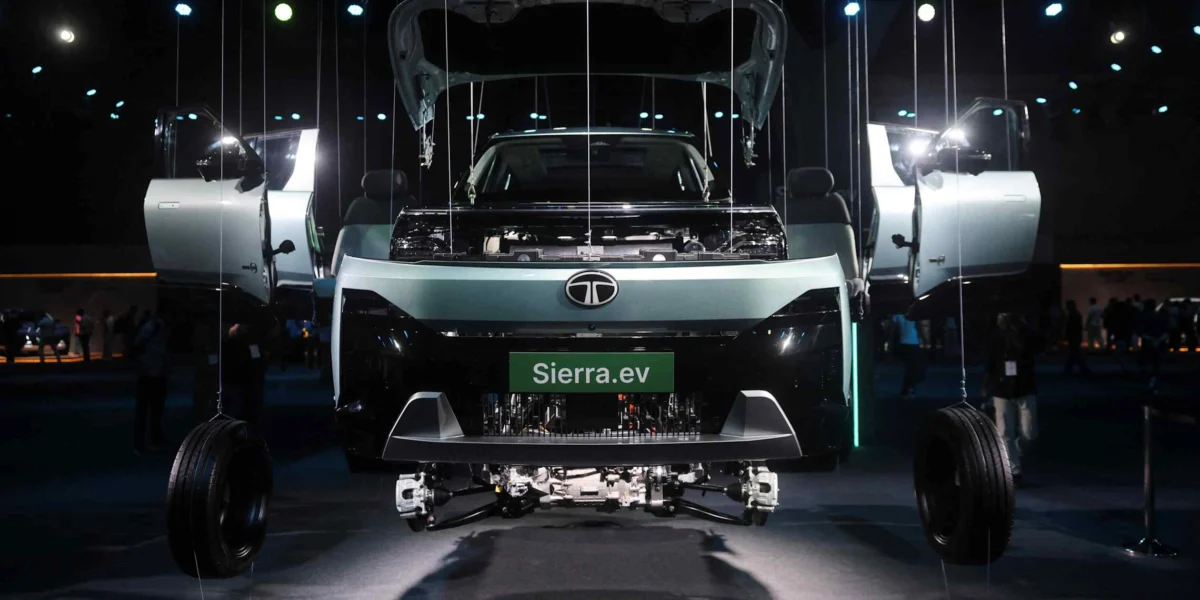
While specific details of the Honda-Tata partnership are still emerging, industry analysts widely anticipate a focus on shared platforms, joint development of electric vehicle (EV) technologies, and potentially, co-production of components or even entire vehicle models. For Honda, a company with a strong global reputation for engineering and reliability, partnering with Tata – a conglomerate with deep roots in India, extensive manufacturing capabilities, and a pioneering presence in the Indian EV market through its subsidiary Tata Passenger Electric Mobility (TPEM) – offers a compelling proposition.
Tata Motors, through TPEM, has already established itself as a leader in India’s nascent EV segment, with models like the Nexon EV and Tiago EV gaining significant traction. This existing infrastructure, market understanding, and consumer acceptance provide Honda with a considerable shortcut to market entry and expansion in the electric space. Conversely, Honda’s advanced powertrain technologies, its established global brand equity, and its experience in developing and marketing a wide range of vehicles can significantly benefit Tata’s ambitions for both domestic and international growth.
The strategic rationale for such a collaboration is multifaceted. Firstly, capital expenditure management is paramount. Developing new EV platforms, battery technologies, and advanced driver-assistance systems (ADAS) requires billions of dollars. By pooling resources, Honda and Tata can share these immense R&D costs, mitigating individual financial burdens and accelerating the pace of innovation. This is particularly crucial as global regulatory pressures and consumer demand for cleaner mobility solutions intensify.
Secondly, market access and penetration are significantly enhanced. Tata’s established dealer network, its understanding of local consumer preferences, and its existing manufacturing footprint in India provide Honda with immediate access to a vast customer base and efficient operational capabilities. This reduces the time and investment typically required for a foreign entity to build such an extensive network from scratch.
Thirdly, technological synergy is a key driver. Honda’s expertise in areas such as hybrid powertrains and internal combustion engine efficiency, combined with Tata’s strides in EV battery management and software integration, can lead to the development of more comprehensive and competitive automotive solutions. This could involve co-development of next-generation EV architectures, intelligent charging solutions, and connected car technologies.
A Precedent Set in China
The parallels drawn to China are not coincidental. In the late 20th and early 21st centuries, foreign automakers flocked to China, recognizing its immense market potential. Faced with strict regulations and a desire to foster domestic industry, China mandated joint ventures, requiring foreign companies to partner with local entities. These collaborations, though sometimes fraught with challenges, ultimately proved instrumental in the rapid growth of the Chinese automotive sector, enabling foreign brands to scale production, understand local tastes, and transfer technology. Companies like Volkswagen, General Motors, and BMW all established successful, albeit sometimes complex, joint ventures that allowed them to dominate the Chinese market.
The Honda-Tata alliance can be viewed as a modern iteration of this strategy, adapted for the Indian context and driven by the accelerating shift towards electrification. India, much like China did decades ago, is actively encouraging domestic manufacturing and technological development. The government’s policies, such as the Faster Adoption and Manufacturing of Hybrid and Electric Vehicles (FAME) scheme and Production Linked Incentive (PLI) schemes, further incentivize such collaborations.
Timeline and Background of Strategic Alliances in India
The automotive industry in India has a history of joint ventures and strategic partnerships. Early in its liberalization, foreign manufacturers like Suzuki (through Maruti Suzuki) and Hyundai entered the Indian market with strong local partners, which proved to be a highly successful model. More recently, collaborations have focused on specific segments or technologies. For instance, Mahindra & Mahindra has had various partnerships over the years, and other global players have explored joint ventures to share the burden of investment and navigate regulatory landscapes.
The trend towards EV-focused partnerships is a more recent phenomenon. As battery costs began to decline and government incentives for EVs increased, a wave of new players and existing manufacturers began investing heavily in electric mobility. Tata Motors, with its early and decisive move into the EV space, has positioned itself as a natural partner for international companies seeking to accelerate their electrification plans in India. Honda’s decision to align with a Tata Group company, rather than pursuing a wholly-owned subsidiary or a less integrated partnership, indicates a recognition of Tata’s established leadership and comprehensive ecosystem in the burgeoning EV sector.
Data-Driven Insights into the Indian Automotive Market
The sheer scale of the Indian market makes it an irresistible proposition.
- Passenger Vehicle Sales: India is one of the largest automobile markets globally. In the fiscal year 2023-24, passenger vehicle sales in India surpassed 4 million units, a significant increase from previous years and indicating a strong upward trend.
- Electric Vehicle Growth: The EV segment, though starting from a smaller base, is experiencing exponential growth. In FY23, India sold over 1.2 million EVs across all segments (including two-wheelers, three-wheelers, and commercial vehicles), with passenger EVs accounting for a substantial and growing portion. Projections suggest this number could reach several million units annually within the next five to seven years.
- Capital Investment: Developing a new vehicle platform can cost upwards of $1 billion, while establishing a new manufacturing plant can require several hundred million dollars. The cost of battery R&D and manufacturing is also substantial, running into billions of dollars globally. Shared R&D and manufacturing facilities can therefore lead to savings of hundreds of millions of dollars for each partner.
- Market Share: Tata Passenger Electric Mobility (TPEM) currently holds a dominant share, often exceeding 70-80%, in the Indian passenger EV market. This significant market leadership makes them an attractive partner for any global automaker looking to gain a foothold in this segment.
Potential Implications and Broader Impact
The Honda-Tata alliance is likely to have several significant implications for the Indian automotive industry and its consumers:
Increased Competition and Innovation
This partnership will undoubtedly intensify competition in the Indian automotive market, particularly in the EV segment. The combined technological prowess and market reach of Honda and Tata could lead to a faster introduction of advanced EVs with competitive pricing and features, benefiting consumers. It may also spur other manufacturers to consider similar strategic alliances to remain competitive.
Accelerated Electrification
By pooling resources and expertise, the collaboration can accelerate the development and deployment of electric vehicles in India. This could help India meet its ambitious EV adoption targets and contribute to reducing vehicular emissions and improving air quality in its rapidly urbanizing cities.
Manufacturing and Supply Chain Development
The alliance could lead to the expansion of manufacturing capabilities and the development of a more robust local supply chain for EV components, including batteries, electric motors, and power electronics. This aligns with the government’s ‘Make in India’ initiative and can create significant employment opportunities.
Impact on Other Automakers
Existing players in the Indian market, both domestic and international, will need to reassess their strategies in light of this significant alliance. Companies that have not yet invested heavily in electrification or local partnerships might find themselves at a disadvantage. This could lead to further consolidation or new strategic alignments within the industry.
Global Strategy for Honda
For Honda, this partnership signifies a strategic pivot to leverage external resources and local expertise in a key growth market. It allows them to participate aggressively in India’s EV transition without the full upfront investment and operational risks associated with a solely independent venture. This model could potentially be replicated in other emerging markets.
Official Reactions and Industry Outlook
While formal statements from Honda and Tata are likely to be measured and focused on the mutual benefits of the collaboration, industry observers are optimistic. A spokesperson for Tata Motors, speaking anonymously due to the sensitive nature of ongoing discussions, indicated that the company is "always open to strategic partnerships that align with our vision for future mobility and enhance our capabilities in serving the Indian market." Similarly, while Honda has not released detailed comments, the move is seen as a testament to their commitment to India and their recognition of the evolving global automotive landscape.
The collaboration between Honda and Tata represents a forward-looking strategy, acknowledging the substantial capital requirements of the automotive industry’s transition and the immense, yet complex, potential of the Indian market. It is a clear indication that in the era of electrification and rapidly advancing technology, strategic alliances are no longer an option, but a necessity for sustained growth and competitive advantage. The success of this partnership will be closely watched, potentially setting a new benchmark for how global automakers approach expansion and innovation in one of the world’s most dynamic automotive markets.
