

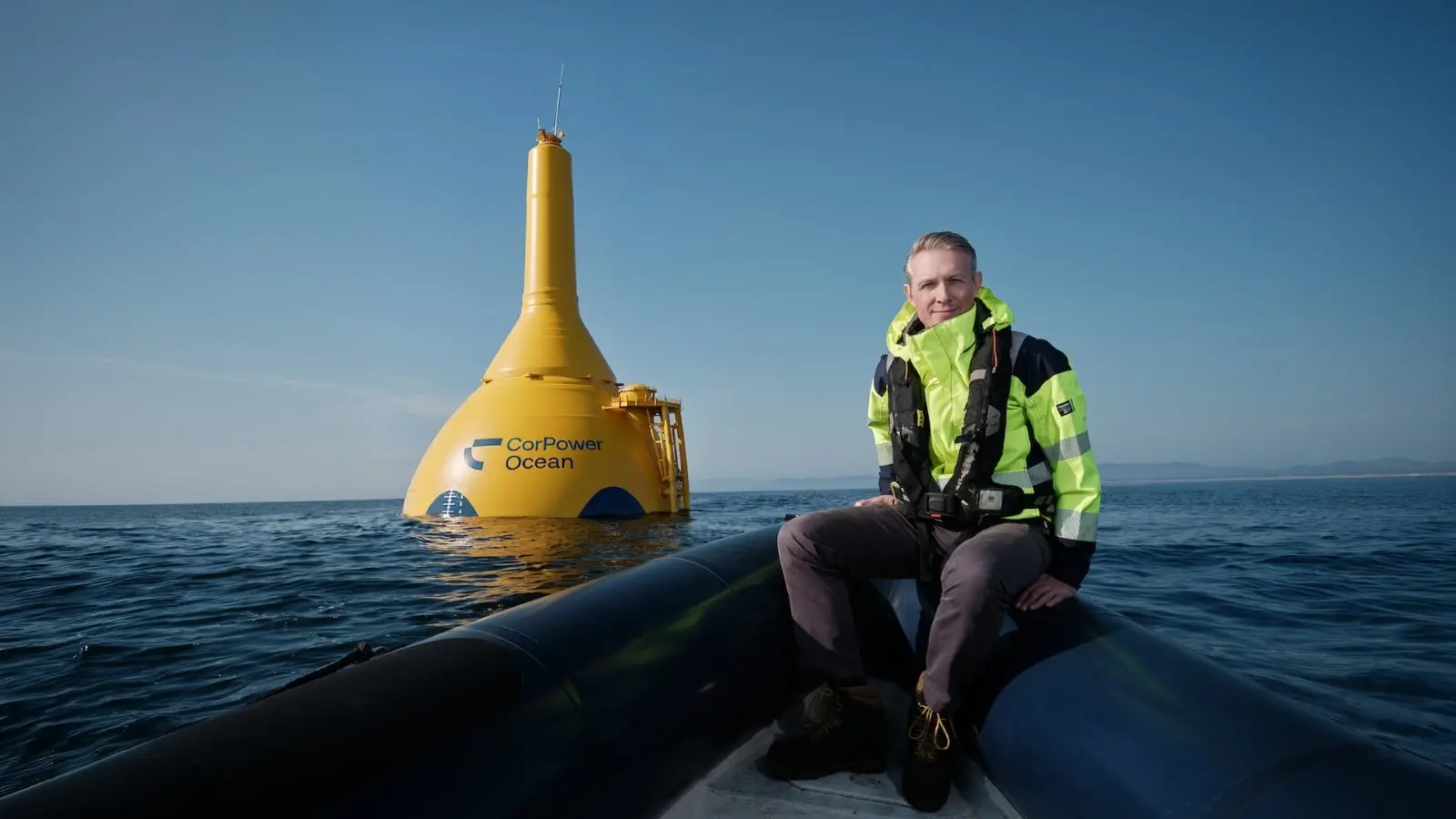
The global transition toward a diversified renewable energy portfolio reached a significant milestone this week as CorPower Ocean announced it has received a world-first prototype certification for its Wave Energy Converter (WEC) from DNV, the international independent assurance and risk management provider. This certification, granted under the rigorous DNV-SE-0120 standard, represents a definitive shift for the marine energy sector, moving wave power from a theoretical and experimental stage into the realm of proven, bankable technology suitable for utility-scale deployment. The certification serves as a formal verification that CorPower’s C4 system adheres to the highest international requirements for structural integrity, reliability, and operational safety, addressing long-standing investor concerns regarding the survivability of equipment in the world’s most hostile maritime environments.
For decades, the wave energy industry has struggled to achieve the level of standardization and risk mitigation found in the solar and wind sectors. The awarding of this prototype certificate is widely viewed by industry analysts as the "seal of approval" necessary to unlock large-scale project financing. By meeting the DNV-SE-0120 standard, CorPower Ocean has demonstrated that its technology can withstand the immense physical stresses of the ocean while maintaining consistent power output, a dual requirement that has historically been the primary barrier to commercialization.
A Seven-Year Journey Toward Technical Validation
The path to this certification was neither swift nor simple, reflecting the complexity of engineering for the marine environment. The process spanned seven years of continuous collaboration between CorPower Ocean and DNV, beginning with the establishment of a comprehensive "design basis" for the CorPower C4 device. This foundational stage required the company to define the environmental conditions, load cases, and safety factors that would govern the device’s lifecycle.
The certification process involved an exhaustive review by DNV experts, covering every facet of the technology’s development. This included initial concept development, detailed engineering specifications, and sophisticated structural strength and fatigue analyses. Beyond the digital and theoretical models, DNV supervised the manufacturing and assembly phases to ensure quality control. The rigorous assessment continued through dry testing—where the device’s mechanical and electrical systems were pushed to their limits in a controlled environment—and followed the system into the water for installation, operations, and maintenance evaluations.
Crucially, the certification validates the device’s performance under extreme conditions. The CorPower C4 was required to demonstrate its ability to not only survive but remain functional when subjected to storm waves reaching heights of up to 18.5 meters. This "storm-resilient" capability is a cornerstone of the C4’s design, utilizing a unique phase-control technology that allows the device to tune and detune itself in response to sea states, effectively shielding it from the destructive forces of the largest swells.
Technical Specifications and Engineering Resilience
The CorPower C4 is a point-absorber type wave energy converter, which consists of a buoy tethered to the seabed. It converts the rising and falling motion of waves into electricity through a specialized drive train. What distinguishes the C4 from its predecessors is its "WaveSpring" technology, a pneumatic system that enhances the buoy’s motion to increase energy capture in regular waves, while also providing the ability to "dampen" the motion during storms.
The DNV certification confirms that the structural fatigue analysis provided by CorPower Ocean is accurate, ensuring the device can operate for its intended 20-year lifespan without catastrophic failure. The materials used, ranging from high-strength composites for the hull to specialized alloys for the internal power take-off (PTO) system, were all subject to DNV’s verification. This level of technical scrutiny is essential for the marine environment, where salt-water corrosion, biofouling, and constant kinetic stress pose constant threats to mechanical integrity.
Economic Implications and the Path to Bankability
The announcement has resonated strongly within the financial community. Historically, wave energy projects have been viewed as high-risk "venture" investments rather than "infrastructure" investments. The DNV certification fundamentally alters this perception.
Patrik Möller, co-founder and CEO of CorPower Ocean, emphasized that this milestone marks the transition of wave energy into a "proven and bankable" asset class. This sentiment was echoed by Santiago Gil of Santander Alternative Investments, who noted that the certification validates years of rigorous engineering and significantly reduces the technology risk profile. For institutional investors like Santander, such third-party validation is a prerequisite for moving toward commercial deployment at scale.
The reduction in perceived risk is expected to lower the cost of capital for wave energy projects. As interest rates for project financing are closely tied to technical certainty, the DNV certificate acts as a catalyst for more competitive Levelized Cost of Energy (LCOE) figures. CorPower Ocean has set an ambitious target to deliver wave energy solutions that are cost-competitive with offshore wind and solar by 2030, a goal that now appears increasingly attainable.

Strategic Global Projects: Portugal and Scotland
The certification comes at a critical time as CorPower Ocean advances its industrial-scale wave farms in two of Europe’s most promising marine energy markets: Portugal and Scotland. These projects serve as the primary proving grounds for the newly certified C4 technology.
The HiWave-5 and Viana Wave Projects (Portugal)
In Portugal, the HiWave-5 project is already making headlines. Located at the Aguçadoura site, the project is grid-connected and represents one of the first instances of a wave energy converter feeding power directly into a national transmission system at an industrial scale. The Portuguese coastline, known for its consistent and powerful Atlantic swells, provides an ideal environment for demonstrating the C4’s efficiency.
Building on the success of HiWave-5, CorPower is developing the Viana Wave project. This expansion aims to leverage existing maritime infrastructure to create a 10MW wave energy farm. By utilizing shared subsea cables and grid connection points, the project demonstrates how wave energy can be integrated into broader "blue economy" hubs, potentially co-located with floating offshore wind farms to maximize grid utilization.
The Valiant Project (Scotland)
In the United Kingdom, CorPower Ocean is focusing its efforts on the Valiant project, situated at the European Marine Energy Centre (EMEC) in Orkney, Scotland. The Billia Croo site at EMEC is world-renowned for having some of the highest wave energy densities in the world, making it a "worst-case scenario" testing ground for marine technology.
The Valiant project is supported by a €19 million ($22 million) grant from the EU’s Horizon Europe program. It is designed to function as a 5MW standalone wave farm, showcasing the UK’s potential to lead the world in marine renewables. The project not only tests the hardware but also refines the logistics of installation and maintenance in the challenging conditions of the North Sea.
Industry Reactions and Broader Sector Impact
The maritime and renewable energy sectors have reacted with cautious optimism to the news. Claudio Bittencourt Ferreira, Project Manager at DNV Renewables Certification, noted that DNV has supported the marine energy sector for over two decades, and this certification represents a "stepping stone" for the entire industry.
Industry analysts suggest that the success of CorPower Ocean could trigger a "halo effect," encouraging other developers to pursue similar rigorous certification paths. The move toward standardization is seen as essential for the development of a global supply chain. If wave energy converters can be manufactured, certified, and insured according to a common set of standards, the industry can achieve the economies of scale that led to the rapid cost reductions in the solar and wind sectors over the last decade.
Furthermore, wave energy offers a unique value proposition for grid stability. Unlike solar energy, which peaks during the day, or wind energy, which can be highly intermittent, wave energy is more predictable and often peaks at different times than other renewables. This "anti-correlation" makes wave power an ideal partner for balancing the grid, reducing the need for expensive battery storage or fossil-fuel backup.
Future Outlook: Scaling to 2030 and Beyond
As CorPower Ocean moves forward, the focus will shift from prototype validation to mass production and fleet deployment. The data gathered from the Portuguese and Scottish sites will be used to refine the C5 and subsequent generations of the technology.
The global potential for wave energy is staggering. The International Energy Agency (IEA) has previously estimated that the theoretical potential of wave energy is roughly 8,000–80,000 TWh/year, which is the same order of magnitude as the world’s total electricity consumption. While only a fraction of this is technically and economically recoverable, the certification of the CorPower C4 suggests that the "recoverable" portion is much larger than previously thought.
The road to 2030 will require continued policy support, including feed-in tariffs and dedicated "pot" funding in renewable energy auctions, to ensure that wave energy can bridge the gap from pilot farms to full commercial saturation. However, with the DNV prototype certification now in hand, CorPower Ocean has cleared the most significant technical hurdle in its history, providing a clear signal to the world that the power of the oceans is finally ready to be harnessed at scale.
