

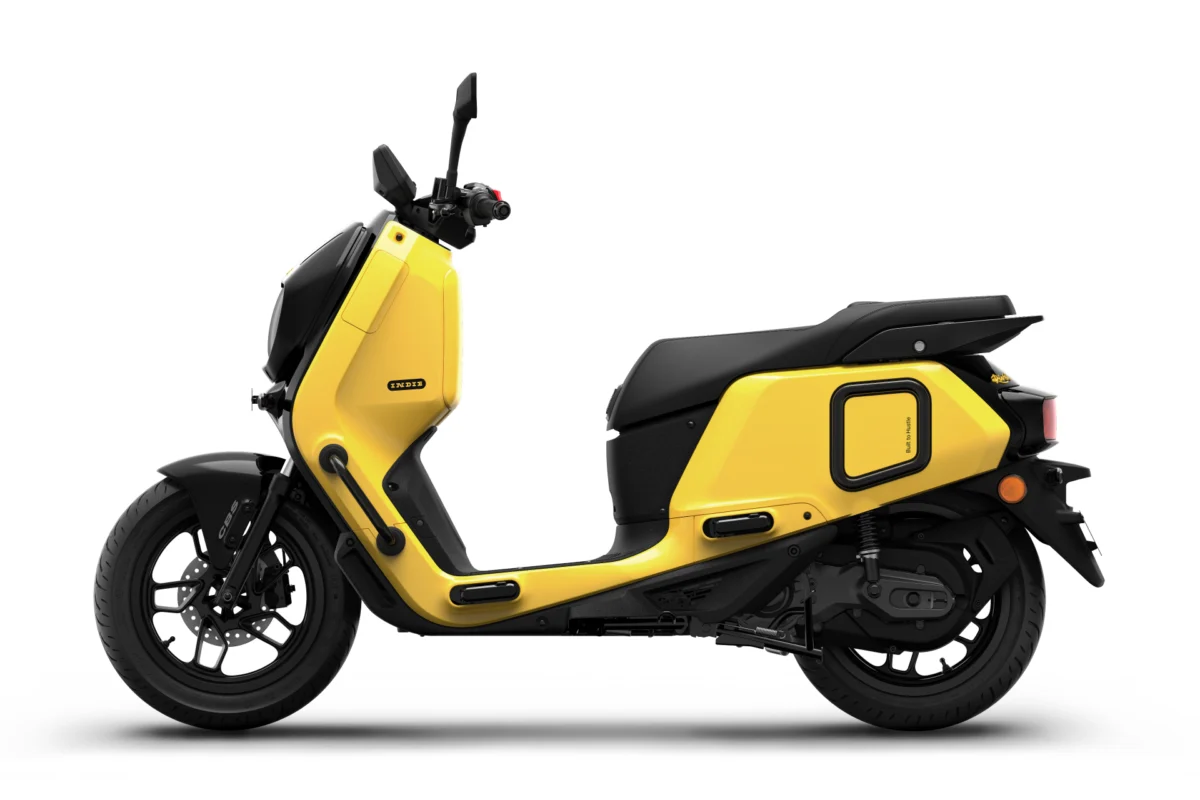
Bengaluru, India – River, a burgeoning Indian electric vehicle (EV) startup, announced on Wednesday that it has successfully raised $120 million in a Series C funding round. This significant capital injection is earmarked to substantially scale its manufacturing capabilities and accelerate its strategic expansion plans, marking a pivotal moment in the company’s trajectory within India’s dynamic electric two-wheeler market. The funding round was spearheaded by prominent Indian investors Elev8 Venture Partners and Claypond Capital, signaling a robust domestic confidence in River’s growth potential and innovative approach. A diverse consortium of participants joined the round, including Singularity AMC, Anicut Capital, 360 ONE Asset, JIF Capital, and HDFC AMC, alongside continued support from existing international backers such as Yamaha Motor, Al-Futtaim Group, and Mitsui.
This latest financing round brings River’s total capital raised to an impressive $144 million since its inception in 2021. According to Aravind Mani, founder and CEO of River, less than 10% to 12% of the total amount comprised venture debt, with the vast majority of the equity funding being primary capital. Notably, the round involved no secondary share sales, underscoring the investors’ direct commitment to fueling the company’s operational growth and future development. Mani emphasized that this round represents a critical shift in investor focus, moving from backing early-stage product development and technology to supporting the company’s demonstrated ability to scale production and market penetration.
River’s Strategic Edge: The Utility-Focused Indie Moped
Founded in 2021, River has quickly carved out a distinct niche within India’s intensely competitive and rapidly expanding electric two-wheeler market. Unlike many of its rivals who often pursue multiple consumer segments, River has strategically built its business around a single, highly differentiated electric moped model known as the Indie. Launched in 2023, the Indie is pitched as a utility-focused vehicle, designed to cater to a specific segment of the market that prioritizes practicality, durability, and versatility. This deliberate focus has allowed River to streamline its operations, concentrate its research and development efforts, and optimize its manufacturing processes for a singular product, a strategy that appears to be yielding significant results.
The Indie, priced at approximately ₹155,000 (around $1,630), offers a claimed range of about 99 miles (160 kilometers) on a single charge, a crucial factor for daily commuters and small businesses. Its design incorporates features that enhance utility, such as ample storage space, robust build quality, and optional accessories that further boost its functionality for various use cases. Aravind Mani highlighted that River’s typical customers are self-employed individuals aged between 28 and 35, a demographic that often relies on two-wheelers for both personal commuting and professional tasks, making the Indie’s utility-first approach particularly appealing. This targeted strategy has enabled River to avoid direct, head-on competition across multiple consumer segments with established players like Ather Energy and Ola Electric, as well as legacy manufacturers such as Bajaj Auto and TVS Motor, who have also made significant strides in the EV space.
Navigating the Manufacturing Gauntlet: Scaling Production Amidst Rapid Growth
One of River’s most significant achievements over the past year, as articulated by CEO Aravind Mani, has been its remarkable success in learning how to scale manufacturing. The transition from nascent production volumes to substantial output has been a steep learning curve, requiring continuous innovation and operational optimization. "There was a point in time when we were making 20 vehicles a day. Today we make 300 vehicles a day, and that scale-up has not been easy. This is the steepest learning curve for any company out there," Mani stated, underscoring the inherent complexities of establishing and expanding an automotive production line.
The company’s current manufacturing facility, situated on the outskirts of Bengaluru, has undergone recent upgrades, boosting its capacity to approximately 10,000 vehicles per month. River anticipates fully utilizing this plant by early next year, signaling the urgent need for further expansion. To address this burgeoning demand and support its ambitious growth projections, River plans to commence construction on a new, state-of-the-art manufacturing facility within the next two months, pending finalization of the location. The first phase of this expansive new plant is slated for commissioning by mid-2027 and is projected to have an impressive annual production capacity of about 700,000 to 800,000 vehicles. This substantial increase in capacity is critical for River to meet its long-term goals and solidify its position as a major player in the Indian EV market.
A Deep Dive into India’s Electric Two-Wheeler Boom
India’s electric two-wheeler market stands as the largest source of EV adoption in the country, a testament to the nation’s unique transportation landscape where two-wheelers dominate personal mobility. This segment has been experiencing explosive growth, driven by a confluence of factors including rising fuel prices, increasing environmental awareness, and proactive government support. The Indian government, through initiatives like the FAME (Faster Adoption and Manufacturing of Electric Vehicles) II scheme and various state-level subsidies, has provided significant incentives for both manufacturers and consumers, fostering a conducive environment for EV proliferation. Additionally, Production Linked Incentive (PLI) schemes for advanced chemistry cell battery manufacturing and automotive components are further strengthening the domestic EV ecosystem, encouraging localization and reducing dependence on imports.
The market is characterized by intense competition, with a mix of agile startups and established automotive giants vying for market share. While new entrants like River, Ather Energy, and Ola Electric are pushing the boundaries with innovative designs and direct-to-consumer models, traditional players such as Bajaj Auto (with its Chetak EV) and TVS Motor (with iQube) are leveraging their extensive dealer networks and manufacturing expertise to adapt to the electric transition. This competitive landscape, while challenging, also fuels innovation, drives down costs, and ultimately benefits the consumer. The sheer scale of the Indian two-wheeler market, estimated to sell over 15 million units annually, presents an enormous opportunity for electric vehicles to capture a significant share, making it a highly attractive sector for investors and entrepreneurs alike.

Investor Confidence and Shifting Paradigms
The composition and focus of River’s Series C funding round reveal a significant evolution in investor sentiment and strategy within the Indian EV sector. Aravind Mani noted that earlier financings primarily supported product development and foundational technology. In contrast, the current wave of investors, predominantly Indian funds, are betting on the startup’s proven ability to scale operations and market traction. This shift indicates a maturing market where investors are increasingly seeking companies that have moved beyond the ideation phase and demonstrated tangible results in production, sales, and customer adoption.
Mani also offered a poignant observation regarding the perception of the Indian EV opportunity among global investors. While Silicon Valley investors, for instance, have long recognized the macroeconomic potential of India’s vast market, many have, according to Mani, underestimated the nuances of local consumer behavior, particularly concerning electric two-wheelers. "They understand macroeconomics. What they don’t understand is the customer behavior," he explained. This insight underscores the importance of a deep, localized understanding of factors such as price sensitivity, charging infrastructure availability, multi-purpose usage of vehicles, and cultural preferences that significantly influence EV adoption in India. The active participation and leadership of Indian investors in River’s latest round suggest a growing appreciation for these localized market dynamics and a greater willingness to back companies that exhibit this intrinsic understanding.
Financial Trajectory and Future Projections
River’s financial performance provides a compelling narrative of its rapid ascent. Driven by the rising sales of its Indie moped, the company reported a staggering 330% increase in revenue for the fiscal year ended March 2026. Monthly revenue has now reached approximately ₹1 billion, equivalent to about $11 million, indicating a strong commercial momentum. This robust growth underscores the market’s receptiveness to River’s utility-focused product and its expanding retail footprint.
Looking ahead, River has set ambitious targets for operational profitability. Aravind Mani projects that the company expects to become operationally profitable once its monthly production reaches between 20,000 and 25,000 vehicles, a milestone he aims to achieve by the 2028-29 fiscal year. Gross margins, which are currently approaching double digits, are expected to improve significantly as production scales up and economies of scale are realized. This financial discipline, coupled with aggressive expansion plans, positions River for sustainable long-term growth and a strong competitive standing.
Expansion Blueprint: New Models and Retail Footprint
While River’s single-model focus has been a strategic advantage in its initial growth phase, enabling efficient resource allocation and manufacturing optimization, the company is now poised to diversify its product portfolio. Mani revealed plans to introduce two additional models starting from next year, indicating a readiness to broaden its appeal to other consumer segments or specific use cases. However, he cautioned that the immediate restriction for this expansion is manufacturing capacity. "The restriction is the capacity. I don’t have capacity to do one more model today in my current factory," Mani stated, reiterating the critical importance of the upcoming new manufacturing facility.
Beyond product diversification, River is also aggressively expanding its retail presence across India. The company currently operates through more than 75 stores nationwide and has ambitious plans to significantly grow this network. The retail footprint is projected to expand to over 200 stores by March 2027, with a further increase to approximately 400 outlets by March 2028. This rapid expansion of its sales and service network is crucial for enhancing market penetration, improving customer accessibility, and providing robust after-sales support, all vital components for sustained growth in a competitive market.
Broader Implications for India’s EV Ecosystem
River’s successful funding round and aggressive expansion plans carry broader implications for India’s burgeoning EV ecosystem. It signifies a strong vote of confidence from investors, particularly domestic ones, in the long-term viability and profitability of electric mobility in the country. The focus on the two-wheeler segment, which is the backbone of Indian transportation, highlights the immense potential for electrification to bring about a transformative shift in urban and rural mobility.
The company’s strategy of focusing on a utility-oriented product also suggests a maturing market where specialized needs are being addressed, moving beyond generic consumer offerings. This differentiation can inspire other startups to explore niche markets and innovative solutions, further diversifying the EV landscape. As River scales its manufacturing and retail operations, it will not only contribute to India’s ambitious decarbonization goals but also create significant employment opportunities across the manufacturing, sales, and service sectors. The journey of River, from a startup founded in 2021 to a significant player poised for rapid expansion, serves as a compelling case study of the entrepreneurial spirit and immense potential embedded within India’s electric vehicle revolution.
