

The recent security incident involving the Coldcard hardware wallet has sent ripples of unease throughout the Bitcoin industry, prompting a period of somber introspection regarding the practices and assumptions underpinning retail Bitcoin security. The full ramifications of this event may not become apparent for many months, but initial reactions suggest a significant shift in user behavior and a renewed debate about the future of self-custody.
Reports indicate that a substantial amount of Bitcoin, estimated by some to be over 11,000 BTC, has been moved to custodial exchanges in the wake of the vulnerability. This exodus represents a flight from one of the most widely trusted hardware wallets in the Bitcoin ecosystem. The exploit, which remains an active threat, has already resulted in the theft of over 1,300 BTC, with some estimates placing the losses as high as 2,000 BTC. While users can still take steps to mitigate their risk, the ongoing nature of the exploit has fueled widespread concern.
Coinkite, the manufacturer of Coldcard, and its prominent founder, NVK, had long championed a rigorous approach to securing Bitcoin private keys. Their hardware wallets were designed with extreme caution, employing air-gapped architecture to prevent malware exfiltration via USB. They opted for low-resolution LED screens over complex touch interfaces and developed innovative protocols like BBQR and NFC integration for data transfer, minimizing direct physical contact between the device and computers. These "paranoid" design choices were instrumental in establishing Coldcard’s reputation for robust security.
However, the recent exploit did not involve sophisticated, James Bond-esque hacking techniques. Instead, the attackers exploited a fundamental flaw in the generation of cryptographic keys, specifically the entropy, or randomness, used to create these secrets. While Coldcard devices were designed to utilize high-quality entropy sources, a firmware bug meant that the generated Bitcoin private keys were, in fact, mathematically predictable. This vulnerability, which had remained undetected for years, festered as the product gained popularity, culminating in last week’s widespread losses.
The "Just Buy the ETF" Counterpoint and the Enduring Case for Self-Custody
Despite the significant financial losses experienced by a dedicated segment of the Bitcoin community, many in the industry maintain that abandoning self-custody would undermine Bitcoin’s core integrity. The foundational principles outlined in Satoshi Nakamoto’s white paper clearly envisioned Bitcoin as a solution to the systemic risks and flaws inherent in traditional, trusted third-party financial intermediaries. The 2008 global financial crisis, a stark reminder of these vulnerabilities, serves as a perpetual case study for the dangers of centralized financial hierarchies.
The historical context of monetary policy and government intervention further strengthens the argument for self-custody. In 1933, President Franklin D. Roosevelt’s Executive Order 6102 effectively mandated the confiscation of privately held gold by the U.S. government. Citizens were compelled to sell their gold to banks at an artificially fixed price of $20.67 per ounce, under threat of severe penalties, including hefty fines and imprisonment. This order resulted in the surrender of over 14 million troy ounces of gold to the banking system, with an estimated 200 million additional ounces held within American banks at the time.
The U.S. abandonment of the gold standard, a move that dealt a significant blow to gold’s role as a global pricing mechanism, ushered in an era of fiat currency. This transition allowed governments worldwide to devalue their currencies through inflation, a hidden tax on citizens. The price of gold, artificially suppressed at $20.67 per ounce, was subsequently repriced to $35 per ounce in 1934 with the passage of the Gold Reserve Act, representing a 69% devaluation of the dollar. This shift effectively granted central banks the power to print money at will, a capability that fueled subsequent global events, including World War II, which was financed through fiat currency.
The Echoes of 1933 in Modern Debt and Devaluation
Fast forward a century, and the consequences of this shift are starkly evident. U.S. government debt now incurs nearly a trillion dollars in annual interest payments alone, with the total debt approaching $40 trillion and a debt-to-GDP ratio exceeding 123%. These figures are arguably the predictable, albeit devastating, outcomes of abandoning a sound monetary standard. Concurrently, the purchasing power of the U.S. dollar has plummeted over the past century, even as technological efficiency has soared. This divergence is only possible in a monetary system characterized by persistent devaluation.
The historical confiscation of gold in a rising economic power like the United States might have been less effective if civilian ownership and custody of gold had been more widespread and decentralized. Many individuals who complied with Executive Order 6102 had their gold stored in banks, with their holdings easily identifiable. If gold had been more easily transferable in large quantities, if private ownership records had been less transparent, and if the state had not been able to leverage the banking system to facilitate confiscation, the global economy might have been less susceptible to the prolonged economic strains that followed.
Bitcoin as Engineered Gold: Designed for Resilience
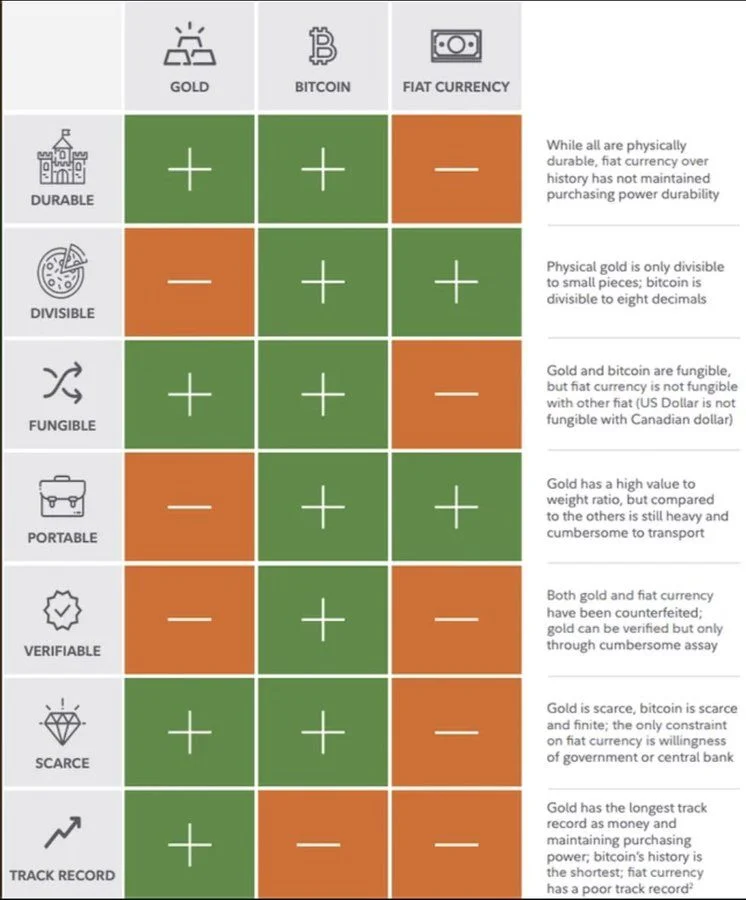
Bitcoin presents a compelling alternative to gold, specifically engineered to address its historical vulnerabilities and resist such state-level confiscation. The aspiration within the Bitcoin community is to establish Bitcoin as a global monetary standard, where a significant portion of the global economy adopts it as its primary store of value. In such a future, Bitcoin would supplant gold, restoring sound money principles to the capitalist order.
To achieve this status, Bitcoin must demonstrably outperform gold. Its digital nature offers inherent advantages. The control of private keys, while currently facing scrutiny due to the Coldcard incident, holds the potential for far greater security than any physical vault. Multi-signature technology, for instance, enables distributed storage of private keys, requiring a predefined threshold of approvals to authorize transactions. This allows for multi-jurisdictional, multinational vaults that can resist the coercive power of a state seeking to implement a modern-day confiscation.
The inherent transferability of Bitcoin means that significant value can be moved discreetly and efficiently, without the logistical complexities of physically transporting gold or relying on trusted intermediaries. Individuals, armed with current and future technological tools, may be able to obscure their Bitcoin holdings, similar to how it has already served as a lifeline for activists in conflict zones like Ukraine, enabling them to safeguard their wealth from oppressive state control.
A Moment of Reckoning and the Enduring Principle
The failure of a major hardware wallet manufacturer represents a significant setback for the Bitcoin industry, underscoring the ongoing challenges in achieving perfect security. However, the fundamental qualities of money, as identified by thinkers like Aristotle, remain immutable. In this context, Bitcoin continues to stand as a unique and potentially revolutionary monetary asset, despite the current challenges. The incident, while painful, serves as a catalyst for innovation and a renewed commitment to the principles of decentralization and individual financial sovereignty. The path forward will undoubtedly involve a deeper examination of security protocols, an increased focus on user education, and the development of even more resilient self-custody solutions, ensuring that the promise of Bitcoin as a truly independent store of value is not diminished.
