

In a significant development poised to reshape the architecture of global data transmission, Endeavor Optical Networks (EON), a new startup emerging from stealth mode, has announced securing $10.75 million in seed funding from leading venture capital firms General Catalyst and Andreessen Horowitz. Founded in May, EON is embarking on an ambitious mission to establish a network of laser-equipped spacecraft in orbit, designed to link data centers worldwide and address the growing vulnerabilities and bandwidth demands currently straining the internet’s foundational infrastructure. This initiative signals a potential paradigm shift away from the reliance on often-fragile undersea fiber optic cables, offering a robust, high-capacity alternative for hyperscalers and AI labs.
The Undersea Internet: A Foundation Under Pressure
The digital backbone of our interconnected world largely relies on an intricate, yet inherently vulnerable, network of undersea fiber optic cables. These critical conduits crisscross the world’s oceans, facilitating the immense flow of data between continents. Hyperscale cloud providers, which operate vast data centers globally, depend heavily on these cables to move colossal amounts of data back and forth, powering everything from streaming services to artificial intelligence computations.
However, this vital infrastructure is not without its significant drawbacks. Undersea cables are notoriously difficult and costly to install, requiring specialized ships and years of planning. More critically, they are highly susceptible to damage. According to industry reports, hundreds of cable faults occur annually, primarily due to fishing trawlers, anchor drags, and natural disasters like earthquakes or volcanic activity. Repairing these cables is a complex and expensive undertaking, often costing between $1 million and $3 million per incident and taking weeks, if not months, to complete. During such outages, data rerouting can lead to increased latency, service disruptions, and substantial economic losses for businesses and regions affected. The sheer scale of data traffic, which continues to grow exponentially—projected to exceed several zettabytes annually in the coming years—only exacerbates the pressure on this finite and exposed infrastructure. The current global network boasts over 500 active submarine cables spanning more than 1.3 million kilometers, underscoring the monumental challenge of maintaining and expanding this brittle network.
The Quest for Alternative High-Bandwidth Solutions
The limitations of undersea cables have long spurred the search for alternative transmission methods. Traditional radio frequency (RF) transmissions, while capable of spanning vast distances, fundamentally lack the bandwidth required to match the terabit-per-second speeds of fiber optics. This bottleneck has largely ruled out most conventional wireless approaches, both terrestrial and orbital, for high-capacity data center interconnectivity. This is where optical communication, specifically using lasers, enters the picture as a promising frontier.
Lasers offer the potential for extremely high data rates due to their higher frequency compared to radio waves, allowing for more data to be packed into each transmission. While the concept of laser communication (laser comms) isn’t new, its practical application for high-bandwidth, space-to-ground links has faced significant technical hurdles, primarily related to atmospheric interference.
EON’s Vision: Laser Comms from Orbit
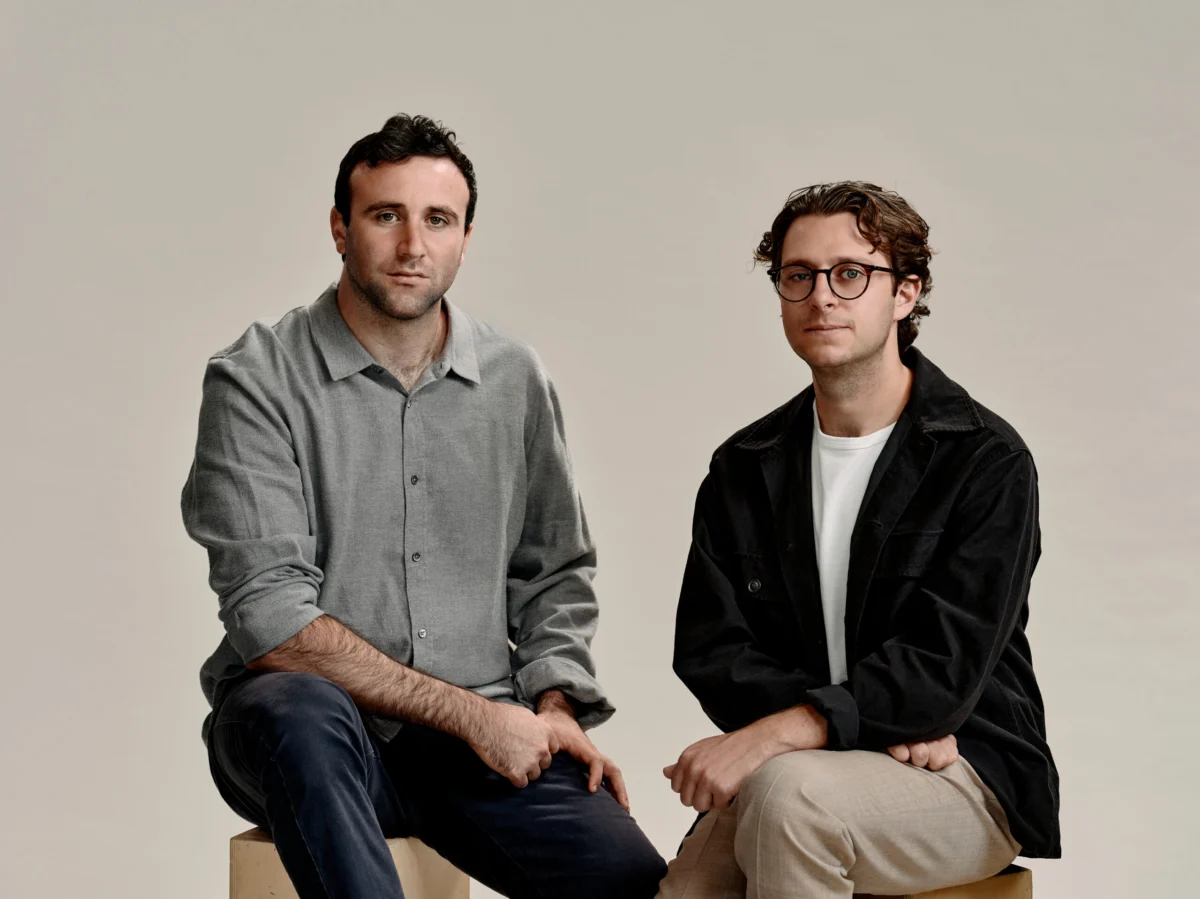
Endeavor Optical Networks is placing a significant bet on overcoming these challenges. Co-founded by CEO Charlie Horowitz and CTO Tyler Presser, EON aims to build a dedicated orbital network specifically optimized for data center connectivity. Unlike many existing satellite communications networks, which often prioritize last-mile broadband to individual users and typically offer speeds in the gigabits per second (Gbps) range, EON’s ambition is to deliver speeds comparable to or exceeding undersea fiber.
"Most satellite communications networks, even those that provide broadband internet service, aren’t robust enough to carry data at 200 terabits a second or more, the speed of undersea fiber," notes the original statement. EON, however, is setting an initial throughput goal of 2.4 terabits per second (Tbps), a monumental leap beyond current commercial satellite capabilities. This aggressive target highlights the company’s focus on the demanding requirements of inter-data center traffic, which needs not only high bandwidth but also low latency and high reliability.
Advances Paving the Way for Space-to-Ground Laser Comms
The feasibility of EON’s plan is underpinned by recent technological breakthroughs in optical technology and more powerful satellite designs. NASA has been a pioneer in demonstrating the potential of laser comms. For instance, in 2023, NASA’s Artemis II Moon mission successfully utilized laser communication to beam back high-definition data from deep space, showcasing the scalability and robustness of the technology for long-distance, high-bandwidth applications. This demonstration achieved impressive data rates, proving that the concept is no longer confined to theoretical discussions but is actively being implemented in demanding space environments.
Beyond NASA, several private space companies, including York Space Systems, Kepler Communications, and Cailabs, have also made strides, demonstrating successful laser links between Earth orbit and ground stations. These achievements, while significant, typically aimed for throughputs around 2.5 Gbps. EON’s ambitious target of 2.4 Tbps represents an order of magnitude increase, necessitating a specialized approach and advanced engineering.
Overcoming Atmospheric Distortion: EON’s "Secret Sauce"
One of the most formidable challenges for space-to-ground laser communication is atmospheric distortion. As a laser beam traverses Earth’s atmosphere, it can be scattered, absorbed, and distorted by atmospheric turbulence, aerosols, and critically, clouds. These effects can significantly degrade signal quality and even completely block transmissions, making reliable, continuous service difficult.
EON acknowledges this core problem and is developing proprietary solutions to mitigate its impact. While the specifics remain part of their "secret sauce," Charlie Horowitz emphasizes that addressing atmospheric interference is central to their strategy. Their plan involves building a network of approximately 20 satellites, each capable of providing a dedicated link between two continents. To ensure reliability, EON will strategically choose ground stations in diverse geographical regions, serving local data centers and Content Delivery Networks (CDNs). This redundancy, coupled with sophisticated real-time weather data integration, will allow EON to dynamically route traffic and maintain a reliable link even when localized atmospheric conditions are unfavorable. This multi-site, weather-aware approach is crucial for achieving the uptime and reliability demanded by enterprise-grade customers.
Target Market: Hyperscalers and AI Labs
EON is specifically targeting customers with the most voracious data appetites: hyperscale cloud providers (such as Google, Amazon, Microsoft, and Meta) and cutting-edge AI labs. These entities move more data than anyone else, constantly optimizing their global networks for speed, resilience, and cost-effectiveness. The focus is on "underserved or expensive routes" – lengthy transcontinental connections like France to Australia, or regions lacking extensive existing infrastructure, such as routes between Africa and South America. These are markets where traditional cable infrastructure is either prohibitively expensive to lay, prone to extended repair times, or simply non-existent.
EON plans to sell dedicated capacity, offering customers full control over their data transit. This dedicated model provides a distinct advantage over shared networks, guaranteeing bandwidth and performance critical for latency-sensitive applications like real-time AI processing, distributed computing, and rapid data replication across global data centers. The global AI market, in particular, is experiencing unprecedented growth, driving demand for high-speed, low-latency data transfer capabilities that traditional infrastructure struggles to meet efficiently.
Development Roadmap and Technical Prowess
EON’s immediate roadmap involves utilizing its recent seed funding to establish a state-of-the-art optics lab, expand its engineering team, and conduct rigorous ground tests. The company aims to launch a demo satellite around the end of 2027. This inaugural spacecraft is projected to deliver an optical downlink throughput of at least 800 gigabits per second (Gbps) and potentially reach a full terabit, setting a new benchmark for space-to-ground optical communication.
Achieving these ambitious targets will necessitate "careful engineering." EON’s strategy involves focusing its internal resources on developing the core optical communications terminal, allocating spending judiciously to "exquisite" components like the gimbals that precisely point the laser beams. For the satellite platforms themselves, EON plans to leverage powerful, off-the-shelf satellite buses from established manufacturers, a cost-effective approach that accelerates deployment. This strategy mirrors that of other successful space startups, allowing EON to focus on its core intellectual property without reinventing the entire satellite platform. Charlie Horowitz’s previous experience as chief of staff and director of special projects at Apex Space, a satellite bus manufacturer, provides valuable insight into this approach.
A Team of Seasoned Innovators
The leadership and technical bench at EON boast impressive credentials. Charlie Horowitz, the CEO, brings a strong background from Apex Space, where he served as chief of staff and director of special projects. Ian Cinnamon, CEO of Apex Space, lauded Horowitz, stating, "Charlie is a force of nature—he can move seamlessly from strategy to the details required to make something real. Charlie is the ideal founder, and I invested personally because I believe deeply in Charlie and what he’s building at EON with Tyler."
CTO Tyler Presser is a PhD astronautical engineer with experience planning frontier missions for NASA, bringing deep expertise in space systems and complex engineering challenges. The technical team is further strengthened by key hires such as Michael David Francois, a long-time Google executive with a focus on global network infrastructure, and Wesley Baxter, an optics engineer who most recently contributed to Amazon’s Project Kuiper, its Low Earth Orbit (LEO) satellite network. This blend of space engineering, optical expertise, and global network infrastructure experience positions EON with a formidable technical foundation.
Jeannette zu Fürstenburg, the General Catalyst partner who led the investment, articulated the fund’s confidence, seeing EON’s mission as uniting two of General Catalyst’s key investment themes: AI and resilience. "I don’t worry about demand," she told TechCrunch, emphasizing the clear market need. "I think all of that will solve for itself. It’s really all about can you actually get this thing into space in the time that we discussed? We really think about founder-product fit, [Horowitz] is just the right caliber of guy to go after a problem like this." This investor perspective underscores the perceived market readiness and the belief in the team’s execution capabilities.
The Competitive Landscape: A Race to Orbit
EON is not alone in recognizing the potential of orbital laser communication for high-capacity data transfer. Blue Origin, Jeff Bezos’s space company, has announced its own ambitious plans for TeraWave. This proposed network envisions an astounding 5,048 satellites, aiming to provide speeds of up to 6 Tbps to large-scale users. Blue Origin’s plan is significantly more ambitious in scale and target throughput, but correspondingly, it will require a much longer timeline for launch and full deployment.
EON’s strategy of deploying a smaller, more focused fleet of around 20 satellites positions it for potentially faster development and deployment. While both companies will face many of the same fundamental technical challenges, EON’s leaner approach might allow it to reach operational status more quickly, establishing a foothold in the market. This competitive environment highlights the growing industry consensus on the necessity and feasibility of space-based optical communication for the next generation of global data infrastructure.
Broader Impact and Industry Perspectives
The emergence of companies like EON signals a pivotal shift in how we envision the internet’s future. Increased reliance on space-based links could significantly enhance the resilience of global data networks, offering redundant pathways that are less susceptible to terrestrial and subsea disruptions. This has profound implications for geopolitical stability, reducing dependence on vulnerable choke points and potentially bridging digital divides in regions historically underserved by traditional infrastructure.
However, industry experts also caution against overoptimism. Caleb Henry, director of research at Quilty Space, offers a balanced perspective: "Data centers have high standards for quality and redundancy. Satellite internet is just now progressing from a technology of last resort to dependable, high-bandwidth infrastructure. That’s not to say it will be impossible to make satellites optimized for data center connectivity, just that it will be harder and take longer than most entrepreneurs suggest." Henry’s statement underscores the rigorous requirements of data center operators and the significant engineering and operational challenges that EON and its competitors must overcome to meet these exacting standards.
Despite these challenges, a project like EON’s is seen as significantly more practical and impactful compared to more speculative ideas such as building data centers themselves in space. The focus remains on efficiently moving data between terrestrial data centers, where the vast majority of computing resources reside.
Charlie Horowitz encapsulates EON’s pragmatic philosophy: "We have one rule at the company: no physics problems. There’s a market that exists today that we can go serve. Down the road, we’ll go and take on more as it comes, but we know that this is a problem that exists today, that’s only getting worse. That’s our bet—more data is moving terrestrially than ever." This statement reflects a clear understanding of the immediate market need and a grounded approach to tackling complex engineering problems. As the global demand for data continues its relentless ascent, EON’s orbital laser network represents a bold and potentially transformative step towards building a more robust, resilient, and high-capacity internet for the future.
