

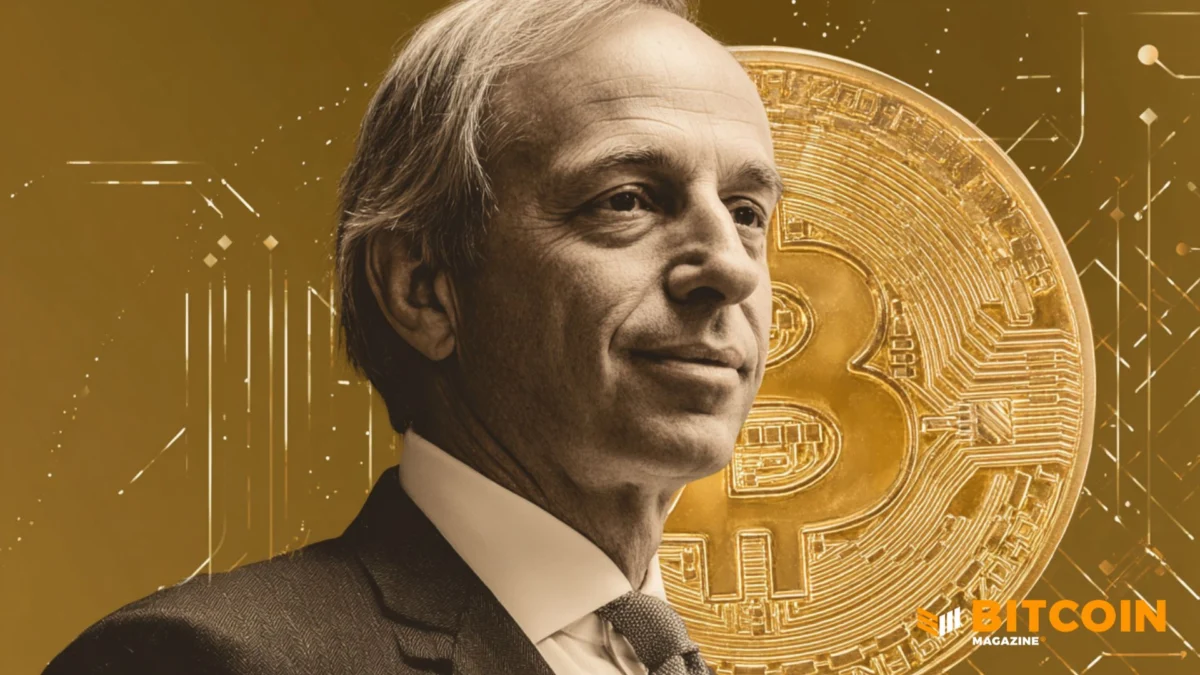
Legendary investor and founder of Bridgewater Associates, Ray Dalio, has reiterated his cautious stance on Bitcoin, confirming that the cryptocurrency constitutes a mere 1% of his extensive investment portfolio. In a recent appearance on the "Diary of a CEO" podcast, Dalio elaborated on his preference for gold as a more robust and reliable store of value, underscoring his long-held skepticism regarding Bitcoin’s long-term viability as a primary investment asset.
Dalio’s journey with Bitcoin has been one of gradual acknowledgment rather than enthusiastic adoption. While he has, over the years, expressed reservations about its investment potential, his recent admission that it resides within his portfolio marks a notable evolution in his public commentary. However, this modest allocation clearly signals that his confidence remains firmly anchored in traditional assets.
Dalio’s Concerns: Technology, Regulation, and Control
During his podcast discussion, Dalio articulated several key concerns that contribute to his preference for gold over Bitcoin. He acknowledged Bitcoin as a form of "money that can’t be printed," a characteristic that appeals to some investors seeking an alternative to inflationary fiat currencies. However, he immediately countered this by highlighting potential technological vulnerabilities.
"There are technologies that can hurt it," Dalio stated, specifically referencing the potential impact of quantum computing. This concern centers on the possibility that advanced quantum computers could, in theory, break the cryptographic underpinnings of Bitcoin, thereby compromising its security and immutability. While the timeline for such advanced quantum computing capabilities remains a subject of debate among experts, Dalio’s foresight incorporates this potential future threat.
Furthermore, Dalio pointed to the inherent transparency and regulatory oversight that governments can exert over digital currencies. "It can be monitored by governments and so on, and it could be taxed," he explained. This observation touches upon a fundamental difference between decentralized cryptocurrencies like Bitcoin and traditional monetary systems. Governments possess the legal and technological means to track, regulate, and tax transactions within their jurisdictions, a level of control that is more challenging to achieve with a pseudonymous, global digital asset.
He extended this observation to digital currencies more broadly, suggesting a similarity in their susceptibility to governmental influence. This perspective aligns with the broader debate about the role of regulation in the cryptocurrency space, with many governments worldwide exploring or implementing frameworks to govern digital assets.
The Enduring Appeal of Gold
Dalio’s preference for gold was unequivocally stated. When asked about his portfolio allocation, he gestured metaphorically towards gold bars, asserting, "I prefer that… rather than the Bitcoin." This is not a new sentiment for the billionaire investor. As far back as 2020, Dalio publicly lauded gold as an essential component of any diversified portfolio, while simultaneously cautioning against Bitcoin’s extreme volatility, deeming it too unstable to function effectively as money.
His rationale for favoring gold is rooted in its historical role as a store of value and a hedge against economic uncertainty. Gold has been recognized as a precious metal and a medium of exchange for millennia, accumulating a track record of preserving wealth through various economic cycles, geopolitical upheavals, and inflationary periods. Its tangible nature, relative scarcity, and global acceptance contribute to its enduring appeal among investors seeking stability.
A Look at Dalio’s Bitcoin History and Allocation
Dalio’s admission of holding Bitcoin, albeit a minimal 1%, represents a significant shift from his earlier pronouncements. For an extended period, he remained a vocal skeptic, often highlighting Bitcoin’s speculative nature and lack of intrinsic value compared to traditional assets. His recent disclosures confirm that this minimal allocation has been consistent over at least the past year, as he previously acknowledged the 1% figure in reports from last year.
This measured approach to Bitcoin acquisition suggests that Dalio views it less as a foundational investment and more as a small experiment or a way to maintain exposure to a nascent asset class that is gaining traction, while still hedging his bets with a significantly larger allocation to gold.
Government Intervention and Central Bank Stance
Dalio further elaborated on the potential for government intervention to impact Bitcoin’s trajectory. He posited that if governments decide they "don’t want" Bitcoin, they possess the power to take action. This could manifest in various forms, including outright bans, stringent regulations, or efforts to undermine its adoption.
"Central banks will not own any significant amount of that because of the reason I said: they want their transactions to be private and in their control," Dalio explained, referring to the inherent transparency and potential for external influence on Bitcoin. Central banks, as custodians of national currencies and monetary policy, typically prioritize assets that offer them complete control over transactions and data. Bitcoin’s decentralized and pseudonymous nature inherently conflicts with this objective.
The Shifting Landscape of Institutional Acceptance
Despite Dalio’s reservations, the broader financial landscape has witnessed a growing acceptance of Bitcoin among traditional investors and Wall Street institutions. This trend has been amplified by the increasing involvement of major asset managers and financial giants.
BlackRock, the world’s largest asset manager, stands as a prime example. In recent years, BlackRock CEO Larry Fink has publicly acknowledged Bitcoin, describing it as an "international asset" and even a means of "digitizing gold." This endorsement from such a prominent figure signals a significant validation of Bitcoin as a legitimate investment class, moving it beyond its early reputation as a fringe digital curiosity.
The introduction of Bitcoin spot exchange-traded funds (ETFs) in the United States by major players like BlackRock, Fidelity, and others has further democratized access to the cryptocurrency for a wider range of investors. These products provide a regulated and familiar investment vehicle, allowing individuals and institutions to gain exposure to Bitcoin without the complexities of direct ownership and self-custody. The approval and subsequent trading of these ETFs represent a pivotal moment in Bitcoin’s integration into the mainstream financial system.
Data and Market Context
To contextualize Dalio’s views, it’s important to consider the historical performance and market dynamics of both Bitcoin and gold.
Bitcoin: Launched in 2009, Bitcoin’s price has experienced extreme volatility. It has seen parabolic rises followed by significant corrections. For instance, in late 2021, Bitcoin reached an all-time high of nearly $69,000 per coin, only to fall to lows around $16,000 in late 2022. As of early 2024, it has seen a resurgence, trading in the $40,000-$50,000 range, influenced by factors such as ETF approvals and macroeconomic sentiment.
Gold: Gold’s price, while also subject to market fluctuations, has historically exhibited less dramatic swings compared to Bitcoin. It is often viewed as a safe-haven asset, its price tending to rise during periods of economic uncertainty or geopolitical instability. Its price performance is measured in decades and centuries, demonstrating its long-term store of value characteristics. For example, gold prices have steadily climbed over the past two decades, reflecting its role as a hedge against inflation and currency devaluation.
Dalio’s cautious approach is informed by this data, recognizing that while Bitcoin offers the potential for significant gains, it also carries a considerably higher risk profile than gold.
Broader Implications and Future Outlook
Ray Dalio’s persistent preference for gold over Bitcoin, despite holding a small allocation to the latter, reflects a broader strategic divergence within the investment community. While some investors, particularly younger generations and those in emerging markets, have embraced Bitcoin as a digital store of value and a hedge against traditional financial systems, seasoned investors like Dalio often approach it with a more traditional risk-management lens.
His concerns about quantum computing and government regulation are not isolated. They represent ongoing debates within the tech and finance sectors. The development of quantum-resistant cryptography is an active area of research, and governments worldwide are grappling with how to effectively regulate and tax digital assets.
The contrasting views of figures like Dalio and Larry Fink highlight the evolving narrative around Bitcoin. Fink’s framing of Bitcoin as "digital gold" suggests a potential convergence, where Bitcoin could carve out a niche as a digital alternative to a traditional asset, while still acknowledging its unique technological properties.
However, Dalio’s perspective serves as a crucial reminder that the mainstream adoption of Bitcoin is not without its hurdles. For it to truly rival gold as a primary store of value in the eyes of all major investors, it may need to demonstrate greater price stability, clearer regulatory frameworks, and demonstrable resilience against future technological advancements and governmental pressures. Until then, the cautious approach, exemplified by Dalio’s modest allocation, is likely to persist among a significant segment of the investment world.
