

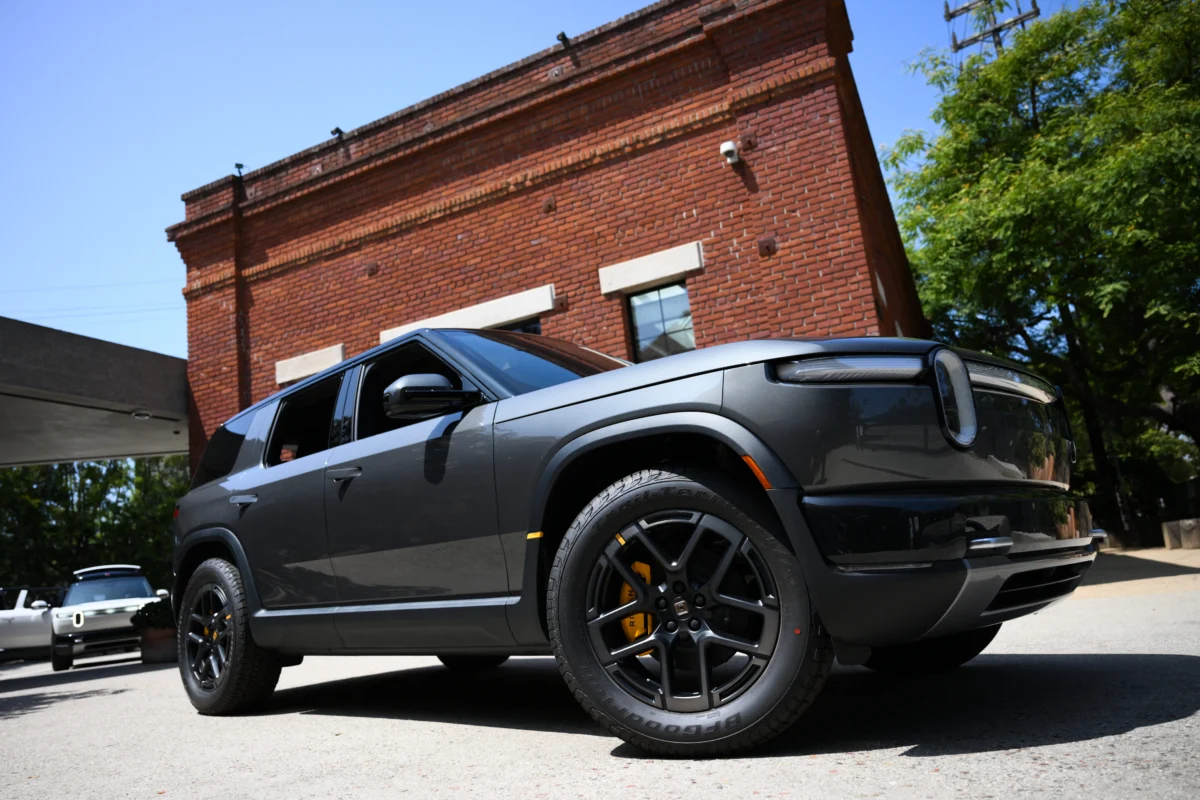
Rivian Automotive, the California-based electric vehicle manufacturer, delivered a robust second-quarter performance in 2026, signaling a refined strategic approach towards operational efficiency and a clearer trajectory to profitability. The company announced a reduction in its projected capital expenditures for the year and a slight narrowing of its previously forecast losses, alongside reconfirming its ambitious vehicle delivery targets. These financial adjustments and a strong product rollout, particularly the new R2 SUV, underscore Rivian’s concerted efforts to optimize its cost structure while simultaneously expanding its market footprint and product offerings in a highly competitive automotive landscape.
Navigating Financial Headwinds with Strategic Precision
Rivian’s updated financial guidance for 2026 now forecasts adjusted losses between $1.8 billion and $2.0 billion, a slight improvement from the earlier projection of $1.8 billion to $2.1 billion. This recalibration suggests a growing command over operational costs and a more efficient allocation of resources. Crucially, the company also revised its capital expenditure (capex) outlook downwards, now anticipating spending between $1.7 billion and $1.8 billion, a notable reduction from the prior estimate of $1.95 billion to $2.05 billion. This $250 million mid-point reduction in planned spending is attributed by Rivian to "project efficiencies and timing of spend." This signals that the automaker is finding smarter, more streamlined ways to invest in its growth initiatives, which previously included substantial allocations for advanced technologies such as its nascent hands-free driving system. The ability to reduce capex without compromising key strategic objectives is a positive indicator for investors scrutinizing the capital intensity of EV startups.
The second quarter saw Rivian’s gross profit reach $179 million, a significant turnaround from a loss of $206 million in the same period last year. This positive shift in gross profit is a critical milestone for a company striving for sustained profitability. A closer look at the segments reveals that the automotive division, while still incurring a $36 million loss at the gross profit level, showed substantial progress. The software and services division, however, proved to be a strong contributor, generating a profit of $215 million. This highlights the growing importance of recurring revenue streams and value-added services in the modern automotive industry, where software is increasingly becoming a differentiator and a profit center.
Rivian’s total revenue for the second quarter amounted to approximately $1.655 billion, comprising $1.14 billion from its automotive segment and $515 million from software and services. This figure slightly exceeded the company’s pre-released revenue expectations, which had ranged between $1.55 billion and $1.65 billion. The automotive revenue alone demonstrated a robust 23% year-over-year increase, primarily driven by a 14% increase in vehicle deliveries. An additional $103 million in revenues related to regulatory credits also bolstered this growth. Regulatory credits, often earned by selling zero-emission vehicles, can be sold to other automakers to help them meet emissions standards, providing an important, albeit fluctuating, revenue stream for EV manufacturers.
On the bottom line, Rivian’s net loss attributable to common stockholders for Q2 was $837 million, or 63 cents per share. While still a loss, this represents a significant improvement of $278 million, or 34 cents per share, compared to the second quarter of 2025. This narrowing of losses underscores the company’s progress in scaling production and improving unit economics, moving closer to its long-term financial goals.
Operational Milestones and the Crucial R2 Launch
Central to Rivian’s operational success in the second quarter was its unwavering commitment to its delivery targets and the highly anticipated launch of its R2 SUV. The company reconfirmed its previously raised delivery target of 65,000 to 70,000 vehicles to customers for the full year. This confidence is rooted in stronger-than-expected deliveries during the second quarter, particularly for its electric delivery van (EDV) products and the flagship R1 series (R1T pickup truck and R1S SUV). The EDV, with its notable partnership with Amazon, continues to be a steady contributor to production volumes and revenue. The R1T and R1S, positioned in the premium electric vehicle segment, have garnered critical acclaim and a loyal customer base, demonstrating Rivian’s capability to deliver high-performance, desirable vehicles.
The second quarter marked a pivotal moment for Rivian with the commencement of deliveries for its midsize R2 SUV. This vehicle is designed to be a more accessible and higher-volume offering compared to the R1 series, aiming to capture a broader segment of the electric vehicle market. Production of the R2 is currently ramping up at Rivian’s sole manufacturing plant in Normal, Illinois, which boasts an annual production capacity of 160,000 vehicles for the R2 line. The R2 is strategically vital for Rivian’s future, as it targets a highly competitive segment currently dominated by models like the Tesla Model Y and increasingly, offerings from traditional automakers.

RJ Scaringe, Rivian’s CEO, expressed profound enthusiasm for the R2’s market introduction. "Incredibly excited with R2 now getting into customers’ hands, and the overall feedback and response to the product has just been outstanding," Scaringe told CNBC’s Phil LeBeau on Thursday. He emphasized the R2’s significance as a "major step for us on our path to profitability." Scaringe has previously articulated that the R2 is expected to achieve profitability on a per-unit production basis within the current year. However, he also acknowledged that achieving overall company-wide profitability would necessitate greater scale than the 160,000 units currently planned for the R2 at the Normal plant. This suggests that future expansion, potentially including the planned Georgia plant, remains a critical component of Rivian’s long-term growth and profitability strategy. The R2, being a smaller and less expensive sibling to the luxury R1S SUV, represents Rivian’s strategic pivot towards democratizing its advanced EV technology and design, making it available to a wider consumer base.
Strengthening the Financial Foundation: Cash Position and Strategic Partnerships
Rivian’s financial stability was further reinforced in the second quarter, with its cash, cash equivalents, and short-term investments balance estimated at $5.3 billion, an increase from $4.8 billion at the end of the first quarter. This healthy liquidity position is crucial for funding ongoing operations, research and development, and future production expansions.
Looking ahead, Rivian has secured significant additional funding sources that are expected to bolster its financial reserves later this year. The company anticipates receiving $1 billion in non-recourse debt financing stemming from its landmark software deal with Volkswagen Group. This partnership, announced in late 2024, involves a joint venture where Rivian contributes its advanced software and electrical architecture expertise, while Volkswagen gains access to this technology for its next-generation electric vehicles. This collaboration is a testament to Rivian’s technological prowess and provides a significant non-dilutive funding stream, further validating its innovative approach to EV development. The non-recourse nature of the debt means that Rivian’s other assets are not collateral, providing a more favorable financial arrangement.
Additionally, Rivian expects a $250 million equity investment from a separate partnership with Uber. While specific details of this partnership beyond the investment amount are yet to be fully disclosed, such an alliance could potentially explore synergies in urban mobility, last-mile delivery, or even the integration of Rivian vehicles into Uber’s expanding fleet services, aligning with Uber’s sustainability goals. These strategic financial injections from established automotive and technology giants underscore confidence in Rivian’s long-term potential and provide crucial capital for its ambitious growth plans.
Broader Market Context and Implications
Rivian’s Q2 2026 performance unfolds against a backdrop of evolving dynamics in the global electric vehicle market. While the long-term shift towards electrification remains undeniable, the immediate term has seen challenges such as softening demand in certain segments, intensified price wars, and increasing competition from both legacy automakers and new entrants. Supply chain disruptions, though easing, continue to pose complexities for manufacturers. In this environment, Rivian’s ability to narrow losses, reduce capex, and successfully launch a pivotal new product demonstrates a growing maturity in its operational execution and strategic planning.
The focus on "project efficiencies" and the positive gross profit suggest that Rivian is effectively learning from its early production challenges and is implementing measures to optimize its manufacturing processes and supply chain. This disciplined approach is essential for any EV startup aiming to transition from a growth-at-all-costs phase to sustainable profitability. The R2’s launch is particularly significant as it positions Rivian to compete in a larger, more price-sensitive market segment, critical for achieving the scale necessary for long-term financial health. The success of the R2 will be a key determinant of Rivian’s ability to achieve its profitability targets and expand its customer base beyond the premium segment.
The strategic partnerships with Volkswagen and Uber are not merely financial transactions; they are powerful endorsements of Rivian’s technology and vision. The Volkswagen deal validates Rivian’s software and electrical architecture as industry-leading, potentially opening doors for further technology licensing or collaborative ventures. The Uber investment, while smaller, hints at future mobility solutions and potentially integrating Rivian’s robust vehicles into diverse service applications, reflecting broader industry trends towards integrated transportation ecosystems.
In conclusion, Rivian’s second-quarter results paint a picture of a company making tangible progress on its path to financial sustainability. By tightening its spending, improving its gross margins, and successfully bringing a critical new product like the R2 to market, Rivian is demonstrating resilience and strategic acumen. While the road to consistent profitability for an EV startup is often arduous and capital-intensive, the latest financial disclosures and operational achievements suggest Rivian is navigating this complex journey with increasing confidence and a clearer vision for its future. Investors and industry observers will closely watch how these efficiencies translate into sustained profitability and how the R2 fares in the competitive mid-size SUV market, along with the full realization of its strategic partnerships.
