

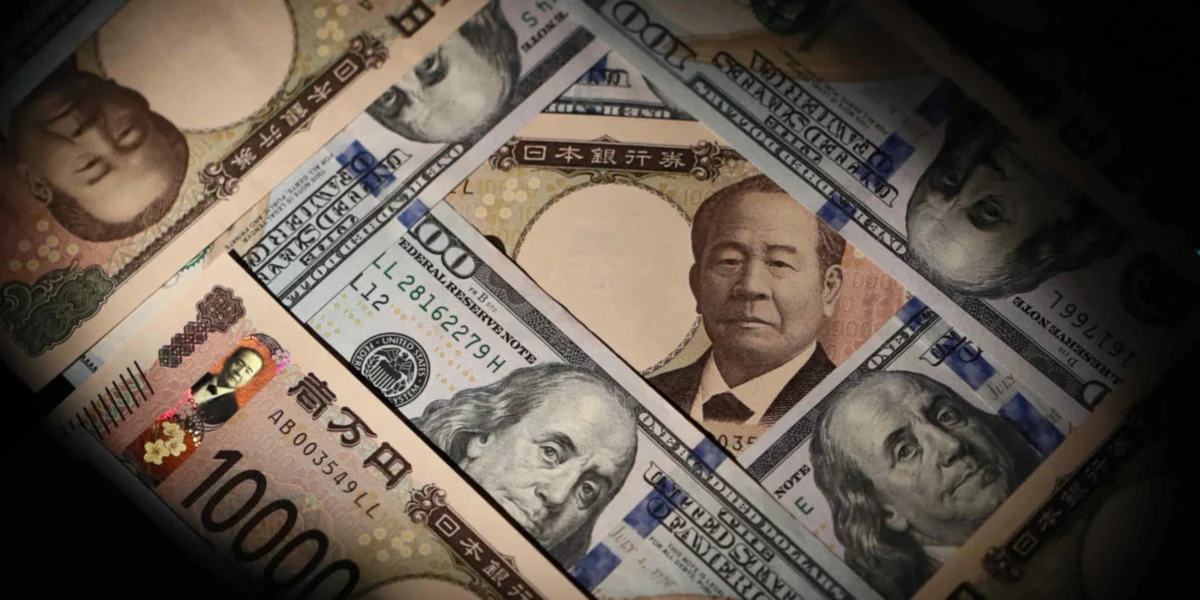
LONDON/NEW YORK – The Japanese government intervened in foreign-exchange markets on Thursday, a decisive action to bolster the weakening yen by selling dollars, while U.S. authorities conducted a rate check, a move widely interpreted by market participants as a signal of potential coordinated action to stabilize the currency. This dual maneuver suggests a concerted effort between Tokyo and Washington to stem the yen’s precipitous slide against the U.S. dollar, a trend that has been accelerating in recent weeks, raising concerns for the Japanese economy and global financial stability.
The Yen’s Steep Decline: A Mounting Concern
The Japanese yen has experienced a significant and sustained depreciation throughout much of 2026, reaching multi-decade lows against the U.S. dollar. This downward spiral has been fueled by a confluence of factors, including persistent interest rate differentials between Japan and major economies like the United States, robust U.S. economic performance, and shifting global investor sentiment. As of late July 2026, the yen had fallen by approximately 15% against the dollar since the beginning of the year, a pace that has alarmed policymakers in Tokyo.
This depreciation has tangible consequences. For Japanese consumers, it means higher import costs, particularly for essential goods like energy and food, contributing to inflationary pressures that the Bank of Japan has been struggling to manage. For Japanese businesses, while exporters may see a short-term boost in competitiveness, the rising cost of imported raw materials and components can erode profit margins. Furthermore, a persistently weak yen can undermine confidence in the Japanese economy and potentially lead to capital outflows.
A Timeline of Intervention
The intervention on Thursday marked a significant escalation in Tokyo’s efforts to support the yen. While Japanese authorities had previously issued verbal warnings and engaged in subtle market signaling, direct intervention in the forex market is a more potent tool, signaling a serious commitment to defending the currency.
Early 2026: The yen begins its steady decline, initially attributed to widening interest rate differentials as the U.S. Federal Reserve maintained a hawkish stance on monetary policy while the Bank of Japan pursued an ultra-loose approach.
Spring/Summer 2026: The yen’s depreciation accelerates, crossing key psychological levels against the dollar. Concerns mount within the Japanese Ministry of Finance and the Bank of Japan about the economic repercussions.
July 2026 (Weeks Leading Up to Intervention): Japanese officials, including Finance Minister Shunichi Suzuki and Bank of Japan Governor Kazuo Ueda, issue increasingly stern warnings about excessive currency volatility and express readiness to take appropriate action. These verbal interventions, however, prove insufficient to halt the yen’s slide.
Thursday, July 30, 2026:
- Morning (Tokyo Time): Reports emerge of Japanese authorities engaging in significant yen-buying, dollar-selling operations. The sheer volume of these transactions suggests a well-coordinated effort.
- Simultaneously (New York/London Trading Hours): U.S. Treasury officials reportedly conduct a "rate check" with major banks. This is a standard procedure where the Treasury inquires about current market exchange rates. However, in the context of a rapidly falling yen and Japanese intervention, it is widely interpreted as a signal of U.S. awareness and implicit support for Japan’s efforts to stabilize the currency. The U.S. Treasury’s participation, even if indirect, is crucial, as it can lend significant weight to market interventions and deter speculative attacks against the yen.
Supporting Data: The Dollar-Yen Exchange Rate
The dollar-yen exchange rate has been the focal point of this currency turmoil. Throughout 2026, the pair has ascended from levels around 130 yen to the dollar at the start of the year to breaching the 160 yen per dollar mark in the days leading up to the intervention.
- January 2026: USD/JPY trading around 130.00
- April 2026: USD/JPY approaches 140.00
- July 25, 2026: USD/JPY briefly touches 160.50, a level not seen in over three decades.
- July 30, 2026 (Post-Intervention): Following the coordinated actions, the USD/JPY pair retreats sharply, falling back towards the 155.00 level within hours. This immediate impact demonstrates the effectiveness of direct intervention when executed with conviction and, importantly, with the tacit approval of a major economic power like the United States.
The intervention aims not necessarily to engineer a specific, permanent exchange rate level, but rather to disrupt the rapid, one-sided trend and restore some degree of order to the market. The goal is to discourage further speculative selling of the yen and provide breathing room for economic adjustments.
Official Responses and Market Interpretations
The Japanese Ministry of Finance, traditionally reticent about confirming direct intervention, issued a carefully worded statement. "We are closely monitoring currency market movements and are prepared to take decisive action against excessive volatility," a spokesperson stated, without directly confirming the specific operations. This diplomatic ambiguity is common in currency intervention, allowing authorities to maintain flexibility and avoid telegraphing future strategies.
The U.S. Treasury Department, in line with its policy, did not comment on specific market activities. However, the timing of their rate check was not lost on market observers. "The U.S. rate check is a clear signal that Washington is aware of and, by extension, likely comfortable with Japan’s efforts to manage its currency," commented a senior forex strategist at a major investment bank. "This implicitly suggests a coordinated approach, which is far more impactful than unilateral action."
The Bank of Japan’s role in such interventions is often to provide liquidity and coordinate with the Ministry of Finance. While the Ministry of Finance typically executes the actual buying and selling of foreign currency reserves, the central bank’s policy stance on interest rates and its communication are critical in shaping the underlying market sentiment. Governor Ueda’s recent statements have hinted at a gradual normalization of monetary policy, a factor that could eventually support the yen from a fundamental perspective, but immediate forex market stability requires more direct measures.
Broader Impact and Implications
The intervention’s success in stabilizing the yen will be closely watched. If the upward trend in USD/JPY is halted and reversed, it could provide a much-needed respite for the Japanese economy.
- Inflation Control: A stronger yen would reduce the cost of imports, easing inflationary pressures and potentially allowing the Bank of Japan more flexibility in its monetary policy decisions.
- Investor Confidence: A stable or strengthening yen can boost investor confidence in Japan as an investment destination, potentially leading to increased foreign direct investment and a reversal of capital outflows.
- Global Trade and Finance: The yen’s volatility has had ripple effects across global markets. A more stable yen would contribute to greater predictability in international trade and finance, benefiting companies with significant exposure to Japanese markets.
- Monetary Policy Divergence: The intervention underscores the ongoing challenge of managing monetary policy divergence. While the U.S. Federal Reserve has been gradually tightening, the Bank of Japan faces a delicate balancing act between supporting economic growth and addressing currency weakness. The intervention suggests that Tokyo is willing to take extraordinary measures to prevent currency depreciation from derailing its economic objectives.
However, the effectiveness of intervention is often temporary. If the fundamental drivers of yen weakness, particularly the interest rate differential, persist, the yen could resume its slide. Future interventions would then depend on the size of Japan’s foreign exchange reserves and the willingness of both Tokyo and Washington to continue such coordinated efforts.
The coordinated action on Thursday represents a significant moment in global currency markets, highlighting the interconnectedness of economies and the willingness of major powers to intervene to maintain financial stability when significant imbalances emerge. The coming weeks will be critical in determining whether this intervention marks a turning point for the beleaguered yen or merely a temporary pause in its decline.
