

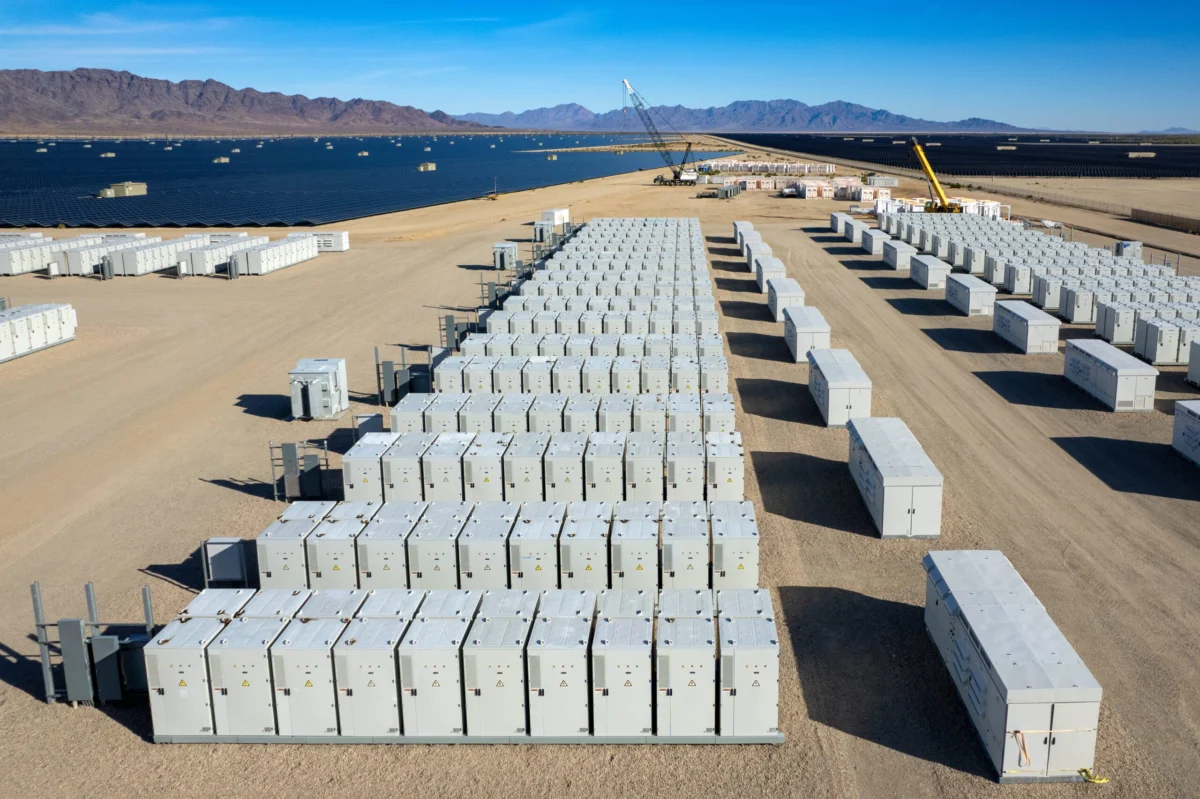
The transition toward a decarbonized global economy has triggered an unprecedented surge in demand for high-performance battery technology. As nations race to meet net-zero targets, the reliance on electric vehicles (EVs), massive data centers, and grid-scale battery energy storage systems (BESS) has transformed battery manufacturing from a niche industrial sector into a cornerstone of geopolitical and economic strategy. However, the path from laboratory breakthroughs to gigawatt-hour production is fraught with technical and operational hurdles. To bridge this gap, the industry is increasingly turning to advanced automation, process optimization, and digitalization to ensure that the next generation of energy storage is both scalable and sustainable.
The Strategic Necessity of Energy Storage
The global energy landscape is undergoing a fundamental shift. As traditional fossil fuel power plants are decommissioned, they are being replaced by renewable sources, primarily solar and wind. While these sources are essential for reducing carbon emissions, they introduce a significant challenge: intermittency. Solar arrays do not produce power at night, and wind turbines remain idle during calm weather. This mismatch between energy generation and consumer demand necessitates a robust infrastructure of Long-Duration Energy Storage (LDES).
Modern grid operations now rely on BESS to act as a buffer. These systems store excess energy during periods of high production and discharge it during peak demand or when renewable output drops. The resilience of the modern power grid is becoming synonymous with the capacity of these storage units. Beyond the grid, the exponential growth of artificial intelligence and cloud computing has forced data center operators to seek massive battery backups to ensure 24/7 uptime, further straining the global supply chain for battery cells.
A Chronology of Battery Evolution and Manufacturing
The journey of battery technology has moved through several distinct eras, each defined by the limitations of the time and the demands of the market.

- The Portable Electronics Era (1990s–2010s): Dominated by small-form-factor lithium-ion cells for laptops and mobile phones. Manufacturing was precise but focused on low-volume, high-margin consumer goods.
- The EV Dawn (2010–2020): The rise of Tesla and other early EV adopters shifted the focus toward energy density and safety. This period saw the birth of the "Gigafactory" concept, where economies of scale began to drive down the cost per kilowatt-hour.
- The Diversification and Scaling Era (2020–Present): The current phase is defined by a desperate need for massive throughput. Manufacturers are no longer just looking at lithium-ion; they are exploring alternative chemistries like sodium-ion, iron-air, and solid-state batteries to mitigate raw material shortages and improve safety.
In this current era, the challenge is no longer just "how to build a better battery," but "how to build millions of them without defects."
Quantifying the Industry’s Scaling Challenges
Despite the clear demand, the road to full-scale production is littered with "valleys of death" where pilot programs fail to transition to mass manufacturing. Recent industry data highlights the severity of these challenges. According to a 2025 study by Capgemini, approximately 68% of automotive companies report significant struggles in elevating battery quality standards when moving to high-volume production.
The study further reveals that 59% of battery executives cite extended timeframes—often stretching into years—to build and ramp up new facilities. These delays are frequently caused by the complexity of integrating disparate manufacturing processes, from electrode coating and cell assembly to pack integration and final testing. Furthermore, the industry faces a critical human capital crisis; 60% of executives in battery-related fields report a shortage of skilled workers capable of managing the high-tech environments of modern gigafactories.
The Role of Automation in Overcoming Production Barriers
To address the dual pressures of quality and speed, the industry is adopting a "digital-first" approach to manufacturing. Advanced automation is no longer an optional upgrade; it is the primary driver of viability.
Precision and Waste Reduction
In battery manufacturing, even microscopic defects can lead to catastrophic failures or significantly reduced lifespans. Automated vision systems and AI-driven sensors now monitor every stage of the assembly line in real-time. By identifying a flawed electrode coating or a misaligned tab before the cell is sealed, manufacturers can significantly reduce "scrappage rates," which currently account for a substantial portion of production costs.

Modular and Flexible Systems
The rapid pace of chemical innovation means that a factory designed today might need to produce a different type of battery tomorrow. Companies like JR Automation have pioneered modular assembly solutions that allow manufacturers to swap out specific sections of a production line without necessitating a total overhaul. This flexibility ensures that capital investments remain productive even as battery chemistries evolve from lithium-ion to sodium-ion or sulfur-based technologies.
Digital Twins and Simulation
Before a single piece of hardware is installed, engineers now use "Digital Twins"—virtual replicas of the entire production line. This allows for the simulation of workflows, the identification of bottlenecks, and the stress-testing of equipment in a risk-free environment. Digitalization ensures that when the physical facility is built, the ramp-up time is measured in weeks rather than months.
Diversifying Battery Chemistries for a Sustainable Future
While lithium-ion remains the gold standard for high-performance EVs, its dominance is being challenged by the need for more abundant and less expensive materials. The industry is currently exploring several key alternatives:
- Sodium-Ion: Utilizing salt as a primary component, these batteries are cheaper and safer than lithium-ion, though currently less energy-dense. They are ideal for stationary grid storage.
- Iron-Air: These batteries "breathe" oxygen from the air to convert iron to rust and back again. They offer the potential for multi-day energy storage at a fraction of the cost of traditional batteries.
- Solid-State: By replacing the liquid electrolyte with a solid one, these batteries promise higher energy density and a near-total elimination of fire risks.
The challenge for automation providers is to create systems that can handle these diverse materials—some of which are highly sensitive to moisture or require specific atmospheric conditions—at the same scale and speed as traditional cells.
The Impact of Government Policy and Global Competition
The race for battery supremacy is as much a political battle as it is a technological one. In the United States, the Inflation Reduction Act (IRA) has provided billions of dollars in incentives for domestic battery manufacturing and raw material sourcing. Similarly, the European Green Deal and China’s aggressive industrial subsidies have created a competitive environment where speed to market is paramount.

Regulatory bodies are also increasing pressure on the "circularity" of batteries. New mandates in various jurisdictions require manufacturers to prove the sustainability of their supply chains and implement clear plans for battery recycling. Automation plays a critical role here as well, as robotic systems are being developed to safely disassemble old battery packs and recover precious metals like cobalt, nickel, and lithium for reuse.
Analysis of Economic and Operational Implications
The successful scaling of battery production has profound implications for the global economy. Efficient manufacturing reduces the total cost of ownership for EVs, bringing them to price parity with internal combustion engine vehicles faster than previously predicted. On the grid level, lower-cost BESS units make renewable energy more competitive than coal or natural gas, even without subsidies.
However, the "knowledge gap" remains a significant threat. As automation takes over manual tasks, the demand for "blue-tech" workers—those who can maintain, program, and optimize robotic systems—will skyrocket. Companies that invest in both hardware automation and workforce upskilling will likely emerge as the leaders of the next decade.
Conclusion: Partnering for Progress
The future of the battery industry depends on a holistic approach that balances immediate production targets with long-term innovation. For manufacturers, the path forward involves moving away from siloed operations and toward integrated, data-driven ecosystems.
Experts in the field, such as the engineering consultants at JR Automation, emphasize that the goal is not just to automate, but to automate intelligently. By combining decades of experience in high-volume manufacturing with cutting-edge digital integration, the industry can overcome the hurdles of scalability and quality. As we look toward a future powered by clean energy, the strength of the global battery supply chain will be the foundation upon which the sustainable economy is built. For those ready to lead, the integration of flexible, scalable, and high-precision automation is no longer a luxury—it is the essential engine of growth.
