

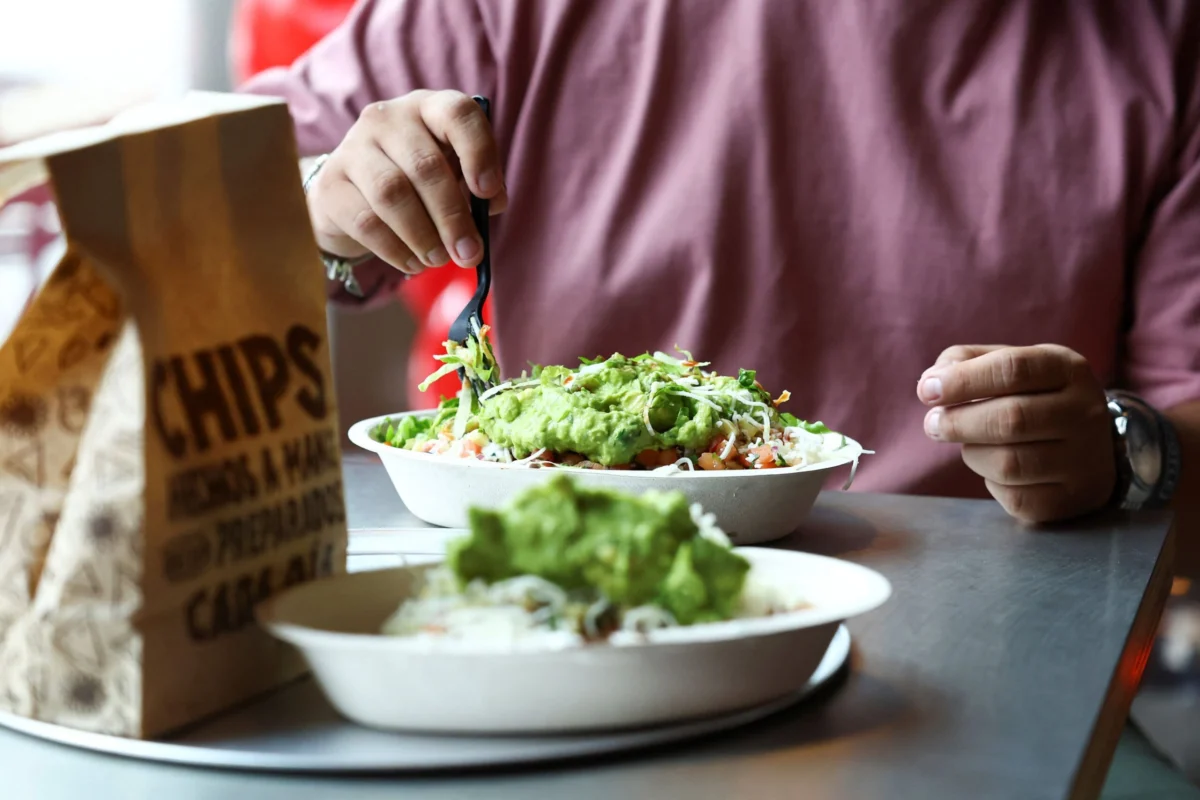
Chipotle Mexican Grill delivered a strong financial performance in the second quarter of 2026, exceeding Wall Street’s earnings and revenue projections and subsequently raising its full-year same-store sales growth forecast. The restaurant giant, known for its focus on fresh, customizable Mexican cuisine, announced on Wednesday an updated outlook projecting low single-digit percentage growth in same-store sales for 2026, a significant uplift from its prior expectation of flat growth. This revised guidance signals a robust recovery and renewed confidence in the company’s strategic initiatives, particularly noteworthy given the persistent inflationary pressures and elevated consumer costs impacting the broader dining sector. The positive report sent Chipotle’s stock climbing approximately 6% in extended trading, reflecting investor optimism in its operational resilience and growth trajectory.
A Turnaround Story: Overcoming 2025’s Challenges and Economic Headwinds
The impressive second-quarter results mark a pivotal moment for Chipotle, demonstrating its ability to rebound effectively after what CEO Scott Boatwright candidly described as a "shaky 2025." That preceding year had presented a confluence of challenges for the fast-casual chain and the restaurant industry at large. Lingering supply chain disruptions, escalating commodity costs, and a tightening labor market had squeezed margins across the sector. Moreover, a more cautious consumer sentiment, driven by persistent inflation and particularly spiking gas prices, had led to a discernible shift in dining habits, with many households re-evaluating discretionary spending. For Chipotle, this translated into softer traffic and an increased scrutiny on value, making the path to recovery arduous.
In response to these headwinds, Chipotle embarked on a multi-pronged strategic offensive beginning in late 2025 and accelerating into 2026. This strategy was centered on enhancing the customer experience, driving menu innovation, and leveraging its digital ecosystem. The company intensified its focus on operational efficiencies within its kitchens, aiming to improve speed of service and order accuracy, two critical components of customer satisfaction in the fast-casual segment. Marketing efforts were recalibrated to highlight Chipotle’s value proposition and the quality of its fresh ingredients, aiming to differentiate it in a crowded market. These foundational efforts laid the groundwork for the encouraging progress observed in the first half of 2026, culminating in the strong Q2 performance.
Navigating a Cyclospora Outbreak: A Test of Food Safety Protocols
The announcement of Chipotle’s robust performance came amid heightened industry-wide scrutiny over food safety, particularly concerning fresh produce. A significant U.S. cyclospora outbreak, linked to contaminated lettuce, had prompted widespread concern and affected multiple restaurant chains and grocery retailers. This outbreak served as a critical reminder of the perpetual challenges in food sourcing and safety for companies dealing with fresh ingredients.
In this context, Chipotle executives took proactive measures to address potential concerns during their call with analysts. They emphatically stated that Chipotle "maintains a very robust food safety program," a claim underscored by the company’s past experiences and subsequent investments in its supply chain and internal protocols. Importantly, Chipotle clarified that its lettuce supply is sourced exclusively from California and was not impacted by the specific cyclospora outbreak. This swift and transparent communication was crucial in reassuring both consumers and investors about the integrity of its food supply.
Despite its stringent protocols and independent sourcing, the broader cyclospora scare did have a measurable, albeit temporary, impact on Chipotle’s sales. The company estimated that the outbreak led to an approximate 2 percentage point drag on sales in the latter half of July. This impact was prudently incorporated into the company’s updated guidance for the full year, reflecting a cautious yet optimistic outlook. The incident highlighted Chipotle’s commitment to transparency and its ability to quantify and manage external risks, a testament to its matured operational framework.
Second Quarter 2026 Financial Highlights and Key Performance Indicators
Chipotle’s financial report for the second quarter, ending June 30, 2026, painted a picture of solid growth and effective cost management, especially when considering the challenging economic backdrop.
- Net Income: The company reported a net income of $403.5 million, or 32 cents per share. This figure represented a decrease from $436.1 million, or 32 cents per share, recorded in the same period a year earlier. However, excluding impairment and restructuring costs and other specific items, adjusted earnings per share climbed to 33 cents. The slight year-over-year decline in reported net income, despite strong revenue growth, can be attributed to increased operational investments, higher labor costs, and strategic marketing expenditures aimed at driving the current recovery, as well as specific one-time charges related to operational streamlining.
- Revenue: Total revenue for the quarter surged by 9.3% to reach $3.35 billion, comfortably surpassing analyst expectations. This significant revenue growth underscores the effectiveness of Chipotle’s strategies in attracting and retaining customers.
- Same-Store Sales Growth: A critical indicator of restaurant health, same-store sales (or comparable restaurant sales) rose by 2.2%. This growth was driven by a healthy combination of increased customer traffic and a slightly higher average check size.
- Traffic: Customer traffic to restaurants increased by 1%, indicating that more diners were choosing Chipotle despite the pressures on household budgets. This is a particularly encouraging metric in the current economic climate, suggesting that Chipotle’s value proposition is resonating.
- Average Check Size: The total check size inched up by 1.2% compared with the year-ago period. This increase points to a combination of strategic menu pricing adjustments and customers opting for additional items or slightly more premium choices within their orders.
These figures collectively demonstrate a well-executed strategy that is successfully drawing customers back into its restaurants, converting them into loyal patrons, and driving incremental sales.
Strategic Pillars of Growth: Menu Innovation, Rewards, and Hospitality
CEO Scott Boatwright attributed the company’s strong performance to a focused approach on "the right growth drivers." These pillars include meaningful menu innovation, deepening engagement through the Chipotle Rewards program, elevating hospitality in every restaurant, and expanding opportunities to serve more group occasions.
- Meaningful Menu Innovation: The introduction of seasonal items like the Chipotle Honey Chicken and the recently launched cilantro lime sauce proved to be significant drivers of customer interest and sales. These limited-time offerings (LTOs) are designed not only to create buzz and drive trial but also to cater to evolving consumer tastes, such as the growing demand for unique flavor profiles and a touch of culinary novelty within the familiar fast-casual framework. Boatwright emphasized that these innovations had an "outsized impact" on winning over both younger consumers and lower-income diners, suggesting that new menu items effectively broadened the brand’s appeal and perceived value. The strategy behind LTOs like Honey Chicken is to generate excitement, encourage repeat visits, and potentially convert new customers into regulars. The cilantro lime sauce, a permanent addition, enhances customization options, a core tenet of the Chipotle experience.
- Deepening Engagement Through Chipotle Rewards: The Chipotle Rewards program continued to be a powerful tool for customer retention and loyalty. Boasting over 40 million members by mid-2026, the program offers personalized promotions, exclusive access to new menu items, and points-based rewards that incentivize repeat visits. This digital ecosystem not only fosters customer loyalty but also provides invaluable data insights into customer preferences and purchasing behaviors, enabling more targeted marketing efforts and menu development. The program’s success highlights the importance of digital engagement in modern fast-casual dining, creating a direct and personalized channel for interaction with the brand.
- Elevating Hospitality in Every Restaurant: Beyond menu and digital initiatives, Chipotle has reinvested in the fundamental customer experience within its physical locations. "Elevating hospitality" encompasses comprehensive staff training programs focused on speed of service, order accuracy, friendly interactions, and maintaining high standards of cleanliness and ambiance. In an increasingly competitive market, a consistent and positive in-restaurant experience is crucial for encouraging repeat business and positive word-of-mouth referrals. This focus also extends to improving operational workflows behind the counter, ensuring that employees are empowered to deliver efficient and pleasant service, even during peak hours.
- Expanding Opportunities for Group Occasions: Recognizing the significant potential in catering and larger group orders, Chipotle has actively worked to enhance its offerings and accessibility for these occasions. This includes streamlined online ordering for large groups, dedicated pickup options, and tailored menu suggestions for events. By making it easier and more appealing for customers to choose Chipotle for gatherings, the company taps into a lucrative segment that drives higher average transaction values and introduces the brand to new potential customers.
Strategic Expansion: Broadening Geographic Reach
During the second quarter, Chipotle continued its strategic expansion efforts, opening 100 new restaurant locations domestically. This consistent growth in its physical footprint is a key part of its long-term strategy to increase market penetration and accessibility. The company’s expansion is carefully planned, targeting areas with high population density and strong demand for its fresh, customizable offerings.
Significantly, the quarter also saw the opening of one new international restaurant operated by a partner. This expansion included a notable milestone: the debut of the first Chipotle fast-food restaurant in northeastern Mexico, specifically in San Pedro Garza Garcia, on July 16, 2026. This move into new international territories, particularly in a market with a deep cultural connection to Mexican cuisine, represents a calculated step in Chipotle’s global growth ambitions. Partner-operated international locations allow Chipotle to leverage local market expertise and reduce direct capital expenditure while expanding brand presence. The choice of San Pedro Garza Garcia, a prominent economic hub in Mexico, reflects a strategic decision to enter with a strong initial presence in a high-potential market.
Broader Implications and Future Outlook
Chipotle’s Q2 2026 performance and raised guidance carry significant implications for various stakeholders and the broader fast-casual dining sector.
- For Investors: The strong earnings beat and upward revision of the sales forecast signal robust financial health and management’s confidence in sustained growth. This typically translates into positive investor sentiment, as evidenced by the post-earnings stock climb. Analysts are likely to re-evaluate their price targets and ratings, with a renewed focus on Chipotle’s ability to drive traffic and maintain pricing power amidst inflation. The company’s resilience during challenging economic times positions it as a potentially stable investment in the consumer discretionary sector.
- For the Fast-Casual Sector: Chipotle’s success sets a benchmark for competitors. Its ability to effectively combine menu innovation, digital engagement through loyalty programs, and a focus on operational excellence provides a playbook for others in the industry. The emphasis on "value proposition" amidst economic pressures suggests that even in fast-casual, consumers are increasingly discerning about where they spend their dining dollars, demanding both quality and perceived affordability. Competitors will likely intensify their efforts in similar areas, from introducing LTOs to enhancing their loyalty programs and improving in-restaurant experiences.
- Consumer Spending Trends: Chipotle’s performance offers valuable insights into evolving consumer spending patterns. The increased traffic, even with higher prices, suggests a segment of consumers remains willing to spend on dining experiences they perceive as high-quality and offering good value. The success with younger and lower-income diners through menu innovation indicates that strategic pricing and appealing new options can broaden market reach even during economic constraints. It also highlights the continued demand for fresh, customizable, and "better-for-you" food options within the convenience of fast-casual.
- Long-Term Strategy: The stated growth drivers—menu innovation, rewards, hospitality, and group occasions—are not merely short-term fixes but integral components of Chipotle’s long-term strategic vision. Continued investment in these areas, coupled with disciplined geographic expansion, positions the company for sustainable growth. Future challenges will include maintaining supply chain stability, managing labor costs, and adapting to evolving consumer preferences and technological advancements. The emphasis on a "very robust food safety program" will also remain a paramount concern, as consumer trust is fragile and paramount to brand loyalty.
In conclusion, Chipotle Mexican Grill’s second-quarter 2026 results underscore a successful pivot and a strong execution of its strategic growth initiatives. By deftly navigating economic headwinds and specific industry challenges, the company has not only lured customers back but has also set a confident trajectory for the remainder of the year and beyond, reinforcing its position as a leading player in the dynamic fast-casual restaurant landscape.
