

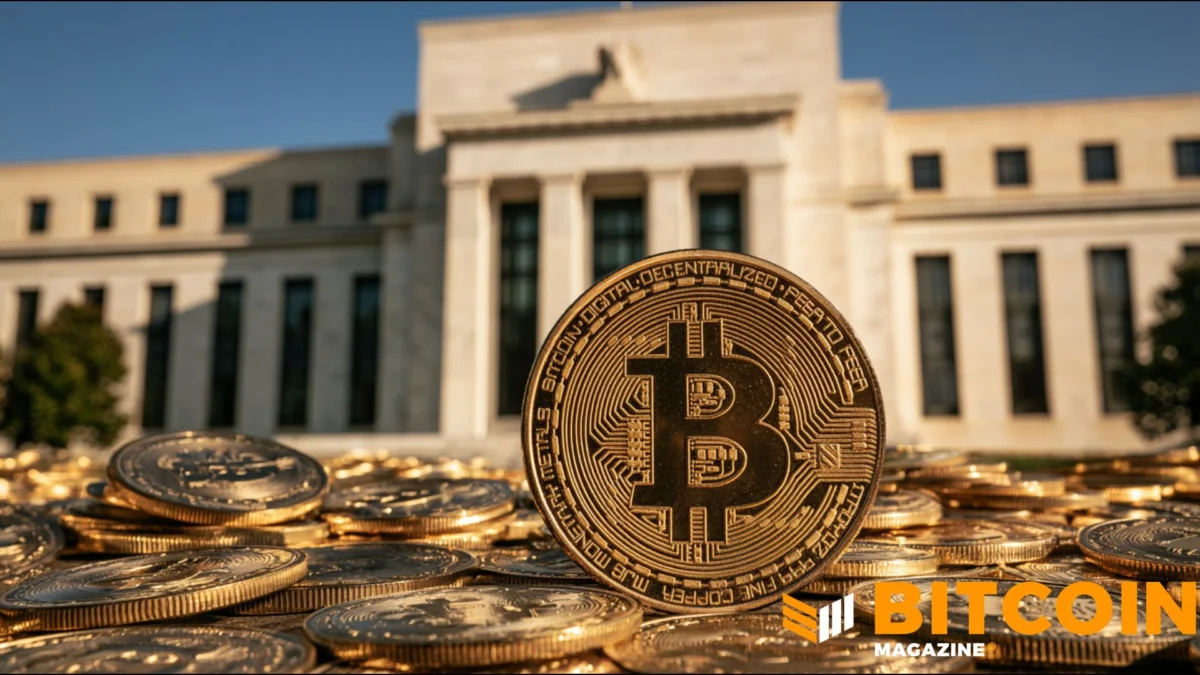
Bitcoin experienced a slight uptick on Wednesday, a modest response to the Federal Reserve’s decision to hold its benchmark interest rate steady. The leading cryptocurrency, recently valued at approximately $64,402 per coin, saw an increase of nearly 1% in the hour following the Federal Open Market Committee’s (FOMC) announcement. This movement, while not dramatic, reflects the ongoing sensitivity of digital assets to macroeconomic policy shifts, particularly those emanating from the U.S. central bank.
The Federal Reserve, as widely anticipated by market analysts, opted to maintain the federal funds rate within the target range of 3.50% to 3.75%. This decision was not unanimous within the 12-member FOMC; three participants reportedly favored a quarter-percentage-point increase at this particular meeting, signaling a divergence of opinion on the optimal path forward for monetary policy. This internal debate underscores the complex economic landscape the Fed is navigating, balancing the need to curb persistent inflation with the desire to avoid stifling economic growth.
Fed Chair’s Cautious Outlook on Future Policy
Following the announcement, the Federal Reserve’s new Chair, Kevin Warsh, addressed the press, offering limited concrete details regarding the central bank’s future policy trajectory. Warsh conveyed a sense of resolute action, stating, "The Fed’s on the case." He further expressed encouragement regarding the reception he has received since assuming the leadership role, emphasizing the committee’s unwavering commitment to their mandate. "We’re committed as ever to deliver," he asserted.
Warsh characterized the July rate decision not as a definitive pause in policy tightening, but rather as a meticulous and comprehensive evaluation of the prevailing economic conditions. "I wouldn’t characterize what we did as anything like a pause," he elaborated. "I would characterize what we did as a rigorous review of the economic situation. I would characterize what we did as a review of the big, hard questions." This phrasing suggests a deliberative approach, acknowledging the significant challenges and uncertainties inherent in managing a complex economy.
Since taking the helm in May, Warsh has consistently articulated a firm stance against inflation, declaring "no tolerance" for price increases that have consistently exceeded the central bank’s target for over five years. This declaration is particularly significant given the historical performance of Bitcoin and other cryptocurrencies in environments characterized by low interest rates. Crypto investors have, at various times, expressed hope that the Federal Reserve would lower rates, viewing such a move as a potential catalyst for increased investment and valuation in digital assets.
Historical Context: Interest Rates and Bitcoin’s Performance
The relationship between interest rates and Bitcoin’s price has been a subject of considerable analysis. Historically, Bitcoin has tended to perform favorably in a low-interest-rate environment. Lower rates reduce the cost of borrowing and can encourage investors to seek higher yields in riskier assets, including cryptocurrencies, as traditional safe-haven investments like bonds offer diminished returns. Conversely, periods of aggressive interest rate hikes, implemented to combat inflation, have often corresponded with declines in Bitcoin’s price.
This dynamic was particularly evident during the Federal Reserve’s aggressive rate-hiking cycle that commenced in 2022. Driven by a surge in inflation, which reached 40-year highs partly due to pandemic-related economic disruptions, the central bank embarked on a series of significant rate increases. This tightening of monetary policy exerted downward pressure on risk assets, including Bitcoin, which experienced considerable volatility and price corrections during this period.
In contrast, the period following 2024 saw a shift in the Fed’s approach, with the central bank undertaking multiple rate cuts. However, since the end of 2025, the Fed has exhibited a marked hesitancy to lower rates further, a stance seemingly reinforced by the current inflationary pressures. This prolonged period of holding rates steady, or even contemplating increases, presents a different macroeconomic backdrop for the cryptocurrency market compared to the more accommodative monetary policies of earlier years.
The Influence of Presidential Policy on Fed Decisions
The influence of political figures on monetary policy decisions, particularly concerning interest rates, has been a recurring theme in recent U.S. economic discourse. President Donald Trump, since assuming office, has consistently advocated for lower interest rates, believing that such a policy would stimulate economic growth and benefit American businesses. His views have occasionally placed him at odds with the Federal Reserve, including its former Chair, Jerome Powell, who emphasized the Fed’s independence in setting monetary policy based on economic data rather than political pressure.
The current stance of Fed Chair Kevin Warsh, characterized by his focus on combating inflation, suggests that he may not readily align with calls for lower interest rates, especially if inflation remains a persistent concern for American consumers and the broader economy. The Fed’s mandate includes both price stability and maximum employment, and the current economic climate appears to prioritize the former, at least in the short to medium term.
Inflationary Pressures: A Lingering Concern
The persistence of "sticky inflation" continues to be a significant challenge for policymakers. Inflationary pressures have been exacerbated by a confluence of factors, including supply chain disruptions, increased consumer demand, and geopolitical events. The Federal Reserve’s primary tool for combating inflation is by raising interest rates, which increases the cost of borrowing, thereby dampening demand and slowing economic activity. While this can lead to a cooling of price increases, it also carries the risk of slowing economic growth and potentially increasing unemployment.
The Fed’s decision to hold rates steady can be interpreted as a signal that while inflation remains a concern, the central bank is also mindful of the potential negative consequences of further tightening on the economy. The "rigorous review" Warsh alluded to likely involved a deep dive into inflation drivers, labor market conditions, and overall economic sentiment to determine the appropriate next steps.
Bitcoin’s Trajectory in a Stable Rate Environment
In the immediate aftermath of the Federal Reserve’s announcement, Bitcoin’s modest price appreciation suggests that the market had largely priced in the decision to maintain current interest rates. The lack of a significant rate hike, which could have been perceived as a more hawkish signal, provided a degree of stability that allowed Bitcoin to edge higher. However, the absence of a rate cut means that the anticipated tailwind for digital assets from looser monetary policy remains absent.
The coming months will be crucial in determining the Federal Reserve’s future course. Key economic indicators, including inflation reports, employment figures, and consumer spending data, will be closely scrutinized by the FOMC. If inflation continues to prove stubborn, the Fed may be forced to consider further rate hikes, which could once again put pressure on Bitcoin and other risk assets. Conversely, if inflation shows signs of moderating more decisively, the Fed might begin to signal a potential shift towards easing monetary policy, which could provide a boost to cryptocurrencies.
Broader Market Implications and Investor Sentiment
The Federal Reserve’s monetary policy decisions have far-reaching implications not only for the cryptocurrency market but for the broader financial landscape. Stable interest rates, in the absence of significant economic shocks, can foster a sense of predictability for investors. However, the underlying economic concerns that necessitate the Fed’s current cautious approach – namely, inflation – continue to cast a shadow.
For Bitcoin investors, the current environment presents a mixed outlook. The absence of immediate rate hikes is a positive, preventing further tightening that could depress prices. However, the continued elevated inflation and the Fed’s explicit commitment to addressing it mean that the prospect of lower interest rates, which has historically been a strong catalyst for Bitcoin, remains uncertain. Investors will likely be looking for clear signals of disinflationary trends before anticipating a significant dovish pivot from the Federal Reserve.
The ongoing debate about the role of cryptocurrencies as an inflation hedge or as a speculative asset class also comes into play. While some proponents argue that Bitcoin’s fixed supply makes it a digital gold, capable of preserving value in inflationary times, its historical price action has often correlated more closely with risk appetite and monetary policy. The current economic climate, with its persistent inflation and the Fed’s focus on price stability, provides a challenging test for both of these narratives.
Looking Ahead: The Interplay of Macroeconomics and Digital Assets
The Federal Reserve’s decision to keep interest rates unchanged is a significant event that will continue to shape the economic narrative in the coming weeks and months. For Bitcoin, this means navigating a landscape where the immediate threat of further rate hikes has receded, but the prospect of rate cuts remains distant. The cryptocurrency’s performance will likely continue to be closely tied to incoming economic data and the Federal Reserve’s evolving response to inflationary pressures.
The cautious optimism that Bitcoin has exhibited is a testament to its resilience, but also highlights its dependence on the broader macroeconomic environment. As Fed Chair Warsh and his colleagues continue their "rigorous review" of the economic situation, investors in digital assets will be eagerly awaiting any indication that the path towards lower interest rates, and potentially a more favorable environment for risk assets, is becoming clearer. Until then, the prevailing sentiment is likely to be one of watchful anticipation, with Bitcoin’s price movements serving as a barometer for the complex interplay between central bank policy and the evolving digital asset market.
Mathew Di Salvo has been reporting on the cryptocurrency space since 2019, covering a wide range of topics from El Salvador’s adoption of Bitcoin to the collapse of FTX.
