

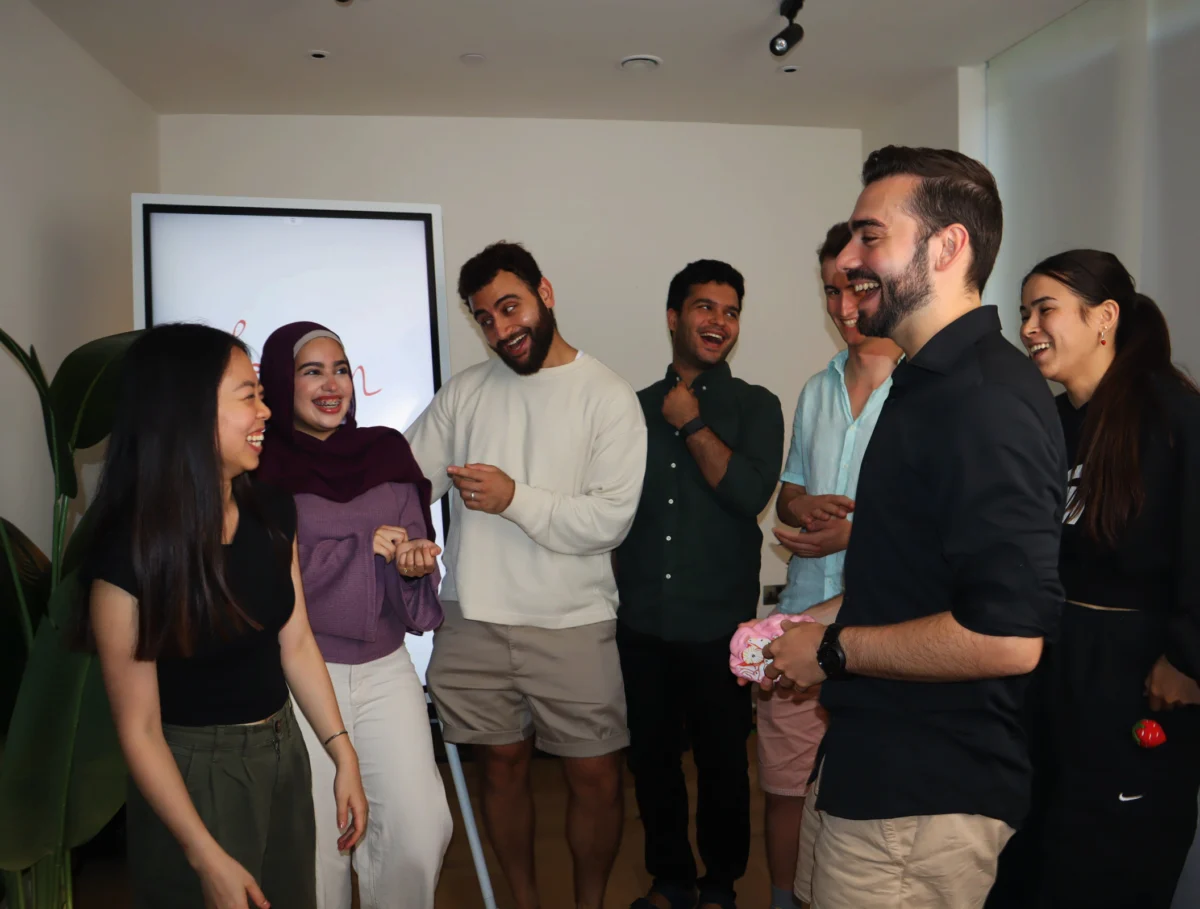
In a burgeoning corner of East London, a unique entrepreneurial experiment is unfolding, aiming to redefine the very essence of startup acceleration. Six twentysomethings have established the London Island Founder House, affectionately known as the "Lift House," as a deliberate counterpoint to the intense, often unsustainable, "hacker house" culture synonymous with San Francisco’s Silicon Valley. The ethos here is not about a frantic sprint to a "Demo Day," but rather a commitment to "holistic improvement in life," as articulated by 26-year-old co-founder Rowan Aldean. This venture signals a maturing London tech scene, one that seeks to foster innovation without sacrificing well-being, mirroring a broader global recalibration of work-life balance within high-pressure industries.
The Genesis of a Balanced Ecosystem: London’s Answer to Silicon Valley
The concept of a "hacker house" emerged from the fertile grounds of Silicon Valley, typically defined as communal living spaces where ambitious tech founders and developers converge to intensively build, network, and launch startups. These environments often foster a relentless "hustle culture," characterized by long hours, minimal personal time, and an almost singular focus on product development and investor pitches. Stories abound of makeshift offices in warehouses, grand galas as networking events, or even founders working from tents, all driven by the "move fast and break things" mantra and, at its extreme, the "996" work culture (9 am to 9 pm, six days a week) popularized in some Asian tech hubs.
The Lift House, however, deliberately veers away from this model. Located in a pristine East London development, its six-story structure overlooks the water, offering a serene backdrop distinct from the often chaotic energy of its Californian counterparts. Rowan Aldean, who successfully sold his previous company for millions last year and now runs an "applied AI" startup focused on deploying agents for businesses, co-founded the Lift House with his wife, Zahraa, 22, an aspiring pharmaceutical research PhD candidate. They have resided there since May, just two months after its official launch in March. The name "Lift House" is a dual homage: to the building’s elevator and, more profoundly, to its mission to "uplift" tech founders, not just professionally but personally.
London, unlike San Francisco, has historically seen far fewer dedicated co-living hacker houses. While temporary meet-ups, such as the Solana Hacker House series, and global chains like The Residency and BaseJump have recently explored London expansions, the Lift House stands out as a locally conceived initiative embodying a distinctly British approach. This scarcity reflects a cultural difference in entrepreneurial ambition, one that the Lift House is now actively shaping.

"Londonmaxxing": Optimizing Success with a British Twist
The Lift House is at the forefront of a burgeoning trend dubbed "Londonmaxxing," a strategic optimization of the myriad advantages offered by the capital’s dynamic tech ecosystem. This approach posits that successful companies can be built without adopting the often-extravagant and exhausting "startup bro-y" theatrics prevalent in some parts of Silicon Valley. London’s tech scene, while sharing the same underlying ambitions for success, wealth, and market domination, cultivates a less showy, more grounded environment.
The city’s burgeoning artificial intelligence sector serves as a prime example of this quiet strength. In 2026 alone, London AI startups commanded an impressive $12 billion in funding, contributing significantly to the total $14.7 billion raised by all London startups, according to Dealroom data. This substantial investment underscores London’s position as a global AI powerhouse. Notably, six companies — Wayve, Superintelligence, ElevenLabs, Recursive, Ineffable Intelligence, and Isomorphic Labs — have each secured over $500 million in funding. The latter three boast strong ties to DeepMind alumni, highlighting the "DeepMind Mafia" effect that has propagated a new wave of highly skilled AI ventures. This surge in AI innovation has injected a palpable sense of morale and renewed inspiration into the UK tech landscape, empowering a new generation of founders, including those at the Lift House, to pursue ambitious endeavors with confidence.
Rowan Aldean points to DeepMind itself as a testament to this philosophy. "They’ve won Nobel prizes and built frontier innovation without any song and dance," he remarks, emphasizing that groundbreaking achievements do not necessitate performative displays of effort. This sentiment resonates deeply within the Lift House, advocating for substance over spectacle and sustainable growth over burnout-inducing sprints.
A Day in the Life: Wellness Woven into the Fabric of Innovation
Life at the Lift House is structured around a flexible yet intentional rhythm, starkly contrasting with the rigid, often singular focus of traditional hacker houses. Residents, whose stays range from a month to potentially six months or more, manage their own groceries but frequently cook and share meals, fostering a strong sense of community. Cleaning responsibilities are distributed equitably among the group. While specific rent figures were not disclosed, the shared living model aims to create an affordable and collaborative environment.

The residents are united by a shared commitment to a balanced approach to ambition—a concept almost revolutionary by the standards of some San Francisco startups. This dedication to holistic well-being is embedded in their daily routines:
- Mindful Practices: Sundays are dedicated to communal journaling, a practice introduced by David Amor, 28, who runs a brain coaching and training company. Amor helps founders optimize their business performance by understanding their brain functions. The journaling sessions encourage residents to track their time spent in nature, dietary habits, and physical activity levels, promoting self-awareness and accountability for their well-being.
- Physical Activity: Tuesday evenings are reserved for team sports, with the founders participating in a local volleyball league. This structured physical activity provides a crucial outlet for stress and fosters teamwork in a non-work context. Luke, 27, who leads an AI-marketing company, attests to the positive impact: "I’m eating healthier, working out more, and sleeping more. I always make sure to have lunch now, which is something that is simple, but I wasn’t doing before I lived here."
- Creative and Social Engagement: Evenings often feature cultural and recreational activities. Wan Ying L, 25, a former AI startup employee now developing a new idea, frequently plays the piano in the living room. Group activities extend to board games like Catan or visits to art exhibitions, encouraging intellectual stimulation and camaraderie outside of their professional pursuits.
- Community and Networking: Presence Plumb, 25, a tech strategist, leverages the house’s rooftop for dinner parties. These gatherings, featuring dishes reflecting the diverse nationalities within the house (from Iraqi to Spanish), bring together invited founders, researchers, investors, and operators. These events serve as organic networking opportunities, fostering discussions on tech trends and investments in a relaxed, authentic setting. Plumb notes, "It’s a bit calmer, balanced, authentic in a way. They don’t want too much of that only startup tech bro vibe. They want a bit of balance."
Individual work routines demonstrate a blend of discipline and flexibility. Amor, for instance, rises by 8 am, immediately dedicating 30 seconds to focus before diving into his morning work, "when there’s no distractions." His routine includes a cold shower, which he credits with boosting dopamine by 250%, providing "that motivation, that spark." Luke, conversely, starts his day around 8:30 am, often joining his co-founder, Varun, 27, who commutes to the Lift House for co-working sessions, commencing with a team call at 9 am. Aldean himself maintains a later start, rarely waking before 10 am unless a critical "crazy angel [investor] call" is scheduled. This varied approach underscores the house’s emphasis on personalized productivity within a supportive community framework.
A Distinctly British Approach: Beyond the Hustle
The nuances distinguishing the Lift House from its Californian counterparts extend beyond daily routines into the very fabric of British entrepreneurial culture. Aldean jokingly attributes some differences to the simple act of "drinking tea together like Brits, and in SF folks just drink filtered coffee." More seriously, he highlights the unique pressures faced by British founders, which diverge significantly from those in the U.S.
British entrepreneurs often navigate a cultural landscape marked by an aversion to overt risk-taking, a pervasive inclination towards humility, and a strong sense of shame associated with failure. This is compounded by what is known as "tall poppy syndrome," where media or public sentiment can celebrate success only to ruthlessly critique or "cut down" individuals who become too prominent. This phenomenon, acknowledged by both investors and founders, can make entrepreneurs wary of overtly showcasing their achievements, fostering a more understated approach to success compared to the often bombastic self-promotion seen in some Silicon Valley circles.
London offers distinct advantages for early-stage founders, as Luke points out: a robust network, ample early-stage capital opportunities, and crucially, the possibility of a life that extends beyond the tech sphere. Culturally, London often feels more akin to New York than San Francisco, providing a diverse urban environment where interests outside of work can be easily pursued. David Amor further elaborates on this, stating, "London is so diverse that if you look properly enough, you’ll always find something fun to get involved with, whether that’s a founder-run club, wellness events, [or going] to jazz nights."

Financial incentives also play a significant role. Luke and Varun, for example, have largely circumvented traditional venture capital funding by leveraging the UK government’s Seed Enterprise Investment Scheme (SEIS) and Enterprise Investment Scheme (EIS). These schemes are designed to attract angel investments into local startups by offering generous tax reliefs to investors. As Luke explains, "There’s people who will pay basically the same rate of tax if they give us the money versus if they pay income tax," making London an attractive launchpad for capital-efficient ventures.
Aldean also observes a less cutthroat environment in the London ecosystem compared to the Bay Area. He recounts his experiences in a previous hacker house in San Francisco, where desks faced walls, fostering an isolated, heads-down product-building mentality. He also felt a pervasive culture of gossip, where negative stories could be spread for personal gain. "There’s nothing like ‘oh my god did you hear that the CTO just, like, did this,’ " Aldean said, describing a constant worry about reputational damage.
Furthermore, London startups often target slow-moving, large corporations as their primary customers, rather than solely selling to other startups. This market dynamic, Aldean suggests, allows founders to build without the perceived need to "kiss up or posture" to their peers. Varun and Luke echo this, highlighting a key difference: "It’s a relatively fleeting market," Varun says of the U.S., where "you get quick wins." In the UK, while "it’s hard to close a customer, if they close, they stay with you longer," indicating a preference for stable, long-term relationships over rapid, high-churn acquisition. This implies a business culture rooted in trust and sustained value, rather than constant disruption and rapid pivots.
The Transatlantic Tug-of-War: London’s Talent Retention Challenge
Despite London’s burgeoning tech scene and its unique advantages, a recurring challenge for many UK and European startups remains the gravitational pull of the United States. The UK offers founders access to a deep pool of affordable top talent, particularly from world-renowned universities like Oxbridge, and a time zone that facilitates seamless collaboration across Europe, the Middle East, Asia, and parts of North America. However, the U.S. presents an undeniable allure: the world’s largest economy and, crucially, a vast ecosystem of investors ready to write significantly larger checks across all stages, from pre-seed to growth.
Varun aptly describes this dynamic as "almost like a factory line in a way. You start here, and then you expand there or vice versa." This "coming to America" narrative often materializes as direct pressure from U.S. investors. The article cites an instance where a top investor explicitly conditioned funding on a female founder’s relocation to the U.S., a move she ultimately made, though opting to keep her family in the UK. Luke confirms this trend: "We had an investor in Miami who said the same thing. It’s quite a common practice." Both Luke and Varun, despite their affection for London, have already commenced their U.S. expansion and acknowledge that a full relocation to be closer to their customers remains a distinct possibility.

This transatlantic tension underscores a broader struggle for the UK and indeed, most of Europe’s tech ecosystems. Presence Plumb notes, "I work with a lot of people trying to support the European ecosystem more," highlighting the concerted efforts to bolster local growth and talent retention. Yet, Aldean starkly summarizes the dilemma: founders often "talk about London; everyone is bullish on the country until they get the opportunity to leave." This "brain drain" or "startup migration" poses a significant challenge, requiring continuous innovation in policy, funding mechanisms, and cultural offerings to convince promising ventures to stay and scale locally. Without competitive investment and market access, even the most appealing lifestyle and cultural benefits may not be enough to fully stem the tide.
The Future of Founder Communities: A Shift Towards Sustainability
The Lift House, with its current lease having about a year remaining, embodies a growing sentiment within the London tech scene for sustainable, community-driven models of entrepreneurship. While London has seen a rise in short-term hacker house events, and international co-living networks like The Residency and BaseJump are establishing a presence, the Lift House represents a distinct, locally grown initiative.
It contrasts sharply with earlier London experiments, such as "The London Founder House," launched in 2024. That predecessor, which wound down last year, was famously covered by Sifted under the headline "The people here don’t want work-life balance." To even be considered for that house, founders needed to have raised at least half a million dollars, signaling a high-pressure, capital-focused environment. While it left an influential legacy in terms of concept and networking, its ethos diverged significantly from the Lift House’s holistic vision.
For the Lift House, the criteria for prospective residents are more nuanced: demonstrating a hobby outside of their company and an interest in fitness. This reflects the core tenet of "Londonmaxxing" – the belief that founders can truly "have it all": professional success intertwined with personal well-being.
As Aldean eloquently concludes, "The culture is to build something that lasts, not necessarily burn out chasing a flash." The Lift House, therefore, is not merely a co-living space or a shared workspace; it is a statement. It represents a mature evolution in the global startup landscape, one that recognizes the human element at the heart of innovation. By fostering balance, community, and a grounded approach to ambition, London’s Lift House is not just building companies; it’s cultivating resilient founders capable of creating lasting impact, proving that perhaps, the most powerful innovation lies in reimagining the very way we work and live.
