

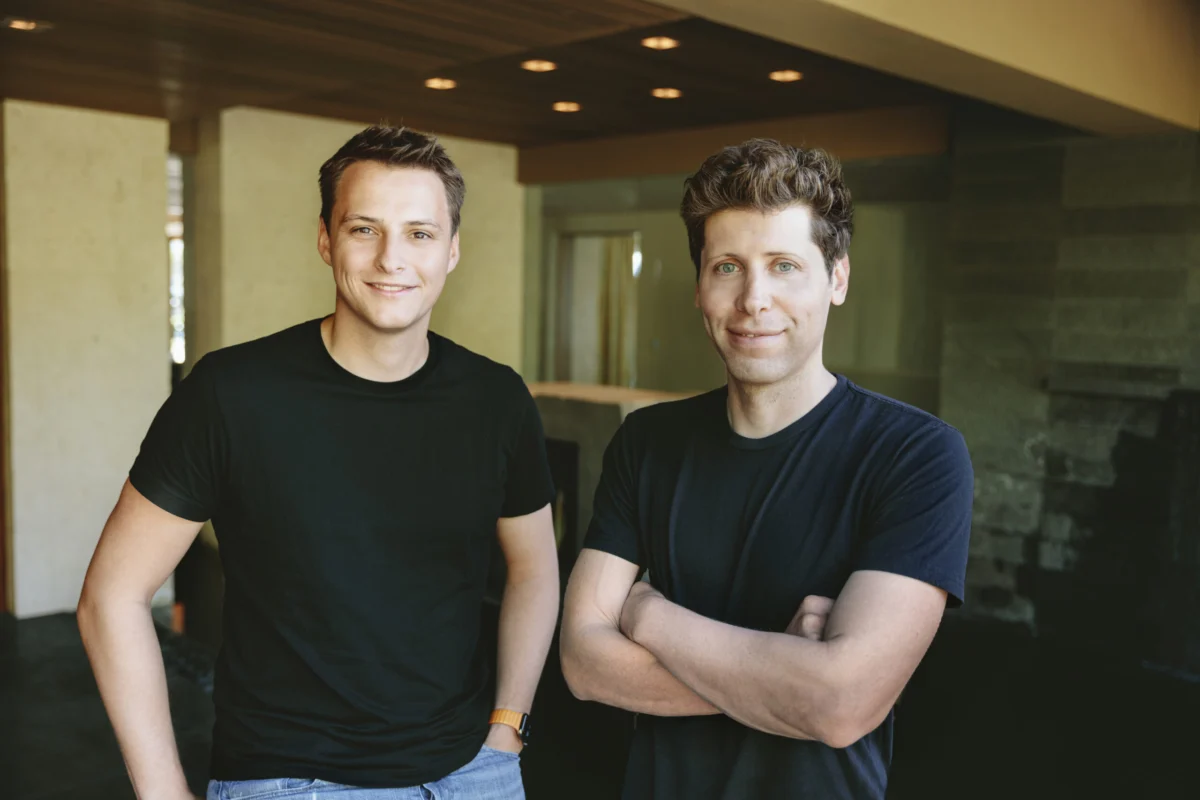
World, the ambitious online verification startup co-founded by OpenAI CEO Sam Altman, has successfully concluded a strategic crypto token sale, raising $52.5 million from a consortium of prominent investors. The funding, secured through the sale of World’s native token, WLD, underscores continued investor confidence in the project’s long-term vision despite a challenging broader market for digital assets and ongoing scrutiny of its unique biometric verification methods.
The capital injection comes at a pivotal time for World, which aims to address the rapidly evolving challenges of distinguishing human activity from machine-generated content in the digital realm. The sale featured a 12-month lockup period for the participating investors, a mechanism designed to prevent immediate liquidation and signal a robust, long-term commitment to the World Foundation’s mission and the sustained growth and utility of the World network. Such lockup periods are common in early-stage crypto investments, serving as a testament to the investors’ belief in the project’s fundamental value proposition rather than short-term speculative gains.
The Genesis of World: From Worldcoin to a Global Vision
The project, initially launched under the more overtly crypto-centric moniker "Worldcoin," emerged from a deep-seated concern about the future impact of advanced artificial intelligence on human society. Sam Altman, a leading voice in the AI revolution, has frequently articulated a vision where AI’s capabilities could eventually make human labor less essential, necessitating new economic models like Universal Basic Income (UBI). In this future, a universally verifiable digital identity, resistant to AI impersonation, would become paramount.
Tools for Humanity, the San Francisco-based startup operating the World project, was co-founded by Altman and CEO Alex Blania. Their initial premise revolved around distributing a new cryptocurrency, Worldcoin, to billions of people globally, contingent upon biometric verification. This ambitious undertaking was envisioned as a foundational layer for a global digital economy, where individuals could prove their uniqueness as a human being without revealing their personal identity, thereby safeguarding privacy while enabling novel forms of digital interaction and potentially, the distribution of UBI.
The rebranding from "Worldcoin" to simply "World" occurred amidst a broader industry shift and a period of increased regulatory scrutiny and public skepticism towards the cryptocurrency space. This strategic pivot likely aimed to broaden its appeal beyond the crypto niche, emphasizing its core utility as a digital identity solution applicable across various online platforms, irrespective of one’s engagement with cryptocurrencies. Despite the name change, the WLD token remains a central component of its ecosystem, serving as the utility and governance token for the network.
Funding Structure and Key Investors
The $52.5 million raised in this latest token sale will be directed to the World Foundation, an exempted limited guarantee foundation domiciled in the Cayman Islands. This structure is typical for decentralized projects, designed to steward the development and expansion of the network independently from the operating company, Tools for Humanity. The foundation’s mandate is crucial for ensuring the long-term resilience and decentralization of the World ecosystem.
Pantera Capital, a prominent venture capital firm with a dedicated focus on digital assets and blockchain technology, led the investment round. Pantera’s participation signals significant confidence in World’s technology and market potential, given their extensive track record in backing successful crypto and Web3 projects. Joining Pantera were other notable investors, including Eightco Holdings, Bain Capital Crypto, Susquehanna Crypto, and Selini Capital, among others. The diversity and caliber of these investors highlight a broad institutional belief in the long-term viability of World’s unique approach to digital identity. For these firms, the 12-month lockup period is a standard practice that aligns with their investment horizon, often spanning several years, and underscores a strategic commitment to nurturing the project’s growth rather than seeking quick returns.
The "Proof of Human" Imperative: World ID and Orb Technology
At the core of World’s offering is its "proof of human" toolset, embodied by World ID. As artificial intelligence models become increasingly sophisticated, capable of generating highly convincing text, images, and even voices, the distinction between human and machine online is blurring. This presents significant challenges for everything from social media authenticity to democratic processes and secure financial transactions. World ID proposes a solution: an anonymous digital marker that definitively verifies whether a human, not a bot or an AI agent, is behind a particular online account or action.
To obtain the highest level of verification within World’s system – a verified World ID – users must undergo a unique biometric scan. This process involves having their eyes scanned by an "Orb," a bespoke metallic sphere that captures the unique patterns of a user’s iris. The Orb then converts this iris data into a distinct cryptographic identifier, a privacy-preserving hash that cannot be reverse-engineered to reconstruct the original biometric data. This cryptographic identifier is then stored on the blockchain, establishing a unique "proof of personhood" without linking to traditional personal identifiable information (PII). World’s Orbs are strategically located at its offices and have been deployed through partnerships with various stores and service points globally, aiming for broad accessibility.
The technical architecture is designed to be privacy-preserving by default. The iris scan creates a unique numerical representation of an individual’s iris, which is then used to check for uniqueness within the World network. The system is not designed to store the actual iris image or link the digital ID to a person’s name, address, or other private data. This emphasis on privacy is crucial for a global identity system, particularly in an era of heightened data protection concerns.
Market Context and Strategic Partnerships
The need for robust digital identity solutions has never been more pressing. The global digital identity market is projected to grow significantly, driven by increasing online interactions, the proliferation of cyber threats, and regulatory demands for stronger authentication. World’s approach stands out by leveraging biometrics in a novel, privacy-centric way, distinct from traditional identity providers that often rely on government-issued documents or centralized databases.
In April, the project marked a significant milestone by launching a new version of its application and announcing key partnerships. Notably, collaborations with platforms like Tinder, the popular dating app, and Ticketmaster, a leading event ticketing company, demonstrated World’s ambition to integrate its "proof of human" verification into mainstream consumer applications. For Tinder, World ID could combat bot accounts and enhance user trust, while for Ticketmaster, it could help prevent ticket scalping by verifying individual human purchasers. These partnerships are crucial for World’s strategy to scale its utility beyond the crypto sphere and into everyday digital life, showcasing practical applications for its technology.
Challenges, Controversies, and the Path Forward
Despite its innovative approach and high-profile backing, World has not been without its challenges and controversies. The project’s unique biometric verification method has raised concerns among privacy advocates and regulatory bodies in various jurisdictions. The collection of iris scans, even if anonymized and cryptographically secured, touches upon sensitive biometric data, prompting questions about data sovereignty, potential misuse, and long-term implications for individual privacy. While World emphasizes its privacy-preserving design, the very act of collecting such data requires significant trust from users and clear communication about its handling.
Scalability has also been a persistent hurdle. The logistics of deploying Orbs globally and convincing a substantial portion of the world’s population to undergo an iris scan is an immense undertaking. Building a truly universal digital identity network requires overcoming cultural barriers, technological access disparities, and public skepticism. The initial rollout has faced practical difficulties in certain regions, highlighting the complexity of its global ambition.
Furthermore, the operating company, Tools for Humanity (TFH), conducted a round of layoffs in June, signaling some internal restructuring or recalibration of its growth strategy. While common in the startup ecosystem, particularly during periods of economic uncertainty or market corrections, such events often prompt closer scrutiny of a project’s operational efficiency and market adoption trajectory. The challenge for World lies in translating its innovative technology into widespread consumer adoption and demonstrating tangible value that outweighs any perceived privacy risks or logistical hurdles.
Looking ahead, World’s success will hinge on several critical factors:
- Regulatory Acceptance: Navigating the complex and evolving global regulatory landscape concerning biometric data and digital identity will be paramount. Clear frameworks and proactive engagement with regulators will be essential.
- User Adoption: Convincing billions of users to adopt World ID will require a compelling user experience, robust security, and demonstrable benefits that resonate with diverse populations.
- Ecosystem Growth: Expanding partnerships and integrating World ID across a wider range of online services will be key to establishing its utility and network effects.
- Technological Evolution: Continuously enhancing the privacy, security, and efficiency of the Orb and World ID system will be crucial to maintaining trust and staying ahead of potential threats.
The $52.5 million capital raise represents a significant vote of confidence from strategic investors who recognize the profound implications of distinguishing humans from AI in the digital age. As AI continues its rapid advancement, the problem World seeks to solve is becoming increasingly urgent. The journey to a universally verifiable "proof of human" digital identity is fraught with technical, ethical, and logistical complexities, but the latest funding round provides World with substantial resources to continue its pursuit of this ambitious and potentially transformative vision.
