

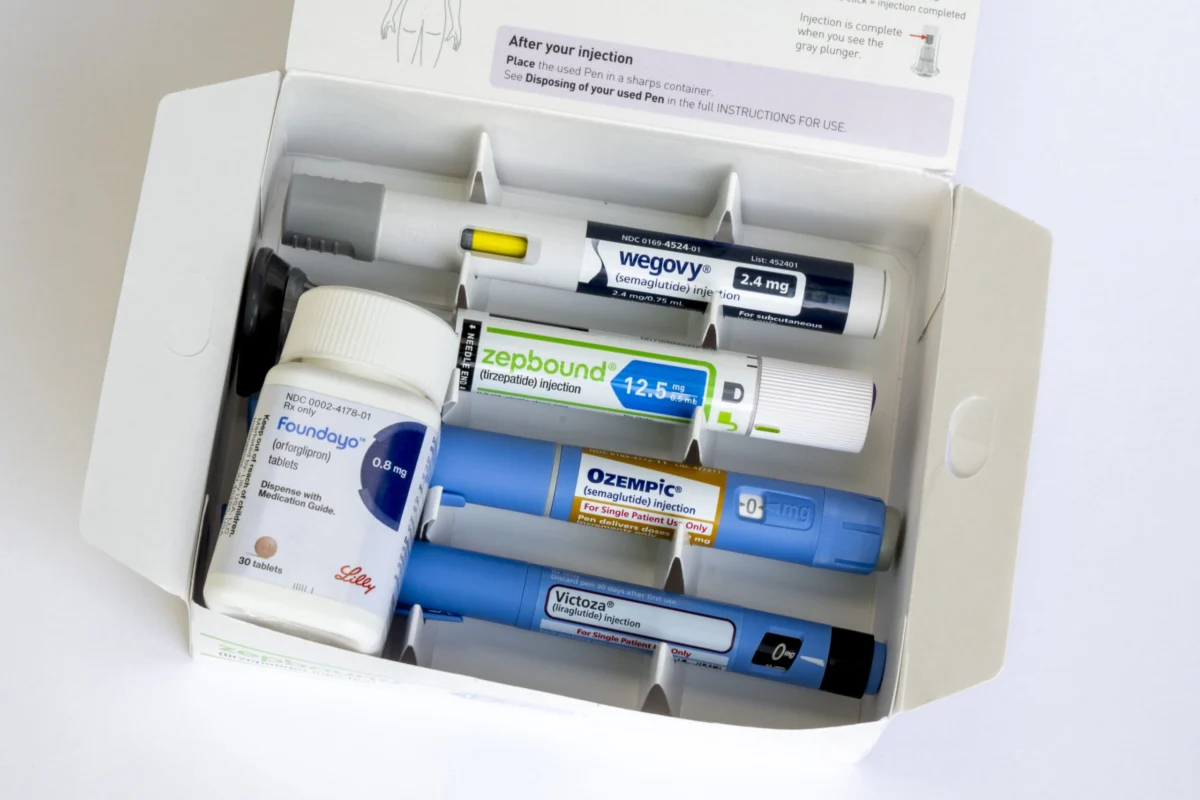
In a significant escalation of the fiercely competitive market for GLP-1 agonist drugs, Danish pharmaceutical giant Novo Nordisk has filed a lawsuit against its American rival, Eli Lilly, alleging that Lilly’s advertising campaigns for its highly successful obesity and diabetes medications are designed to mislead consumers about their comparative efficacy. The lawsuit, lodged on Tuesday, May 21, in the U.S. District Court for the District of New Jersey, contends that Eli Lilly’s nationwide advertisements rely on "outdated" clinical trial data to present a false impression of superiority, particularly when comparing the highest doses of Lilly’s drugs to lower, less potent doses of Novo Nordisk’s competing injections. This legal challenge underscores the immense financial stakes and intense rivalry defining the burgeoning GLP-1 sector, a market projected to reach hundreds of billions of dollars globally in the coming years.
The Core of the Allegations: Outdated Comparisons and Misleading Claims
At the heart of Novo Nordisk’s complaint is the assertion that Eli Lilly’s promotional materials deliberately omit crucial, recently available data regarding Novo Nordisk’s high-dose version of its popular obesity injection, Wegovy (semaglutide). This higher-dose formulation, approved by the FDA in March and subsequently launched into the market, has demonstrated weight loss outcomes that are significantly more comparable to those achieved with Lilly’s products, particularly its obesity drug Zepbound (tirzepatide). Novo Nordisk argues that by not incorporating this updated information, Lilly’s advertising campaigns steer consumers towards the "inevitable conclusion that Lilly’s medicines are superior to Novo’s, and that’s not accurate," according to John Kuckelman, Novo Nordisk’s group general counsel.
The lawsuit specifically targets ads that compare the highest available doses of Lilly’s tirzepatide-based medications, Zepbound and Mounjaro, with lower doses of Novo Nordisk’s semaglutide-based drugs, Wegovy and Ozempic. For instance, one particular television commercial cited in the suit directly contrasts Zepbound and Wegovy, visually and verbally claiming that patients on Lilly’s drug lose an average of 50 pounds, compared to 33 pounds for those on the 2.4-milligram dose of Novo’s treatment. Novo Nordisk contends that this comparison is based on a prior head-to-head clinical trial that did not include the recently approved, higher 7.2-milligram dose of Wegovy. This newer formulation has shown an average weight loss of approximately 47 pounds, which Novo Nordisk describes as "clinically consistent" with the weight loss observed with Zepbound in its most rigorous trials.
Novo Nordisk further alleges that while Eli Lilly’s advertisements may include a "small footnote" acknowledging the existence of the high-dose Wegovy, this disclaimer is often "ambiguous, confusing, virtually illegible, and wholly inadequate." It fails to effectively communicate to the consumer that this higher dose significantly closes the efficacy gap between the rival drugs. Kuckelman emphasized, "While it may have been accurate to say that before 7.2 milligrams became available for Wegovy, it is no longer accurate to say that. They have, we think, a legal obligation, but even more important, they have a responsibility to patients to share accurate information."
The suit also points out that no head-to-head clinical trials have yet directly compared the currently available highest doses of both Wegovy and Zepbound. Therefore, Novo Nordisk asserts that Lilly "has no basis to make these comparative claims" of superior efficacy. Similar claims are made regarding the comparison between Mounjaro and Ozempic, with Novo Nordisk arguing that Lilly’s ads for Mounjaro fail to account for newer data on higher doses of Ozempic, which were approved more than four years ago. The sheer reach of these campaigns is also highlighted, with the Zepbound TV commercial alone having garnered over 700 million impressions since its launch around late April, demonstrating the substantial potential for competitive harm to Novo Nordisk.
A Timeline of Escalation and Legal Action
The legal challenge follows a period of escalating tension between the two pharmaceutical giants.
- March 2024: The U.S. Food and Drug Administration (FDA) approves the higher-dose (7.2-milligram) version of Novo Nordisk’s Wegovy, specifically for chronic weight management, offering patients an additional treatment option with enhanced efficacy.
- April 2024: Novo Nordisk formally issues a cease-and-desist request to Eli Lilly, demanding that the company either withdraw or correct its allegedly misleading advertising campaigns. This request, according to Novo Nordisk, was refused by Eli Lilly.
- End of April 2024: Eli Lilly’s Zepbound TV commercial, central to Novo Nordisk’s allegations, begins airing, quickly accumulating hundreds of millions of impressions.
- May 21, 2024: Novo Nordisk officially files the lawsuit in the U.S. District Court for the District of New Jersey.
- Upcoming Days: Novo Nordisk has indicated its intention to seek a preliminary injunction in the coming days if Eli Lilly does not voluntarily remove the disputed advertisements. Such an injunction would immediately block the ads while the case proceeds through the courts.
The Legal Framework: Unfair Competition and the Lanham Act
Novo Nordisk’s lawsuit primarily brings federal and state claims of unfair competition and false advertising, notably under the Lanham Act. The Lanham Act is a federal statute that governs trademarks, service marks, and unfair competition. In the context of pharmaceutical advertising, it allows companies to sue competitors for deceptive advertising practices that are likely to confuse or mislead consumers and cause commercial harm. Pharmaceutical companies have historically relied on this act to hold rivals accountable for inaccurate or misleading promotional claims.
The lawsuit emphasizes that these advertising campaigns are particularly harmful because consumers, unlike healthcare professionals who typically have access to comprehensive scientific literature and clinical trial data, often rely heavily on advertisements to form their initial understanding of GLP-1 treatments and available options. "Lilly’s advertising campaign deprives consumers of the truthful, current, and complete information they need to make informed decisions about their available treatment options," the suit states. This suggests a potential public health dimension to the legal battle, beyond mere corporate rivalry, as patient choices regarding significant medical treatments could be influenced by potentially inaccurate information.
Novo Nordisk is seeking several remedies from the court, including a permanent injunction to prevent Eli Lilly from running the contested advertisements in the future, a requirement for Eli Lilly to issue corrective advertising to rectify any misinformation, and unspecified financial damages for the harm caused. The specific amount of financial damages is currently unclear, but given the massive market share and revenue generated by these drugs, it could be substantial.
The Multi-Billion Dollar Battle for GLP-1 Dominance
The lawsuit unfolds against the backdrop of an intensely competitive and rapidly expanding market for GLP-1 receptor agonists. These drugs, originally developed for type 2 diabetes, have revolutionized the treatment of obesity, demonstrating unprecedented levels of weight loss. The market, currently dominated by Novo Nordisk’s Wegovy and Ozempic (semaglutide) and Eli Lilly’s Zepbound and Mounjaro (tirzepatide), is projected to exceed $100 billion annually within the next decade.
Novo Nordisk, an early pioneer in the GLP-1 space with Ozempic and then Wegovy, initially held a significant lead. However, Eli Lilly’s tirzepatide, marketed as Mounjaro for diabetes and Zepbound for obesity, has emerged as a formidable challenger. Tirzepatide is a dual GIP/GLP-1 agonist, which some studies have shown to offer slightly superior weight loss compared to semaglutide in earlier head-to-head trials, particularly at its highest doses. This perceived edge has contributed to Lilly’s medications becoming the preferred treatments among many providers and patients in recent years.
Novo Nordisk’s strategic response has included aggressive market maneuvers, such as introducing its new high-dose Wegovy, exploring new oral obesity medications, and implementing strategic price adjustments to compete with Lilly’s offerings. The launch of the 7.2-milligram Wegovy, which achieved an average weight loss of around 19% in clinical trials, is a direct strategic counter to Zepbound’s efficacy, aiming to re-establish parity in the highest-tier weight loss outcomes. For context, some trials for Zepbound have shown average weight loss exceeding 20% at its highest doses. The difference between 19% and 20%+ might seem small, but in a market where patients and physicians are seeking the most effective options, even marginal differences are heavily emphasized in marketing.
The financial stakes for both companies are enormous. In 2023, Novo Nordisk reported sales of over $33 billion, with a significant portion attributed to its GLP-1 franchise. Eli Lilly, with its own robust pharmaceutical portfolio, saw its revenue climb significantly, largely driven by the explosive demand for Mounjaro and Zepbound, with combined sales for tirzepatide products exceeding $5 billion in 2023 and projected to grow exponentially. This lawsuit, therefore, is not merely about advertising claims; it is a battle for market dominance and the vast revenue streams associated with these transformative drugs.
Reactions and Potential Implications
As of the filing of the lawsuit, Eli Lilly had not yet issued an immediate public response to Novo Nordisk’s allegations or a request for comment. However, it is common for pharmaceutical companies facing such lawsuits to defend their advertising practices vigorously, asserting that their campaigns are truthful, substantiated by scientific evidence, and comply with all regulatory guidelines. A likely future statement from Eli Lilly might emphasize their commitment to providing accurate and transparent information to patients and healthcare providers, and that they stand by the integrity of their marketing materials.
The outcome of this lawsuit could have significant implications across several fronts:
- For Consumers: If Novo Nordisk prevails, it could lead to more stringent requirements for comparative advertising in the pharmaceutical industry, potentially resulting in clearer, more up-to-date information for patients making critical health decisions. Conversely, if Lilly successfully defends its practices, it could set a precedent for how efficacy comparisons are presented, even with evolving data.
- For the Pharmaceutical Industry: This case could redefine the boundaries of permissible comparative advertising, especially in rapidly evolving therapeutic areas like GLP-1s where new data and formulations emerge frequently. It may prompt other drugmakers to re-evaluate their current and future advertising strategies to ensure absolute clarity and currency of information. The use of footnotes and disclaimers, as challenged by Novo Nordisk, could also come under closer scrutiny.
- For Regulatory Bodies: The lawsuit may prompt regulatory bodies like the FDA and the Federal Trade Commission (FTC) to review their guidelines for pharmaceutical advertising, particularly regarding how comparative efficacy claims are made and how quickly advertisements must be updated to reflect new clinical data or product approvals.
- For Novo Nordisk and Eli Lilly: Beyond potential financial damages, a court ruling could significantly impact the public perception and brand reputation of either company. A win for Novo Nordisk could help it regain lost market share and reinforce its image as a patient-centric company advocating for transparent information. A win for Eli Lilly would validate its current marketing approach and potentially solidify its competitive position. The pursuit of a preliminary injunction by Novo Nordisk indicates their urgency to halt the ads immediately, highlighting the perceived ongoing harm.
Ultimately, the legal battle between Novo Nordisk and Eli Lilly represents more than just a dispute over advertising; it is a critical juncture in the competition for dominance in one of the most transformative and lucrative drug markets of the century. The resolution of this lawsuit will not only shape the future of GLP-1 advertising but could also establish important precedents for how pharmaceutical companies communicate the efficacy of their life-changing medications to the public.
