

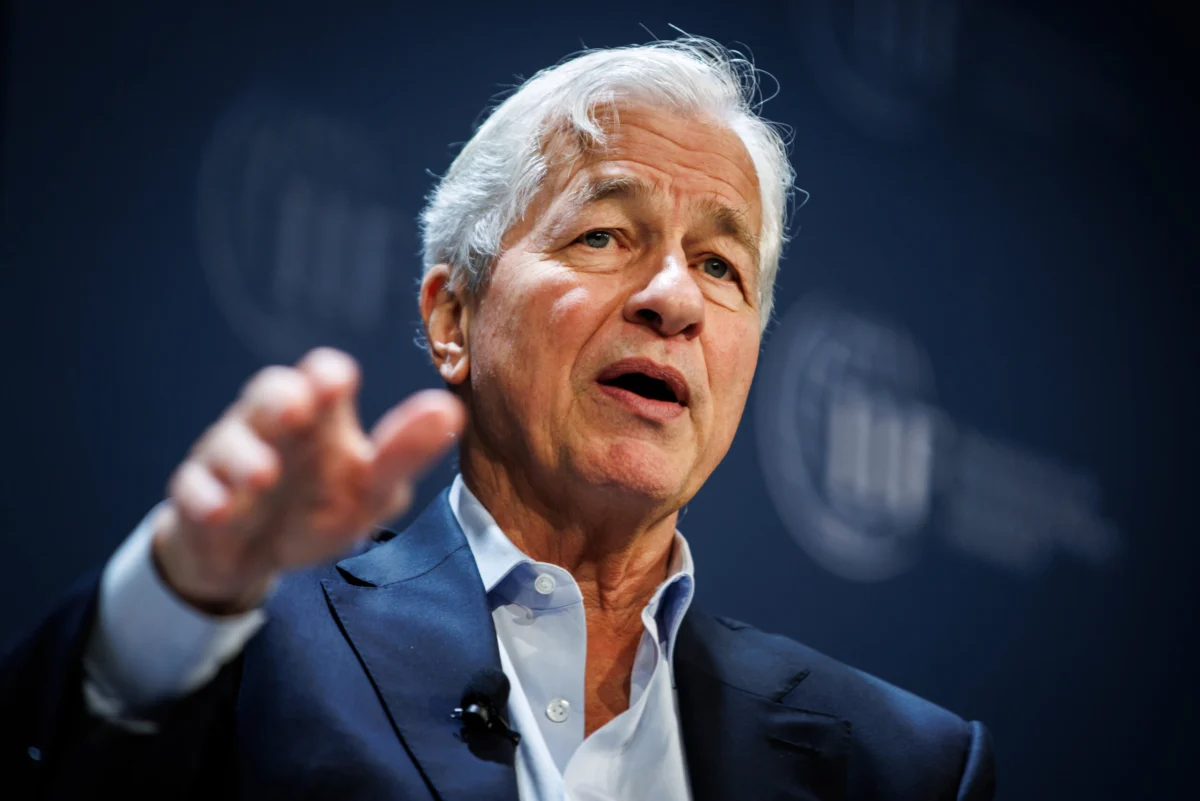
Jamie Dimon, the formidable chief executive officer of JPMorgan Chase & Co., has once again issued a stark warning to investors, contending that global economic risks are significantly underestimated by current market valuations. Speaking in an extensive interview with Wilfred Frost, released late Monday, Dimon articulated a profound sense of caution, declaring that he would refrain from purchasing either equities or long-dated U.S. Treasurys at their prevailing prices. His remarks, delivered against a backdrop of resilient financial markets and strong corporate earnings, underscore a deep-seated apprehension regarding a confluence of geopolitical and fiscal threats that he believes are not fully priced into assets.
Jamie Dimon’s Persistent Warnings: A Track Record of Prudence
Dimon’s pronouncements are not unfamiliar to Wall Street. Often regarded as a barometer for global financial health, the head of the world’s largest bank by market capitalization has a long-standing reputation for his pragmatic, often conservative, outlook. His previous warnings, such as the "economic hurricane" forecast in June 2022 due to quantitative tightening and the war in Ukraine, resonated widely, though the severity of the predicted downturn ultimately softened. Prior to that, he had spoken of "storm clouds" on the horizon, consistently urging vigilance amidst periods of market exuberance. This consistent caution stems from his extensive experience navigating numerous economic cycles, financial crises, and geopolitical upheavals throughout his illustrious career. His current statements, therefore, carry significant weight, prompting a re-evaluation of risk across the investment community, particularly given JPMorgan’s expansive global footprint and unparalleled insights into diverse economic sectors. The institute of International Finance annual membership meeting, where Dimon was photographed speaking on October 16, 2025, often serves as a prominent platform for such high-level economic discourse, bringing together global financial leaders to discuss pressing issues.
The Geopolitical Crucible: Ukraine, Middle East, and U.S.-China Dynamics
At the core of Dimon’s concerns is a complex and intensifying geopolitical landscape. He specifically cited the protracted conflict in Ukraine, the renewed hostilities in the Middle East, and the simmering tensions between the United States and China as principal drivers of uncertainty. The war in Ukraine, now in its third year, continues to exert significant pressure on global energy and food markets, straining supply chains and diverting immense financial resources towards military aid and reconstruction. While European economies have shown some resilience in adapting to reduced Russian energy supplies, the long-term implications for regional stability and global trade remain profound. The recent escalation in the Middle East, particularly involving the Israel-Hamas conflict and its broader regional spillover effects—such as attacks on shipping in the Red Sea—threatens to disrupt critical trade routes, drive up insurance costs, and potentially reignite inflationary pressures through increased energy prices. These conflicts also fuel an alarming increase in global military spending, further diverting resources from productive investments and contributing to national debt burdens worldwide.
Furthermore, the strategic rivalry between the U.S. and China continues to evolve, encompassing trade disputes, technological competition (especially in semiconductors and artificial intelligence), and geopolitical flashpoints like the Taiwan Strait. Dimon alluded to these tensions as a fundamental risk factor, capable of fracturing global supply chains, stifling innovation through protectionist policies, and potentially leading to broader economic decoupling. Such a scenario would undoubtedly introduce unprecedented levels of volatility and inefficiency into the global economic system, impacting multinational corporations and investment flows alike.
America’s Fiscal Predicament: Debt, Deficits, and the Specter of Bond Vigilantes
Beyond geopolitical concerns, Dimon highlighted the persistent and escalating U.S. budget deficits as a critical domestic vulnerability. The nation’s federal debt has surpassed $34 trillion, a figure that continues to climb, exacerbated by substantial spending during the pandemic, ongoing social programs, and increasing interest payments on existing debt. The Congressional Budget Office (CBO) consistently projects widening deficits in the coming years, driven by an aging population, rising healthcare costs, and a structural imbalance between government revenues and expenditures. Dimon warned that this trajectory is unsustainable and will inevitably force a reckoning.
His concern centers on the potential re-emergence of "bond vigilantes"—investors who, perceiving an increasing risk of inflation or future default due to excessive government borrowing, demand higher interest rates to finance the nation’s debt. This dynamic, if it materializes, would dramatically increase the cost of government borrowing, further inflating the deficit and potentially crowding out private sector investment. Dimon predicted that such a scenario would lead to significantly higher interest rates, stating, "My view is it will become a problem," and that bond markets would ultimately demand greater compensation for financing the government’s obligations. This would have profound implications for everything from mortgage rates to corporate borrowing costs, potentially stifling economic growth.
Markets in Defiance: The S&P 500’s Resilience and Robust Bank Earnings
Despite Dimon’s sobering assessment, financial markets have demonstrated remarkable resilience throughout 2025. The S&P 500, a key benchmark for U.S. equities, has returned nearly 10% year-to-date, reflecting investor optimism that has largely looked past the geopolitical turmoil and fiscal concerns. This market strength has been underpinned by several factors: continued robust consumer spending, which has defied expectations of a slowdown; a moderation in inflation rates, easing pressure on central banks; and, critically, an enthusiastic embrace of the artificial intelligence (AI) trade, which has propelled the valuations of technology giants to unprecedented heights.

Adding to this narrative of resilience, JPMorgan Chase itself, along with its peers in the banking sector, reported blockbuster quarterly results just last week. These strong earnings were largely powered by surging trading revenues and a notable rebound in investment banking activity, reinforcing the perception that the U.S. economy has weathered recent geopolitical and economic headwinds better than many anticipated. JPMorgan’s financial performance often serves as a bellwether for the broader economy, and its robust results might seem to contradict Dimon’s cautious stance. However, Dimon’s warnings often focus on systemic, long-term risks that may not be immediately apparent in quarterly earnings, emphasizing the difference between cyclical market performance and underlying structural vulnerabilities.
Navigating the Investment Landscape: Equities, Treasurys, and AI’s Uncharted Waters
When directly questioned about his investment preferences, Dimon was unequivocal. He stated he would personally not purchase long-dated Treasurys, emphasizing that even if inflation were to retreat to the Federal Reserve’s 2% target, the 10-year bond yield "should probably be at 4% to 4.5%." This implies that current yields, which in late 2025 might hover around 3.8% to 4%, offer insufficient compensation for the inherent risks, suggesting little upside for bond prices and potential for significant downside if yields rise. This perspective challenges the conventional wisdom that bonds offer a safe haven, particularly when government debt levels are soaring.
Similarly, Dimon expressed caution regarding the broader stock market. While acknowledging he would consider an individual stock if it represented "a great investment" based on fundamental analysis, he would not be a buyer of the overall market at current valuations. This stance suggests that, in his view, equity prices are stretched, trading at multiples that do not adequately account for the mounting risks he has identified. The S&P 500’s forward price-to-earnings (P/E) ratio, which in 2025 might be hovering above its historical average, supports the argument that valuations are indeed elevated, potentially leaving little room for error if economic conditions deteriorate.
Dimon also offered a measured perspective on the burgeoning artificial intelligence sector, comparing the current spending boom to the early days of the internet. He acknowledged the transformative potential, stating, "The amount of money being spent is huge. Will it in total pay off? Probably, just like the internet did." However, he quickly tempered this optimism with a cautionary note, drawing parallels to the dot-com bubble of the late 1990s. He reminded investors that while the internet ultimately revolutionized global commerce and communication, many early leaders, such as Yahoo and Netscape, eventually faded, while eventual titans like Google and Facebook emerged later. "Will it pay off the way you expect and the timetable you expect? Definitely not," Dimon asserted, implying that the path to profitability and sustained success in AI will be fraught with volatility, consolidation, and unforeseen challenges. This historical perspective serves as a crucial reminder for investors to differentiate between genuine innovation and speculative hype, focusing on companies with sustainable business models and strong competitive advantages rather than chasing every fleeting trend.
Analyst Reactions and Broader Economic Perspectives
Dimon’s warnings, while consistent with his long-held prudence, stand in contrast to a segment of market analysts and investors who remain bullish on the economic outlook. Many point to the resilience of the U.S. labor market, which continues to show robust job creation and wage growth, and the adaptability of corporations in navigating supply chain disruptions and inflationary pressures. Furthermore, proponents of a continued bull market often cite the potential for further innovation beyond AI, strong corporate balance sheets, and a potentially more accommodative Federal Reserve in the future if inflation remains under control. They argue that market valuations, while elevated, are justified by earnings growth and the low-interest-rate environment that has largely prevailed in recent years, even with recent hikes.
Conversely, a significant cohort of economists and strategists echo Dimon’s concerns, particularly regarding the national debt and geopolitical fragmentation. Institutions like the Peterson Institute for International Economics and various bond market strategists have consistently highlighted the unsustainable fiscal path of the U.S. and other developed nations. They caution that the current geopolitical climate introduces a "risk premium" that markets are underpricing, potentially setting the stage for sudden, sharp corrections if any of the identified tensions escalate unexpectedly. Federal Reserve officials, while generally maintaining a posture of "data dependency" regarding monetary policy, have also expressed awareness of the long-term fiscal challenges facing the nation, though their primary mandate remains price stability and maximum employment.
The Path Ahead: Implications for Investors and Policymakers
Dimon’s latest insights serve as a critical reminder for both investors and policymakers to exercise caution and long-term strategic thinking. For investors, his advice suggests a need for increased prudence, diversification across asset classes, and a rigorous re-evaluation of risk exposures. It underscores the importance of fundamental analysis over speculative enthusiasm, especially in frothy sectors like AI. While the global economy has indeed demonstrated increased resilience due to factors like lower energy dependence compared to previous decades, Dimon warned that this does not eliminate the possibility of a sudden inflection point. "You may need more straws in the camel’s back to cause that tipping point," he remarked, implying that while individual shocks might be absorbed, a cumulative effect could still trigger a significant downturn.
For policymakers, Dimon’s critique of fiscal policy highlights the urgent need for addressing structural deficits and the mounting national debt. Failure to do so risks not only higher interest rates and slower economic growth but also diminished capacity to respond to future crises. Diplomatic efforts to de-escalate geopolitical tensions and foster greater international cooperation are also paramount to mitigating the risks of conflict and trade fragmentation. Ultimately, Jamie Dimon’s consistent warnings serve as a call for realism in an often-optimistic market, urging stakeholders to acknowledge and proactively prepare for the complex array of challenges that lie beneath the surface of current economic resilience.
