

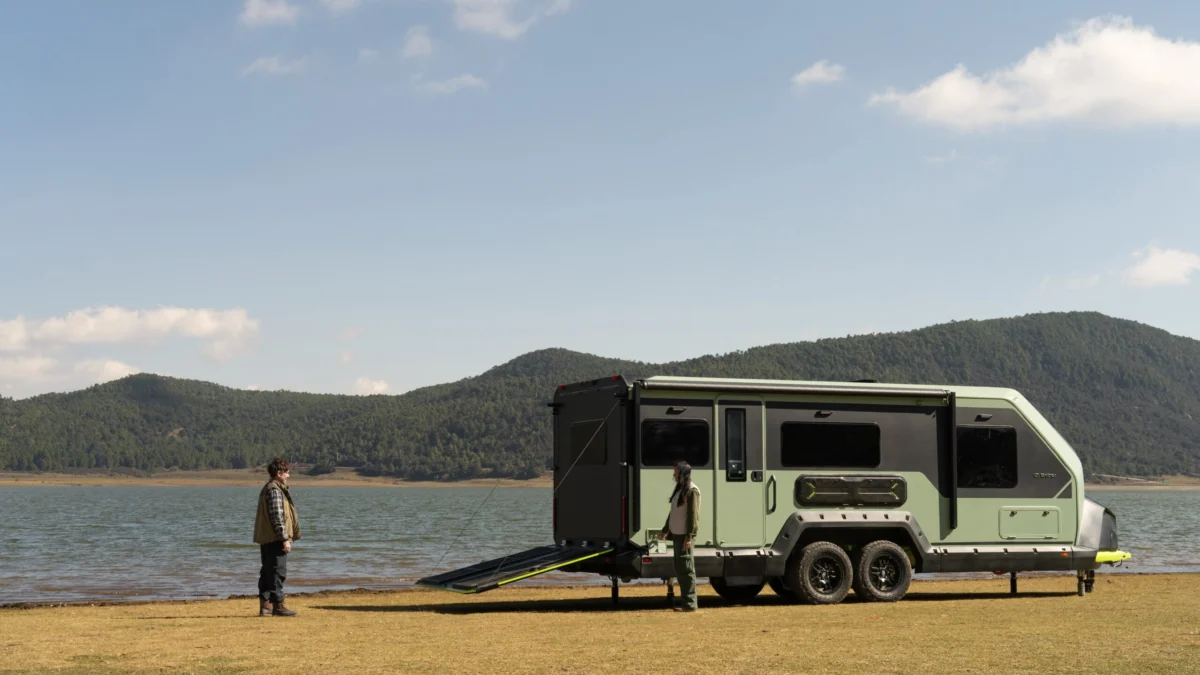
Evotrex, a burgeoning startup operating for just two years, has successfully closed a $30 million Series A funding round, bringing its total capital raised to an impressive $46 million. This substantial investment is poised to propel the company’s ambitious plans to commence the production and sale of its inaugural hybrid RV travel trailers next year, with an initial target of approximately 1,000 units annually. The significant capital infusion underscores a growing investor confidence in the nascent electric and hybrid recreational vehicle market, particularly as consumer demand shifts towards more sustainable and self-sufficient travel options.
The bulk of the Series A funding emanated from a consortium of prominent Chinese and Hong Kong-based investment firms, including GSR United Capital, Forebright Concerto Capital, TTGG Ventures, and Pegasus Capital. This international backing highlights the global interest in innovative mobility solutions and clean energy technologies. Notably, consumer electronics giant Anker, known for its portable power solutions and charging accessories, was among Evotrex’s early seed investors, signaling a strategic alignment with the startup’s vision for extended-range, self-powered travel. This earlier investment from Anker suggests a deeper understanding of portable power systems, a critical component in Evotrex’s hybrid RV design.
The Hybrid Vision: Extended Range for Off-Grid Living
Headquartered in Los Angeles, Evotrex is leveraging this fresh capital to finalize the rigorous development and testing phases of its pioneering RV. The vehicle, first unveiled to critical acclaim at this year’s Consumer Electronics Show (CES) after the company emerged from stealth mode last year, represents a distinct approach in the rapidly evolving RV sector. While some emerging startups, such as Lightship and Pebble, are championing all-electric travel trailers, Evotrex has strategically opted for a hybrid system. Specifically, its RV, dubbed the PG5, is powered by a robust battery pack that can be efficiently recharged via an onboard gas engine. This innovative configuration is commonly referred to as an "extended range electric vehicle" (EREV) system, offering a compelling balance between environmental consciousness and practical utility.
Co-founder Alex Xiao articulated the core philosophy behind this design choice, emphasizing the desire to create an RV capable of facilitating genuine, long-term off-grid living. This objective, he noted, remains challenging to achieve with conventional all-electric power sources due to range anxiety and charging infrastructure limitations, or with traditional gas engines that still frequently necessitate external electric hookups for onboard amenities. The EREV system thus serves as a bridge, providing the environmental benefits of electric propulsion for shorter distances and quiet operation, while offering the flexibility and peace of mind of a gasoline generator for prolonged expeditions away from charging stations. This design directly addresses one of the primary pain points for adventurous RVers: reliable power in remote locations.
Navigating a Crowded and Evolving Market
Evotrex enters an increasingly dynamic, albeit competitive, market segment. The recreational vehicle industry, historically dominated by established manufacturers, has been slow to fully embrace electrification. Legacy players like Thor Industries and Winnebago, while acknowledging the shift, have shown a more cautious, phased approach. Thor’s initial electric vehicle offerings, for instance, are slated for rental fleets rather than direct consumer sales, indicating a desire to test market viability and gather data before a broader rollout. Similarly, Winnebago’s eRV2 has been undergoing extensive field testing since 2023, yet it has not yet reached the hands of everyday consumers. This discernible gap between legacy manufacturers’ intentions and market availability has created a fertile ground for a new wave of startups, with Evotrex positioning itself to be among the first to successfully commercialize a viable, modern solution.
Despite the burgeoning competition, Alex Xiao expressed enthusiasm for the market dynamics. Drawing upon his extensive experience as a product manager at Anker, he underscored the importance of differentiation through superior product definition, robust research and development, and a resilient supply chain. "We are not afraid of competition; competition is a good thing," Xiao told TechCrunch. "We educate the market together, we grow the market together. I think in the long term the strongest companies will have many things – you must be very good at product definition, R&D, and supply chain. You also need to be very good at distribution and service. Many things together. It’s a very complicated business." This holistic perspective suggests a strategy that goes beyond mere technological innovation, encompassing the entire customer lifecycle from product inception to after-sales support.
Robust Demand and a Focus on Durability
The market’s reception to Evotrex’s vision has been demonstrably positive. The company reports that an impressive 90% of its existing order book is for the "fully loaded Premium trim" of its PG5 RV. This high-end model, priced at approximately $160,000, suggests a strong demand among early adopters for advanced features and premium experiences, even at a higher price point. This trend aligns with broader consumer shifts towards luxury adventure travel and a willingness to invest in technologies that enhance lifestyle. The strong pre-order interest validates Evotrex’s product strategy and pricing structure, indicating that consumers are ready for a sophisticated, environmentally conscious RV option.
A critical aspect of Evotrex’s strategy, particularly in a product category known for its mechanical complexity, is an unwavering commitment to durability and quality. Alex Xiao confirmed that Evotrex has successfully validated a functional version of its first RV. However, the company has allocated the next 10 to 12 months for comprehensive and rigorous testing of the PG5’s durability. This extended testing period is a deliberate response to a known vulnerability within the RV industry, where the sheer number of moving parts, systems, and components can often lead to mechanical integrity challenges. Xiao explicitly stated that Evotrex is taking this aspect seriously. As a testament to this priority, he highlighted that the company’s first service employee was onboarded half a year ago, significantly predating the hiring of its first sales employee, who joined only last month. This organizational structuring clearly indicates Evotrex’s strategic decision to prioritize robust customer support and product reliability over an aggressive, immediate sales push. This approach, while potentially delaying revenue generation, aims to build long-term brand trust and mitigate potential reputational damage from early product failures, a common pitfall for new hardware ventures.
Strategic Manufacturing and Market Alignment
Evotrex’s operational strategy involves manufacturing its RVs in China, with final assembly to be completed in California. While Xiao acknowledged that the specific locations for both phases are still being finalized, this dual-location approach offers potential advantages in terms of manufacturing efficiency and cost-effectiveness in China, combined with quality control, customization, and logistical benefits of final assembly closer to its primary market in the United States. This strategy also enables the company to potentially navigate complex supply chain dynamics and optimize for both scale and localized market demands.
The choice of Los Angeles as its operational base is also strategic. Xiao believes that a presence in Southern California will grant Evotrex optimal access to its target demographic—a region known for its outdoor enthusiast culture and significant RV ownership. Furthermore, California’s diverse climate zones offer an invaluable testing ground for the RV, allowing for validation across a wide range of environmental conditions, from arid deserts to coastal humidity and mountainous terrain, ensuring the PG5’s performance and durability in varied real-world scenarios.
Drawing another critical lesson from his tenure at Anker, Alex Xiao underscored the importance of focusing on the right customer segments and cultivating product evangelists. This philosophy, instrumental in Anker’s meteoric rise, centers on a three-pronged approach: "The first thing is you need to find the real customer demand," Xiao explained. "The second is you need to deliver a really good product, and third is: the customer will say the story for you." This customer-centric methodology, emphasizing authentic product-market fit and word-of-mouth advocacy, forms a cornerstone of Evotrex’s long-term growth and branding strategy. By prioritizing genuine utility, quality, and user experience, Evotrex aims to create a loyal customer base that will naturally champion its products and drive organic growth.
Broader Implications and Future Outlook
Evotrex’s successful funding round and strategic direction hold significant implications for the broader RV and sustainable mobility sectors. The company’s focus on EREV technology could carve out a crucial niche between fully electric and traditional gasoline RVs, catering to a segment of consumers who desire reduced environmental impact without sacrificing range or convenience for extended off-grid adventures. This hybrid approach may accelerate the overall electrification trend in the RV industry, pressuring legacy manufacturers to innovate more rapidly and diversifying the options available to consumers.
The investment from Chinese and Hong Kong firms also highlights the global financial ecosystem’s increasing appetite for sustainable technologies, regardless of the company’s ultimate market. This cross-border capital flow can provide critical resources for innovative startups that might otherwise struggle to secure funding within a single market. The manufacturing strategy, while complex, reflects a globalized approach to product development that is increasingly common for hardware companies aiming for scale and efficiency.
As Evotrex moves into its critical testing and production phases, its success will be closely watched. The ability to deliver on its promise of durability, customer service, and a truly effective extended-range hybrid system will determine its long-term viability in a competitive market. Should Evotrex succeed, it could well redefine expectations for modern RV travel, offering a compelling blend of adventure, sustainability, and technological sophistication for the next generation of outdoor enthusiasts. The coming months will be pivotal for the Los Angeles-based startup as it transitions from a visionary concept to a tangible presence on the open road.
