

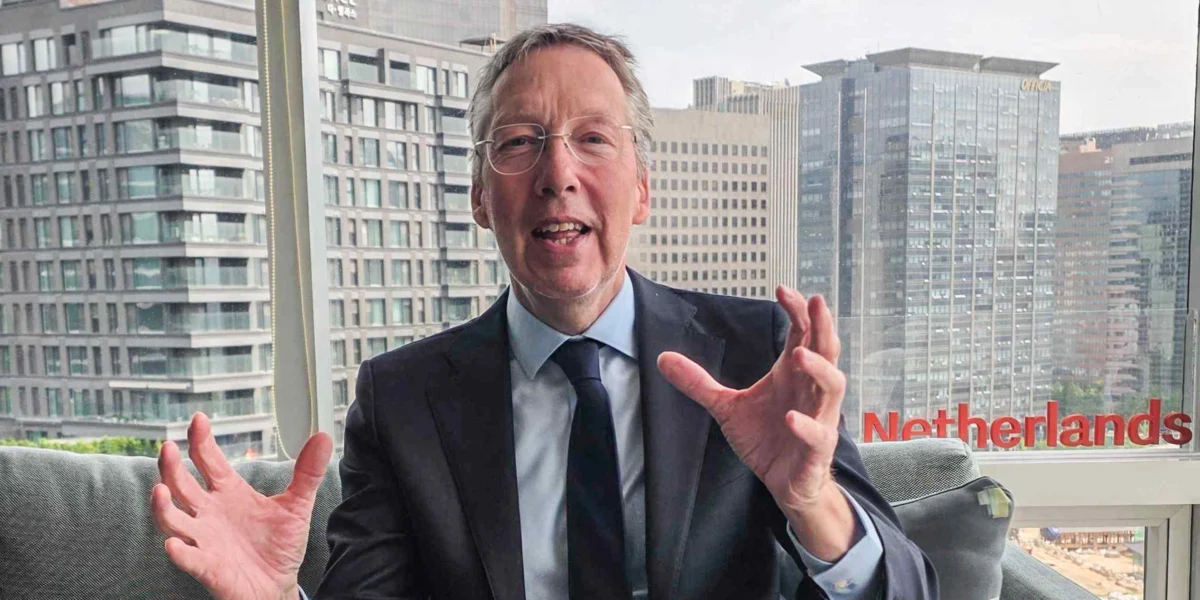
SEOUL — Even casual stock investors in South Korea are likely familiar with ASML, the chipmaking equipment titan based halfway around the world in the Netherlands. This seemingly distant connection, however, represents a microcosm of the increasingly profound and multifaceted technological partnership that is solidifying between the two nations, according to Peter van der Vliet, the ambassador of the Netherlands to South Korea. He asserts that both countries, despite their geographical separation, have cultivated an outsize global influence through a relentless and shared focus on technological advancement and innovation. This shared ethos, he argues, is not merely coincidental but a deliberate and strategic alignment that promises to yield significant future benefits.
The ambassador’s remarks, made in Seoul during a period of heightened international interest in semiconductor supply chains and advanced manufacturing, underscore a deepening bilateral relationship that extends far beyond the well-known contributions of Dutch firms like ASML to South Korea’s dominant electronics industry. While ASML’s extreme ultraviolet (EUV) lithography machines are indispensable for producing the most advanced semiconductors, forming a critical linchpin in the global technology ecosystem, the ambassador suggests that the partnership encompasses a broader spectrum of collaborative endeavors, from cutting-edge research and development to sustainable technologies and future-oriented industrial policies.
A Foundation Built on Shared Ambition and Innovation
The narrative of Dutch-South Korean technological collaboration is not a recent development but rather an evolution built upon decades of mutual recognition of each nation’s strengths. South Korea, a global powerhouse in consumer electronics, semiconductors, and advanced digital infrastructure, has long admired the Netherlands’ prowess in specialized engineering, high-tech manufacturing, and its strategic position as a gateway to the European market. Conversely, the Netherlands, a leader in areas such as high-precision machinery, agricultural technology, water management, and renewable energy solutions, has found a dynamic and receptive partner in South Korea’s forward-thinking economy.
The genesis of this intensified focus can be traced to a confluence of global trends. The accelerating pace of digitalization, the burgeoning demand for advanced computing power driven by artificial intelligence and big data, and the urgent need for sustainable solutions in the face of climate change have all created fertile ground for countries with complementary technological capabilities to converge. Both the Netherlands and South Korea have proactively positioned themselves at the forefront of these transformations, investing heavily in research and development and fostering environments conducive to innovation.
The ASML Nexus: A Symbol of Interdependence
The prominence of ASML in the South Korean semiconductor landscape serves as a potent symbol of this interdependence. ASML holds a near-monopoly on the production of EUV lithography systems, the sophisticated machines required to etch the most intricate patterns onto semiconductor wafers, enabling the creation of smaller, faster, and more power-efficient chips. Companies like Samsung Electronics and SK Hynix, two of South Korea’s leading chip manufacturers, are heavily reliant on ASML’s technology to maintain their competitive edge in the global market.
The strategic importance of ASML’s technology cannot be overstated. In 2023, the global semiconductor market was valued at approximately $580 billion, with South Korea holding a significant share, particularly in memory chips. The ability to produce leading-edge logic and memory devices hinges on access to advanced lithography, making the relationship between ASML and its South Korean clients a matter of national economic security for both countries.
The flow of technology and expertise is not one-sided. South Korean engineers and technicians frequently collaborate with ASML, providing critical feedback and contributing to the refinement of future generations of lithography equipment. This collaborative approach ensures that ASML’s innovations are closely aligned with the evolving needs of its most significant customers, thereby reinforcing its market dominance and the technological capabilities of its partners.
Expanding Horizons: Beyond Semiconductors
Ambassador van der Vliet’s vision extends far beyond the semiconductor realm, highlighting a broader ambition to leverage shared technological acumen across diverse sectors. The Netherlands’ expertise in areas such as:
- Advanced Manufacturing: Dutch companies excel in precision engineering, robotics, and industrial automation, complementing South Korea’s manufacturing prowess. This could lead to joint ventures in developing next-generation factories and optimizing production processes.
- Renewable Energy and Sustainability: As both nations commit to ambitious climate targets, there is significant potential for collaboration in solar, wind, and hydrogen technologies, as well as in smart grid solutions and sustainable urban development. The Netherlands’ experience in offshore wind and water management, coupled with South Korea’s advanced materials and energy storage capabilities, presents a compelling synergy.
- Biotechnology and Life Sciences: Both countries are investing heavily in R&D in these fields. Opportunities exist for joint research initiatives, clinical trials, and the development of new pharmaceuticals and medical technologies.
- Digital Infrastructure and Smart Cities: South Korea’s leadership in 5G and beyond, alongside its ambition to develop smart city solutions, aligns with the Netherlands’ focus on connectivity, data analytics, and intelligent infrastructure.
The ambassador alluded to ongoing dialogues and potential initiatives that are being explored to formalize and expand these areas of cooperation. These discussions likely involve government agencies, research institutions, and private sector leaders from both nations, aiming to identify concrete projects and investment opportunities.
A Timeline of Growing Partnership
The trajectory of Dutch-South Korean technological relations can be viewed through several key milestones:
- 1960s-1980s: Initial diplomatic and trade relations established. South Korea’s burgeoning industrial sector begins to explore international technology acquisition.
- 1990s-2000s: The rise of the global semiconductor industry sees Dutch firms, notably ASML, become increasingly vital to South Korean chip manufacturers like Samsung and Hyundai (later SK Hynix). Growing recognition of complementary strengths.
- 2010s: Increased government-level engagement through bilateral forums and trade missions, focusing on innovation and R&D. Joint research projects begin to emerge in niche technological areas.
- 2020s (Present): Heightened geopolitical and economic focus on supply chain resilience and technological sovereignty amplifies the strategic importance of the Dutch-South Korean partnership. The ambassador’s recent statements signal a deliberate effort to deepen and broaden this collaboration beyond established sectors.
Supporting Data and Economic Impact
The economic implications of this deepening partnership are substantial. The Netherlands is a significant investor in South Korea, and bilateral trade in high-tech goods and services has been steadily growing. While specific data on collaborative R&D investments between the two nations is often proprietary, the sheer scale of the semiconductor industry underscores the potential impact. For instance, ASML’s annual revenues have consistently been in the tens of billions of euros, with a significant portion attributable to sales to South Korean clients.
Furthermore, the innovation spurred by such collaborations can have a ripple effect, driving job creation, fostering new industries, and enhancing the global competitiveness of both nations. A recent report by the Organisation for Economic Co-operation and Development (OECD) highlighted that countries with strong international R&D collaborations tend to exhibit higher rates of innovation and economic growth.
Official Responses and Future Outlook
While specific governmental statements directly echoing Ambassador van der Vliet’s remarks might not be immediately available in public domain, the actions of both governments suggest a strong alignment. South Korea’s Ministry of Trade, Industry and Energy (MOTIE) has consistently emphasized the importance of international partnerships in securing advanced technologies and fostering innovation. Similarly, the Dutch government’s economic diplomacy agenda prioritizes strengthening ties with key innovation hubs, including South Korea.
It is logical to infer that statements from relevant ministries in both countries would support such a strategic direction. For example, a spokesperson for MOTIE might reiterate South Korea’s commitment to “diversifying its technological partnerships to enhance supply chain stability and drive future growth engines,” implicitly including nations like the Netherlands. Likewise, a statement from the Dutch Ministry of Economic Affairs and Climate Policy could emphasize the Netherlands’ role as a “global leader in critical technologies and a reliable partner for nations seeking to advance innovation and sustainable solutions.”
Broader Impact and Implications
The strategic technological alliance between the Netherlands and South Korea carries significant implications for the global landscape.
- Supply Chain Resilience: In an era marked by geopolitical uncertainties and trade tensions, a robust partnership between two key technological players can contribute to greater stability and predictability in critical supply chains, particularly for semiconductors.
- Innovation Acceleration: By pooling expertise and resources, the two nations can accelerate the pace of innovation in areas crucial for addressing global challenges, such as climate change, healthcare, and digitalization.
- Economic Competitiveness: A strengthened technological collaboration will enhance the economic competitiveness of both the Netherlands and South Korea on the global stage, creating new opportunities for businesses and skilled professionals.
- Setting Global Standards: As leaders in their respective technological domains, the collaborative efforts of these two nations could influence the development of future global standards and best practices in critical industries.
Ambassador van der Vliet’s articulation of this deepening relationship signifies more than just a continuation of existing ties; it points towards a proactive strategy to harness shared strengths for mutual benefit and to exert a more significant collective influence on the future of global technology. The success of this endeavor will likely be measured not only by the advancements made in specific industries but also by the creation of a more interconnected and resilient global innovation ecosystem. The Netherlands and South Korea, through their shared dedication to technological excellence, are charting a course that promises to shape the innovations of tomorrow.
