

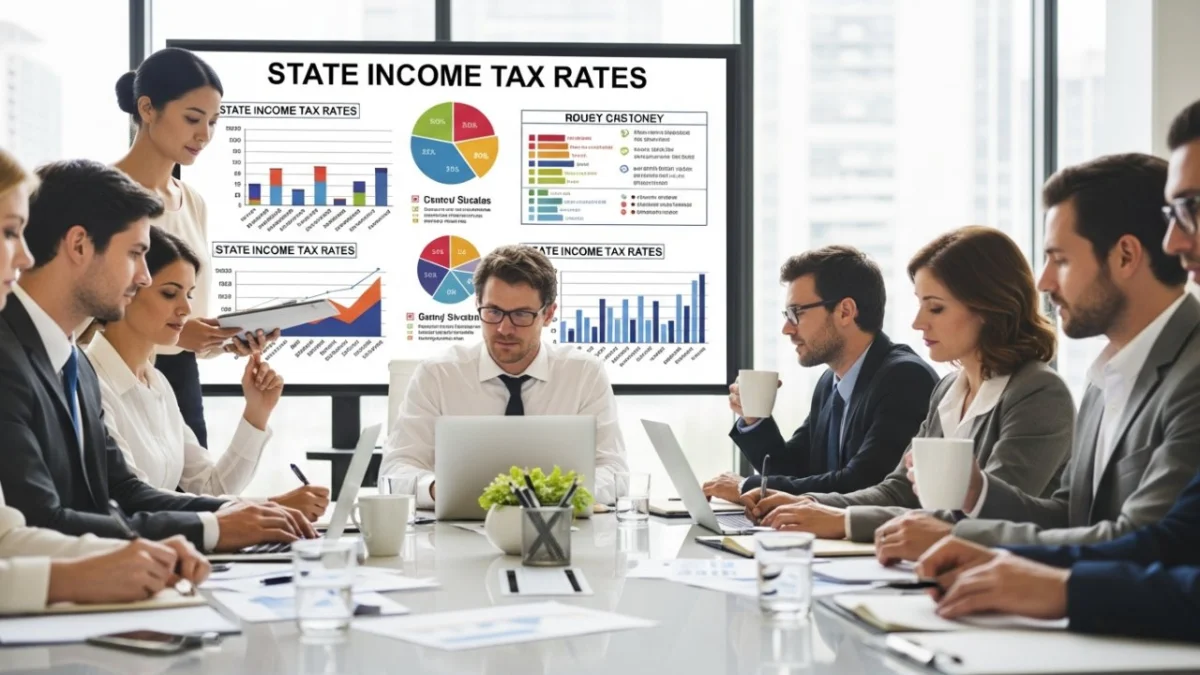
State income tax rates serve as a fundamental pillar of American fiscal policy, functioning as a primary mechanism through which individual states finance their operations, infrastructure, and social safety nets. While the federal government maintains a unified tax code, the 50 states operate as laboratories of democracy, each crafting a unique tax environment based on a complex interplay of economic necessity, political ideology, and demographic shifts. Currently, 41 states and the District of Columbia levy a broad-based individual income tax, while the remaining nine states—including Texas, Florida, and Washington—forgo this revenue stream in favor of alternative funding models. The disparity between a high-tax state like California, which features a top marginal rate of 13.3%, and a low-tax state like Arizona, with a flat rate of 2.5%, illustrates the vast differences in how regional governments prioritize public spending versus private economic incentives.

The Evolution of State Income Taxation: A Brief Chronology
The history of state income tax in the United States is marked by periods of expansion and, more recently, a significant trend toward simplification and reduction. Wisconsin became the first state to successfully implement a modern, permanent income tax in 1911, two years before the ratification of the 16th Amendment established the federal income tax. Throughout the early and mid-20th century, many states followed suit as the demand for public infrastructure, such as highways and standardized education systems, grew beyond what property taxes could sustain.
In the late 20th century, the landscape remained relatively stable, with states generally choosing between progressive graduated systems or flat rates. However, the period between 2021 and 2024 has seen a "tax cut revolution." Following the COVID-19 pandemic, many states found themselves with significant budget surpluses due to federal aid and a rapid economic recovery. This led to a historic wave of tax reforms. In 2022 and 2023 alone, over 20 states enacted permanent individual income tax rate reductions. States like Iowa, Mississippi, and Georgia have recently moved toward—or fully implemented—flat tax systems, signaling a national shift toward prioritizing economic competitiveness over progressive revenue generation.

Primary Drivers: Budgetary Needs and Public Service Funding
At its core, a state’s income tax rate is a reflection of its balance sheet. State governments are legally required to maintain balanced budgets, unlike the federal government, which can operate at a deficit. Consequently, the tax rate is often a direct response to the cost of providing essential services.
Education and healthcare represent the two largest expenditures for most states. States that prioritize high levels of public university funding, K-12 education, and expanded Medicaid programs often require higher income tax revenue to maintain these services. For instance, New Jersey and New York maintain high top-tier tax rates partly to fund some of the highest per-pupil education spending in the country. Conversely, states with more limited public service offerings or those that rely heavily on local property taxes to fund schools can afford to keep state-level income taxes lower.

Economic downturns also play a critical role. When a recession hits, state revenues from sales and corporate taxes often plummet. During these periods, states face the difficult choice of cutting services, drawing from "Rainy Day" funds, or raising income tax rates to bridge the gap. The stability of income tax revenue, particularly from high-earners in a graduated system, provides a buffer that allows states to continue functioning during fiscal crises.
The Shift Toward Economic Competitiveness and Flat Tax Models
One of the most significant factors influencing tax policy today is the concept of economic competitiveness. State legislatures increasingly view their tax codes as marketing tools to attract high-net-worth individuals and corporate entities. The logic, often supported by supply-side economic theory, suggests that lower income taxes encourage investment, boost consumer spending, and prevent "wealth flight."

The trend toward flat tax systems is a clear manifestation of this philosophy. A flat tax applies the same percentage to all taxable income, regardless of the earner’s total wealth. Proponents argue that this system is fairer and simpler to administer. In recent years, North Carolina has been a prominent example of this transition, steadily lowering its rate with the goal of reaching 3.99% or lower.
Data from the Tax Foundation indicates that states with lower or no income taxes have seen higher rates of domestic migration. Florida and Texas have consistently topped the charts for population growth, while high-tax states like California and New York have seen net out-migration. While taxes are only one factor in relocation—alongside weather, housing costs, and job opportunities—lawmakers in "donor states" are increasingly under pressure to lower rates to remain competitive in the national labor market.

Demographic Pressures and the Aging Population
Population demographics exert a subtle but powerful influence on tax structures. The United States is currently navigating a significant demographic shift as the "Baby Boomer" generation enters retirement. This transition impacts state tax revenues in two ways: it reduces the size of the active workforce paying into the system and increases the demand for state-funded healthcare and senior services.
States with rapidly aging populations, such as Maine or Vermont, face unique fiscal challenges. As more residents move from taxable wages to non-taxable or lower-taxed retirement distributions, the tax base shrinks. To maintain the same level of public service, these states may be forced to maintain higher rates on the remaining workforce or find new revenue streams. Additionally, an aging population requires greater investment in infrastructure accessibility and long-term care subsidies, placing further strain on state budgets.

Cost of Living and the Interaction with Property and Sales Taxes
A state’s income tax rate cannot be viewed in isolation; it is part of a "total tax burden" that includes sales and property taxes. States often engage in a "tax swap" where the absence of one tax necessitates the elevation of another.
For example, Washington State has no individual income tax, but it maintains some of the highest sales tax rates in the country to compensate for the lost revenue. Similarly, Texas and New Hampshire have no state income tax but feature some of the highest property tax rates in the nation. This dynamic is closely tied to the cost of living. In states with high real estate values, property taxes can generate sufficient revenue to keep income taxes low. However, in states with lower property values or less commercial activity, the income tax remains a necessary tool for fiscal solvency.

The Political Climate and Legislative Philosophy
The political leanings of a state’s executive and legislative branches are perhaps the most visible determinants of tax policy. Generally, Democratic-led administrations favor progressive tax structures, where higher earners pay a larger percentage of their income. This approach is rooted in the philosophy of "ability to pay" and aims to reduce income inequality by redistributing wealth into public programs.
In contrast, Republican-led administrations typically advocate for lower, flatter taxes. Their philosophy emphasizes individual economic liberty and the belief that the private sector is more efficient at allocating resources than the government. The political climate also dictates the use of tax credits. Progressive states may offer robust Earned Income Tax Credits (EITC) or Child Tax Credits to support low-income families, while conservative states may focus on credits for business investment or private school tuition.

Individual Factors: Income, Filing Status, and Deductions
Beyond the macro-level factors, an individual’s actual tax liability is determined by the specific mechanics of the state’s tax code.
- Income Levels: In states with graduated systems, your tax rate changes as you cross certain income thresholds. California’s system is the most granular, with ten different brackets.
- Filing Status: Just like the federal system, states offer different brackets and standard deductions for single filers, married couples filing jointly, and heads of households.
- Exemptions and Deductions: States vary widely in what they allow taxpayers to subtract from their gross income. Some states "link" to the federal code, adopting the federal standard deduction, while others maintain their own separate list of allowable expenses, such as contributions to 529 college savings plans or medical expenses.
- Tax Credits: Unlike deductions, which reduce taxable income, credits provide a dollar-for-dollar reduction in the tax owed. States use these to incentivize specific behaviors, such as installing solar panels, preserving historic property, or working in high-demand fields like rural medicine.
Broader Implications and Future Outlook
The landscape of state income taxation is currently in a state of flux. As remote work becomes a permanent fixture of the American economy, the "nexus" of taxation is shifting. Historically, people were taxed where their office was located; now, they are increasingly taxed where they physically reside. This has sparked a "race to the bottom" as states compete to become the most attractive home base for the modern, mobile workforce.

Furthermore, the potential expiration of certain provisions in the federal Tax Cuts and Jobs Act (TCJA) in 2025 will likely force states to re-evaluate their own codes. Many state tax systems are "coupled" to federal definitions; if federal law changes, state revenues could fluctuate automatically, prompting a new round of legislative adjustments.
In summary, state income tax rates are far more than mere numbers on a return. They are the result of a century of historical evolution, a reflection of current social priorities, and a strategic response to the competitive pressures of the modern economy. For residents, understanding these factors is essential for long-term financial planning, as the tax environment of a state can significantly influence everything from take-home pay to the quality of local schools and the long-term value of their homes. As the nation moves toward the mid-2020s, the tension between the need for robust public funding and the desire for competitive, low-tax environments will continue to be a defining feature of the American economic story.
