

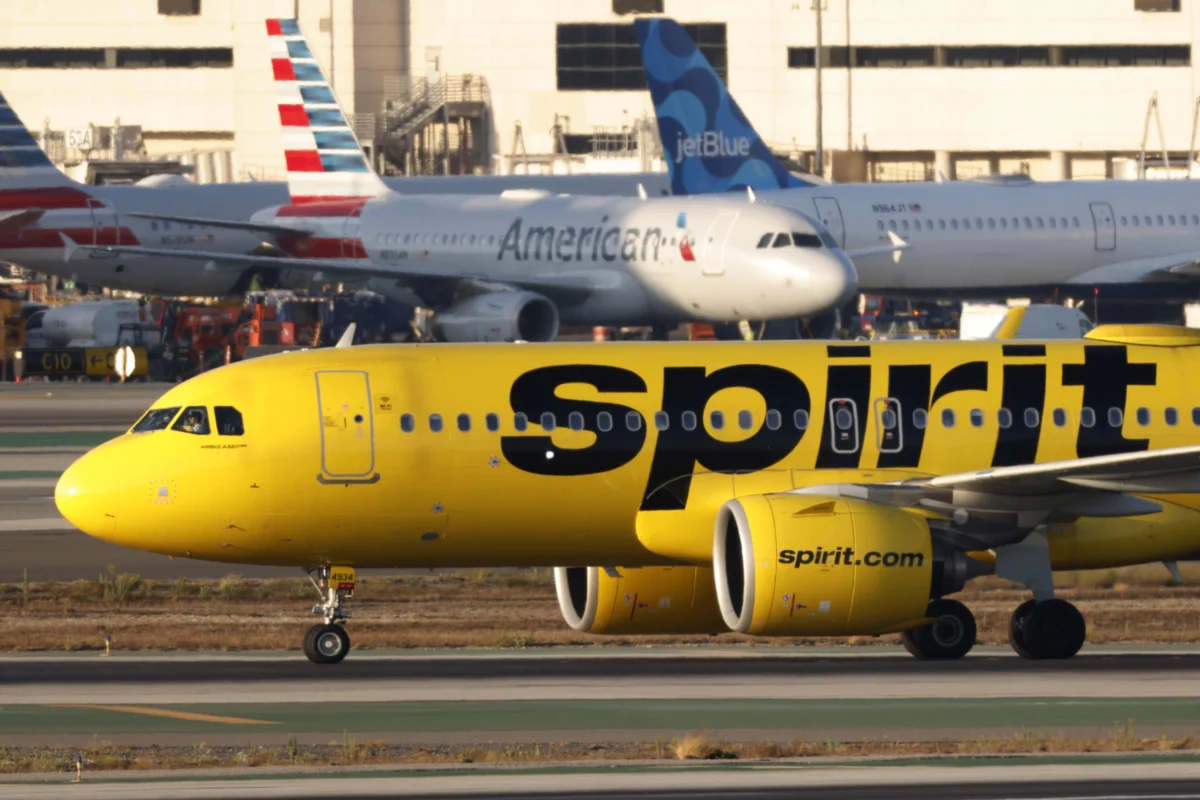
Spirit Airlines, once a symbol of budget travel, finds its very existence in peril, thrust into the national spotlight as President Donald Trump’s administration actively considers an extraordinary government intervention to rescue the struggling carrier from bankruptcy. The potential move, a $500 million loan that could grant the government a commanding 90% equity stake, comes as the airline grapples with a perfect storm of post-pandemic industry shifts, a crucial merger blockage, and a recent, sharp surge in jet fuel costs following geopolitical tensions. With a pivotal bankruptcy court hearing potentially set for as early as Monday, the fate of thousands of jobs, the competitive landscape of U.S. aviation, and the precedent for future government bailouts are on the line.
The Precipice of Collapse: Spirit’s Downward Spiral
Spirit Airlines has long carved out a distinct niche in the highly competitive U.S. aviation market, known for its iconic bright yellow aircraft and ultra-low-cost, "bare-bones" service model. This strategy, prioritizing affordability by unbundling every amenity from seat selection to carry-on bags, resonated with a significant segment of travelers seeking the lowest possible fares. Historically, this model allowed Spirit to offer competitive pricing, often stimulating demand in new markets. However, this very approach, which at times made Spirit a "punchline" for late-night comedians due to its perceived lack of frills and occasional operational challenges, has faced formidable headwinds in recent years.
The onset of the COVID-19 pandemic delivered an unprecedented blow to the entire airline industry, grounding fleets globally and decimating passenger demand. While many carriers received federal aid through the CARES Act, the recovery has been uneven and complex. Post-pandemic, consumer preferences began to shift, with a growing appetite for more "upmarket" offerings, enhanced comfort, and a renewed focus on international travel. This evolution in consumer taste placed budget carriers like Spirit at a disadvantage, as they struggled to attract and retain passengers against full-service rivals like Delta Air Lines and United Airlines. These legacy carriers had spent years and billions of dollars cultivating a less price-sensitive clientele, willing to pay for premium amenities, roomier seats, and extensive global networks, areas where Spirit’s model was not designed to compete directly.
Spirit’s financial health deteriorated sharply in this challenging environment. Court filings reveal a nearly $28.3 million operating loss in February 2026 alone, a stark indicator of its precarious position even before the most recent and significant challenge emerged: the dramatic spike in jet fuel prices. The airline had optimistically projected an emergence from bankruptcy by mid-year 2026, but this forecast was predicated on a more stable operating environment and manageable fuel costs. The latest crisis, however, has thrown those recovery plans into severe disarray, pushing the airline to the brink.
A Timeline of Compounding Challenges and Missed Opportunities
Spirit’s current precarious financial state is not an isolated incident but rather the culmination of several critical events and systemic pressures, each progressively eroding its stability:
Early 2022 – The Quest for Scale Through Merger: Recognizing the increasing consolidation within the airline industry and the need for greater scale and improved financial resilience, Spirit Airlines became the target of two competing acquisition bids. Initially, Frontier Airlines proposed a merger, aiming to create a dominant ultra-low-cost carrier that could more effectively compete against legacy airlines. However, this was swiftly followed by a surprise all-cash offer from JetBlue Airways, sparking a protracted bidding war. After initial resistance, Spirit eventually agreed to JetBlue’s offer, seeing it as the most viable path forward for its shareholders and long-term operational viability. The proposed $3.8 billion acquisition by JetBlue was widely regarded as a critical lifeline for Spirit, promising to integrate its extensive domestic network and growing fleet into a larger, more diversified operation.
January 2024 – Antitrust Blockage by Biden Administration: The planned acquisition by JetBlue, however, faced intense scrutiny from the U.S. Department of Justice (DOJ) under the Biden administration. In January 2024, a federal judge sided with the DOJ, issuing a ruling that blocked the merger on significant antitrust grounds. The Justice Department argued vociferously that the merger would lead to substantially higher fares and reduced choices for consumers, particularly in the vital budget travel segment, by eliminating Spirit as an independent ultra-low-cost competitor. This landmark decision, hailed as a victory for consumer welfare by the administration, simultaneously stripped Spirit of its most viable exit strategy from its deepening financial woes. Without the JetBlue merger, Spirit was left exposed, vulnerable, and without a clear path to sustainable profitability. A White House spokesman for the Trump administration has since explicitly linked Spirit’s current crisis to this decision, stating, "Spirit Airlines would be on a much firmer financial footing had the Biden administration not recklessly blocked the airline’s merger with JetBlue."
April 2026 – Geopolitical Fuel Shock: The final and perhaps most immediate catalyst for the current crisis arrived in April 2026. A sudden escalation of geopolitical tensions, specifically U.S.-Israel attacks on Iran, sent shockwaves through global energy markets. The price of crude oil, and consequently jet fuel, surged dramatically in a short period. For an airline like Spirit, operating on razor-thin margins and already struggling with profitability, this spike represented an immediate and existential threat. Fuel costs are typically one of the largest operating expenses for airlines, often accounting for 25-30% of total costs. A significant and sudden increase can quickly erode any remaining financial buffer, pushing a marginal operator into insolvency. This industry-wide concern prompted executives from several low-cost airlines to meet with Transportation Secretary Sean Duffy earlier this week, specifically to discuss strategies and potential government assistance to mitigate the severe impact of these soaring fuel costs.
In direct response to these mounting pressures and the lack of a merger partner, Spirit has already undertaken aggressive and painful cost-cutting measures. This includes the sale of several aircraft from its fleet and a drastic reduction in its operational network. Aviation data-firm Cirium reported that Spirit operated 19,575 flights in May of the previous year (2025), but for May 2026, that number has been slashed to just 9,353 – a reduction of more than 50% in a single year. This severe operational contraction underscores the dire severity of its financial and operational struggles.
The Unprecedented Government Intervention: Terms and Rationale
Amidst this backdrop of escalating financial distress, President Donald Trump announced that his administration is actively considering a direct government intervention, either through a bailout or an outright purchase of Spirit Airlines. Speaking from the Oval Office on Thursday, President Trump articulated his rationale, stating, "We’re thinking about doing it, helping them out, meaning bailing them out, or buying it." He emphasized his desire to "save those jobs" and "save an airline," stressing the paramount importance of maintaining competition within the U.S. aviation sector for the benefit of consumers. Furthermore, Trump suggested a pragmatic strategy for potential government profitability, noting that "when the price of oil goes down," the government could "sell [Spirit] for a profit," implying a temporary stewardship role.
This proposed intervention is highly unusual for a single private company. While the U.S. government has a historical precedent of bailing out entire industries – notably the auto industry and major banks during the 2008 financial crisis, and the airline sector as a whole after the September 11th attacks and again during the COVID-19 pandemic (through the extensive CARES Act) – directly rescuing an individual airline outside of a systemic crisis is exceedingly rare. The Trump administration has previously taken stakes in companies deemed vital for national security interests, but the current situation with Spirit appears to be primarily an economic and employment-driven consideration, potentially with an eye toward market competition.
Sources familiar with the ongoing discussions indicate that the tentative terms of a potential deal involve a substantial $500 million loan from the government. Crucially, this loan could convert into a commanding 90% equity stake, effectively making the U.S. government the majority owner of the Florida-based carrier. This arrangement would also place the government in a senior position, ahead of other existing investors in the bankruptcy proceedings, ensuring its investment is prioritized. Additionally, the deal would reportedly grant the U.S. government the right to select a board member for Spirit Airlines, providing direct oversight and significant influence over the company’s future strategic direction and operational decisions.
Stakeholder Reactions and Legal Maneuvers
The urgency of the situation is palpable across all involved parties, with a U.S. bankruptcy court hearing to discuss the potential deal possibly scheduled for as early as Monday. This accelerated timeline reflects the critical need for a swift resolution to Spirit’s immediate liquidity challenges and to provide a clear path forward for its operations.
Bondholders: The prospect of significant government intervention has naturally drawn the intense attention of Spirit’s existing creditors, particularly bondholders who stand to be directly impacted by the priority of any new government loan. Mike Stamer, an attorney with Akin representing a coalition of bondholders in the bankruptcy case, confirmed in court on Thursday that "we did, in fact, receive a copy of the term sheet" for the potential deal with the U.S. government. This acknowledgement signifies that negotiations are advanced and a formal proposal is now on the table for rigorous consideration by all parties involved in the complex bankruptcy proceedings. The priority status of the government’s proposed loan would significantly impact the recovery prospects for other unsecured creditors, making these negotiations particularly sensitive.
Labor Unions: Spirit’s extensive workforce, represented by various labor unions, has been vocal in advocating for a deal that preserves jobs and ensures the airline’s continuity. The Association of Flight Attendants-CWA issued a strong statement on Thursday, asserting, "Any assertion that Spirit should just liquidate is only going to harm workers, passengers, and further strain our economy. It’s unnecessary and mean spirited – when just a little help can stave off massive harm." This sentiment underscores the significant human element at stake, with thousands of livelihoods directly dependent on Spirit’s ability to navigate this crisis and secure a viable future.
Spirit’s Legal Team: Marshall Huebner of Davis Polk, Spirit’s lead lawyer in the bankruptcy proceedings, indicated in court that the proposed government loan would provide the necessary capital for Spirit to get to "standalone fighting shape." However, he also acknowledged the dynamic nature of the industry, stating that the deal could simultaneously "set it up for a potential merger," suggesting that while the immediate goal is stabilization and operational continuity, a long-term strategic partnership or even another sale remains a distinct possibility, perhaps once the airline is on more solid financial ground and has a clearer market trajectory. This dual objective highlights the complex path ahead, balancing immediate survival with the strategic demands of future market positioning.
Broader Implications and Expert Analysis
The potential government rescue of Spirit Airlines carries profound implications, not only for the company itself but for the broader U.S. aviation industry and the overarching philosophy of government intervention in private enterprise.
Precedent and Moral Hazard: The most significant concern for many economists and market observers is the precedent this bailout could set. If the government intervenes to save a single, struggling company in a highly competitive sector, it raises fundamental questions about moral hazard – the idea that companies might take on excessive risks if they believe the government will always step in to prevent failure. Barclays analyst Brandon Oglenski articulated this concern, stating in a note Thursday, "We wonder if a potential Spirit deal could become a facility of last resort that other challenged carriers could seek in the future." This highlights the potential for a "contagion" effect, where other low-cost carriers facing similar pressures from high fuel costs and changing market dynamics might also look to the government for assistance, potentially leading to a broader distortion of market forces. Indeed, the recent meeting between LCC executives and Transportation Secretary Sean Duffy earlier in the week underscores the industry-wide sensitivity to current operating costs and the search for solutions.
Market Dynamics and Competition: Proponents of the bailout, including President Trump, argue that it is essential to maintain robust competition within the airline industry. Spirit, despite its struggles, represents a significant player in the ultra-low-cost segment, serving millions of budget-conscious travelers across the United States. Its liquidation would remove a major competitor, potentially leading to higher fares on routes it currently serves and reducing choices for consumers, particularly those most sensitive to price. This aligns directly with the administration’s stated aim to "like having a lot of airlines, so it’s competitive." However, critics argue that propping up an inefficient or unsustainable business model through government aid distorts natural market forces, potentially hindering innovation and the necessary evolution of the industry by preventing weaker players from exiting the market.
Financial Viability and Long-Term Outlook: Even with a $500 million government loan, the long-term viability of Spirit Airlines remains a
