

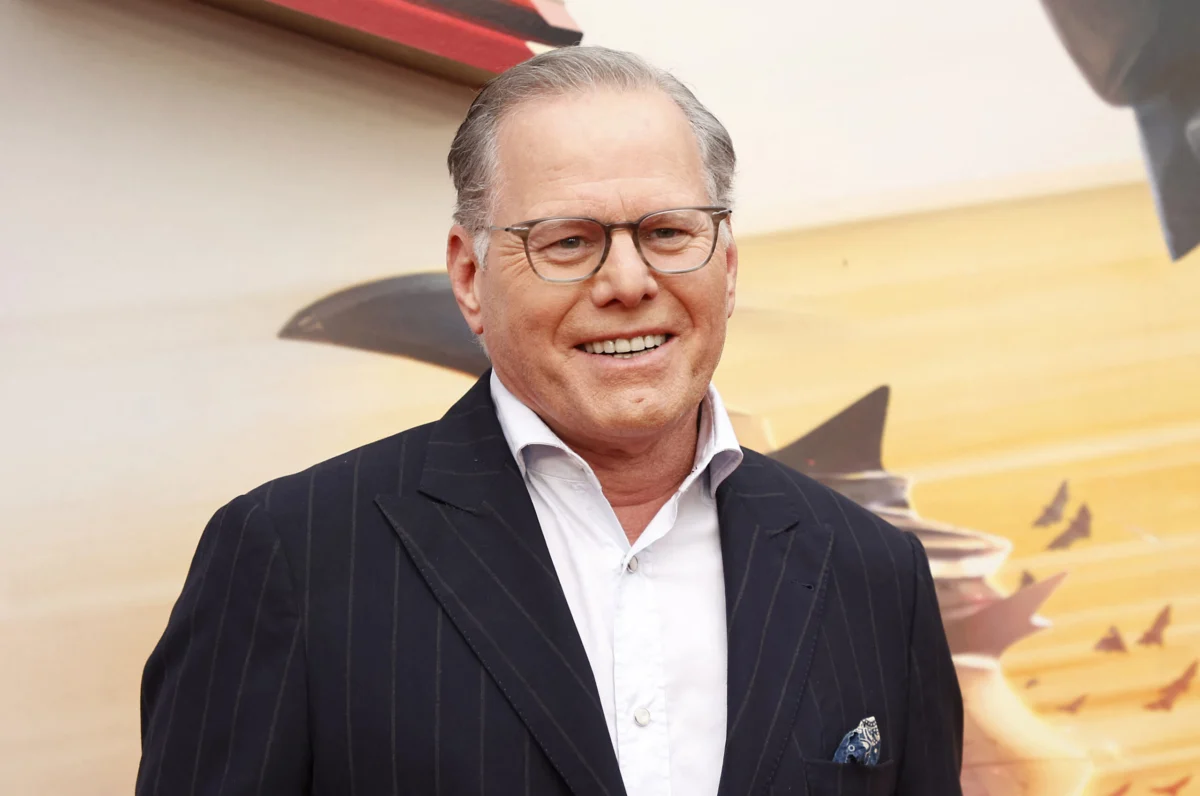
The prospect of Warner Bros. Discovery (WBD) CEO David Zaslav receiving a potential payout exceeding $800 million, possibly reaching $887 million, as part of the proposed acquisition of WBD by Paramount Global and Skydance Media, has thrust the spotlight onto obscure tax rules and the ever-contentious issue of executive compensation in corporate mergers. This staggering sum, detailed in recent U.S. Securities and Exchange Commission (SEC) filings, includes not only substantial stock awards and cash payments but also a controversial "golden parachute" excise tax reimbursement, sparking renewed debate among corporate governance experts, shareholders, and the public.
The Anatomy of a Mega-Payout: Details of Zaslav’s Potential Windfall
According to the SEC filings, the financial package earmarked for Zaslav is multifaceted and exceptionally lucrative. The core components of the payout include approximately $500 million in share awards, alongside an estimated $115 million in vested stock awards, and an additional $34 million in cash. These figures alone represent a monumental sum, reflecting the accumulated value of his compensation over his tenure, structured largely through equity incentives. However, what elevates this payout to unprecedented levels is the inclusion of up to $335 million specifically designated to cover the "golden parachute" excise tax. This provision effectively shields Zaslav from a significant portion of the tax burden that would ordinarily apply to such substantial severance payments triggered by a change of control. Without this tax reimbursement, often referred to as a "gross-up" payment, Zaslav’s payout would still be substantial, projected to be around $667 million.
The deal structure, as presented, outlines that Paramount Global and Skydance Media, as the acquiring entities, would be responsible for paying this excise tax on Zaslav’s behalf. This commitment, however, is not indefinite; the reimbursement amount is structured to decline over time, reaching zero if the acquisition is finalized in 2027. Paramount has publicly stated its intention to close the deal by the fall of the current year, pending necessary regulatory approvals, suggesting the full extent of the tax reimbursement would likely be applicable. The Paramount board, in defending this clause, emphasized that this reimbursement would be paid by the acquiring entity, not by Warner Bros. Discovery shareholders. They further argued that without this "gross up" payment, Mr. Zaslav would face a "substantial disadvantage in terms of excise tax exposure relative to the previously proposed transaction with Netflix," which would not have triggered a golden parachute tax scenario due to its different structural nature.
The Golden Parachute Excise Tax: Intent Versus Reality
At the heart of the controversy lies the "golden parachute" excise tax, a legislative measure originally designed by the U.S. Congress in the 1980s. Its primary intent was to curb what lawmakers and the public perceived as excessive payouts to senior executives upon a company’s change of control or sale. Specifically, the tax, codified under Sections 280G and 4999 of the Internal Revenue Code, imposes a 20% excise tax on "excess parachute payments." These payments are defined as compensation exceeding three times an executive’s average annual compensation (base salary plus target annual bonus) over the five years preceding the change of control. The logic was straightforward: by taxing these large severance packages, Congress aimed to disincentivize companies from granting, and executives from receiving, what were seen as unjustifiably large windfalls during corporate transitions.
However, as observed by numerous management and corporate governance experts, the practical application of these rules has often veered significantly from its original intent. Instead of limiting pay, the golden parachute provisions have, in many instances, inadvertently incentivized companies to structure deals that ensure executives are fully compensated for the tax burden, thus shifting the cost to the acquiring entity or its shareholders. Jeffrey Gordon, co-director of Columbia Law School’s Ira M. Millstein Center for Global Markets and Corporate Ownership, has critically noted this phenomenon, stating, "Over time, especially as executive compensation radically shifted toward stock-based pay, golden parachutes have become increasingly lucrative, platinum in many cases." Gordon further elaborated on the perceived inequity, observing that "Even if there is pain among those who are laid off when the firm is sold and layoffs occur, there is plainly one winner: the CEO with a golden parachute." This sentiment reflects a broader concern that while ordinary employees might face job insecurity or layoffs following a merger, top executives are often cushioned by immense financial security, largely at the expense of shareholder value.
A Chronology of Consolidation: The WBD-Paramount-Skydance Saga
The potential acquisition of Warner Bros. Discovery by Paramount Global and Skydance Media is the latest chapter in a rapidly evolving narrative of media industry consolidation, driven by the intense pressures of the streaming wars, declining traditional media revenues, and the imperative for scale. The path to this current proposed deal has been complex, involving multiple suitors and shifting dynamics.
The origins of this particular saga can be traced back to late 2023, when reports began to surface about potential merger discussions between Warner Bros. Discovery and Paramount Global. Both companies, products of earlier mega-mergers (WarnerMedia with Discovery, and Viacom with CBS), found themselves grappling with significant debt burdens, challenging streaming profitability, and a fragmented media landscape. Zaslav, who spearheaded the integration of WarnerMedia and Discovery, had publicly signaled an openness to further consolidation to achieve greater scale and efficiency.

By early 2024, the discussions intensified. While early reports hinted at a direct merger between WBD and Paramount, the narrative soon shifted to an acquisition scenario involving third parties. Notably, in January 2024, private equity firm Apollo Global Management reportedly submitted a $11 billion bid for Paramount Global’s film studio. Simultaneously, other major players, including Netflix, were rumored to be exploring various partnerships or acquisition avenues, as referenced by the Paramount board in their justification for Zaslav’s "gross-up." The Netflix option, being a different kind of transaction (likely a content deal or strategic alliance rather than a full change-of-control merger for WBD), would not have triggered the golden parachute excise tax, thus forming a crucial comparative point for Paramount’s board.
The current proposed deal, which emerged as the frontrunner, involves Skydance Media, led by David Ellison, and its financial partner RedBird Capital Partners, led by Gerry Cardinale. This complex transaction reportedly involves Skydance acquiring the controlling stake in Paramount Global from Shari Redstone’s National Amusements, followed by a merger of Skydance with Paramount’s studio and streaming assets. The combined entity would then proceed to acquire Warner Bros. Discovery. This multi-layered deal aims to create a formidable new media giant, combining Paramount’s iconic studio, extensive film and TV library, and streaming services (Paramount+) with WBD’s vast content catalog (Warner Bros. films, HBO, DC Comics, Discovery channels), news (CNN), and sports rights. The strategic rationale is clear: achieving economies of scale, reducing content spending redundancies, and bolstering their competitive position against industry behemoths like Disney and Netflix.
Broader Implications for Corporate Governance and Shareholder Value
The potential $800 million-plus payout to David Zaslav raises significant questions about corporate governance, particularly concerning executive compensation in the context of mergers and acquisitions. Shareholder advocacy groups and corporate governance watchdogs frequently scrutinize such "golden parachute" provisions, arguing that they can create perverse incentives for executives. Instead of focusing solely on long-term shareholder value creation, some critics contend that these clauses might motivate CEOs to pursue a sale of the company, even if the timing or terms are not optimally aligned with the best interests of ordinary shareholders, because their personal financial gain is so heavily tied to a change of control event.
The fact that the acquiring company, Paramount Skydance, has agreed to shoulder the burden of Zaslav’s excise tax is particularly contentious. While the Paramount board claims it protects Zaslav from disadvantage compared to alternative deals, it effectively means that the value that could have accrued to the new entity’s shareholders is instead diverted to cover a CEO’s personal tax liability. This practice of "grossing up" executives for golden parachute taxes has been widely criticized for shifting the cost of a tax intended to limit excessive pay directly onto the company, and by extension, its shareholders. It essentially nullifies the deterrent effect of the tax, transforming it into an additional cost of the transaction.
Historically, the issue of executive compensation in M&A has been a flashpoint. Studies by organizations like Institutional Shareholder Services (ISS) and Glass Lewis, which advise institutional investors on proxy voting, often highlight concerns when severance packages appear disproportionately large compared to company performance or the value created for shareholders. In the case of WBD, Zaslav’s compensation has been significant throughout his tenure, particularly during the integration of WarnerMedia. While supporters argue that such compensation reflects the immense responsibility and complexity of leading a major media conglomerate through turbulent times and executing a large-scale merger, critics point to WBD’s stock performance and debt levels as counterarguments. Warner Bros. Discovery’s stock has faced significant challenges since the merger of WarnerMedia and Discovery, leading some investors to question the direct correlation between executive pay and shareholder returns.
Regulatory Scrutiny and Market Reactions
Beyond the internal corporate governance debate, the proposed acquisition of Warner Bros. Discovery by Paramount Skydance will undoubtedly face rigorous scrutiny from regulatory bodies, particularly the U.S. Department of Justice (DOJ) and the Federal Trade Commission (FTC), on antitrust grounds. The media industry has seen a wave of consolidation in recent years, leading to concerns about reduced competition and potential impacts on consumers, content creators, and advertisers. A combined WBD-Paramount entity would control an enormous library of intellectual property, a vast array of distribution channels, and a significant share of the streaming market. Regulators will assess whether such a merger would lead to undue market concentration, stifle innovation, or result in higher prices for consumers.
The revelation of Zaslav’s potential payout, especially the tax gross-up, could also influence public perception and, by extension, potentially add another layer to regulatory considerations, even if not directly an antitrust issue. Large executive windfalls during periods of significant corporate change, particularly when layoffs are a common outcome of such mergers, often draw public criticism and political attention. This heightened scrutiny can, at times, indirectly impact the broader environment in which regulatory reviews are conducted.
Market reactions to such deals are typically complex, balancing strategic benefits against financial implications and potential integration risks. While the market generally favors consolidation for efficiency gains, the specifics of executive compensation packages can sometimes temper investor enthusiasm if they are perceived as excessive or detrimental to long-term shareholder value. The challenge for the acquiring entities and their boards will be to clearly articulate the strategic benefits of this colossal merger in a way that outweighs concerns over executive payouts and convinces both regulators and investors of its overall value proposition.
In conclusion, David Zaslav’s potential multi-hundred-million-dollar payout, fortified by the "golden parachute" excise tax reimbursement, serves as a powerful illustration of the ongoing tension between executive incentives, corporate governance principles, and the original intent of legislative safeguards. As the proposed acquisition of Warner Bros. Discovery by Paramount Global and Skydance Media moves forward, this contentious issue will undoubtedly remain a focal point, prompting deeper discussions about fairness, accountability, and the future of executive compensation in a consolidating global media landscape.
