

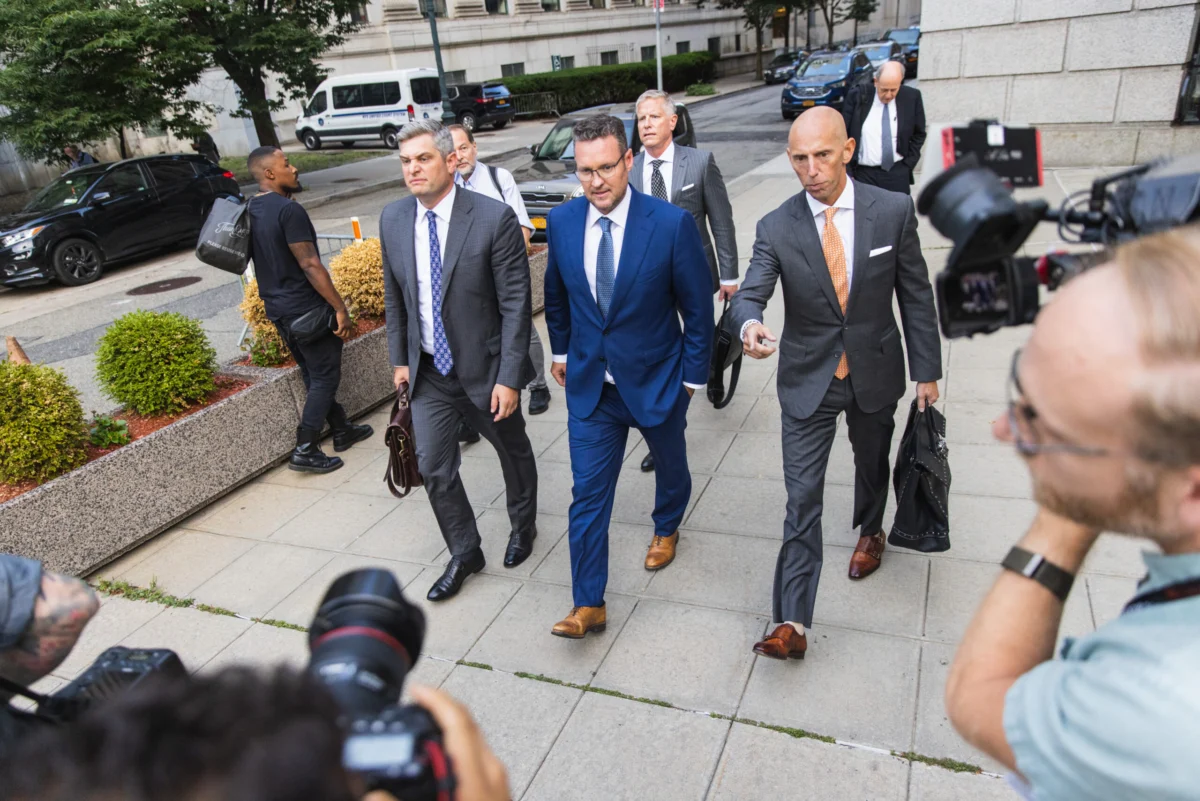
Almost exactly one year after Trevor Milton, the controversial founder of the now-bankrupt electric truck startup Nikola, received a presidential pardon from then-President Donald Trump, new details have emerged regarding his latest entrepreneurial endeavor: an ambitious foray into the development of autonomous aircraft. The Wall Street Journal recently published an in-depth report, offering one of the first comprehensive looks into Milton’s post-pardon activities and his significant pivot from ground-based electric vehicles to the complexities of AI-driven flight. This move marks a dramatic shift for a figure whose previous venture ended in a high-profile fraud conviction, raising questions about investor confidence, regulatory oversight, and the sheer technical challenges of his new ambition.
A New Chapter in Aviation: SyberJet Aircraft Acquisition
Late last year, Milton, reportedly backed by an undisclosed "investment group," acquired SyberJet Aircraft, a company described as downtrodden within the aviation sector. SyberJet, historically known for its SJ30 business jet, has faced its share of financial and production challenges over the years, making its acquisition by a figure like Milton particularly noteworthy. Since the takeover, Milton has been actively working to revitalize the company, initiating a strategy that involves bringing in a significant number of former Nikola staff – reportedly "dozens" – to his new aviation enterprise. This re-assemblage of a familiar team, while potentially leveraging existing working relationships and technical expertise, also inevitably carries the historical baggage of Nikola’s spectacular rise and fall.
The immediate priorities for Milton’s revitalized SyberJet appear multifaceted. Beyond re-staffing, the report indicates efforts to secure crucial investment, with potential financial backing being solicited from entities in Saudi Arabia, a region increasingly looking to diversify its economy through investments in advanced technology and aerospace. Furthermore, substantial resources have been allocated to lobbying efforts, with "a few hundred thousand dollars" already spent, suggesting a concerted attempt to navigate the complex regulatory and political landscape inherent in the aviation industry, especially for a venture aiming to disrupt traditional flight paradigms with autonomous technology.
The Vision: AI-Powered Light Jets and Defense Contracts
Milton’s grand vision for SyberJet is reportedly to design an entirely new avionics system from the ground up. This foundational technological overhaul is intended to pave the way for what he envisions as "the first light jet to focus on artificial-intelligence flight." Such a development, if successful, could unlock significant opportunities, particularly in securing defense contracts. The defense sector globally is increasingly exploring the integration of advanced AI into both manned and unmanned aerial systems, seeking advantages in reconnaissance, logistics, and combat operations. A light jet capable of sophisticated autonomous operation could potentially fulfill various roles, from surveillance to rapid transport in challenging environments, attracting interest from military and government agencies.
However, the scale of this ambition is not lost on Milton himself. Acknowledging the immense difficulties, he reportedly told the Wall Street Journal that he believes developing autonomous planes will be "10 times harder than Nikola ever was." This statement, coming from an individual who navigated the highly competitive and capital-intensive electric vehicle market, underscores the formidable technical, regulatory, and financial hurdles that lie ahead for SyberJet.
Background Context: The Nikola Saga and Milton’s Conviction
To fully appreciate the significance of Milton’s new venture, it is crucial to revisit the tumultuous history of Nikola Corporation and the events that led to his conviction for securities fraud. Trevor Milton founded Nikola in 2014, positioning it as a revolutionary force in the electric and hydrogen-powered truck market. Through a combination of charismatic leadership, aggressive marketing, and bold promises, Nikola quickly captured the attention of investors and the public. The company went public in June 2020 via a special purpose acquisition company (SPAC) merger, achieving a peak market capitalization that briefly surpassed Ford Motor Company, despite having no significant revenue or commercially available product.
However, Nikola’s meteoric rise was soon overshadowed by serious allegations of deception. In September 2020, investment research firm Hindenburg Research published a scathing report titled "Nikola: How to Parlay an Ocean of Lies into a Partnership with the Largest Auto OEM in America." The report detailed numerous claims of fraud, alleging that Nikola had misled investors about its technology, products, and partnerships. A central allegation focused on a promotional video from 2018, which purportedly showed a Nikola One semi-truck driving under its own power. Hindenburg claimed the truck was merely rolling down a gentle incline, a fabrication designed to create a false impression of technological advancement. Other accusations included misrepresenting the functionality of its hydrogen fuel cell technology and exaggerating its manufacturing capabilities.
The fallout from the Hindenburg report was swift and severe. Regulatory investigations were launched by the U.S. Securities and Exchange Commission (SEC) and the Department of Justice (DOJ). Milton resigned as executive chairman in September 2020, and Nikola subsequently paid a $125 million civil penalty to the SEC to settle charges that it defrauded investors by misleading them about its products, technology, and commercial prospects.
The legal repercussions for Milton culminated in his conviction in October 2022 on three counts of securities fraud and wire fraud. Federal prosecutors argued that Milton had engaged in a scheme to defraud investors by making false statements about "nearly all aspects of the business." These false claims, often disseminated through social media and interviews, were designed to inflate the company’s stock price and attract retail investors. In December 2023, Milton was sentenced to four years in prison, along with a $1 million fine and three years of supervised release.
The Pardon and Its Implications
The conviction and subsequent sentencing were widely seen as a landmark case, underscoring the legal risks associated with misleading public markets, particularly in the context of high-flying tech startups. However, in a controversial move, President Trump issued a pardon for Milton on March 28, effectively commuting his sentence and nullifying his conviction. The pardon came with less than a year served, sparking debate about executive clemency and its application in cases of white-collar crime. While a presidential pardon restores certain rights and removes the legal penalties associated with a federal conviction, it does not erase the historical record or necessarily alter public and investor perception of past conduct.
The timing of the pardon, nearly a year ago, now provides a clearer context for Milton’s current re-emergence in the business world. Free from the constraints of incarceration and legal penalties, he has wasted little time in seeking to establish a new enterprise, albeit one in an even more technologically complex and highly regulated sector.
The Autonomous Aviation Landscape and SyberJet’s Challenges
The ambition to develop an "artificial-intelligence flight" focused light jet places SyberJet squarely within one of the most exciting, yet challenging, frontiers of modern aerospace: autonomous aviation. This sector, while still nascent, is attracting significant investment and innovation, driven by advancements in AI, sensor technology, and electric propulsion. Market projections indicate that the autonomous aircraft market could grow substantially over the next decade, with applications ranging from urban air mobility (UAM) and cargo delivery to advanced military operations. Industry analysts suggest that the global autonomous aircraft market size, valued at approximately $5-7 billion in the early 2020s, is projected to reach upwards of $20-30 billion by the early 2030s, fueled by increased R&D and eventual commercialization.
However, the path to commercialization and widespread adoption is fraught with obstacles.
- Regulatory Hurdles: The Federal Aviation Administration (FAA) in the U.S. and the European Union Aviation Safety Agency (EASA) are notoriously stringent regulators. Developing and certifying a new aircraft, let alone one with a completely new AI-driven avionics system, requires years of rigorous testing, extensive documentation, and immense capital expenditure to meet safety standards. Integrating AI into flight control systems raises unprecedented questions about fault tolerance, decision-making autonomy, and human oversight in emergency situations.
- Technological Complexity: Building a new avionics system from scratch that can reliably and safely control an aircraft using AI is an engineering marvel. It demands expertise in artificial intelligence, machine learning, sensor fusion, real-time operating systems, cybersecurity, and aerostructures. The software alone will be millions of lines of code, requiring exhaustive validation.
- Capital Requirements: Aerospace development is incredibly expensive. Billions of dollars are often required to bring a new aircraft to market, from design and prototyping to certification and production scaling. SyberJet’s current reported lobbying and initial investment pale in comparison to the likely needs for Milton’s stated vision. Securing "billions" from Saudi Arabia or other investors would be a monumental task, especially for a venture led by a figure with a fraud conviction.
- Competition: The autonomous aviation space is not empty. Established aerospace giants like Boeing, Airbus, and Lockheed Martin are investing heavily in autonomous capabilities, often leveraging decades of experience and existing infrastructure. Furthermore, a new wave of innovative startups, particularly in the eVTOL (electric vertical take-off and landing) sector, are also pushing the boundaries of autonomous flight, many with cleaner reputations and established investor backing.
Reactions and Implications
The news of Milton’s new venture has elicited a range of reactions. For former Nikola employees who have joined SyberJet, it represents a new opportunity, perhaps driven by loyalty or belief in Milton’s vision despite his past. For others in the aviation industry, the announcement likely sparks a mix of curiosity, skepticism, and perhaps apprehension.
- Investor Perception: While Milton has reportedly sought investment from Saudi Arabia, the broader investment community, particularly in the U.S. and Europe, will likely approach any venture associated with him with extreme caution. The shadow of the Nikola fraud, even with a presidential pardon, is long. Investors will demand unprecedented levels of transparency, due diligence, and tangible proof of technological progress and financial viability.
- Regulatory Scrutiny: It is highly probable that any new aircraft development by SyberJet under Milton’s leadership will face heightened scrutiny from aviation authorities. Regulators are inherently conservative, prioritizing safety above all else. The history of exaggerated claims at Nikola could translate into an even more rigorous, and potentially skeptical, review process for SyberJet’s technologies and claims.
- Talent Acquisition: Attracting top-tier aerospace and AI engineering talent, who typically have numerous opportunities, might also be a challenge. While some former Nikola staff have rejoined, convincing industry veterans to commit to a venture with such a controversial leader, and in such a high-risk field, will require more than just ambition.
- Broader Impact: Milton’s re-emergence could also fuel ongoing debates about accountability in corporate leadership and the implications of executive pardons for white-collar crimes. His attempt to build an "AI-first" light jet could, if successful, contribute to the advancement of autonomous flight, but the journey promises to be one of the most closely watched and scrutinized entrepreneurial endeavors in recent memory.
In conclusion, Trevor Milton’s pivot from electric trucks to autonomous planes is an audacious move that underscores his relentless entrepreneurial drive. Having purchased SyberJet Aircraft and begun assembling a team, he now aims to revolutionize light jet aviation with AI-driven flight, potentially eyeing lucrative defense contracts. However, the shadow of his past conviction for fraud at Nikola, even mitigated by a presidential pardon, looms large over this new venture. The technical, financial, and regulatory challenges of developing a novel autonomous aircraft are immense, making Milton’s own assessment of it being "10 times harder than Nikola" a stark and perhaps understated reality. The coming years will reveal whether Milton can navigate these formidable obstacles and rebuild trust in a sector where safety and integrity are paramount, or if his ambitious flight path will encounter turbulence too severe to overcome.
