

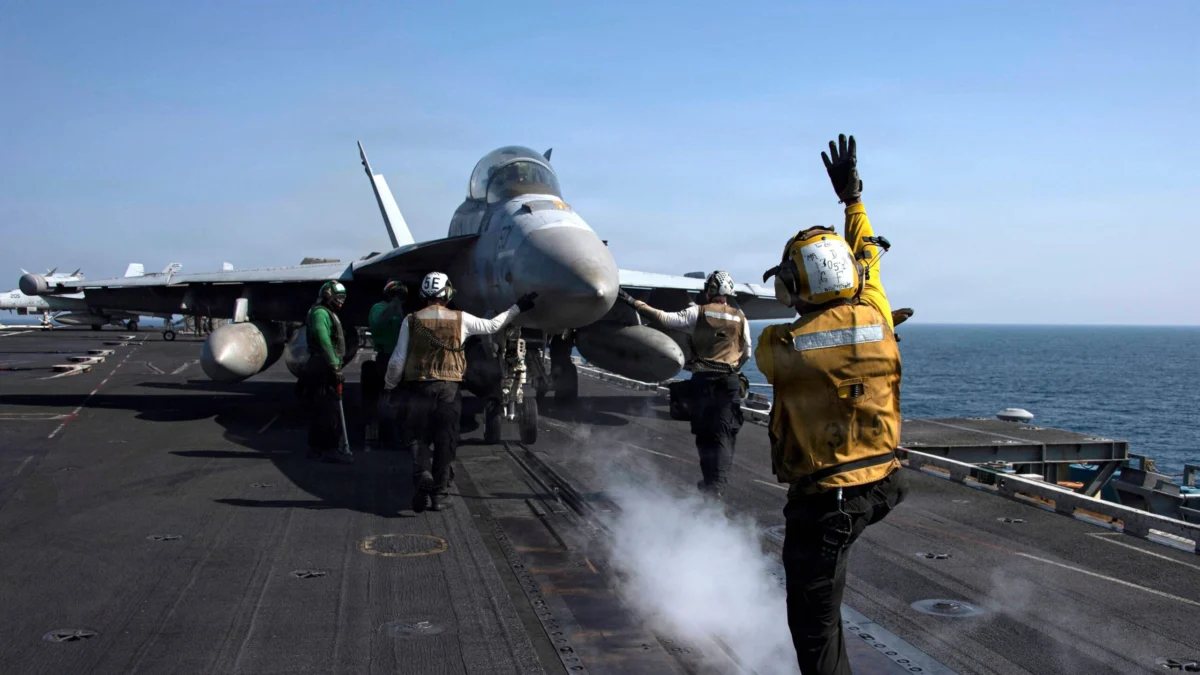
The precise nations President Donald Trump had in mind when he called for an international naval coalition to counter Iran’s maritime threats, and whether any countries have indeed committed to dispatching warships, remains unclear. President Trump expressed his hope that China, France, Japan, South Korea, Great Britain, and other nations affected by Iran’s blockade of a vital Strait for global oil exports would send vessels. This statement comes amidst a period of heightened geopolitical tension in the Persian Gulf region, characterized by a series of incidents involving commercial shipping and a complex web of international interests tied to the free flow of oil.
Background of Escalating Maritime Incidents
The Strait of Hormuz, a narrow waterway connecting the Persian Gulf to the Gulf of Oman and the open ocean, is a critical chokepoint for global oil transportation. Approximately 30% of the world’s seaborne oil trade passes through this strategic passage daily. Any disruption or threat to navigation in the Strait has immediate and significant implications for global energy markets, impacting prices and supply chains worldwide.
In recent months, the region has witnessed a series of concerning incidents, including the seizure of oil tankers, alleged attacks on commercial vessels, and increased military posturing by various actors. These events have been widely interpreted as a response to escalating tensions between the United States and Iran, particularly following the U.S. withdrawal from the Joint Comprehensive Plan of Action (JCPOA) nuclear deal in 2018 and the subsequent reimposition of stringent economic sanctions on Tehran.
Iran, facing severe economic pressure, has been accused by the U.S. and its allies of attempting to exert leverage by threatening maritime traffic. U.S. officials have pointed to specific incidents, such as attacks on oil tankers in the Gulf of Oman and the seizure of vessels, as evidence of Iran’s disruptive intent. Iran, in turn, has denied direct responsibility for many of these incidents, often attributing them to other actors or framing them as defensive measures against perceived aggression.
Trump’s Call for a Naval Coalition: Rationale and Ambiguity
President Trump’s call for an international coalition echoes a broader U.S. strategy to isolate Iran and deter its regional activities. The proposed naval mission aims to provide security and freedom of navigation for commercial vessels transiting the Strait of Hormuz and surrounding waters. The underlying rationale is that a multilateral effort would lend greater legitimacy and effectiveness to such a mission, distributing the burden and demonstrating a united international front against perceived Iranian provocations.
However, the vagueness surrounding the specific countries involved and their commitments highlights the diplomatic complexities of forming such a coalition. Several nations, while reliant on the free flow of oil, are also hesitant to engage in direct confrontation with Iran, fearing reprisal or a wider regional conflict. Their responses are often shaped by delicate diplomatic relationships, existing trade ties with Iran, and differing perspectives on the causes of the current tensions.
The inclusion of China, a major importer of Iranian oil and a significant global economic power, is particularly noteworthy. China has historically advocated for de-escalation and diplomatic solutions in the region. While Beijing has expressed concern over maritime security, its willingness to participate in a U.S.-led military initiative remains uncertain. Similarly, European allies, including France and Great Britain, have expressed a desire for maritime security but have often pursued their own diplomatic channels and initiatives, sometimes differing from the U.S. approach.
Japan and South Korea, both heavily dependent on Middle Eastern oil, have also been directly affected by the disruptions. Their involvement in any coalition would be a significant development, reflecting the global stakes involved in ensuring maritime security in this vital region.
Timeline of Key Events and Developments
To understand the context of President Trump’s call, it is essential to consider a brief timeline of recent relevant events:
- May 2018: The United States withdraws from the JCPOA and reimposes sanctions on Iran.
- May-June 2019: A series of attacks on oil tankers in the Persian Gulf and the Gulf of Oman occur. The U.S. blames Iran for these incidents.
- June 2019: Iran downs a U.S. drone, further escalating tensions.
- July 2019: Iran seizes a British oil tanker, the Stena Impero, in the Strait of Hormuz. This action is seen by many as retaliation for the detention of an Iranian oil tanker by British authorities off Gibraltar.
- July 2019: The U.S. announces its intention to form a maritime coalition to protect shipping in the Strait of Hormuz.
- August 2019: President Trump makes his statement regarding the desired international participation in a naval coalition, naming specific countries.
This chronology illustrates a pattern of escalating actions and reactions, with maritime security becoming a central flashpoint in the broader U.S.-Iran standoff.
Supporting Data and Economic Implications
The economic implications of any disruption in the Strait of Hormuz are profound. Global oil prices are highly sensitive to events in the Persian Gulf. For instance, during periods of heightened tension in 2019, Brent crude oil futures saw significant spikes, reflecting market anxieties about supply disruptions.
- Daily Oil Flow: Estimates suggest that approximately 17 million barrels of oil pass through the Strait of Hormuz daily.
- Global Share: This represents roughly 30% of global seaborne oil trade.
- Economic Impact: A sustained blockade or significant disruption could lead to a sharp increase in global oil prices, impacting transportation costs, manufacturing, and consumer spending worldwide. This could also exacerbate inflationary pressures in economies already struggling with economic headwinds.
- Market Volatility: The mere threat of disruption can trigger significant volatility in financial markets, affecting not only oil prices but also broader equity and currency markets.
The participation of major oil-importing nations in a coalition would underscore the shared economic vulnerability to instability in the region. Their potential involvement is driven by the need to safeguard their own energy security and economic stability.
Reactions and Diplomatic Maneuvers
The international response to President Trump’s call has been cautious and, in many cases, non-committal.
- United States: U.S. officials have been actively engaging in diplomatic efforts to build support for the maritime security initiative, emphasizing the need for freedom of navigation.
- European Nations: While expressing concern for maritime security, European powers have often preferred a more measured approach, balancing security concerns with the desire to preserve diplomatic channels with Iran and avoid further escalation. Some European nations have indicated a willingness to consider contributing to maritime surveillance or escort missions, but not necessarily in a direct combat role.
- Asian Nations: Countries like Japan and South Korea have expressed commitment to ensuring the safety of shipping lanes but have been more reserved about direct military involvement in a U.S.-led coalition. Their responses often reflect a desire to maintain neutrality and avoid alienating Iran, a significant energy supplier.
- China: China has consistently called for restraint and de-escalation from all parties involved. While recognizing the importance of the Strait of Hormuz for global trade, China has not indicated any intention to commit naval assets to a U.S.-led coalition. Beijing’s focus remains on diplomatic solutions and protecting its own economic interests through established trade routes.
- Iran: Iran has vehemently opposed any foreign military presence in the Persian Gulf, viewing it as a threat to its security. Tehran has warned that any coalition would be seen as an act of aggression and has asserted its right to defend its interests and territorial waters.
These varied reactions highlight the inherent challenges in forging a unified international response to complex geopolitical issues. The formation of a robust coalition requires navigating diverse national interests, risk assessments, and diplomatic considerations.
Broader Impact and Analysis
President Trump’s call for a naval coalition, while intended to project strength and deter Iranian actions, also carries significant implications for regional and global stability.
- Risk of Escalation: The deployment of additional naval assets in the Persian Gulf, particularly in close proximity to Iranian waters, inherently increases the risk of miscalculation and unintended escalation. Any incident, however minor, could quickly spiral out of control, leading to a broader conflict.
- Diplomatic Fallout: The formation of a coalition perceived by some as confrontational could further complicate diplomatic efforts to resolve the nuclear issue and other regional disputes. It could also alienate countries not participating in the coalition, potentially creating new geopolitical alignments.
- Economic Stability: The success or failure of such a coalition in ensuring maritime security will have a direct impact on global energy markets. A successful mission could stabilize oil prices and restore confidence in supply chains. Conversely, a failure or an escalation of conflict would likely lead to sustained price volatility and economic disruption.
- Multilateralism vs. Unilateralism: The U.S. approach, while seeking international participation, also reflects a broader trend in American foreign policy towards leveraging alliances to achieve strategic objectives. The effectiveness of such multilateral efforts often depends on the degree of consensus and commitment among participating nations.
The situation in the Strait of Hormuz remains a critical test of international diplomacy and the ability of global powers to cooperate in ensuring the security of vital trade routes. The success of any initiative to de-escalate tensions and maintain freedom of navigation will depend on a delicate balance of deterrence, diplomacy, and sustained international engagement. The coming weeks and months will likely reveal the extent to which President Trump’s call for a naval coalition translates into tangible action and whether it contributes to a more stable maritime environment or exacerbates existing geopolitical fault lines.
