

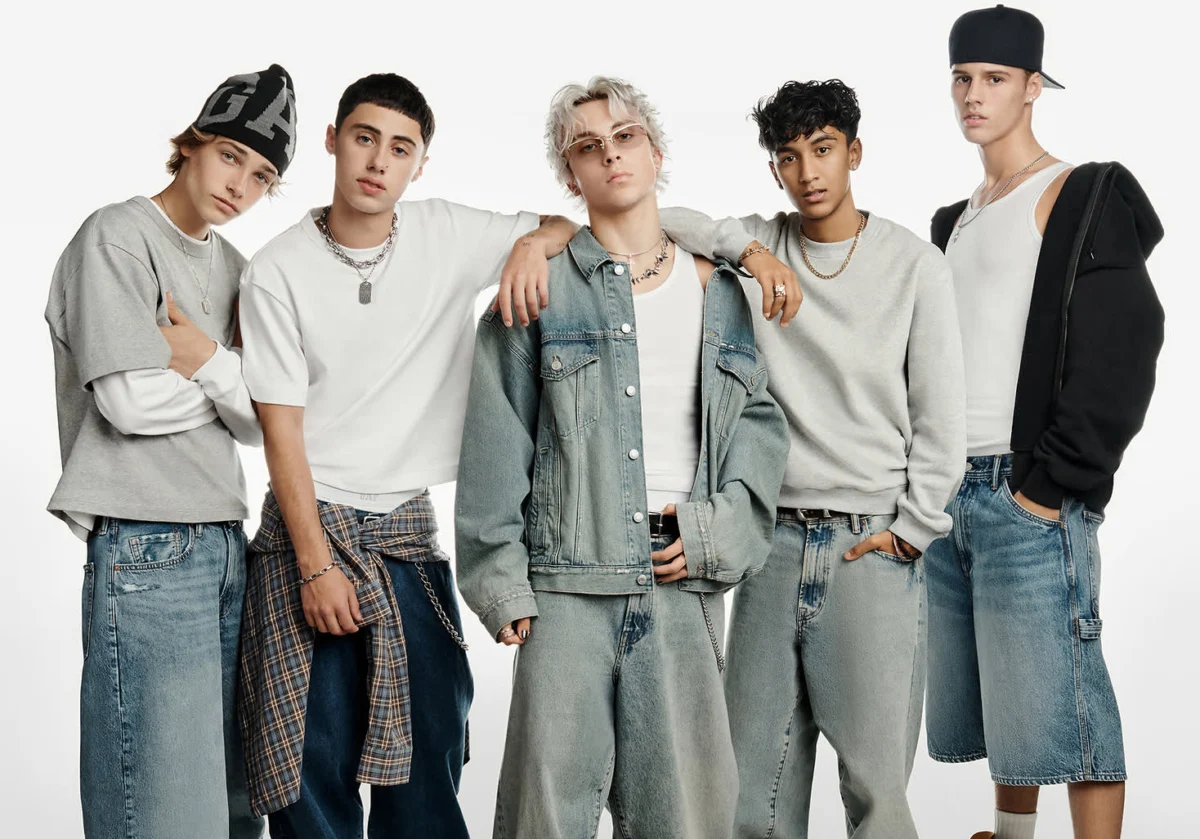
Gap Inc., the iconic American apparel retailer, has officially launched its inaugural "fashiontainment" partnership, collaborating with the burgeoning boy band Just Your Type. This strategic alliance marks a significant milestone in Gap’s ambitious new direction, which seeks to seamlessly merge the worlds of fashion and entertainment to cultivate deeper consumer engagement and redefine the retail experience. The move signals a bold pivot for the legacy brand, aiming to resonate with a contemporary audience increasingly drawn to immersive and authentic brand interactions beyond mere product transactions.
The Genesis of ‘Fashiontainment’: Gap’s Strategic Shift
This groundbreaking initiative is the direct outcome of a deliberate and calculated strategic overhaul initiated by Gap Inc. earlier this year with the unconventional appointment of a Chief Entertainment Officer. This newly created executive role underscored the company’s commitment to prioritizing content, licensing, and entertainment as core pillars of its future growth strategy. To helm this critical department, Gap tapped Pam Kaufman, a seasoned executive with a distinguished career at Paramount, bringing a wealth of experience in navigating the complex landscape of media and popular culture. Kaufman’s mandate was clear: leverage entertainment to forge meaningful connections between Gap’s diverse portfolio of brands and their global consumer base.
The "fashiontainment" concept is not merely a marketing buzzword but a comprehensive strategy designed to blend retail narratives with compelling entertainment. This approach builds upon recent successes, including last year’s impactful advertising campaigns featuring the dynamic girl group Katseye, which garnered significant attention and hinted at Gap’s evolving vision. The partnership with Just Your Type, an emerging force in the boy band scene, represents the latest and most explicit manifestation of this strategy, positioning Gap at the intersection of music, fashion, and youth culture. The announcement of this partnership directly from Gap Inc. signals its strategic importance and commitment to the "fashiontainment" model.
Richard Dickson, Gap Inc.’s Chief Executive Officer, articulated this vision at the Goldman Sachs Global Consumer and Retail conference in September, emphasizing the intrinsic narrative quality of brands. "Brands are stories, and we are the storytellers," Dickson stated, underscoring the company’s intent to place its brands "in the center of culture and cultural conversation." This philosophy is deeply rooted in Dickson’s prior experience at Mattel, where as president and chief operating officer, he witnessed firsthand the transformative power of intellectual property. The monumental success of the "Barbie" movie, which leveraged a decades-old fan-favorite toy into a cultural phenomenon and a massive box office hit, serves as a powerful precedent for Gap’s current trajectory. That film, which grossed over $1.4 billion worldwide, demonstrated the immense potential of translating brand IP into compelling entertainment that transcends traditional product sales and creates pervasive cultural relevance.
Executive Vision and Industry Trends: The Blurring Lines of Retail and Entertainment
Pam Kaufman, Gap’s Chief Entertainment Officer, elaborated on the strategic imperative behind "fashiontainment." In a statement, Kaufman emphasized the profound connection consumers feel with beloved brands. "Beloved brands have value beyond the products they sell. Consumers identify with them, trust them and want to be part of their world," she explained. The cornerstone of this strategy, according to Kaufman, is authenticity: "The key is authenticity: Every extension has to reflect what the brand stands for and give its fans a meaningful new way to experience it." This focus on genuine connection aims to differentiate Gap in a crowded market, moving beyond transactional exchanges to foster enduring loyalty by providing experiences that resonate deeply with consumer values and aspirations.
The shift towards experiential retail and brand-driven entertainment is not unique to Gap but reflects a broader, industry-wide evolution, particularly in the wake of the global pandemic. Bryan Eshelman, who leads the retail practice at consulting firm AlixPartners, observed a significant change in consumer behavior. "I think the post-Covid consumer attitude around shopping certainly evolved a lot," Eshelman noted, adding, "It has gone from shopping as a fulfillment task to shopping, in many instances, more as an entertainment form." This transformation necessitates that retailers adopt more creative and engaging marketing strategies, encompassing both immersive in-store experiences and exclusive online content. The goal, Eshelman highlighted, is to tap into a sense of "community, some sense of lifestyle, some sense of belonging that’s beyond the product that they offer," thereby cultivating loyalty through shared experiences and values rather than solely through product utility.
Historically, branded entertainment has a long and storied tradition. Procter & Gamble famously played a pivotal role in coining the term "soap opera" in the 1930s, sponsoring serialized radio dramas to promote household products. These early forms of brand integration demonstrated the power of storytelling to create emotional connections with consumers, long before the advent of digital media. Companies have consistently leveraged various media campaigns to attract customers for decades. However, the contemporary landscape, characterized by the omnipresence of social media, the proliferation of user-generated content, and the demand for short-form, digestible offerings, has intensified consumers’ appetite for novel and original experiences. This digital shift has amplified the need for brands to innovate their engagement strategies, moving beyond traditional advertising to become content creators themselves, often collaborating with influencers and artists to reach niche communities.
The Power of Intellectual Property in a Crowded Market
The convergence of retail and entertainment is occurring at a critical juncture when intellectual property (IP) is recognized as an increasingly valuable asset in the corporate world. In an era where consumers are inundated with more marketing messages than ever before—estimates suggest an average person sees thousands of ads daily—the ability to "cut through all of the noise" is paramount for companies vying for attention, according to Alex Michael, senior managing director at investment firm LionTree. "The hardest thing to find and to get is audience these days," Michael told CNBC. "IP, in that sense, is the most valuable thing out there, and only becoming more valuable because it’s attached to audience." This perspective elevates brand IP from a mere legal asset to a strategic cornerstone for audience acquisition and retention, forming the basis for entire ecosystems of content and products.
Furthermore, the methods of IP distribution have diversified dramatically. What was once confined to traditional media like television or print now encompasses a vast array of formats, including video, audio, short-form content for platforms like TikTok, long-form narratives for streaming services, and live event experiences. This multi-platform approach allows brands to engage consumers across various touchpoints, reinforcing their narrative and expanding their reach in a holistic manner. Concurrently, consumer loyalty is undergoing a profound redefinition. Modern consumers are less bound by traditional brand allegiances and more influenced by authentic connections, shared values, and unique experiences. This demands that companies "play much earlier in the consumer journey" than in previous years to establish trust and secure lasting engagement, often through compelling narratives and community-building initiatives.
The trend is further fueled by a new generation of executives who possess expertise spanning both the retail and entertainment sectors. Pam Kaufman’s extensive background at Paramount is a prime example, as is Richard Dickson’s pivotal role at Mattel during the "Barbie" movie’s development, where he championed the strategic use of IP. Even figures like Skydance co-CEO Ynon Kreiz, who also held top roles at Mattel, exemplify this cross-sector proficiency. Alex Michael emphasizes the growing value of such expertise: "The gray areas have never been more pronounced as to what is classically defined as retail or media or entertainment or live events. People who have cross-sector expertise are increasingly more valuable because you can’t be defined by a single vertical, especially as things change so quickly." This interdisciplinary understanding allows leaders to envision and execute integrated strategies that leverage the distinct strengths of both industries, creating symbiotic relationships between products and pervasive cultural narratives.
New Horizons for Content Creation: Bridging the Gap
Despite the dominance of established players, the evolving media landscape presents significant opportunities for new entrants, particularly as the traditional studio system undergoes rapid consolidation. Sean Akaks, CEO of SonderCo, an agency specializing in connecting brands with celebrities and entertainment properties, sees this as a pivotal moment for innovation. "I think it’s a really interesting time for nontraditional players to be making content because you’re seeing this massive consolidation of these legacy entertainment companies," Akaks commented. He suggests that this consolidation creates "more open lanes for independent creators and also brands and anyone outside the traditional studio system to create content." This democratized environment empowers retailers like Gap to bypass traditional media gatekeepers and engage directly with their audiences, fostering a more agile and responsive content strategy.
In this paradigm, retailers can strategically partner with independent creators, leveraging their platforms and authentic voices to reach consumers more effectively and build genuine communities. Akaks even envisions a future where "creators and brands sort of co-creating IP that maybe they’re owning together," fostering a more collaborative and symbiotic relationship between content generation and brand building. This model could lead to innovative forms of storytelling and product integration, blurring the lines between advertising and entertainment even further, and potentially creating entirely new revenue streams through shared IP ownership.
Beyond digital content, the "fashiontainment" strategy extends to the physical retail environment through experiential retail. Once consumers are drawn into stores, brands are transforming shopping into an immersive experience. Dick’s Sporting Goods, for example, has integrated interactive activities and simulators into its stores, allowing customers to test products in a dynamic setting, such as a golf simulator or a climbing wall. Similarly, luxury brands like Coach and Ralph Lauren have invested in creating sophisticated, engaging retail spaces that offer more than just merchandise, incorporating cafes, art installations, and personalized styling services. Data from AlixPartners underscores the tangible benefits of such investments, revealing that companies embracing experiential retail saw close to a 10% year-over-year increase in consumers’ average basket size, indicating that memorable experiences can directly translate into enhanced purchasing behavior and greater customer lifetime value.
Jeff Goldstein, co-lead of the media and entertainment practice at AlixPartners, drew parallels between these retail strategies and those employed by entertainment companies. "The idea that retailers would potentially invest in some distributed electronic content to help drive traffic, and then when you get there, it’s experiential — it really goes into the kinds of flywheels that entertainment companies are also trying to build and grow," Goldstein explained. This concept of a "flywheel" implies a continuous loop where engaging content drives store traffic, which in turn enhances the in-store experience, leading to greater loyalty and further engagement, much like how entertainment franchises build and sustain fan bases through continuous content releases and immersive fan events.
Navigating the ‘Fashiontainment’ Frontier: Challenges and Fundamentals
While "fashiontainment" and experiential retail offer exciting avenues for brand growth and consumer engagement, it is crucial to recognize that they represent only one component of a broader, holistic strategy to attract and retain customers. The inherent challenge lies in translating this heightened engagement into sustained, tangible sales growth and a robust return on investment. The allure of glitzy campaigns and immersive experiences, while powerful in generating initial buzz, cannot overshadow the foundational principles of retail that underpin long-term success.
Bryan Eshelman of AlixPartners offered a pragmatic caution against over-reliance on entertainment alone. "The basics of having great product in stock at a transparent price that feels like value is not swept away by animatronics," he asserted. "The fundamentals are still there, and if you’re going to have a good retail proposition, you need to have that balance. You can’t mask bad product at a bad price with no inventory with glitz and glamour." This highlights the enduring importance of product quality, competitive pricing, efficient inventory management, and a seamless customer service experience. A captivating "fashiontainment" campaign might draw customers in, but a disappointing product or an unsatisfactory shopping experience will ultimately undermine loyalty and sales, leading to short-lived interest.
The broader implications for the retail sector are significant. As more legacy retailers confront evolving consumer expectations and intense competition from digitally native brands, the strategic adoption of entertainment-driven strategies may become a necessity rather than a mere novelty. Brands that successfully integrate compelling content and immersive experiences, while simultaneously upholding core retail fundamentals, are poised to thrive in this new landscape. The evolving role of physical stores, transitioning from mere points of sale to experiential hubs, will also be critical in providing tangible, memorable interactions. Online presence will continue to be vital, but the quality and originality of distributed electronic content will increasingly dictate success in driving traffic, fostering community, and converting engagement into commercial outcomes.
Gap Inc.’s "fashiontainment" initiative with Just Your Type is more than just a marketing stunt; it is a strategic declaration. It signals a profound understanding of the contemporary consumer’s desire for connection, authenticity, and entertainment, intertwining these elements with the act of shopping. As the retail industry continues its rapid transformation, Gap’s bold foray into this blended space will serve as a compelling case study for how established brands can innovate, reclaim cultural relevance, and build enduring relationships with a new generation of consumers, provided they maintain a delicate balance between glitz and fundamental value. The success of this venture will undoubtedly influence how other retailers approach their own strategies for bridging the gap between commerce and culture in an increasingly experience-driven marketplace.
