

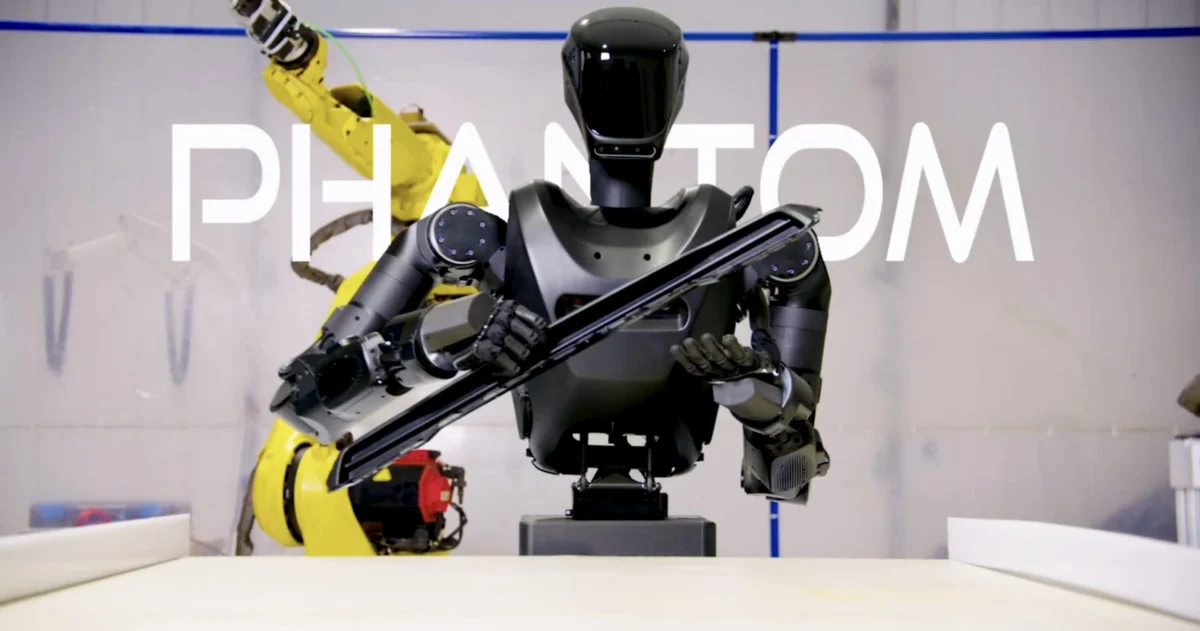
Foundation Future Industries, a fledgling startup launched in 2024 with ambitious plans to deploy humanoid robots in military and industrial sectors, not consumer markets, finds itself embroiled in a severe financial crisis, leaving employees without health benefits and facing consecutive missed payrolls. The unfolding distress casts a stark light on the volatile landscape of deep-tech ventures and raises questions about corporate governance, especially given the company’s high-profile advisory role held by Eric Trump and its pursuit of investment from a South Korean conglomerate with existing business ties to the Trump Organization.
The severity of the situation became acutely clear to Foundation Future Industries’ workforce following a Friday evening email notification that their health benefits, administered through Rippling, had been retroactively terminated to October. This abrupt cessation of coverage, initially blamed by Foundation on Rippling, was subsequently clarified by the Professional Employer Organization (PEO) as a direct consequence of the startup’s failure to meet its financial obligations. Rippling explicitly stated that clients unable to fulfill payroll and benefits commitments for multiple months receive warnings before termination, indicating a prolonged period of non-payment by Foundation. While the company promised to offer coverage through COBRA—the federal Consolidated Omnibus Budget Reconciliation Act that allows employees to temporarily maintain health insurance by paying full premiums out-of-pocket—and pledged to reimburse these costs, employees expressed deep skepticism regarding the company’s capacity to deliver on these promises, particularly those with family members undergoing critical medical treatments.
This benefits debacle is merely the latest symptom of Foundation Future Industries’ deepening financial woes. Employees were last compensated on October 15th, and with another payday scheduled for November 30th looming, many face the grim prospect of a third consecutive pay cycle without income. The mounting financial pressure has forced numerous staff members to deplete personal savings to cover basic living expenses, contributing to a palpable atmosphere of frustration and distrust within the company. Attendance at the San Francisco headquarters has reportedly plummeted as employees actively pursue alternative employment opportunities, a natural consequence of such profound financial instability.
A History of Financial Instability and Leadership Scrutiny
The current crisis at Foundation Future Industries also brings renewed scrutiny to its co-founder, Sankaet Pathak. Pathak, whose previous fintech startup, Synapse, collapsed in 2024 amidst regulatory challenges and accusations of false promises regarding FDIC insurance, has made headlines for the bold, often audacious, claims about the capabilities of his humanoid robots and their potential applications in high-stakes environments like war zones. While Pathak has publicly championed his vision for advanced robotics, his leadership has come under intense internal criticism, particularly concerning a $4.6 million loan he reportedly took from the company in 2025. This significant withdrawal of company funds by the CEO, revealed in a CNBC report earlier this month, has fueled employee anger and questions about the allocation of capital, especially when staff are struggling to make ends meet.
In an all-hands meeting following the CNBC report, Pathak attempted to defend the loan, asserting that he had invested substantial personal funds into the startup and was taking only a nominal salary. He also reportedly advised employees facing dire financial straits to contact human resources for assistance with personal bills, a gesture that, while seemingly empathetic, likely rings hollow for staff already questioning the company’s ability to cover basic operational costs. The juxtaposition of a CEO taking a multi-million-dollar loan while employees are deprived of basic compensation and health benefits highlights profound governance concerns and a potential misalignment of interests between leadership and the workforce.
The Desperate Search for a Lifeline and the Trump Connection
Foundation Future Industries’ financial distress began to manifest significantly in August, prompting an urgent search for a bridge loan to cover immediate expenses and outstanding payroll. Pathak has reportedly been in discussions with three to four venture capital firms, including existing investor Tribe Capital, in an effort to secure this interim funding. Such a bridge loan would serve as a crucial stopgap, allowing the company to survive until a larger, more substantial investment can be finalized.
The primary target for this significant capital injection is the South Korean conglomerate Base Group, which is reportedly considering a $150 million investment. Pathak has informed employees that this critical funding could materialize as early as December or January. While Base Group recently confirmed to Reuters that it is indeed evaluating the investment, the funding has not yet been finalized, leaving Foundation Future Industries in a precarious holding pattern.
This potential investment is noteworthy not only for its scale but also for its implications concerning the business ties between the Trump family and Base Group. Eric Trump, who holds an advisory role as chief strategy advisor and is an investor in Foundation Future Industries, represents a direct link. The relationship between the Trump Organization and Base Group is not new; a 2026 New York Times article revealed that Base paid the Trump Organization $2 million in 2025. This payment, along with Base Group’s pursuit of other Trump-branded ventures, including a golf course in South Korea, has previously drawn scrutiny from Democratic senators over potential conflicts of interest. Should Base Group’s investment in Foundation Future Industries proceed, it would deepen these commercial entanglements, potentially raising further ethical and transparency questions, especially given Eric Trump’s public profile and his family’s continued influence.
Inside the Troubled Startup: Morale, Hiring, and Legal Warnings
The internal atmosphere at Foundation Future Industries is one of acute anxiety and disillusionment. Employees are burning through savings, with one telling CNBC, "I’m burning through savings just to afford my apartment. It’s extremely unfortunate we’re in this situation." This sentiment is widely shared as staff grapple with the immediate impact of missed paychecks and the uncertainty of their health coverage. The sharp decline in attendance at the San Francisco headquarters is a tangible indicator of collapsing morale and employees prioritizing job searches.
Adding to the complexity and controversy, despite its rapidly deteriorating financial state, Foundation Future Industries reportedly continued to hire for open roles until very recently. This decision has left some new employees in an even more dire situation, as they have never received a full paycheck since joining the company. The practice of continuing to hire amidst such severe financial instability raises serious questions about transparency and ethical recruitment practices.
Furthermore, in an apparent attempt to retain employees until the prospective Base Group investment materializes, Pathak has reportedly floated the idea of offering workers equity in the startup. While this could theoretically incentivize long-term commitment, its appeal is likely diminished by the immediate financial hardship and the company’s uncertain future. More concerning, however, are reports that human resources staff have actively warned workers against pursuing legal action with the state of California to recover their unpaid wages. Employees have been told that filing such complaints would result in dismissal, a threat that, if true, could constitute a serious violation of labor laws designed to protect workers’ rights to fair compensation and legal recourse. California labor laws are particularly stringent regarding wage payment and retaliation, making such warnings highly problematic.
Broader Implications: The Humanoid Robot Market and Startup Ecosystem
The saga of Foundation Future Industries serves as a cautionary tale within the burgeoning, yet volatile, humanoid robot market. While the prospect of general-purpose humanoid robots capable of performing diverse tasks has captured the imagination of investors and technologists alike, the path to commercial viability is fraught with immense technical challenges, colossal capital requirements, and lengthy development cycles. Companies like Boston Dynamics (acquired by Hyundai), Agility Robotics, and Tesla Bot have all demonstrated impressive prototypes, but widespread, economically viable deployment remains a distant goal. The focus on military and heavy industrial applications, as Foundation Future Industries aimed, represents a particularly demanding segment, requiring extreme robustness, reliability, and safety standards.
The startup’s rapid ascent and equally rapid descent into crisis underscore the inherent risks in backing highly ambitious, capital-intensive hardware ventures. Even with high-profile advisors and significant initial funding, a lack of sustainable cash flow management, coupled with the immense costs of R&D and manufacturing in robotics, can quickly lead to insolvency. This situation will likely prompt increased scrutiny and due diligence from venture capital firms looking to invest in the robotics space, particularly in companies led by founders with a history of previous startup failures.
For the broader startup ecosystem, the Foundation Future Industries case highlights the critical importance of transparent financial management, robust corporate governance, and ethical treatment of employees. The alleged CEO loan, the continued hiring amidst financial distress, and the reported warnings against legal action all represent practices that erode trust and can have long-lasting negative impacts on a company’s reputation and its ability to attract future talent and investment, regardless of its technological potential.
As the end of November approaches, Foundation Future Industries and its beleaguered employees stand at a critical juncture. The fate of the company, and the livelihoods of its workforce, hinge on the successful securing of a bridge loan and the elusive $150 million investment from Base Group. Without these lifelines, a company that once promised to revolutionize industries with humanoid robots may instead become another stark reminder of the harsh realities and inherent risks of the startup world, leaving behind a trail of unpaid wages, terminated benefits, and shattered aspirations. The coming weeks will undoubtedly determine whether Foundation Future Industries can navigate its current existential crisis or if it is destined to join the ranks of ambitious ventures that failed to bridge the gap between bold vision and financial reality.
