

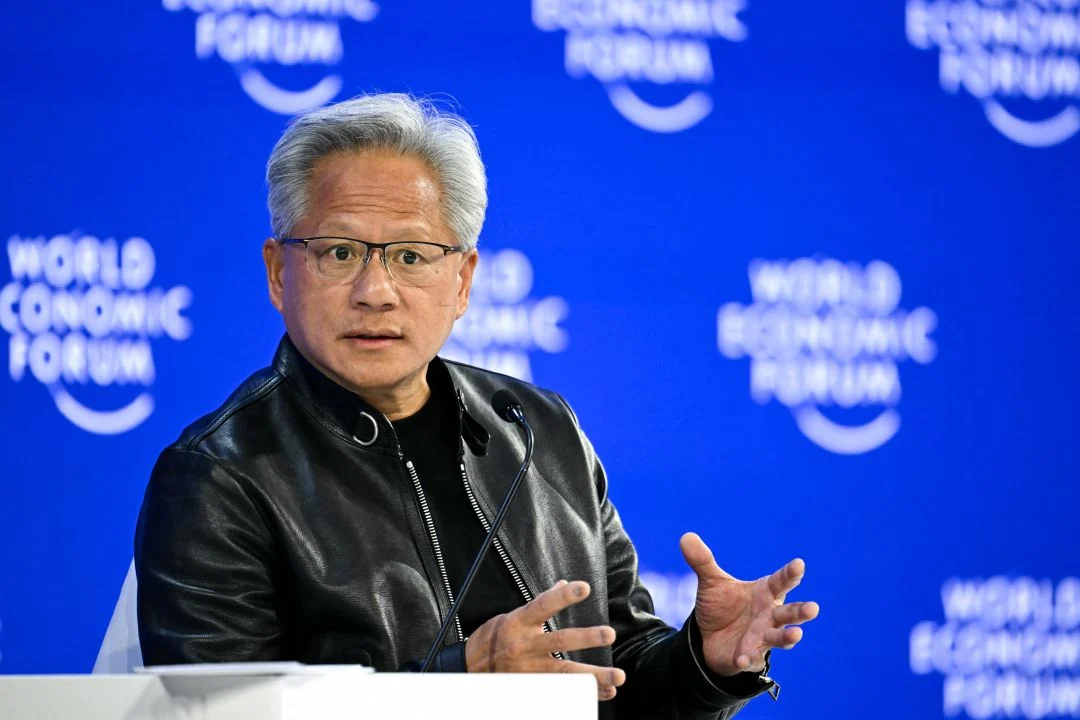
Nvidia, the undisputed titan of artificial intelligence chip manufacturing, finds itself navigating a period of unprecedented paradox, marked by record-breaking financial triumphs on one hand, and profound leadership uncertainty and escalating geopolitical pressures on the other. This week, the company presented two distinctly different narratives: one of immense, sustained growth reflected in its latest earnings report, and another of internal strife and external calls for the return of its recently ousted visionary leader, Jensen Huang. The market’s reaction, characterized by a declining stock price despite stellar financials, underscores the deep unease surrounding Nvidia’s future trajectory.
A Chronology of Recent Turbulence
The dramatic events unfolding at Nvidia have their roots in the complex interplay of technological dominance, U.S.-China geopolitical tensions, and corporate governance. For years, Nvidia, under Jensen Huang’s leadership, meticulously built its empire on the back of its Graphics Processing Units (GPUs), which proved indispensable for AI training and inference. This technological superiority placed the company at the epicenter of the global AI revolution, leading to exponential revenue growth.
However, Nvidia’s pivotal role also made it a key player in the escalating U.S.-China technology rivalry. Successive U.S. administrations, starting with President Trump and continuing under President Biden, implemented stringent export controls aimed at restricting China’s access to advanced semiconductor technology. These measures specifically targeted high-performance AI chips like Nvidia’s A100 and H100, forcing the company to develop "China-specific" variants (such as the H800 and L20) that complied with export regulations but offered reduced performance.
The most recent catalyst for the current turmoil was the unexpected ouster of CEO Jensen Huang. While the official reasons remain largely undisclosed, reports suggest an internal investigation into alleged covert sales of advanced chips to China played a significant role. This development sent shockwaves through the tech world, given Huang’s iconic status and his instrumental role in shaping Nvidia into a trillion-dollar company. Following his departure, Colette Kress, Nvidia’s Chief Financial Officer, stepped into the role of interim CEO, tasked with steering the company through this turbulent period.
Immediately following Huang’s ouster, Nvidia released its latest quarterly earnings report, which presented a stark contrast to the leadership drama. The report detailed soaring revenues and robust future guidance, primarily driven by insatiable demand for its AI accelerators. Yet, almost simultaneously, a powerful campaign for Huang’s return erupted across social media and tech forums, spearheaded by high-profile figures like Elon Musk, who famously likened Huang’s removal to "kicking Michael Jordan off your team."
Further complicating matters, Nvidia announced a significant shift in its China strategy. Interim CEO Kress confirmed that the company would cease sales of its H200 chips to China and, crucially, close a previously utilized loophole allowing Chinese companies to remotely access Nvidia chips housed in data centers in neighboring countries like Malaysia. This move, while aligning with tightening U.S. export controls, is projected to have a substantial impact on Nvidia’s bottom line, raising questions about its long-term market strategy in the world’s second-largest economy.
Nvidia’s Financial Resilience Versus Market Skepticism
The latest earnings report painted an undeniably rosy picture of Nvidia’s financial health. The company announced that its quarterly revenue had surged by an astounding 206% year-over-year, reaching an impressive $22.1 billion, significantly beating analysts’ expectations of around $20.4 billion. Net income followed suit, climbing to $12.29 billion, representing a staggering 769% increase from the previous year. The data center segment, fueled by overwhelming demand for its H100 and newer H200 AI GPUs, was the primary engine of this growth, contributing over 80% of total revenue. Furthermore, Nvidia provided optimistic guidance for the upcoming quarter, projecting revenues of approximately $24 billion, plus or minus 2%, signaling continued strong performance.
Interim CEO Colette Kress, during the earnings call, confidently reiterated the company’s robust position and future prospects. Her concluding remarks, "Hey, we’ve got this," were a clear attempt to reassure investors and stakeholders that the company’s strategic direction and operational execution remained strong despite the change in leadership.
However, the market’s response was far from uniformly positive. Despite the stellar financial figures, Nvidia’s stock price experienced a noticeable decline in the days following the earnings announcement and Huang’s ouster. This disconnect suggests that investors are weighing the company’s current financial strength against significant uncertainties. Analysts point to several factors: the perceived instability arising from Huang’s departure, the potential long-term financial repercussions of stricter China export controls, and the inherent "Jensen premium" – the intangible value attributed to Huang’s visionary leadership and his unique ability to anticipate and shape technological trends. Many investors fear that without its founder at the helm, Nvidia might struggle to maintain its innovation edge and strategic clarity in a rapidly evolving and intensely competitive AI landscape.
The Geopolitical Chessboard: Nvidia’s China Conundrum
Nvidia’s decision to halt sales of its H200 chips to China and close the remote access loophole marks a significant capitulation to intensifying U.S. export controls. This move is not merely a corporate decision but a direct consequence of a prolonged and escalating technological cold war between Washington and Beijing. The U.S. government’s policy, driven by national security concerns, aims to impede China’s progress in advanced AI and supercomputing capabilities, which are deemed critical for military applications and economic dominance.
Initially, U.S. restrictions focused on preventing the export of Nvidia’s most powerful chips, the A100 and H100, to China. In response, Nvidia developed less powerful, "de-tuned" versions specifically for the Chinese market, such as the H800 and L20, which initially appeared to satisfy U.S. regulatory requirements. However, the U.S. Commerce Department has continuously tightened these restrictions, demonstrating a clear intent to close any perceived loopholes. The cessation of H200 sales, a newer and more powerful AI chip, indicates a proactive step by Nvidia to align with these stricter regulations, possibly preempting further government action.
The closing of the "remote access" loophole is particularly impactful. This practice allowed Chinese tech firms to lease access to Nvidia’s high-end chips located in data centers in neighboring countries (like Malaysia, Singapore, or Taiwan), effectively bypassing direct export bans. This indirect revenue stream was substantial, with critics of Nvidia’s previous stance estimating that up to 20% of its total business could be attributed to China, either directly or indirectly through these regional data centers. Nvidia’s public declaration to shut down this channel, while a move towards greater compliance, is expected to deliver a significant blow to its bottom line, though the exact magnitude remains uncertain as the company seeks to offset this loss through growth in other markets.
The implications extend beyond Nvidia’s financials. This tightening of controls signals a further escalation in the U.S.-China tech decoupling. It puts immense pressure on other semiconductor companies and tech giants to re-evaluate their engagement with China, potentially leading to a more fragmented global tech ecosystem. For China, it reinforces the urgency of achieving semiconductor self-sufficiency, likely spurring increased investment in domestic chip design and manufacturing, albeit a long and arduous path. Nvidia’s strategic dilemma remains: how to navigate U.S. regulatory compliance while maintaining a presence in a market that, despite restrictions, remains one of the largest and fastest-growing in the world.
The Call for Jensen Huang’s Return: A Public Uproar
The immediate aftermath of Jensen Huang’s ouster saw a rapid and vocal mobilization among prominent figures in the tech industry and a significant portion of Nvidia’s investor base, all clamoring for his reinstatement. This groundswell of support is largely attributable to Huang’s almost mythical status as a visionary leader. He is widely credited with foreseeing the potential of GPUs beyond graphics to power parallel computing and, subsequently, the AI revolution. His strategic acumen, hands-on approach to product development, and ability to cultivate a strong corporate culture are often cited as indispensable assets.
Elon Musk, CEO of Tesla, SpaceX, and X (formerly Twitter), emerged as one of the most outspoken proponents of Huang’s return. His public statements, often delivered via his influential social media platform, likened Huang’s leadership to that of a legendary athlete, suggesting that Nvidia’s board had made a grave error. Musk’s sentiments resonated with many other unnamed tech executives and venture capitalists who privately and publicly expressed concern over the loss of Huang’s unique guidance during a critical period for AI development.
A petition advocating for Huang’s reinstatement quickly gained traction, attracting thousands of signatures from investors, employees, and industry observers. The momentum was further fueled by reports that Huang himself, while respecting the board’s decision, was "prepared to come back" if the circumstances warranted it, adding a layer of dramatic tension to the corporate saga.
The underlying motivation for this fervent push is a deep-seated fear among many that Nvidia, despite its current technological and financial prowess, might falter without Huang’s specific brand of leadership. In an industry defined by rapid innovation and fierce competition, where strategic missteps can be catastrophic, the "Jensen premium" represents not just past success but future assurance. The argument posits that while current executives may be capable operators, Huang’s long-term vision and unparalleled understanding of the AI landscape are irreplaceable, particularly as the company navigates complex technical challenges and intensifying geopolitical headwinds.
Corporate Governance Under Scrutiny: The Board’s Dilemma
Nvidia’s Board of Directors finds itself in an unenviable position, caught between internal pressures, external demands, and its fiduciary duties to shareholders. Publicly, the board has maintained a firm stance, expressing full confidence in the interim management led by Colette Kress and unequivocally rejecting the immediate return of Jensen Huang. This resolute posture appears to be driven by a desire to assert control and demonstrate independent governance, preventing the perception that the board can be swayed by public opinion or the dictates of powerful tech billionaires like Elon Musk.
The ongoing internal investigation into alleged undisclosed chip sales to China is undoubtedly a critical factor influencing the board’s decisions. Depending on the findings, the board may feel legally and ethically obligated to maintain Huang’s separation, at least until the investigation is fully concluded and any potential fallout managed. Reinstating a CEO amidst such an inquiry could expose the company to significant regulatory risks, legal liabilities, and reputational damage.
The recent governance crisis at OpenAI, where CEO Sam Altman was abruptly ousted by the board only to be reinstated days later amidst immense employee and investor pressure, provides a cautionary tale. While Nvidia is a publicly traded company with different governance structures and legal obligations compared to OpenAI’s non-profit-controlled model, the board would undoubtedly be keen to avoid a similar public spectacle of perceived indecision or capitulation. They aim to project stability and authority, even if it means weathering a period of market skepticism.
However, the sustained decline in Nvidia’s stock price, despite its strong financial performance, indicates that the board’s current stance has not fully reassured investors. The market is clearly signaling its apprehension about the leadership vacuum and the potential for a prolonged period of uncertainty. While the board has a duty to act in the best long-term interest of the company, balancing that with immediate investor confidence and managing the perception of corporate stability is a delicate act. For now, the board’s message is clear: they are in control, and a quick return for Huang is not on the cards. Yet, as one analyst put it, "never say never" in the volatile world of high-stakes tech. The outcome of the China sales investigation, combined with sustained market pressure, could potentially alter this position in the future.
Analyst Perspectives and Future Outlook
The situation at Nvidia has elicited a spectrum of views from financial analysts and industry observers. While some acknowledge the immediate financial strength demonstrated by the latest earnings report, they concurrently highlight the significant risks posed by the leadership change and the escalating U.S.-China tech tensions.
Optimistic analysts point to Nvidia’s technological lead, robust product pipeline (including next-generation GPUs), and the enduring, insatiable demand for AI compute power. They argue that the company’s strong foundational technology and established market dominance might be sufficient to weather the current storms, even without Jensen Huang at the helm. They may also believe that Colette Kress and the existing executive team are capable of executing the company’s strategy effectively.
Conversely, more cautious analysts emphasize the "X-factor" of Huang’s leadership. They question whether a new leadership team, however competent, can replicate Huang’s strategic foresight, his ability to cultivate deep relationships with key customers, and his unique vision for future technological shifts. They also express concern about the true long-term impact of the China restrictions. While Nvidia’s current revenue growth can absorb the initial hit, the sustained loss of access to a massive market could open doors for competitors and force Nvidia to significantly re-evaluate its global growth strategies. The potential for China to accelerate its domestic chip development in response to these restrictions is also a looming threat.
Key questions remain unanswered: Can Nvidia effectively diversify its market presence to mitigate the China impact? Will the company be able to maintain its blistering pace of innovation without its founder? How will the ongoing internal investigation conclude, and what legal or regulatory repercussions might it bring? The answers to these questions will profoundly shape Nvidia’s trajectory in the coming years.
Conclusion
Nvidia stands at a critical juncture, embodying a powerful dichotomy: a technological powerhouse and financial titan grappling with profound internal and external challenges. Its record-breaking earnings underscore its undeniable market dominance in the AI era, yet the dramatic ouster of its visionary founder, Jensen Huang, and the intensifying geopolitical pressures surrounding its China operations, have cast a long shadow of uncertainty. The market’s skeptical reaction, despite glowing financials, reflects a deep-seated concern about leadership stability and future strategic direction.
The coming months will be pivotal for Nvidia. The board’s resolve to maintain control and manage the fallout from the China sales investigation will be tested against persistent calls for Huang’s return and the imperative to reassure a jittery investor base. How Nvidia navigates this complex interplay of corporate governance, geopolitical realities, and the relentless demands of technological innovation will determine whether it can successfully reconcile its "two Nvidias" and continue to lead the charge in the rapidly evolving global AI landscape.
