

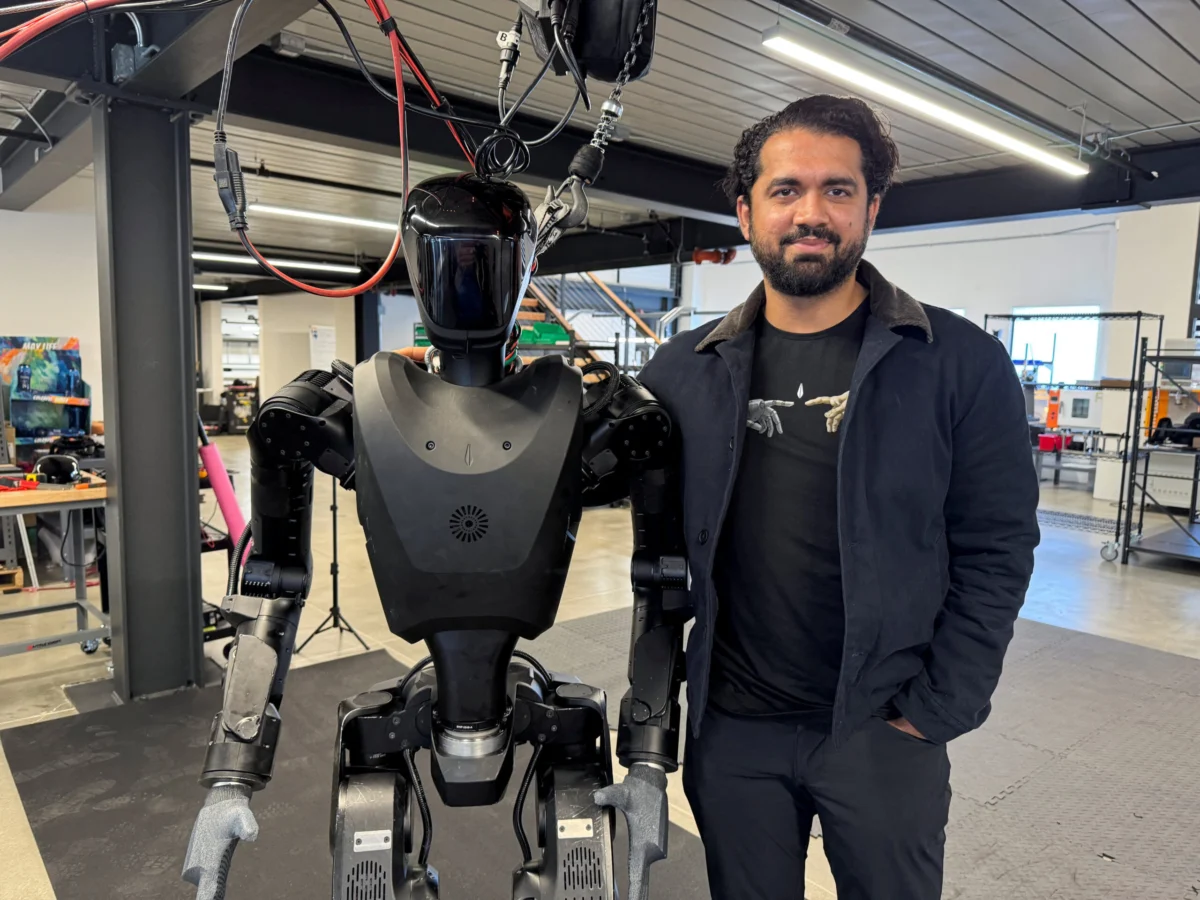
San Francisco, California – Foundation Future Industries, a high-profile startup aiming to revolutionize military robotics with its humanoid robot Phantom-01, is grappling with severe financial difficulties, including a missed payroll that has left employees without wages. This crisis unfolds as the company’s cash reserves dwindle and its CEO and co-founder, Sankaet Pathak, faces scrutiny over a $4.6 million loan he took from the company last year to purchase a luxury home, according to individuals with direct knowledge of the matter. The situation is further complicated by the company’s association with Eric Trump, who serves as a chief strategy advisor and investor, and Pathak’s controversial history, which includes the collapse of his previous fintech venture, Synapse.
Deepening Financial Crisis and Employee Distress
The San Francisco-based Foundation missed its payroll on October 30, leaving its workforce, including highly sought-after robotics engineers and artificial intelligence experts recruited from tech giants like Tesla, Amazon, and Zoox, unpaid. This marks the second instance of payroll delays this year, following a similar cash crunch in August that was temporarily resolved by a bridge loan from an existing investor, which only provided a two-day reprieve. The current failure to disburse salaries has generated significant anger and concern within the startup, particularly given the backdrop of CEO Sankaet Pathak’s personal financial decisions.
Sources close to the company, who requested anonymity to speak candidly about the private firm’s sensitive internal affairs, revealed that Pathak borrowed $4.6 million from Foundation in 2025. Public records corroborate that an LLC with Pathak as its sole principal acquired a $4.6 million property in Sausalito, California, in October 2025. This property, boasting "sweeping, cinematic views" of the San Francisco Bay, was purchased around the same time the company began experiencing significant financial strain. Employees and some investors are questioning the allocation of company funds, especially when these resources could have been used to ensure timely compensation for the workforce. Pathak acknowledged receipt of a detailed list of inquiries regarding these issues but has not yet provided a response.
A Pattern of Controversial Financial Management and Corporate Governance
The current turmoil at Foundation is not an isolated incident in Pathak’s entrepreneurial career. Before venturing into advanced robotics, Pathak founded Synapse, a fintech firm that acted as a crucial intermediary, enabling other fintech companies like Mercury, Dave, and YieldStreet to offer banking services through partnerships with smaller community banks. Synapse’s operational model, while innovative, proved to be fragile. Its spectacular collapse in 2024 left over 100,000 Americans locked out of their FDIC-backed savings accounts, collectively totaling an estimated $265 million in deposits.
The aftermath of Synapse’s bankruptcy was protracted and chaotic. Despite partial payments to some customers, thousands remain without access to their funds more than two years later. Jelena McWilliams, the former FDIC Chair appointed as bankruptcy trustee, reported that as much as $96 million in customer funds had vanished without a clear explanation. While Pathak blamed banking partner Evolve, and Evolve pointed fingers at Synapse, federal regulators initially hesitated to intervene comprehensively. It was not until the Consumer Financial Protection Bureau (CFPB) sued Synapse last year that a $55 million relief fund was established for affected customers.
Further compounding the concerns, independent journalist and consultant Jason Mikula revealed that Pathak withdrew $320,000 in loans from Synapse in 2024 as the company spiraled towards bankruptcy amid unresolved ledger discrepancies. The Wall Street Journal reported last year that federal prosecutors convened a grand jury to investigate potential criminal misconduct at Synapse, though Pathak was not specifically named in that report. This history raises serious questions about Pathak’s financial stewardship and accountability, questions that are now echoing through Foundation’s current crisis.
High-Stakes Ambitions and Unfulfilled Promises in Military Robotics
Despite these financial and historical shadows, Foundation Future Industries has maintained a high public profile, fueled by Pathak’s ambitious claims regarding its humanoid robots. Pathak has frequently asserted that Foundation is on the cusp of unveiling a "next-generation, weapons-ready robot" designed to bolster U.S. competitiveness against rivals like China. He has publicly stated that this robot, Phantom-01, could soon undertake battlefield tasks in Ukraine or patrol the U.S.-Mexico border, captivating media attention with visions of robotic soldiers and autonomous security forces.
In an April television interview, Pathak boldly claimed that what Foundation was "about to unveil in the next couple of months [is] going to be the strongest humanoid robot that exists anywhere in the world, including China." These statements were often accompanied by assertions that the company had secured $24 million in Pentagon contracts, a significant credential in the competitive defense sector.
However, the reality behind these contract claims appears to be more nuanced. While widely reported, Foundation itself did not directly win $24 million in new contracts. Instead, the company acquired Florida-based Boardwalk Robotics in late 2024. The reported government research contracts were originally awarded to Boardwalk Robotics, and Foundation utilized Boardwalk’s existing robot, Alex, as the foundational basis for its own Phantom MK-1. Moreover, a separate source with direct knowledge of the Boardwalk deal indicated that the acquisition included performance milestones for the robot that have yet to be achieved, casting doubt on the full value and success of the integration.
This pattern of ambitious claims preceding actual delivery is not new for Pathak. In 2024, CNBC reported that Pathak had sent letters to prospective investors for a previous robotics startup, citing an imminent $300 million purchase order and investment from General Motors, claims the automaker subsequently rejected. Mike LeBlanc, a co-founder of Foundation, reportedly expressed embarrassment over these earlier marketing materials.
The Eric Trump Connection and Political Scrutiny
Adding another layer of complexity and controversy to Foundation’s narrative is the involvement of Eric Trump, son of the former U.S. president. The April television interview that featured Pathak’s bold claims also introduced Eric Trump as a Foundation investor and chief strategy advisor, though the size of his stake remains undisclosed.
Eric Trump and his brother, Donald Trump Jr., have a documented history of investing in defense firms, including those developing military drones and autonomous weapons. A July Washington Post investigation revealed that startups backed by investment vehicles linked to the Trump brothers had secured at least $3.2 billion in government business during their father’s administration. Eric Trump publicly championed Foundation, stating, "We have to win robotics in the United States of America," and praising the robots’ interactive capabilities.
This prominent association immediately drew the ire of Democratic lawmakers. Senator Elizabeth Warren (D-Mass.) swiftly questioned whether Foundation’s alleged U.S. defense contracts were a result of nepotism. In an April 23 social media post, Warren stated, "Eric Trump went on FOX to brag about winning ANOTHER multimillion-dollar contract from the Trump administration. This looks like corruption in plain sight."
Eric Trump has not responded to requests for comment regarding Foundation’s current financial troubles or the allegations of nepotism. However, his spokesperson recently informed the Financial Times that Eric Trump had "no involvement in Foundation’s management, operations, strategic decisions or commercial activities, including the solicitation, negotiation, procurement or execution of any government contracts." This statement attempts to distance him from operational decisions, yet his public advocacy and advisory role remain significant. The political scrutiny generated by this connection led to internal speculation within Foundation that a Democratic-led Congress might initiate investigations into the company’s dealings, further complicating its already precarious position.
Corporate Governance Deficiencies and Investor Apprehension
The financial woes and past controversies are exacerbated by Foundation’s corporate governance structure, which has raised significant concerns among prospective investors. Pathak is the sole board member and owns a majority of the firm’s shares. This highly concentrated power structure enabled him to secure the $4.6 million short-term loan from the company, a transaction that, while disclosed to existing investors through financial reports, has been heavily criticized by insiders.
"This is what happens in a company with no governance," remarked one individual familiar with the situation, expressing frustration over the lack of checks and balances that could have prevented such a loan during a critical period for the company. The absence of an independent board or robust oversight mechanisms is a major red flag for venture capitalists and institutional investors, especially those evaluating a company seeking hundreds of millions of dollars in funding at a $3 billion valuation, a target Pathak has pursued since at least January. In the current tight venture capital market, strong governance is often a prerequisite for significant investment.
Broader Implications for Robotics, Defense Tech, and Investor Trust
Foundation Future Industries’ predicament reflects the inherent challenges and risks associated with hardware startups, particularly in a complex and capital-intensive field like advanced robotics. Developing cutting-edge humanoid robots requires immense investment in research, development, and manufacturing, often with long lead times before commercial viability or profitability. The "valley of death" between initial funding and scalable production is notoriously difficult to cross, and many promising startups falter.
The ongoing cash crunch and governance issues at Foundation could have broader implications for investor confidence in the nascent military robotics sector. While the strategic importance of autonomous systems for national security is undeniable, high-profile failures and controversies can deter potential investors, making it harder for other legitimate startups to secure necessary funding. Moreover, the ethical and regulatory landscape surrounding military AI and autonomous weapons is still evolving, adding another layer of complexity for companies operating in this space.
The intersection of business, politics, and defense contracting, as highlighted by the Eric Trump connection, also underscores the need for greater transparency and stricter oversight in government procurement processes. Concerns about potential conflicts of interest or undue influence can erode public trust and compromise the integrity of defense spending.
The Path Forward: A Precarious Future
As Foundation struggles to secure fresh funding, its future hangs in the balance. Pathak, in a memo to employees this week, stated he was actively working to source money to pay back wages, suggesting a desperate scramble for a rescue loan or new investment. However, with the company’s financial instability, the CEO’s controversial loan, and his troubled entrepreneurial past, attracting new capital will be an uphill battle.
The company, founded in April 2024 by Pathak, Tribe Capital CEO Arjun Sethi, and Cobalt Robotics co-founder Mike LeBlanc, initially managed to attract top talent and significant buzz. Yet, the current crisis threatens to undo these early achievements. Insiders openly fret that Foundation could soon collapse if Pathak fails to close a substantial funding round. The potential collapse of Foundation would not only mean job losses for its highly skilled workforce but also a setback for the broader ambition of U.S. leadership in advanced military robotics.
The Foundation Future Industries saga serves as a stark reminder of the volatile nature of high-tech startups, the critical importance of robust corporate governance, and the intense scrutiny faced by companies operating at the intersection of cutting-edge technology, national security, and political influence. As the robotics industry continues to evolve, the lessons from Foundation’s current struggles will undoubtedly resonate throughout the ecosystem for years to come.
