

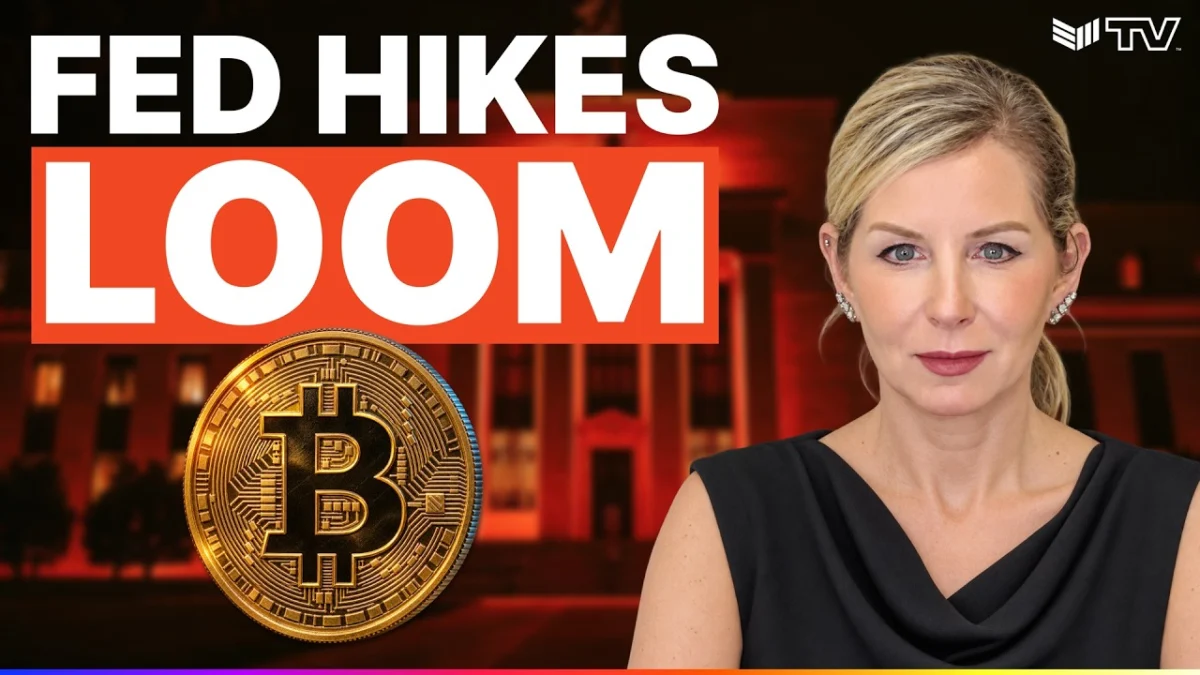
Tracy Shuchart, a prominent voice in the cryptocurrency analysis sphere, has articulated a nuanced perspective on Bitcoin’s long-term value proposition, emphasizing its inherent monetary scarcity while cautioning investors against conflating this fundamental argument with its current trading behavior. In an environment characterized by tightening liquidity, rising interest rates, and a strengthening U.S. dollar, Shuchart observes that Bitcoin is exhibiting traits more akin to a risk asset rather than a traditional safe haven. This divergence, she posits, necessitates a clear distinction between the enduring thesis for Bitcoin and its day-to-day market fluctuations.
Shuchart’s analysis, presented in a recent discussion, highlights that despite price declines, the underlying activity on the Bitcoin network remains robust. The sustained strength in Bitcoin transactions, even as its market price experiences volatility, underscores her assertion that the fundamental long-term case for the digital asset remains intact. She anticipates continued adoption, suggesting that the foundational principles driving Bitcoin’s value are not being eroded by current macroeconomic headwinds.
The Macroeconomic Environment and Bitcoin’s Shifting Correlation
The current financial landscape presents a complex backdrop for all asset classes, including Bitcoin. A tightening monetary policy by central banks globally, aimed at combating inflation, has led to a significant increase in yields across various debt markets. This has, in turn, made the U.S. dollar a more attractive store of value for international investors, leading to its appreciation against other major currencies. Historically, Bitcoin has shown a varied correlation with traditional markets, sometimes acting as a hedge against inflation and currency devaluation, and at other times mirroring the behavior of technology stocks, sensitive to broader market sentiment and risk appetite.
In recent periods, the correlation between Bitcoin and high-growth technology stocks has become increasingly pronounced. This behavior is often attributed to investors’ flight to safety during times of economic uncertainty. When liquidity dries up and investors become risk-averse, assets perceived as less established or more volatile, such as cryptocurrencies, tend to be sold off. The rising yields environment exacerbates this by offering more attractive, less risky returns in traditional fixed-income markets, drawing capital away from riskier assets.
Shuchart’s observation that Bitcoin is "behaving much more like a risk asset than a safe haven" aligns with this phenomenon. During periods of quantitative tightening (QT) and rising interest rates, the cost of capital increases, and speculative investments become less appealing. This is a stark contrast to the narrative that often positions Bitcoin as "digital gold" – a hedge against inflation and currency debasement, akin to traditional safe-haven assets like gold. While the long-term scarcity argument remains, its manifestation in market price is being overshadowed by immediate macro-economic pressures.
Bitcoin’s Monetary Scarcity: The Enduring Long-Term Thesis
The core of Bitcoin’s long-term appeal lies in its design as a scarce digital asset. Unlike fiat currencies, which can be printed at will by central banks, Bitcoin has a fixed supply cap of 21 million coins. This scarcity is algorithmically enforced and immutable, making it inherently resistant to inflation caused by supply increases. This characteristic is often cited as the primary reason for its potential to act as a store of value, similar to gold.
The "halving" events, which occur approximately every four years, reduce the rate at which new Bitcoins are created. The most recent halving occurred in May 2020, and the next is anticipated around April 2024. These events are designed to further control the supply and are often seen as bullish catalysts by proponents of Bitcoin. Over time, as the rate of new Bitcoin issuance diminishes, the scarcity premium is expected to increase.
However, Shuchart’s point is that the market’s current interpretation of this scarcity is being heavily influenced by short-term economic forces. While the potential for scarcity to drive long-term value remains, the realization of that value is contingent on broader market conditions and investor sentiment. When investors are prioritizing capital preservation over speculative growth, assets like Bitcoin, despite their scarcity, can be subject to sell-offs driven by liquidity constraints and a general deleveraging across markets.
Transaction Activity as a Barometer of Network Health
Shuchart’s emphasis on the continued strength of Bitcoin transactions is a critical indicator of the network’s underlying health and adoption. Transaction volume and user activity are often seen as more fundamental metrics than short-term price movements. If more people are using Bitcoin for transactions, transferring value, or holding it as a long-term asset, it suggests a growing network effect and increasing utility.
Data from various blockchain analytics firms often show that even during periods of price decline, the number of active addresses, transaction counts, and on-chain volumes can remain stable or even increase. This suggests that while speculative traders might be exiting positions, genuine users and long-term holders are continuing to accumulate or utilize the network. This sustained activity can be interpreted as a sign of conviction in Bitcoin’s future potential, irrespective of short-term market sentiment.
For instance, during the market downturns of 2022, while the price of Bitcoin saw significant declines, the number of daily active addresses and the volume of transactions processed on the network remained relatively high, indicating persistent user engagement. This resilience in network activity is a key component of Shuchart’s bullish argument for Bitcoin’s long-term trajectory.
The Implications of Tightening Liquidity and a Stronger Dollar
The current macroeconomic environment of tightening liquidity and a stronger dollar has profound implications for global asset prices. When central banks raise interest rates, the cost of borrowing money increases, which can slow down economic activity and reduce the amount of capital available for investment in riskier assets. This deleveraging process often leads to a decline in asset prices across the board, as investors seek to reduce their exposure to volatility.
A stronger dollar also plays a significant role. As the U.S. dollar appreciates, it makes dollar-denominated assets more expensive for holders of other currencies. Conversely, it makes non-dollar assets cheaper for dollar holders, potentially leading to capital outflows from those markets. For cryptocurrencies, which are often priced in U.S. dollars, a strengthening dollar can put downward pressure on their prices.
This environment creates a challenging landscape for assets that are still in their developmental or adoption phases, such as Bitcoin. While the long-term thesis of monetary scarcity and decentralized value transfer remains compelling, the immediate pressures of a risk-off environment can obscure these fundamental strengths. Investors must therefore be discerning, differentiating between the speculative noise of short-term price action and the underlying technological and economic arguments that support Bitcoin’s enduring value.
Continued Adoption: A Forward-Looking Perspective
Despite the short-term challenges, Shuchart’s expectation of continued adoption from here is grounded in several ongoing trends. These include:
- Institutional Interest: While institutions may reduce their speculative holdings in the short term, the long-term trend of institutional adoption of digital assets, including Bitcoin, is expected to continue. This is driven by a growing understanding of the technology, the potential for diversification, and the increasing availability of regulated investment products.
- Technological Development: The Bitcoin ecosystem continues to evolve with advancements in layer-2 solutions like the Lightning Network, which enhance scalability and transaction speeds, making Bitcoin more practical for everyday use.
- Global Economic Uncertainty: In an era of geopolitical instability and concerns about traditional financial systems, the appeal of a decentralized, censorship-resistant store of value like Bitcoin may grow.
- Emerging Markets: In countries experiencing high inflation or currency devaluation, Bitcoin can offer an alternative means of preserving wealth.
The "long-term argument hasn’t changed" sentiment suggests that while the path may be volatile, the fundamental reasons for Bitcoin’s existence and its potential to disrupt traditional financial paradigms remain robust. The current market conditions are a test of resilience, and for those who believe in Bitcoin’s core principles, these periods of price correction can present opportunities for accumulation.
The Broader Context of the Discussion
The insights from Tracy Shuchart are part of a larger conversation within the Bitcoin community and the broader financial world about the asset’s role in a changing economic landscape. Discussions often revolve around:
- The Fed’s Monetary Policy: The Federal Reserve’s decisions on interest rates and quantitative easing/tightening are closely watched as they significantly influence liquidity and risk appetite across all markets. The timing and magnitude of potential interest rate hikes or cuts are crucial factors.
- Commodities Markets: The article references discussions on the Fed, dollar, and commodities sell-off, indicating a focus on broader economic trends that impact inflation, interest rates, and currency values. Commodities like silver, copper, gold, and oil are sensitive to global economic health and geopolitical events, and their price movements can offer clues about the direction of the economy.
- The AI Boom: The mention of AI CapEx trade, AI IPOs, and AI Data Centers suggests an analysis of how technological advancements are influencing capital flows and market dynamics. The massive investment in artificial intelligence infrastructure is creating new demand for resources like natural gas and is impacting capital allocation decisions across various sectors.
- Geopolitical Risks: The reference to oil supply risk and potential shifts in oil trade routes underscores the ongoing influence of geopolitical factors on energy markets and global economic stability.
By dissecting these interconnected elements, analysts like Shuchart aim to provide a comprehensive view of the forces shaping asset prices, including Bitcoin. The ability to distinguish between transient market behavior and enduring fundamental value is paramount for navigating the complexities of modern financial markets.
Conclusion
Tracy Shuchart’s perspective offers a valuable framework for understanding Bitcoin’s current market position. While its designation as a risk asset in the face of tightening liquidity and a stronger dollar is a short-term reality, the long-term argument for Bitcoin, rooted in its monetary scarcity, remains a powerful narrative. The sustained strength in transaction activity further reinforces the idea that the underlying network is growing and being utilized. As the macroeconomic landscape continues to evolve, investors are tasked with the critical challenge of separating the signal from the noise, recognizing that the journey of Bitcoin, while potentially turbulent in the present, is underpinned by a foundational thesis that has not changed. The ongoing adoption and development of the ecosystem suggest that Bitcoin’s role as a digital store of value and a decentralized financial network will continue to be a significant force in the years to come.
