

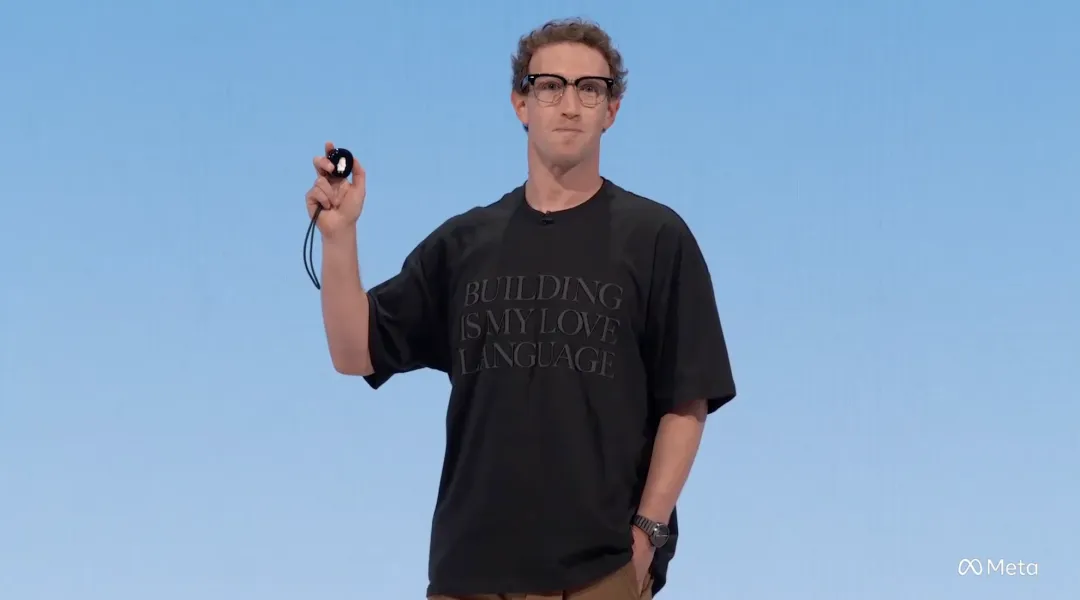
Reports from The Information, published on November 19, 2026, suggest that Meta Platforms, Inc. is poised to launch its much-anticipated Muse Charm, a Tamagotchi-like artificial intelligence companion device, with an estimated price tag of $300. This rumored pricing positions the device squarely within a burgeoning, yet highly competitive and challenging, market for dedicated AI wearables, drawing immediate comparisons to both previous high-profile failures and more affordably priced alternatives.
The disclosure follows Meta’s initial tease of the device at its annual Connect event earlier this year, where it was presented as a novel extension of the company’s ambitious AI strategy. When approached for comment regarding the $300 price, a Meta spokesperson offered a coy, non-committal statement to TechCrunch, remarking, "We’re charmed by the interest in our AI devices, and we’ll have more to share soon." This response, while not an outright confirmation, did not deny the figures, lending further credence to The Information’s report.
Meta’s Ambitious Foray into AI Hardware
Meta’s pivot towards artificial intelligence has been a defining strategic shift for the company in recent years, particularly as it navigates the complex and capital-intensive landscape of the metaverse. The introduction of "Muse," Meta’s agentic AI helper, alongside a suite of customizable, expressive avatars, has already seen a relatively successful push into consumer-facing AI software. Muse has been designed to offer personalized assistance, engage in dynamic conversations, and even generate creative content, demonstrating Meta’s commitment to integrating advanced AI into daily digital interactions.
The Muse Charm represents the logical next step in this evolution: transforming a software-based AI companion into a tangible, physical device. Envisioned as a highly portable gadget, potentially worn around the neck or carried in a pocket, the Muse Charm aims to offer users a constant, personal interface with their AI. Users would be able to interact with it through voice commands, ask questions, and delegate tasks, essentially carrying a dedicated digital assistant with a unique personality wherever they go. The "Tamagotchi-like" descriptor suggests an emphasis on nurturing and ongoing interaction, potentially allowing the AI to evolve and adapt to the user’s personality and preferences over time, fostering a deeper sense of connection than traditional voice assistants.
This move underscores Meta’s broader strategy to diversify its product ecosystem beyond social media platforms and virtual reality headsets. By creating proprietary hardware that deeply integrates its AI capabilities, Meta seeks to establish new paradigms for human-computer interaction and carve out a significant presence in the nascent ambient computing market. The goal is to make AI a seamless, always-on part of users’ lives, much like how smartphones became indispensable.
A Challenging Market Landscape for AI Wearables
The road for dedicated AI wearables has, to date, been fraught with significant challenges, punctuated by high-profile failures and lukewarm consumer reception. This historical context casts a long shadow over Meta’s latest hardware venture.
One of the most notable cautionary tales is the Humane Ai Pin. Launched with considerable fanfare in early 2025, promising a screen-free, projector-based interaction model and advanced AI capabilities, the device quickly faltered. Priced at $699 with an additional monthly subscription, the Ai Pin struggled with inconsistent performance, limited functionality, short battery life, and a lack of compelling killer applications that would justify its premium price and novel interface. Despite its innovative concept, consumers were largely unwilling to sacrifice the versatility and reliability of their smartphones for a specialized, often frustrating, AI companion. By February 2025, Humane’s assets were reportedly acquired by HP for a mere $116 million, marking a swift and decisive end to its ambitious standalone product.
Another recent entrant, the Rabbit R1, also faced mixed reviews following its launch in early 2026. While more affordable than the Ai Pin at $199, the R1, a pocket-sized device designed to interface with apps using a Large Action Model (LAM), encountered criticism for its perceived redundancy with smartphone capabilities and its sometimes-unreliable AI performance. These examples highlight a critical lesson: consumers demand clear, indispensable value, seamless integration, and robust performance from new hardware, especially when it seeks to displace or augment existing ubiquitous devices like smartphones.
Pricing and Competition: A Deep Dive

The rumored $300 price point for Muse Charm places it in an interesting position within this volatile market. While arguably steep for a device described as "the size of a keychain," it aligns with some contemporary AI wearable offerings, yet significantly diverges from others.
For instance, the "Friend" wearable, an AI startup’s device designed for texting and talking to an AI persona, currently retails for $250. This indicates a segment of the market where consumers might be willing to pay a premium for a dedicated AI companion experience, especially if it offers unique emotional or conversational depth.
In stark contrast, Amazon’s "Bee Frontier" wearable AI device offers a different value proposition and pricing strategy. Launched at $75, and frequently available for as low as $52.49 during promotional periods like Black Friday, the Bee Frontier focuses on utility, primarily transcribing conversations and tracking tasks. While it requires an additional $99/year subscription to integrate with a user’s broader digital ecosystem (photos, emails, etc.), its overall cost, even with the annual fee, remains substantially lower than the rumored Muse Charm. Amazon’s strategy appears to prioritize accessibility and a functional, albeit less personalized, AI experience, aiming for mass market adoption.
The disparity in pricing models reflects differing philosophies on how AI should be delivered to consumers. Meta, with its Muse Charm, seems to be betting on a premium, personalized, and emotionally engaging AI experience that justifies a higher upfront cost. This could involve more advanced proprietary AI chips, high-quality audio components, and robust software development to deliver on the "Tamagotchi-like" promise of an evolving, empathetic companion. The $300 price tag would need to cover significant research and development, manufacturing costs, and a marketing budget to cut through the skepticism surrounding the category.
Conversely, Amazon’s approach with the Bee Frontier leans into the utility aspect, offering core AI functionalities at a budget-friendly price, potentially subsidizing the hardware with subscription revenue. This model targets users seeking practical assistance without necessarily desiring a deeply personalized or emotionally resonant AI relationship.
Implications and Future Outlook
The success or failure of Meta’s Muse Charm will have significant implications not only for Meta but also for the broader trajectory of the AI wearables market.
For Meta, a successful launch could validate its multi-pronged AI strategy, demonstrating its ability to translate software innovations into compelling hardware products. It could open up new revenue streams beyond advertising and metaverse investments, and solidify its position as a leader in ambient computing. However, a misstep could be costly, both financially and in terms of market perception, potentially adding another cautionary tale to its hardware portfolio alongside past experiments like the Portal smart displays. Privacy concerns will also be paramount, given the nature of an always-on AI device designed for constant interaction and data collection. Meta will need to rigorously address how user data is handled, stored, and protected to build consumer trust.
For the AI wearables market, Meta’s entry brings considerable brand power and resources. If Muse Charm manages to capture consumer interest and deliver a genuinely valuable experience, it could legitimize the entire category, encouraging further innovation and investment from other tech giants. Conversely, if it struggles to find a broad audience, it could reinforce the skepticism that has plagued the segment, suggesting that consumers are not yet ready for dedicated AI companions, or that the right form factor and value proposition have yet to be discovered.
Industry analysts are likely to view Muse Charm with cautious optimism. While Meta’s commitment to AI is undeniable, the challenge lies in convincing consumers to integrate yet another specialized device into their lives, especially one that performs functions that could, in theory, be handled by their increasingly capable smartphones. The "Tamagotchi-like" element could be a key differentiator, appealing to a niche segment seeking digital companionship or a nostalgic experience, but whether this appeal can translate into mass-market adoption remains to be seen.
The critical period ahead will involve Meta’s marketing strategy, the actual performance and features of the Muse Charm upon release, and how effectively it integrates into the existing Meta ecosystem and users’ daily routines. The question of whether consumers are willing to invest $300 in a dedicated AI companion, in an era where multipurpose smartphones dominate, will ultimately determine if Muse Charm becomes a groundbreaking success or another entry in the challenging history of AI wearables. The battle for the future of personal AI is far from over, and Meta’s Muse Charm is poised to be a significant contender in this evolving technological frontier.
