

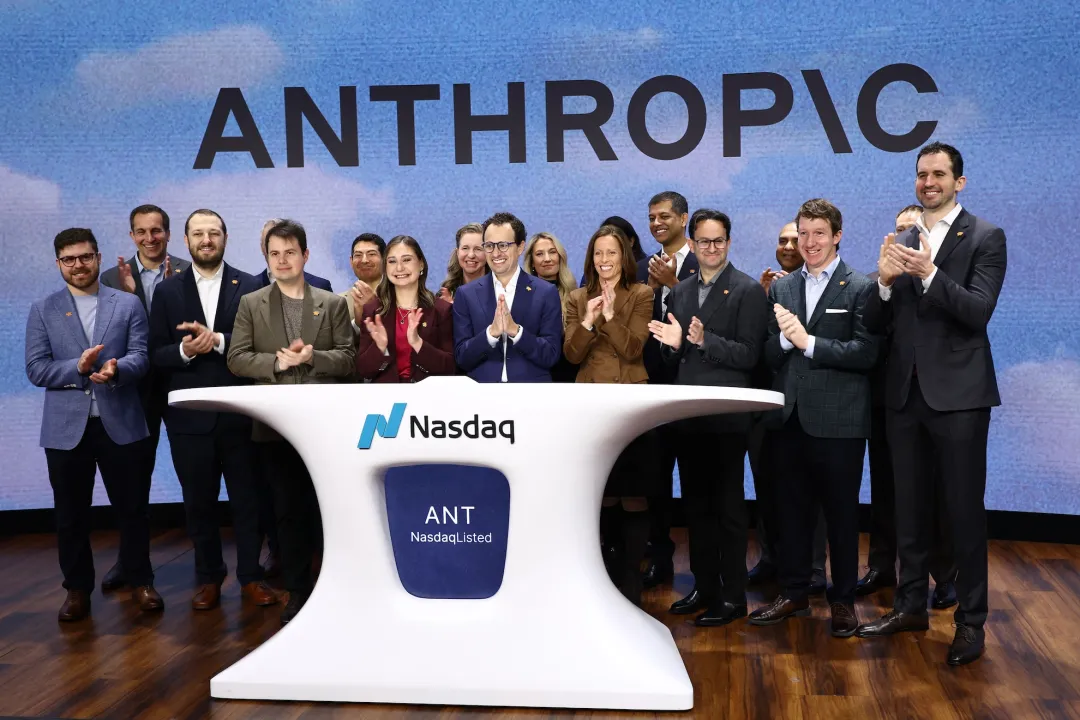
Anthropic, a leading artificial intelligence research and development company, officially transitioned into a public entity on Thursday, marking a significant milestone in the rapidly evolving AI landscape. The initial public offering (IPO) garnered a staggering $81.3 billion in total capital, a figure that includes a substantial $1.95 billion allocated to its seven co-founders. This monumental financial event underscores the immense investor confidence and the colossal capital requirements inherent in the race to develop advanced artificial intelligence. The founders, as previously reported, each made available approximately 3.4 million shares for sale in the IPO, a strategic move that has now translated into considerable personal wealth.
A Historic Public Offering Amidst AI Frenzy
The final IPO price settled at an impressive $83 per share, surpassing the midpoint of Anthropic’s initial projected price range of $74. This upward revision meant a substantial boost for the founders, who each pocketed roughly $280 million before factoring in underwriting fees and taxes. This windfall represented an additional $30 million for each founder beyond their initial projections, highlighting the robust demand for Anthropic’s stock. The sheer scale of this IPO positions it as one of the largest in recent tech history, dwarfing even Facebook’s then-record-breaking $16 billion IPO in 2012 and setting a new benchmark for AI companies entering the public market. This successful debut comes amidst a global frenzy surrounding artificial intelligence, fueled by breakthroughs in large language models and generative AI, which have captivated both the public imagination and investor capital.
The market’s enthusiastic reception of Anthropic’s offering reflects a broader trend of aggressive investment in companies at the forefront of AI innovation. Investors are keen to secure positions in entities perceived as potential leaders in a technology poised to reshape industries worldwide. Anthropic’s offering, therefore, was not merely a financial transaction but a powerful indicator of the current state of the AI arms race, where capital deployment is occurring at unprecedented scales to accelerate research, development, and market dominance.
The Founders’ Lucrative Payout and Philanthropic Vows
While the founders’ immediate financial gains are undeniably substantial, Anthropic’s IPO filings hinted at a deeper commitment beyond monetary accumulation. The company disclosed that each of its co-founders has pledged to dedicate a remarkable 80% of their personal equity in the company to philanthropic endeavors. This commitment, if fully realized, could channel billions of dollars into charitable causes, aligning with a growing trend among tech billionaires to utilize their wealth for societal benefit. This philanthropic intent is particularly noteworthy given Anthropic’s foundational philosophy, which emphasizes the development of "Constitutional AI"—a method designed to create AI systems that are helpful, harmless, and honest, guided by a set of principles.
However, the filings also provided a crucial clarification: these commitments are described as "voluntary, revocable expressions of each co-founder’s philanthropic intent and do not constitute legally binding obligations." This provision allows for flexibility, should any founder face unforeseen personal financial challenges, permitting them to scale back their charitable contributions. While the revocable nature of the pledges introduces a degree of uncertainty, the public declaration itself serves to reinforce Anthropic’s image as a company deeply committed to ethical AI development and responsible wealth management, potentially mitigating concerns about the concentration of immense wealth in the hands of a few. This blend of substantial personal gain with a significant philanthropic pledge sets a precedent for how leaders in the new AI economy might approach their newfound fortunes.
Strategic Capital Infusion: The $104.8 Billion War Chest
Beyond the founders’ payouts, the IPO provided Anthropic with a monumental infusion of capital for its own operational coffers. The company successfully raised $104.8 billion, with a potential to reach $117 billion if the underwriters exercise their full allotment of shares. This vast sum is a testament to the company’s strategic approach to fundraising, which included not only the sale of its Class A common stock but also a previously announced $26 billion worth of a special non-voting Class N stock. This Class N stock was strategically placed with some of the biggest names in the technology industry, underscoring the collaborative yet competitive nature of the AI ecosystem.
The roster of investors in the non-voting Class N shares reads like a who’s who of global tech giants, each with a vested interest in the future of AI. Nvidia, the undisputed leader in AI-enabling semiconductor technology, invested a substantial $10 billion. Google, a perennial competitor and partner in AI development, also contributed $10 billion. The remaining portion was divvied up among other crucial players including AMD, Broadcom, Micron, Microsoft, and TSMC. The participation of these strategic investors is not merely about capital; it represents a deepening of alliances and supply chain relationships critical for Anthropic’s ambitious growth plans. Nvidia’s investment, for example, secures access to the cutting-edge GPUs essential for training large AI models. Similarly, investments from Google and Microsoft reinforce cloud partnerships, providing Anthropic with the vast computational infrastructure required for its operations. This multi-faceted capital raise not only provides financial stability but also integrates Anthropic more deeply into the broader tech ecosystem, leveraging the expertise and resources of industry titans.
Cloud Giants Cement Their Influence: Amazon and Google’s Substantial Stakes
The IPO further solidified the significant influence of cloud computing behemoths Amazon and Google within Anthropic. All told, at the higher IPO share price, Google now owns a substantial 13.4% of the company. Amazon, another crucial partner, also holds a significant stake, amounting to 14.6%. This combined ownership gives the two cloud providers a formidable 28% stake in Anthropic, according to the AI lab. Amazon’s stake originated from its earlier investments in Anthropic as a startup, where it was granted promissory notes convertible into equity. As part of the IPO, Amazon converted a portion of these notes, securing its current stake, though it could have owned nearly 24% had it converted all its promissory notes.
These substantial stakes highlight a critical strategic maneuver in the AI industry: cloud providers are not just offering infrastructure; they are becoming direct investors and partners in the leading AI development companies. For Amazon and Google, investing in Anthropic ensures that a prominent AI innovator develops on their respective cloud platforms (AWS for Amazon, Google Cloud for Google), fostering deep technical integrations and potentially influencing the trajectory of AI development in ways beneficial to their own ecosystems. For Anthropic, these partnerships provide not only capital but also access to unparalleled computational resources, data storage, and global distribution networks. However, these alliances also raise questions about potential conflicts of interest and the delicate balance of independence for AI developers like Anthropic, operating within the orbit of powerful corporate partners who are also competitors in the broader AI landscape.
The Trillion-Dollar Horizon: Unprecedented AI Infrastructure Demands
Perhaps the most astonishing revelation from Anthropic’s IPO filings is the sheer scale of its projected future capital needs. While raising nearly $105 billion in its public debut, which provides Anthropic with approximately $230 billion in available working capital (including existing cash reserves), this sum only scratches the surface of its long-term financial requirements. The company has disclosed colossal infrastructure spending commitments that paint a vivid picture of the "AI arms race" and the astronomical costs associated with developing frontier AI models.
As of the quarter ended September 30, 2026, Anthropic projects it will need approximately $70.7 billion just to cover its compute and infrastructure spending commitments over the subsequent 12 months. Looking further ahead, this figure balloons to an estimated $451.6 billion to cover these commitments before the end of 2030. These are concrete, non-conditional commitments. Beyond these, the company has racked up hundreds of billions of other commitments that are either conditional (and thus may not materialize) or have not yet been fully priced. All told, Anthropic’s filings disclose a ballpark figure of $1.05 trillion to $1.08 trillion in infrastructure commitments over its foreseeable future.
This trillion-dollar figure underscores the unprecedented capital intensity of advanced AI development. Training and running state-of-the-art large language models require vast data centers equipped with hundreds of thousands, if not millions, of specialized AI accelerators (like Nvidia’s GPUs), immense power consumption, sophisticated cooling systems, and highly skilled engineering talent. The costs associated with acquiring, cleaning, and labeling petabytes of data for training are also staggering. This level of investment reflects the industry’s belief that the payoff from achieving truly general artificial intelligence will be equally immense, justifying what would, in any other sector, be considered an unthinkable capital expenditure. The IPO, despite its record-breaking scale, is merely a foundational step in securing the long-term capital necessary to fund Anthropic’s ambitious mission in this profoundly expensive, yet potentially transformative, business.
Anthropic’s Journey: A Brief Chronology of Innovation
Anthropic’s journey to this monumental IPO has been relatively swift, yet marked by significant innovation and strategic development. Founded in 2021 by former members of OpenAI, including siblings Dario and Daniela Amodei, the company quickly established itself with a mission focused on building reliable, interpretable, and steerable AI systems. Their core philosophy of "Constitutional AI" emerged as a distinctive approach to AI safety, aiming to align AI behavior with human values through a set of guiding principles rather than extensive human feedback.
Key milestones include:
- 2021: Founding of Anthropic, attracting top talent from leading AI labs.
- 2022: Initial public demonstrations of its early language models, emphasizing safety and ethical considerations. The development of its proprietary "Constitutional AI" training method begins to gain recognition.
- 2022-2023: Significant private funding rounds, attracting investments from major players like Google and Amazon, which provided crucial early capital and strategic partnerships for cloud compute.
- March 2023: Public launch of Claude, its flagship large language model, positioning it as a direct competitor to OpenAI’s GPT series. Subsequent iterations like Claude 2 and Claude 3 followed rapidly, demonstrating increasing capabilities and context windows.
- Late 2023: Announcement of further substantial funding, including a $4 billion investment from Amazon and another $2 billion from Google, cementing its position as a top-tier AI developer.
- November 2026 (as per original article’s implied timeline): The highly anticipated public offering, culminating years of intensive research and development into a record-setting financial event.
This rapid ascent from a startup to a public company commanding trillion-dollar infrastructure commitments highlights the accelerated pace of innovation and market maturation within the AI sector.
Broader Market Implications and the Future of AI Development
Anthropic’s IPO is more than just a successful market debut; it carries profound implications for the broader technology landscape, venture capital, and the future trajectory of AI development. It sets a new precedent for the valuation and capital needs of leading AI companies, signaling to investors that the rewards, despite the risks and immense costs, are potentially astronomical. This could further intensify the "AI gold rush," drawing even more capital into the sector and potentially accelerating the pace of innovation.
The significant stakes acquired by Amazon and Google underscore the increasing consolidation of power among cloud providers in the AI ecosystem. As the foundational infrastructure for AI development, these giants are strategically positioning themselves to control key segments of the AI value chain, from compute to model development and deployment. This trend could make it increasingly challenging for smaller, independent AI startups to compete without aligning themselves with one of these dominant players.
Furthermore, the disclosed trillion-dollar infrastructure commitments serve as a stark reminder of the immense financial barriers to entry in the frontier AI space. Developing and maintaining cutting-edge large language models is not a venture for the faint of heart or the undercapitalized. This will likely lead to a bifurcation of the AI industry: a few heavily funded "super labs" like Anthropic, OpenAI, and Google DeepMind pushing the boundaries of general intelligence, and a multitude of smaller companies focusing on niche applications and specialized AI solutions.
In conclusion, Anthropic’s monumental public offering is a pivotal moment, signaling both the boundless potential and the extraordinary financial demands of the AI era. It solidifies Anthropic’s position as a central player in shaping the future of artificial intelligence, but it also casts a long shadow, revealing the unprecedented scale of investment required to navigate the trillion-dollar horizon of AI development. The coming years will reveal whether this immense bet on AI’s future will yield the transformative returns envisioned by its founders and investors.
