

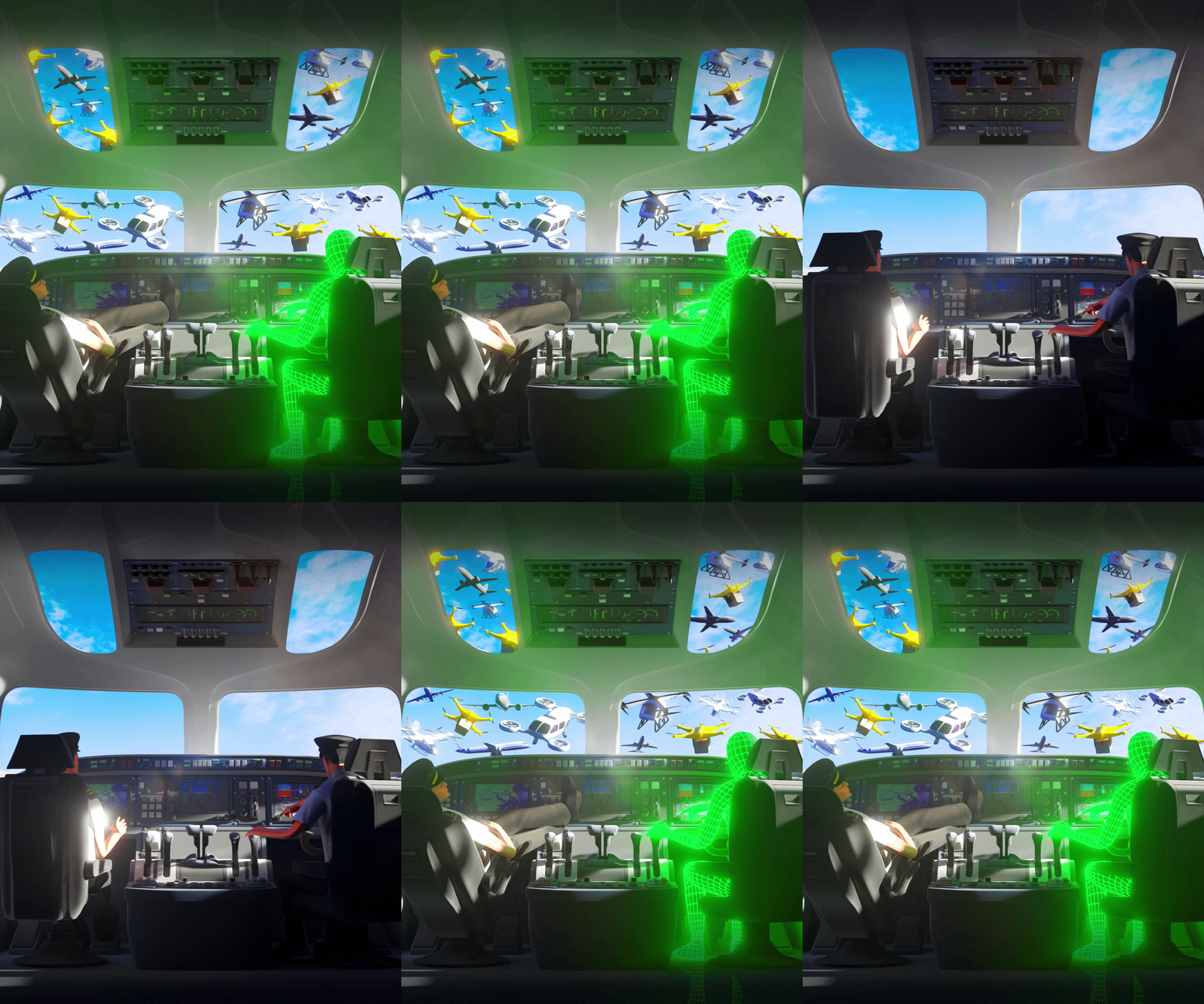
On September 27, U.S. Transportation Secretary Sean Duffy heralded a new era in air travel with a video posted on X, formerly Twitter. "GAME CHANGER," he declared, introducing "SMART" – a new AI-infused air traffic management tool designed to "save YOU time, cut back DELAYS, and make your flying experience BETTER." This optimistic announcement, however, took on a chilling resonance nearly three weeks later. On Friday the 13th, a date already steeped in superstition, the Federal Aviation Administration (FAA) issued a nationwide ground stop, plunging the global airline industry into unprecedented chaos. While the FAA swiftly stated there was no evidence of a cyberattack and no indication that SMART was implicated in the communications failure that triggered the suspension of flights, a shadow of doubt lingered. When pressed on whether AI failure could be definitively ruled out, Homeland Security Secretary Markwayne Mullin could only offer, "There’s nothing certain right now." This stark uncertainty underscores the burgeoning, yet fraught, integration of artificial intelligence into the very fabric of aviation.
The AI Revolution Takes Flight: From Autonomous Journeys to Air Traffic Control
The introduction of systems like SMART is merely a visible facet of a profound AI-driven revolution sweeping through the aviation sector. One striking example of this transformative potential is the recent coast-to-coast journey of a Cessna Caravan, orchestrated by Joby Aviation. This single-engine turboprop embarked on a 3,200-mile odyssey from Concord, California, to Dare County Regional Airport in North Carolina. The flight path, a complex zigzag encompassing stops in Phoenix, Fort Worth, and Shaw Air Force Base, saw the aircraft navigate busy airspace and meticulously avoid storms. The truly remarkable aspect of this journey? It was completed entirely without human hands touching the aircraft’s controls.
While a safety pilot was present aboard the Cessna throughout the flight, Joby Aviation confirmed they never needed to intervene. This pilotless trip marks a significant milestone in an industry historically characterized by technological conservatism. The inherent risks associated with human lives necessitate a cautious, time-tested approach, often favoring proven reliability over cutting-edge unpredictability. Yet, AI is now making inroads into aviation at an unprecedented pace, promising to fundamentally reshape the economics of air travel and redefine how people and goods traverse the skies. The central, and perhaps most critical, question that emerges from these advancements is whether this nascent technology can be trusted to be both reliable and safe.
"We’re introducing all this new technology to improve the system, and it’s going to be a disaster," stated a recently retired FAA employee who requested anonymity. "This is literally a Pandora’s box that we are going to regret." This sentiment reflects a deep-seated concern within some segments of the aviation community regarding the rapid and potentially unchecked adoption of AI.
A Road Map to Robot-Friendly Skies: The Genesis of NextGen
The integration of AI into aviation can be traced back to the early 2000s, a period marked by significant advancements in battery technology and microelectronics that dramatically enhanced the capabilities and affordability of drones. This surge in drone technology prompted aviation officials to recognize the inevitability of humans and robots sharing the airways, necessitating the development of new infrastructure to facilitate this coexistence. At the time, the vast majority of aircraft were human-piloted, and effective mechanisms for drones to avoid both human-flown planes and each other were virtually nonexistent.
In response to these emerging challenges and opportunities, the federal government launched a comprehensive initiative in 2007 known as the Next Generation Air Transportation System, or NextGen. This ambitious, multi-decade project mandated sweeping changes to the air travel system. A key provision of NextGen was the requirement for all aircraft operating in the United States to be equipped with Automatic Dependent Surveillance-Broadcast (ADS-B) by 2020. ADS-B is a system that continuously transmits radio signals, providing real-time location and trajectory data to all nearby aircraft and ground facilities, thereby enhancing situational awareness and collision avoidance.
The Dawn of Drone Delivery and eVTOLs
With a foundational framework for robot-friendly skies in place, major corporations like Amazon and Walmart began to explore ambitious drone delivery service initiatives. In 2014, Google unveiled Project Wing, a drone delivery program that, by 2018, was successfully delivering food, coffee, and medication to 164 homes near Canberra, Australia. The pilot program was subsequently expanded in 2019 to Christiansburg, Virginia. While these early efforts were characterized by high costs and slow service, their primary objective was not immediate commercial viability but rather to gather crucial operational experience for future deployments.
Concurrently, a burgeoning ecosystem of startups emerged, focusing on a related class of aircraft: electric vertical takeoff and landing (eVTOL) vehicles, often referred to as electric air taxis. These aircraft, essentially scaled-up drones designed to carry a small number of passengers over short distances, saw a remarkable surge in development. By 2022, an estimated 600 different eVTOL models were under development, with manufacturers promising a future where affordable, short-hop aerial transportation would become commonplace. Joby Aviation was at the forefront of this charge, unveiling the design of its S4 model in 2020. The company claimed the S4 would be capable of carrying a pilot and four passengers over 100 miles at speeds up to 200 mph. The S4 successfully completed its maiden flight the following year.
Navigating the Regulatory Labyrinth: The Conservative Nature of Aviation
The prospect of widespread eVTOL adoption and autonomous flight seemed imminent, with commercial launches anticipated in the near future. However, projected timelines were repeatedly pushed back. The development of autonomous flying robots proved to be only one piece of a complex puzzle. The broader challenge involved designing compatible airspace, training human operators to pilot or supervise these new craft, and establishing viable economic frameworks for their operation. "It’s a very important, safe, careful dance," remarked one industry insider.

Silicon Valley’s characteristic rapid innovation often clashes with the deeply ingrained norms of air travel. "Aviation regulation has been conservative and prioritizes reliability, because the consequences of failure are severe," explained Mary Schiavo, an aviation lawyer and former Inspector General in the Department of Transportation. "Certification standards and airworthiness require proof and demonstrated safety, and that usually means incremental rather than radical change." The FAA, understandably, has been hesitant to permit unproven robotic systems to operate freely within the national airspace.
Europe encountered a different form of resistance. In 2017, aircraft manufacturers Airbus and Dassault proposed to the European Union Aviation Safety Agency (EASA), Europe’s equivalent of the FAA, the possibility of allowing airliners to operate with a single pilot in the cockpit. Traditionally, airliners require multiple pilots to manage the significant workload and to ensure continuity of operations in the event of a pilot incapacitation. The proposal envisioned automated systems handling the copilot’s responsibilities and even taking over entirely if necessary.
This proposition met with strong opposition from pilots. The European Cockpit Association, a union representing airline pilots, lodged a formal protest, arguing that such a move "would remove an independent safety professional from the flight deck and give operators greater influence over the safety judgments that a pilot would otherwise make." In response to these concerns, EASA shelved the plan last year.
AI’s Persistent March: Drones, eVTOLs, and the Future of Air Travel
Despite these challenges, AI’s influence in aviation continued to grow. In 2023, the FAA began issuing waivers to permit delivery drone flights beyond the visual range of operators, with the potential for this rule to become permanent by the end of the current year. Major players are aggressively pursuing these opportunities. In August, Amazon announced plans to expand its drone delivery service to 500 locations across the country by year’s end. Walmart is similarly projecting drone delivery capabilities from 270 store locations by the end of 2027.
The ultimate vision is far more expansive. Industry insiders anticipate a scenario where hundreds of thousands of drones could eventually service a significant portion, if not all, of the U.S. population. "In five to 10 years, it’s going to be completely ubiquitous," Anthony Vittone, chief operating officer of drone technology company DroneUp, told Sherwood News last year. "People are going to be, like, ‘I don’t know how I lived without it.’"
Joby Aviation and other eVTOL companies, while not progressing at the same pace as drone delivery services, are also advancing steadily. In April, Joby successfully executed the first-ever point-to-point eVTOL flight within New York City, traveling from John F. Kennedy Airport to three heliports in Manhattan. The company has conducted similar flights in California and Texas, all under the auspices of the eVTOL Integration Pilot Program (eIPP), a federal initiative launched to demonstrate the capabilities of modern drones and eVTOLs.
These demonstration flights, according to industry representatives, represent the initial phase of the Joby S4’s operational rollout. The subsequent stages include demonstration flights with non-paying passengers, followed by flights with paying passengers, and ultimately, routine passenger transport. "All of that is permitted under eIPP, with increasing levels of oversight," an industry spokesperson stated.
Initially, these flights will be piloted by humans. However, the economic viability of eVTOLs hinges on their ability to fly autonomously. The cost of employing a human pilot for a handful of passengers makes the model unsustainable in the long run. If self-driving technology presents significant challenges for ground vehicles, its application in aviation, where system failure can have catastrophic consequences, is exponentially more complex.
The Subtle Entry of AI: Data Analysis and Predictive Management
The most immediate impact of AI on human passenger flight is not through fully autonomous aircraft but through more subtle, behind-the-scenes roles. Companies like Palantir and established aviation industry players such as Jeppesen and Thales are already offering AI-enabled software solutions. These platforms empower regulators, airlines, and flight dispatchers to analyze vast quantities of data, identify potential risks, and optimize aircraft and crew scheduling.
In September, the FAA announced the deployment of "Strategic Management of Airspace, Routes and Trajectories" (SMART), an AI-powered tool developed by Air Space Intelligence. The stated aim of SMART is to "fundamentally reshaping how we manage our airspace." The FAA maintains that the program is not intended to replace air traffic controllers but rather to augment their capabilities by leveraging predictive AI to preempt scheduling conflicts. "Combining SMART with our ongoing hardware upgrades gives us the tools to cut flight delays, optimize traffic, and keep airspace capacity across the country open—all while maintaining our gold standard of safety," stated FAA Administrator Bryan Bedford in a press release.

Concerns and Criticisms: The Specter of Hallucination and Workforce Reduction
Despite the purported benefits, the rollout of SMART has not been without controversy. The system is designed to assist controllers in decision-making, not to supplant them. However, a critical question remains: Will human operators be able to effectively identify and correct erroneous information generated by the AI? "This is the Trump/DOGE/Musk effect," asserted the retired FAA employee, referring to a perceived tendency to push new technologies without a full grasp of their complexity. "They’re pushing through all this new technology without any understanding of the complexity of the national airspace system."
Concerns have also been voiced by lawmakers. On October 13, a group of nearly two dozen Democratic lawmakers reportedly sent a letter to the Government Accountability Office requesting a review of the SMART program, citing fears that the AI could "hallucinate safety-critical information."
Furthermore, there is apprehension that SMART could exacerbate the existing shortage of air traffic controllers. While the FAA anticipates that the technology could reduce the need for human intervention, historical precedents in other industries suggest that AI-driven efficiencies do not always translate into actual workforce reductions. Even if the software doesn’t directly replace controllers, its perceived efficiency could be used to justify downsizing. In May, the FAA revised its staffing target for active air traffic controllers downward for 2024, citing "modern staffing models and scheduling tools."
A Cautious Optimism and the Path Forward
Not all experts share these concerns. "I think the SMART program is an important improvement," said Mary Schiavo. "No one wants the current aviation environment with midairs, runway incursions, myriad near misses, delays, groundings, loss of separation, and long taxi or clearance wait times."
Michael McCormick, a professor of air traffic management at Embry-Riddle Aeronautical University, also recognizes the advantages of predictive AI. "When you have the computing capability to look at the entire trajectory of the aircraft, you can see where the conflicts are going to be," he explained. "And the general axiom in air traffic control is that the sooner you know about a potential conflict, the less effort is required to resolve it."
However, the leap from building machines that perform well most of the time to creating systems that meet the rigorous reliability standards of aviation is substantial. Researchers are currently focusing on "deterministic neural networks"—models trained offline with fixed weights before deployment. While these models are less prone to "hallucination," they may exhibit other risky failure modes. A 2021 paper by Darren Cofer of Collins Aerospace highlighted that when such systems encounter novel situations not present in their training data, they can produce "unexpected (and potentially dangerous) outputs."
The stakes will escalate significantly when AI software begins to make real-time air traffic control decisions, initially within airspace designated for autonomous aircraft. This is likely to occur in select corridors near drone hubs and eVTOL vertiports, where the sheer volume and complexity of robotic air traffic will necessitate a departure from traditional air traffic control methods. "The objective is not to use traditional air traffic control," McCormick stated, "because it would overwhelm the national airspace system if it tried to handle that volume and complexity of airframes moving around."
The coexistence of two parallel systems—one managed by human decision-makers and the other by AI—will provide a critical real-world comparison of their respective performances. The potential for any computer-based system to be hacked, and for any AI creative enough to devise novel solutions to also misinterpret crucial details, underscores the ongoing need for vigilance. Without a human in the loop, seemingly obvious errors could persist undetected until it is too late, a chilling prospect in the high-stakes domain of aviation.
