

Microsoft Corporation has officially launched a targeted philanthropic initiative providing critical financial support to 25 nonprofit organizations across Washington State, a move designed to fortify the local social safety net during a period of sustained economic uncertainty. This commitment comes at a pivotal moment for the nonprofit sector, which is currently grappling with the dual pressures of increased service demand and rising operational costs. By focusing on organizations that address education, basic human needs, civic engagement, and environmental sustainability, Microsoft is reinforcing its role as a cornerstone of the Pacific Northwest’s community infrastructure.
The initiative, led by Microsoft’s Community Affairs division, underscores a strategic shift toward flexible funding models that allow grassroots organizations to pivot their resources where they are most needed. In an era where inflation has eroded the purchasing power of traditional grants, this infusion of capital is intended to bridge the "funding gap" that often prevents small to mid-sized nonprofits from scaling their impact or completing essential capital projects.
The Evolution of Corporate Philanthropy in the Pacific Northwest
Microsoft’s relationship with Washington State is deeply rooted in its history as a Redmond-based technology giant. For decades, the company has utilized its resources to influence the regional landscape, not just through technological innovation but through social investment. However, the nature of this investment has evolved. While early corporate social responsibility (CSR) efforts often focused on one-time donations or hardware gifts, the current strategy emphasizes long-term sustainability and community resilience.
Jane Broom, Senior Director of Community Affairs at Microsoft, has been a vocal advocate for the vital role these organizations play in the regional ecosystem. According to Broom, nonprofits act as the "glue" that holds communities together, providing the essential services that government and private sectors may overlook. The decision to support 25 specific organizations was not arbitrary; it followed a rigorous assessment of community needs, prioritizing those that provide a direct "feedback loop" into the local economy and social fabric.
This latest round of funding is part of a broader chronology of Microsoft’s engagement in Washington. Over the last decade, the company has committed billions to affordable housing initiatives and educational programs. The 2024 grant cycle, however, is distinct in its focus on the immediate financial health of the nonprofits themselves, recognizing that even the most well-intentioned programs cannot succeed if the underlying organization is struggling to maintain its staff and facilities.
Addressing the Economic Pressures on the Nonprofit Sector
The economic landscape of 2023 and early 2024 has been particularly unforgiving for the nonprofit sector. Data from various philanthropic monitoring groups indicate that while total charitable giving remains significant, the "cost of doing business" for nonprofits has surged. Labor costs, facility maintenance, and the price of goods required for service delivery—such as food for pantries or materials for classrooms—have all increased at rates that often outpace annual budget growth.
Furthermore, the "nonprofit starvation cycle"—a phenomenon where donors provide funds for specific programs but refuse to cover the essential overhead costs like rent, utilities, and administrative salaries—continues to threaten organizational longevity. Microsoft’s flexible grant program is specifically designed to combat this. By providing funds that can be applied to "vital projects" without the restrictive silos of traditional project-based grants, the tech giant is allowing nonprofit leaders to exercise professional discretion in resource allocation.
Jilyne Jarvis, the founder and executive director of ZGIRLS, a Bellevue-based nonprofit, highlighted the intensifying competition for limited resources. ZGIRLS utilizes a mentorship model featuring women athletes to help adolescent girls build self-esteem and leadership skills. Jarvis noted that the current climate puts immense pressure on foundations and corporations to step into the breach. When private funding fluctuates, the burden falls on organizations to find creative ways to maintain service levels without compromising quality.
Case Study in Impact: The ZGIRLS Confidence Kits
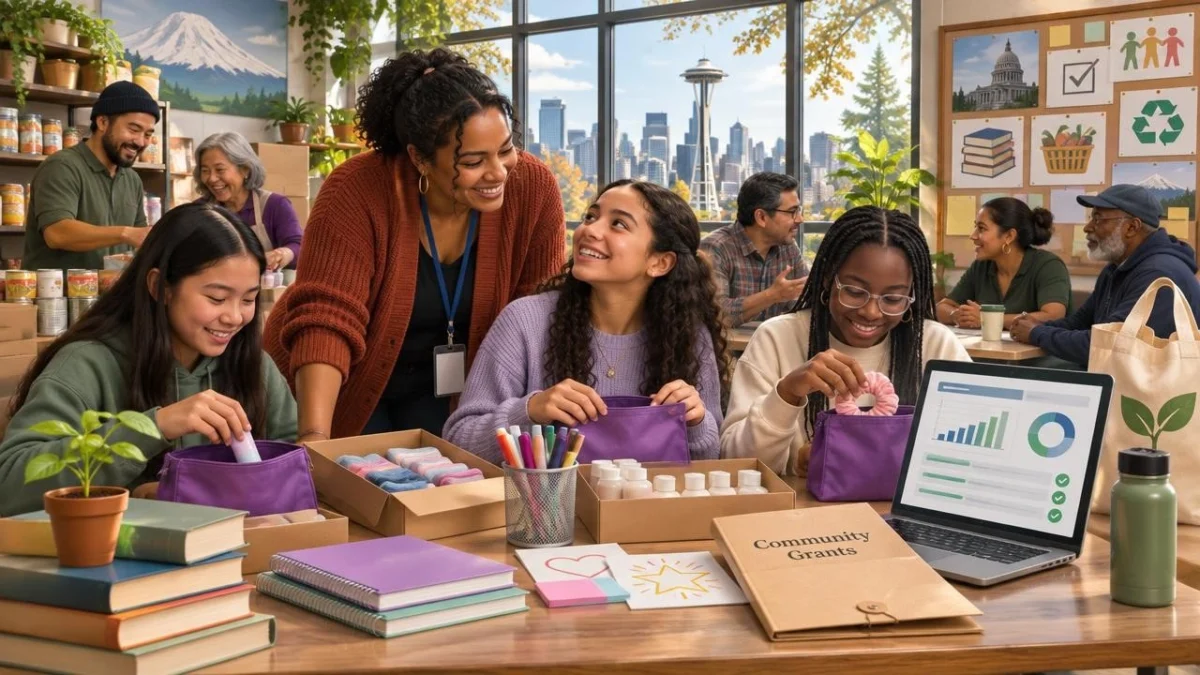
One of the most tangible outcomes of the Microsoft grant is the expansion of the ZGIRLS "Confidence Kits." These kits are designed to address the specific developmental needs of middle school girls, a demographic that research shows often experiences a significant dip in self-confidence and sports participation. Each kit contains guided activities, educational materials, and tools designed to foster resilience and leadership.
Initially, the pilot program for these kits was limited by budgetary constraints, with only 22 kits distributed to local sports teams and schools. However, the infusion of capital from Microsoft has enabled the organization to more than double its reach, funding an additional 40 kits for immediate distribution. This represents a direct application of corporate funds into a scalable community solution.
According to Jarvis, the significance of these grants extends beyond the dollar amount. They represent a vote of confidence in the organization’s mission. "These kinds of grants make the world of difference because it does feed back into the community," she stated. The ability to move from a pilot phase to a broader implementation phase is often the most difficult hurdle for small nonprofits, and it is here that corporate partnerships prove most effective.
The Strategic Importance for Small Business Owners and Local Economies
While Microsoft’s initiative is a high-level corporate move, its implications resonate deeply with the small business community in Washington. The health of the nonprofit sector is intrinsically linked to the health of the local economy. Nonprofits are significant employers, and the services they provide—ranging from childcare to vocational training—directly support the local workforce.
For small business owners, the trend of large corporations like Microsoft investing in local nonprofits serves as a blueprint for community engagement. There is a growing body of evidence suggesting that consumers are increasingly making purchasing decisions based on a company’s social impact. By observing how Microsoft aligns its brand with community welfare, small business owners can identify opportunities for their own local collaborations.
Supporting local nonprofits can enhance a business’s reputation, foster customer loyalty, and create a more stable environment for commerce. When a community’s basic needs are met and its civic life is vibrant, the local business climate flourishes. However, the Microsoft initiative also serves as a cautionary tale regarding sustainability. Small business owners and nonprofit leaders must consider the long-term viability of these partnerships. Relying solely on external grants can be risky; therefore, the goal of such funding should be to build self-sustaining models or to complete specific projects that reduce long-term operational costs.
Analysis of Broader Implications and Future Outlook
The collaboration between Microsoft and the 25 selected nonprofits offers several key insights into the future of corporate-nonprofit relations:
- The Shift to Flexible Funding: There is an increasing recognition that nonprofit professionals are best positioned to know where their organizations need money. Moving away from highly restricted grants allows for greater innovation and faster responses to community crises.
- The Role of Tech in Social Equity: As a leader in the technology sector, Microsoft’s focus on "Confidence Kits" and educational programs suggests a continued interest in ensuring that the next generation—particularly underrepresented groups—is prepared for a rapidly changing economy.
- Community Resilience as a Business Metric: For a company like Microsoft, a stable and thriving Washington State is essential for talent recruitment and retention. Philanthropy, in this context, is not just charity; it is a strategic investment in the region’s human capital.
- The Sustainability Challenge: As the original report suggests, the sustainability of relying on corporate grants is a point of concern. The nonprofit sector must continue to advocate for diverse revenue streams, including individual giving and fee-for-service models, to ensure they are not overly dependent on the fluctuating budgets of large corporations.
Chronology of the Grant Implementation
The rollout of these grants followed a structured timeline designed to maximize impact:
- Assessment Phase (Late 2023): Microsoft’s Community Affairs team identified key sectors within Washington State that were experiencing the highest levels of economic strain.
- Selection Process (Early 2024): A cohort of 25 nonprofits was selected based on their proven track record of community service and their ability to implement flexible funding effectively.
- Disbursement (Mid-2024): Funds were distributed, allowing organizations like ZGIRLS to immediately scale existing programs and initiate new projects.
- Reporting and Evaluation (Ongoing): The nonprofits are expected to provide data on the impact of the funds, which Microsoft will use to refine its future philanthropic strategies.
Conclusion: A Model for Regional Cooperation
The initiative undertaken by Microsoft serves as a compelling example of how large-scale corporate resources can be channeled into specific, high-impact community needs. By targeting 25 diverse nonprofits, the company is addressing a wide spectrum of issues that contribute to the overall well-being of Washington State residents.
As economic conditions continue to evolve, the partnership between the private sector and the nonprofit community will likely become even more critical. For the nonprofits involved, these grants represent a lifeline that enables them to continue their essential work. For the community at large, it represents a step toward a more resilient and equitable future. The success of programs like the "Confidence Kits" demonstrates that when corporate resources are matched with grassroots expertise, the results are both measurable and meaningful.
Small business owners and other corporate entities would do well to monitor the outcomes of this initiative. The "Washington model" of flexible, community-focused giving could provide a roadmap for similar efforts across the country, highlighting the indispensable role of nonprofits as the "glue" that ensures society functions effectively, even in the face of economic adversity.
