

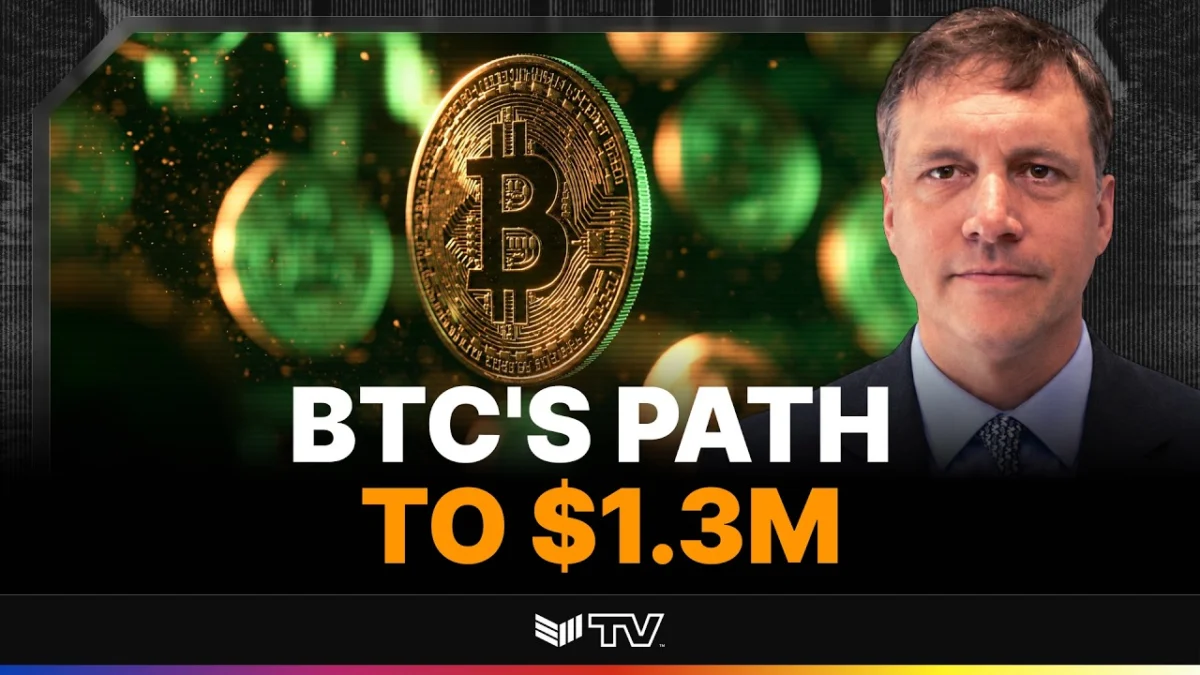
In a recent appearance on BMTV, Bill Miller IV, Chairman and Chief Investment Officer of Miller Value Partners, articulated a robustly optimistic outlook on Bitcoin, even as prevailing market sentiment hovers at levels reminiscent of the FTX collapse era. Miller IV underscored his continued conviction in the digital asset’s long-term potential, highlighting its inherent volatility not as a deterrent, but as a characteristic of high-performing, transformative assets.
Resilience Amidst Volatility: A Defining Trait of Digital Gold
Miller IV drew attention to Bitcoin’s recent price action, noting its capacity to oscillate dramatically within short periods. He cited the cryptocurrency’s movement from $63,000 to $87,000 and a subsequent retreat to $68,000 within a matter of months as evidence of its dynamic nature. Rather than viewing this volatility as a risk, Miller IV posited it as an inherent byproduct of owning assets with exceptional growth potential. This perspective aligns with the historical performance of pioneering assets that often experience significant price swings during their formative stages.
To contextualize Bitcoin’s value proposition, Miller IV employed an analogy with gold, a traditional store of value. He argued that Bitcoin’s "addressable value" – the total market opportunity it could potentially capture – significantly exceeds its current market capitalization. This assertion is rooted in the growing recognition of Bitcoin as a potential hedge against inflation and a decentralized alternative to traditional financial systems.
Furthermore, Miller IV emphasized Bitcoin’s unique scarcity factor. With a supply that grows at an annual rate of approximately 80 basis points (0.8%), he contends that Bitcoin is becoming inherently scarcer than gold. This controlled and predictable rate of supply increase, dictated by its protocol, contrasts with the often unpredictable and sometimes manipulated supply dynamics of precious metals. As of early 2024, the estimated annual inflation rate of Bitcoin has been around 1.75%, and is set to halve again with the next halving event, further enhancing its scarcity. Gold’s annual production, while variable, is generally considered to be in the range of 1-2% of the total above-ground stock. This makes Bitcoin’s programmed scarcity a compelling feature for investors seeking long-term value preservation.
Market Sentiment and the FTX Shadow
The current market sentiment for Bitcoin is a key point of discussion for Miller IV. The lingering impact of the FTX collapse in November 2022, which saw the cryptocurrency exchange file for bankruptcy and trigger a significant market downturn, has cast a long shadow over investor confidence. At the time of the collapse, Bitcoin’s price plummeted from around $20,000 to below $16,000. The subsequent recovery has been marked by periods of intense optimism followed by sharp corrections, contributing to the current cautious sentiment.
Despite this prevailing apprehension, Miller IV’s bullish stance suggests a belief that the underlying fundamentals of Bitcoin remain strong, and that current price levels present an attractive entry point for long-term investors. His view implies that the market may be overreacting to short-term sentiment, overlooking Bitcoin’s fundamental advantages and its potential to capture significant market share in the global financial landscape.
The Gold Standard of Scarcity: A Comparative Analysis
Miller IV’s comparison of Bitcoin to gold is central to his bullish thesis. Gold has historically served as a hedge against inflation and a store of value for millennia. Its scarcity, coupled with its physical properties and established demand from jewelry, industrial uses, and central bank reserves, has cemented its position in the financial world.
However, Bitcoin introduces a new paradigm of scarcity: digital and programmatic. The total supply of Bitcoin is capped at 21 million coins, a hard limit embedded in its code. This makes it a deflationary asset by design, unlike gold, whose supply can theoretically increase with new discoveries. Bitcoin’s annual issuance rate is predetermined and halves approximately every four years through a process known as "halving." The most recent halving occurred in April 2024, reducing the block reward for miners from 6.25 BTC to 3.125 BTC. This programmed scarcity, combined with an ever-increasing global demand for digital assets and a potential hedge against fiat currency debasement, underpins Miller IV’s assertion that Bitcoin’s addressable value is far greater than its current market capitalization.
As of early 2024, Bitcoin’s market capitalization hovered around $1 trillion. While this figure is substantial, proponents like Miller IV argue that if Bitcoin were to capture even a fraction of the global wealth currently held in assets like gold (estimated to be over $12 trillion), its valuation could reach unprecedented levels.
Broader Economic Context and Investment Strategy
Beyond Bitcoin itself, Miller IV’s commentary likely touches upon broader macroeconomic trends that inform his investment decisions. The current economic environment is characterized by persistent inflation concerns, global geopolitical instability, and evolving monetary policies. In such a climate, assets that offer scarcity and a potential hedge against currency devaluation tend to gain prominence.
Miller IV’s affiliation with Miller Value Partners suggests a disciplined investment approach, likely focused on identifying undervalued assets with strong fundamentals. His continued bullishness on Bitcoin, even when sentiment is low, indicates a conviction that the cryptocurrency’s long-term trajectory is not solely dictated by short-term market psychology.
The mention of chapters within the BMTV broadcast suggests that Miller IV may have also delved into specific catalysts for a Bitcoin price surge. These could include regulatory clarity, increased institutional adoption, technological advancements within the Bitcoin ecosystem, or a broader shift in investor sentiment driven by economic conditions.
The Role of Technology and Innovation
The BMTV segment also hinted at discussions concerning the intersection of Bitcoin with emerging technologies, specifically Artificial Intelligence (AI). The chapters mention topics like "Hot Inflation and a Bigger Fed Hike," "Jensen Huang’s Exit and the AI Bubble," and "Value Stocks vs the AI Capex Bill." This suggests that Miller IV may have discussed how the immense capital being deployed into AI infrastructure and development could potentially compete with or complement capital flows into Bitcoin.
The significant investment in AI development, exemplified by companies like NVIDIA, which has seen its stock price surge due to the demand for its AI chips, represents a major allocation of capital. Miller IV might have analyzed whether this AI boom could divert investment away from other asset classes, including digital assets, or conversely, if the underlying technological innovation in AI could indirectly benefit Bitcoin by driving further digitalization and a greater need for secure, decentralized value transfer.
The mention of "NVIDIA at Its Lowest Multiple in a Decade" is particularly interesting. While seemingly unrelated to Bitcoin, it could be part of a broader discussion about market valuations across different sectors. If established tech giants are trading at historically low multiples, it might suggest a broader re-evaluation of growth stocks, potentially making assets like Bitcoin, with its unique value proposition, more attractive by comparison.
Regulatory Landscape and Future Outlook
The chapter titled "What Bitcoin Investors Need From the Clarity Act" suggests a discussion around the crucial role of regulatory frameworks in shaping the future of Bitcoin and the broader digital asset market. Regulatory clarity has long been a significant factor influencing institutional adoption and investor confidence. The absence of clear regulations in many jurisdictions has created uncertainty, leading some investors to remain on the sidelines.
The "Clarity Act," if it refers to a specific legislative proposal, would aim to provide a more defined legal and regulatory environment for cryptocurrencies. Such clarity could unlock significant capital inflows and legitimize Bitcoin as an asset class, further bolstering its long-term prospects. Miller IV’s focus on this aspect underscores the interconnectedness of technological innovation, market sentiment, and regulatory developments in determining Bitcoin’s future trajectory.
Conclusion: A Long-Term Perspective on Digital Scarcity
Bill Miller IV’s persistent bullishness on Bitcoin, articulated against a backdrop of cautious market sentiment, highlights a strategic investment philosophy grounded in the fundamental strengths of the digital asset. His emphasis on Bitcoin’s programmatic scarcity, its potential as a digital store of value analogous to gold, and its resilience amidst volatility, suggests a long-term perspective that transcends short-term market fluctuations. As the digital asset landscape continues to evolve, the insights from seasoned investors like Miller IV offer valuable context for understanding the enduring appeal and potential of Bitcoin in a rapidly changing global economy.
Sponsorship and Partnership Information:
This content is brought to you in part by Square. Square offers up to $200 off their hardware when new customers sign up at http://square.com/go/bmtv. This offer expires on December 31, 2026, at 11:59 pm PST. The offer provides discounts on various Square hardware products, including the Square Stand, Square Terminal, Square Handheld, and Square Register, with specific terms and conditions applying, including limitations to one discount per product type per seller account and eligibility for new U.S. customers only.
For partnership inquiries and to explore customized sponsorship opportunities tailored to brand goals and target audiences, BMTV invites interested parties to visit https://bitcoinmagazine.com/bmtv.
Disclaimer: The views and opinions expressed in this program are those of the participants and do not necessarily reflect the official policy or position of BTC Inc., Bitcoin Magazine, or any affiliated entities. This content is provided for informational and educational purposes only and should not be construed as investment, legal, tax, or accounting advice. Nothing contained in this program constitutes a solicitation, recommendation, endorsement, or offer to buy or sell any securities or financial instruments. Viewers should consult their own advisors before making financial or business decisions.
About the Author:
Patrick Green is an Assistant Producer and Channel Manager on the multimedia team at Bitcoin Magazine, focusing on production, content distribution, and channel strategy across the network.
