

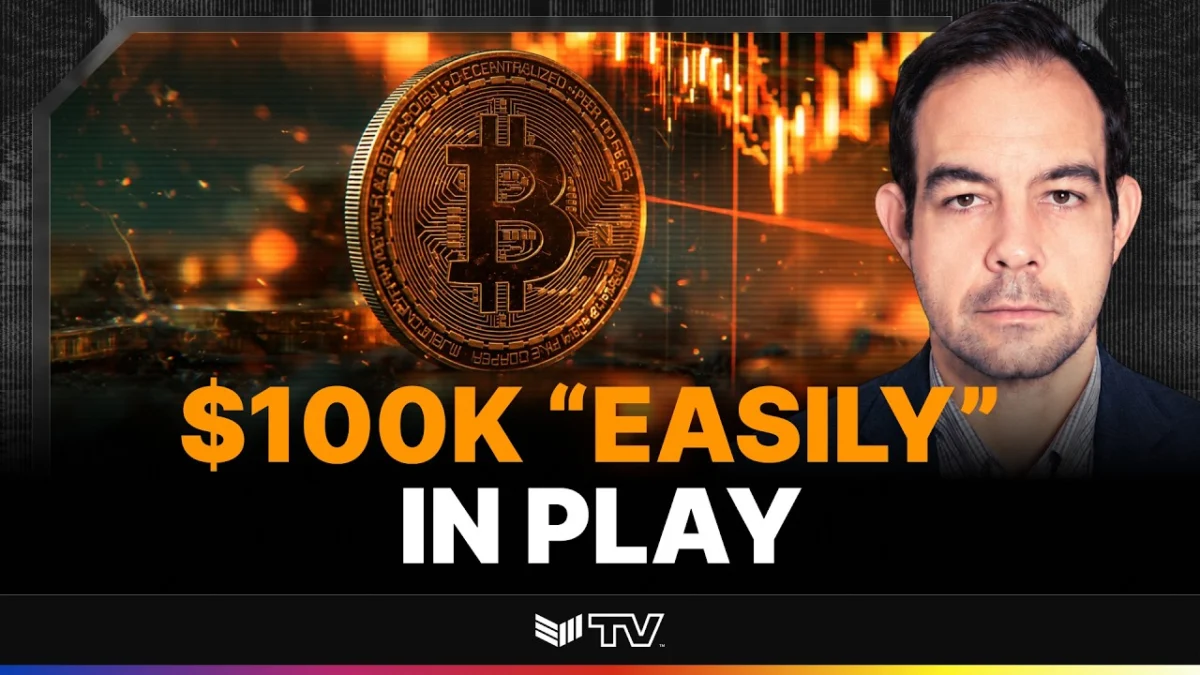
The cryptocurrency market, particularly Bitcoin, has demonstrated a remarkable capacity for rapid recovery and significant price appreciation, defying predictions of sustained capital withdrawal. Joe Carlasare, speaking on BMTV, articulated this perspective, citing Bitcoin’s impressive ascent from $57,000 to $82,000 in under 90 days earlier this year as a primary reason for his skepticism towards the notion that capital cannot flow back into the asset class. This resurgence, according to Carlasare, signals a potential re-engagement of technical and momentum traders, with a return to the $80,000 to $90,000 range potentially reigniting broader market interest. Furthermore, he suggested that a sustained push towards the $100,000 mark could fundamentally alter the prevailing narrative surrounding Bitcoin’s future.
Historical Precedent: Bitcoin’s Rapid Rebounds
The earlier part of the year witnessed a dramatic upswing for Bitcoin. Beginning in late 2023 and extending into early 2024, the digital asset experienced a significant rally. Data from various financial analytics platforms indicate that Bitcoin’s price, which hovered around the $40,000 to $50,000 mark at the close of 2023, began a sustained climb in January. By mid-March, it had breached the $70,000 level, reaching an all-time high close to $73,700 on March 13, 2024, before experiencing some volatility. The period from January to March 2024, a span of approximately 90 days, saw Bitcoin surge from the mid-$40,000s to over $73,000, a testament to its inherent volatility and potential for swift gains. While the specific $57,000 to $82,000 figures mentioned by Carlasare may refer to a particular segment of this rally or a slightly different timeframe within the broader market movements, the underlying principle of rapid price appreciation remains a consistent theme in Bitcoin’s recent history.
The Psychology of Market Momentum
Carlasare’s analysis underscores the psychological drivers within financial markets, particularly for assets like Bitcoin that attract a diverse range of investors. Technical traders, who rely on chart patterns and historical price data to make decisions, are often drawn back into an asset when it demonstrates strong upward momentum and breaks key resistance levels. Similarly, momentum traders seek to capitalize on existing trends, and a sustained price increase signals a favorable environment for their strategies.
The prospect of Bitcoin re-testing or surpassing previous all-time highs is seen as a critical catalyst. Such a move would not only validate the bullish sentiment of existing holders but also attract new capital from those who may have been on the sidelines, waiting for clearer signals of strength. This creates a feedback loop where rising prices attract more buyers, further propelling the price upwards.
Addressing the "OG Selling" and Market shakeouts
Carlasare also touched upon the concept of "OG selling" that might cap a particular market cycle, such as 2025, suggesting it represents a "healthy shakeout." In the context of cryptocurrency markets, "OGs" often refer to early adopters and long-term holders of Bitcoin. These individuals may have accumulated significant holdings at very low prices and, after years of holding through extreme volatility, might choose to liquidate portions of their portfolios as prices reach unprecedented levels.
This selling pressure, while capable of causing temporary price corrections, can be viewed as a natural part of market maturation. It allows for the redistribution of assets from older holders to newer participants, potentially broadening the base of ownership and reducing the concentration of wealth in a few hands. Such shakeouts can cleanse the market of weaker hands and consolidate gains, paving the way for a more sustainable upward trajectory in the long term. The analysis implies that these distributions are not necessarily signs of a market top but rather a necessary process of market cycling and rebalancing.
The Quantum Computing Threat and Bitcoin’s Future
A particularly forward-looking aspect of Carlasare’s commentary involves the potential impact of quantum computing on Bitcoin’s security and the necessity of a "serious quantum plan" to attract new capital. Quantum computers, with their advanced computational power, pose a theoretical threat to current cryptographic standards, including those underpinning Bitcoin’s blockchain. While the widespread availability of powerful quantum computers is still some years away, the cryptocurrency community is increasingly aware of this potential vulnerability.
The Role of SALT Lending and Investor Strategy
Intertwined with the market analysis is a promotional message for SALT Lending, a platform that allows users to borrow against their Bitcoin holdings. The advertisement highlights competitive Annual Percentage Rates (APRs) and the absence of credit checks or origination fees, positioning SALT as a solution for Bitcoin holders looking to leverage their assets without selling. This suggests a strategic approach to managing Bitcoin investments, where liquidity can be accessed through borrowing rather than outright liquidation, thereby preserving potential future gains. The emphasis on borrowing against Bitcoin, rather than selling it, directly counters the narrative of capital flight and encourages a long-term holding strategy, supported by financial instruments.
Broader Economic and Political Influences
While the core of Carlasare’s remarks centers on Bitcoin’s internal market dynamics, the provided chapters of the BMTV segment hint at a broader discussion encompassing macroeconomic factors. Topics such as rising yields, inflation, Federal Reserve policy, and even political landscapes like divided governments are often correlated with capital flows into and out of risk assets like Bitcoin.
Rising Yields and Economic Growth: The chapter "Rising Yields Signal Growth, Not a Debt Crisis" suggests an interpretation of increased bond yields as a positive indicator of economic expansion rather than a harbinger of financial distress. Historically, rising yields can signal stronger economic activity and inflation expectations, which can influence investment decisions across various asset classes.
Inflationary Pressures and Monetary Policy: Discussions around "Seasonal Inflation and a Fed Behind the Curve" and "Can the Fed Cool a 6% Deficit Economy" point to concerns about persistent inflation and the challenges faced by central banks in managing it. If inflation remains elevated, assets like Bitcoin, often viewed as a potential inflation hedge, could see increased demand. However, aggressive monetary tightening by the Federal Reserve to combat inflation could also lead to reduced liquidity and a dampening effect on risk assets.
The AI Trade and Market Psychology: The inclusion of "The Trillion-Dollar AI Trade Question" and "Investing Is 90% Psychology" suggests an exploration of speculative bubbles in emerging technologies like Artificial Intelligence and the pervasive role of investor sentiment in market movements. These broader themes provide context for understanding how capital is allocated across different sectors and the psychological factors that can drive both speculative frenzies and periods of rational investment.
Geopolitical and Governance Factors: "Why a Divided Government Can Lift Markets" indicates an analysis of how political structures might influence financial markets. In some economic theories, divided governments can lead to policy gridlock, which might, in certain scenarios, reduce the likelihood of drastic fiscal or regulatory changes that could negatively impact markets.
The Path Forward: Innovation and Security
The emphasis on a "serious quantum plan" for Bitcoin highlights the industry’s proactive approach to long-term security. As quantum computing capabilities advance, the development and implementation of quantum-resistant cryptographic algorithms will be crucial for maintaining the integrity and trustworthiness of blockchain networks. This ongoing evolution and adaptation are essential for attracting and retaining institutional and retail capital in a rapidly changing technological landscape.
In conclusion, Joe Carlasare’s perspective, as presented, offers a nuanced view of Bitcoin’s market potential. By drawing on recent price action, understanding market psychology, and acknowledging long-term technological challenges, his analysis suggests that Bitcoin possesses the inherent capacity for significant price appreciation and that predictions of sustained capital flight may be premature. The ongoing developments in the broader economic and technological spheres will undoubtedly continue to shape the trajectory of this dynamic asset class.
