

New York State has initiated the enforcement phase for one of the nation’s most ambitious artificial intelligence safety laws, marking a pivotal moment in the regulatory landscape for advanced technology. As of Tuesday, the state has officially opened a registration portal, mandating that major developers of "frontier AI" models, including industry giants like Anthropic and OpenAI, complete their registration by January 1, 2027. This move signals New York’s proactive stance in mitigating the potential risks associated with rapidly evolving AI technologies, aiming to set a national precedent for responsible innovation and public protection.
The RAISE Act: A Framework for Responsible AI
At the core of this regulatory initiative is the Responsible AI Safety and Enforcement (RAISE) Act, a comprehensive safety and transparency bill poised to take full effect at the start of the upcoming year. The legislation specifically targets "large frontier developers," defined as companies generating more than $500 million in annual revenue. These entities will be subject to a series of stringent requirements designed to foster greater accountability and transparency within the AI sector.
Under the RAISE Act, mandated developers must publicly disseminate their safety frameworks on their corporate websites, detailing the methodologies and safeguards employed to prevent harmful outcomes. Furthermore, the act imposes a critical incident reporting obligation, requiring companies to disclose significant safety breaches or malfunctions within a tight 72-hour window. This rapid reporting mechanism is intended to allow prompt regulatory oversight and facilitate learning from incidents across the industry. In addition to these measures, developers are also compelled to publish regular model transparency reports, offering insights into the operational characteristics, limitations, and potential biases of their advanced AI systems. This tripartite approach — public safety frameworks, rapid incident reporting, and transparency reports — forms the backbone of New York’s strategy to ensure that powerful AI technologies are developed and deployed responsibly.
New Regulatory Body and Enforcement Powers
To spearhead the implementation and ongoing oversight of the RAISE Act, New York has established the Office of Digital Innovation, Governance, Integrity, and Trust (DIGIT). This newly formed state entity is tasked with navigating the complex terrain of AI regulation, serving as the primary authority for monitoring and enforcing compliance among large frontier AI laboratories. DIGIT’s mandate extends beyond mere enforcement; it is also expected to foster an environment of responsible innovation, engaging with developers to help them meet the new standards while understanding the evolving technological landscape.
The financial ramifications for non-compliance are substantial, underscoring the state’s seriousness in enforcing these new rules. Penalties for violations can reach up to $1 million for an initial breach, escalating to $3 million for subsequent infractions. Moreover, DIGIT is empowered to initiate enforcement actions against companies that fail to register through the new portal by the stipulated deadline. While a spokesperson for the state declined to provide specific details regarding these potential enforcement actions, the clear message is that non-registration will not be tolerated and carries significant legal and financial risks for non-compliant entities. These penalties are among the highest levied by any U.S. state for AI-related non-compliance, reflecting the perceived scale of risk associated with advanced AI.
Governor Hochul’s Vision for AI Governance
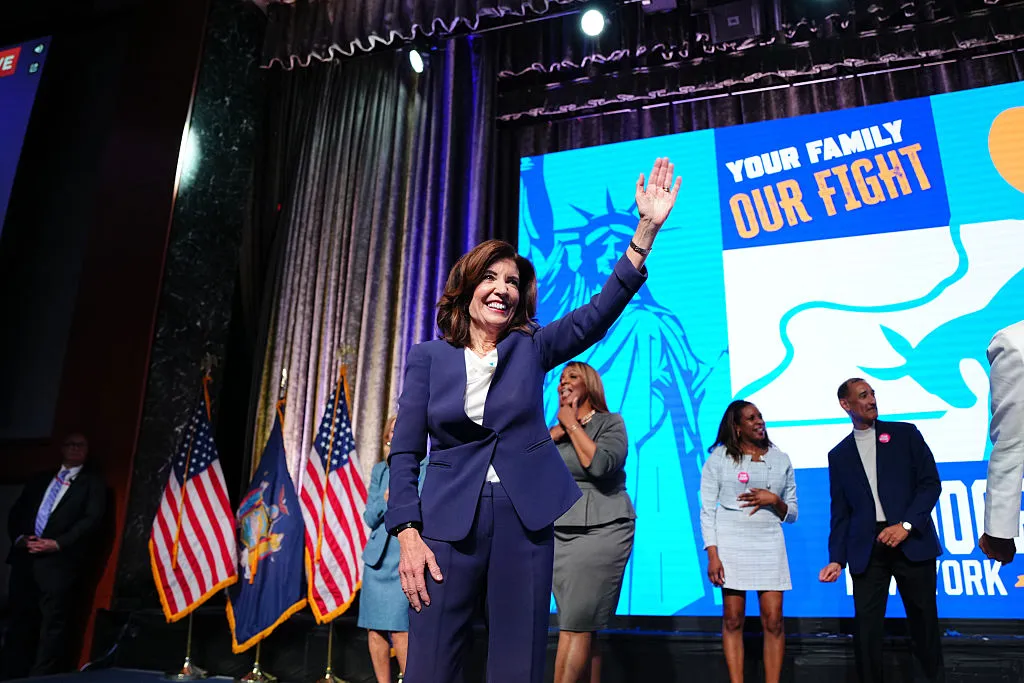
Governor Kathy Hochul has been a vocal proponent of proactive AI regulation, articulating a vision that prioritizes public safety over unchecked technological advancement. During a recent press briefing, Governor Hochul underscored her administration’s philosophy, stating, "Tech moguls tell us that their vision for AI is inevitable. They tell us get on board or get left behind… That any collateral damage is worth it as long as we win the race to the AI cliff." Her remarks highlight a skepticism toward the prevailing Silicon Valley ethos of "move fast and break things" when it comes to technologies with potentially profound societal impacts. The Governor’s stance suggests a deliberate effort to establish guardrails that ensure AI development serves human well-being rather than merely commercial interests.
This sentiment was further solidified with the simultaneous launch of the New York Center for AI Responsibility and Research (NYCAIRR), based at the State University of New York’s Binghamton University. NYCAIRR is envisioned as a critical independent body dedicated to evaluating the safety, security, and operational integrity of advanced AI systems. Its role will include collaborating closely with DIGIT to review and validate the safety frameworks submitted by companies, providing an academic and research-driven layer of scrutiny. Governor Hochul initially announced the center in January, backed by a substantial $55 million in donations and capital, signaling a long-term commitment to fostering AI responsibility through a multi-faceted approach involving both governmental oversight and independent academic research. This public-private partnership model aims to bridge the gap between regulatory bodies and the technical expertise required to assess complex AI systems effectively.
Governor Hochul framed New York’s efforts as a template for other jurisdictions, asserting, "We’re building a national model for smart, sensible AI regulation, a model that puts communities above corporations and people above powerful technology." This statement positions New York as a leader in establishing a balanced approach to AI governance, emphasizing human-centric values in an era dominated by technological innovation.
A Broader Regulatory Landscape in New York
The RAISE Act is not an isolated piece of legislation but rather part of a broader, comprehensive strategy by New York State to regulate AI across various applications. In the preceding year, the state began enforcing a law specifically targeting AI companion operators. This law mandates that developers of AI companions regularly inform users that they are interacting with a bot. Crucially, it also requires these operators to implement reasonable efforts to detect and respond to indicators of suicidal ideation and self-harm among users. This particular regulation addresses the sensitive and potentially vulnerable nature of human-AI interaction in personal support contexts, prioritizing user safety and mental health.
Further demonstrating its commitment to protecting vulnerable populations, Governor Hochul signed a separate chatbot safety law for minors in October. This legislation, which is slated to take effect on June 1, 2027, imposes significant restrictions on the behavior of AI chatbots designed for or accessible by children. It specifically prohibits deceptive human-like interactions, emotionally manipulative or sycophantic responses, and any encouragement of harmful behaviors, including suicide or disordered eating. These provisions reflect a deep concern for the psychological well-being and developmental stages of minors, aiming to shield them from potentially exploitative or damaging AI interactions.
These preceding laws, while distinct from the RAISE Act, collectively illustrate New York’s methodical and layered approach to AI regulation, addressing specific use cases and demographic vulnerabilities alongside the broader governance of frontier models.
The National Context: New York as a Trendsetter
New York’s pioneering efforts in AI regulation are not occurring in a vacuum but rather within a rapidly evolving national and global conversation about governing artificial intelligence. Several other U.S. states have also begun to enact similar AI safety and transparency bills, reflecting a growing consensus on the need for oversight.
California, a global hub for technological innovation, has already implemented its own significant legislation. Senate Bill 53 (SB 53), which became effective in January, mandates that frontier AI laboratories operating within the state establish and publicly disclose safety frameworks. It also includes provisions for whistleblower protections, encouraging internal reporting of potential risks without fear of retaliation, and requires the reporting of critical safety incidents within a 15-day timeframe. While California’s reporting window is slightly more extended than New York’s 72-hour requirement, the core principles of safety frameworks and incident reporting align.
Similarly, Illinois has passed Senate Bill 315 (SB 315), which is scheduled to come into effect at the beginning of 2027. This legislation mirrors many of the requirements found in New York’s RAISE Act and California’s SB 53, including mandates for safety frameworks and incident reporting. Uniquely, Illinois’s law further stipulates the inclusion of independent safety compliance audits, adding an external layer of verification to developers’ self-reported adherence to safety standards. This provision highlights an increasing demand for objective third-party assessments in AI governance.
These parallel developments across key states like New York, California, and Illinois underscore a nascent, but accelerating, trend toward state-level AI regulation in the absence of a comprehensive federal framework in the United States. New York’s robust approach, with its aggressive reporting timelines, significant penalties, and dedicated oversight body, positions it as a potential leader in shaping the direction of this multi-state regulatory patchwork.
Broader Implications and Challenges
The implementation of the RAISE Act and the broader suite of AI regulations in New York carries significant implications for both the technology industry and the future of AI governance. For large frontier AI developers, the new requirements represent a substantial increase in compliance burden. Companies will need to invest considerable resources in developing robust safety frameworks, establishing efficient incident reporting mechanisms, and producing detailed transparency reports. Industry observers suggest that while some companies may view these regulations as restrictive, many progressive developers acknowledge the long-term benefits of responsible AI, including enhanced public trust and reduced catastrophic risks. The "cost of compliance" could also spur smaller AI startups, not yet meeting the $500 million revenue threshold, to proactively embed safety measures, anticipating future regulatory expansion.
Furthermore, New York’s aggressive regulatory posture could serve as a powerful precedent for other states and even influence the ongoing federal debate on AI legislation. As a major economic and cultural center, New York’s actions often resonate nationally, potentially encouraging a more harmonized approach to AI regulation across the U.S. The detailed provisions of the RAISE Act, particularly its focus on specific revenue thresholds and the establishment of a dedicated enforcement office like DIGIT, could offer a practical blueprint for other jurisdictions grappling with how to regulate such a dynamic and complex technology.
However, challenges remain. The rapid pace of AI innovation means that regulatory frameworks risk becoming quickly outdated. DIGIT and NYCAIRR will need to remain agile, continuously adapting their oversight mechanisms to address new AI capabilities and emergent risks. Additionally, jurisdictional complexities could arise as AI models are often developed by companies with global operations and deployed across state lines. The effectiveness of state-level regulations will, to some extent, depend on a broader national or even international alignment of standards.
Despite these challenges, New York’s comprehensive strategy signals a clear shift towards proactive governance in the AI era. By mandating transparency, accountability, and independent scrutiny, the state aims to foster an environment where the immense potential of artificial intelligence can be harnessed responsibly, safeguarding communities and upholding ethical principles above the mere pursuit of technological advancement. This concerted effort positions New York as a critical player in shaping the future trajectory of AI development and its integration into society.
