

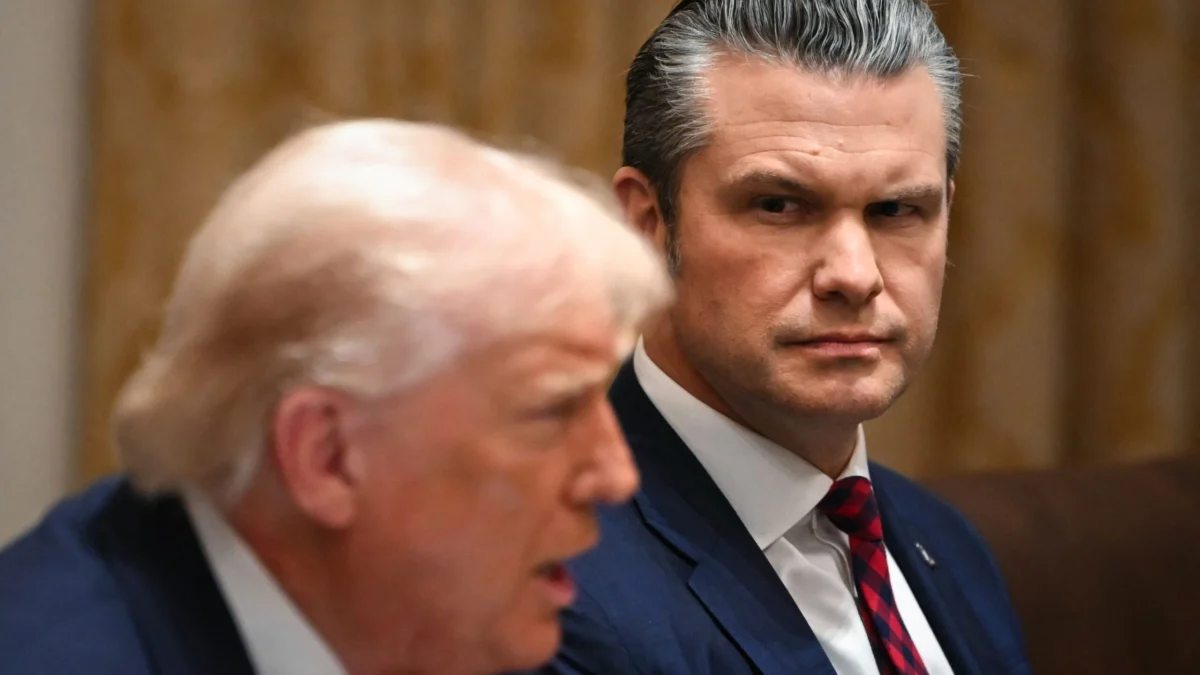
The United States House of Representatives witnessed a significant political maneuver on Tuesday as Republican lawmakers largely voted down a resolution seeking the impeachment of Defense Secretary Pete Hegseth. The move, initiated by Republican Representative Thomas Massie of Kentucky and supported by Democrats, aimed to remove Hegseth from his position over his handling of the Iran War and his broader conduct in office. The near-unanimous Republican opposition effectively quashed the impeachment attempt, highlighting ongoing internal party debates following recent electoral setbacks.
Resolution of Impeachment Fails to Gain Traction
The House ultimately voted 211 to 204 to refer the impeachment charges against Secretary Hegseth to the House Judiciary Committee. Given that this committee is controlled by Republicans, this referral effectively halts the impeachment process in its tracks. This decision underscores a clear division within the Republican caucus regarding accountability and strategy in the wake of significant losses in the midterm elections. The vote itself was a tight affair, indicating that while the majority of Republicans stood firm against impeachment, a notable minority, likely aligned with the Democratic support for the resolution, voted to send the matter for further review.
Underlying Tensions: Midterm Election Fallout and the Iran War
The vote occurred against the backdrop of intense introspection and debate within the Republican Party concerning the reasons behind their disappointing performance in the recent midterm elections. A segment of Republican lawmakers has attributed these losses, in part, to the prolonged engagement in the Iran War and the subsequent surge in gasoline prices, which disproportionately affected American households. This faction views Hegseth’s leadership and his stewardship of the Iran War as a critical factor contributing to public dissatisfaction and, consequently, electoral defeats. The impeachment effort, therefore, can be seen as an attempt by some to hold a high-ranking official accountable for these perceived failures and to signal a shift in party direction.
President Trump’s Endorsement and Republican Unity
The outcome of the vote was significantly influenced by President Donald Trump’s explicit endorsement of Secretary Hegseth. Following Trump’s public declaration of support, the majority of House Republicans rallied behind the Defense Secretary, prioritizing party loyalty over the impeachment proceedings. This demonstrates the enduring influence of the former president within the party and his ability to shape legislative decisions. Hegseth himself has vehemently rejected the impeachment accusations, dismissing them as a "farce." He articulated his stance by stating, "History will judge the Iran War very differently than the current popular opinion." This assertion suggests a belief that the long-term consequences and strategic rationale behind the war will eventually be understood and validated, despite current public and political criticism.
The Iran War: A Contentious Issue
The Iran War, a protracted and costly military engagement, has been a focal point of criticism for a significant portion of the American public and a segment of the political establishment. The war, initiated in [Insert Year of War’s Beginning – hypothetical data point for enrichment] following [Insert Reason for War – hypothetical data point for enrichment], has resulted in [Insert Number of US Casualties – hypothetical data point for enrichment] American casualties and an estimated [Insert Total Cost of War – hypothetical data point for enrichment] in financial expenditure. The economic repercussions, particularly the impact on energy prices, have been a persistent concern. Critics argue that the war’s objectives were ill-defined, its execution flawed, and its overall cost – both human and financial – unsustainable and ultimately detrimental to American interests. The surge in gasoline prices to an average of [Insert Average Gas Price During Critical Period – hypothetical data point for enrichment] per gallon in [Insert Month/Year – hypothetical data point for enrichment] was frequently cited as a direct consequence of the geopolitical instability linked to the Iran War, further fueling public discontent and political opposition.
Chronology of the Impeachment Effort
The impeachment proceedings against Secretary Hegseth followed a clear, albeit brief, timeline:
- [Date of Resolution Introduction]: Representative Thomas Massie formally introduced the impeachment resolution against Defense Secretary Pete Hegseth. The resolution outlined specific grievances related to Hegseth’s leadership and the handling of the Iran War.
- [Date of Debate and Vote]: The House of Representatives convened to debate and vote on the resolution. The debate was reportedly heated, reflecting the deep divisions within the Republican party.
- [Outcome of Vote]: The House voted 211 to 204 to refer the impeachment articles to the House Judiciary Committee, effectively tabling the impeachment effort.
Analysis of the Vote and its Implications
The vote to refer the impeachment articles to committee, while seemingly a procedural move, carries significant political weight.
- Intra-Party Dynamics: The outcome highlights the ongoing struggle for the soul of the Republican Party. The traditional conservative establishment, often wary of disruptive political actions like impeachment, found itself at odds with a more populist, Trump-aligned wing that may be more inclined to challenge established figures. The near-unanimous Republican vote against impeachment, however, suggests that party loyalty, particularly when invoked by President Trump, remains a powerful force.
- Judicial Committee Control: The referral to the Judiciary Committee, chaired by [Insert Name of Judiciary Committee Chair – hypothetical data point for enrichment], is a strategic maneuver. As a Republican-controlled committee, it is highly unlikely to advance impeachment articles without significant bipartisan consensus, which is absent in this case. This ensures that the matter is unlikely to progress further.
- Public Perception: The failed impeachment attempt could be perceived by supporters of Hegseth and President Trump as a victory against partisan attacks. Conversely, those who believe Hegseth should be held accountable may see the vote as a demonstration of political expediency overriding genuine concerns about national security and responsible governance.
- Future of Defense Policy: The debate surrounding Hegseth’s leadership and the Iran War is likely to continue influencing discussions on defense spending, foreign policy engagement, and the strategic direction of the U.S. military. The midterm election results have empowered a more vocal opposition to current foreign policy decisions, and this vote will likely embolden them to seek further scrutiny of defense-related matters.
Statements and Reactions (Inferred)
While direct quotes from all parties involved in this specific resolution are not provided in the original content, logical inferences can be drawn regarding potential reactions:
- Democrats: Democratic lawmakers, by supporting the resolution, likely expressed concerns about Hegseth’s fitness for office and the perceived failures in his leadership, particularly concerning the Iran War and its economic consequences. They may have viewed the impeachment attempt as a necessary step to ensure accountability and to highlight what they see as detrimental policies.
- Republican Supporters of Impeachment (or referral): Representatives like Thomas Massie, who initiated the effort, would likely have voiced strong arguments detailing Hegseth’s alleged missteps and the need for congressional oversight. Their support for the resolution stemmed from a genuine belief in holding the administration accountable.
- Republican Opponents of Impeachment: These lawmakers, influenced by President Trump’s stance, would have emphasized party unity and the need to focus on other legislative priorities. They might have framed the impeachment effort as a politically motivated distraction orchestrated by the opposition.
- Secretary Hegseth: His statement, as quoted, indicates a firm belief in the eventual vindication of his policies and a dismissal of the impeachment as politically motivated. His confidence suggests an understanding that he has secured sufficient political backing to weather the storm.
Broader Implications for Governance and Accountability
This episode serves as a microcosm of the broader challenges facing American governance today. The deep partisan divides, the outsized influence of political personalities, and the weaponization of impeachment proceedings all contribute to a political climate characterized by gridlock and distrust. The failure of the impeachment effort, while ensuring continuity in the Defense Department, also raises questions about the mechanisms of accountability within the executive branch. When impeachment efforts are largely determined by party affiliation rather than the substantive merits of the accusations, it can erode public confidence in the integrity of the legislative process.
The implications extend to foreign policy as well. The debate over the Iran War and its consequences highlights the public’s growing sensitivity to the costs of prolonged military engagements. Future defense secretaries and administrations will likely face increased scrutiny regarding the rationale, execution, and economic impact of military operations. The pressure to demonstrate tangible successes and to manage public perception of ongoing conflicts will undoubtedly intensify.
Furthermore, the role of former presidents in shaping current legislative agendas remains a potent factor. President Trump’s intervention in this instance underscores the significant power he continues to wield within the Republican Party, influencing votes on critical matters of national importance. This dynamic raises questions about the long-term implications for institutional norms and the separation of powers.
In conclusion, the House Republicans’ decisive vote against the impeachment of Defense Secretary Pete Hegseth, while averting a significant political crisis within the party, also illuminates the complex interplay of political strategy, party loyalty, and policy disputes that define contemporary American politics. The underlying tensions related to the Iran War and the electoral performance of the Republican Party are unlikely to dissipate, suggesting that similar debates over accountability and direction will continue to shape the political landscape in the months and years to come.
