

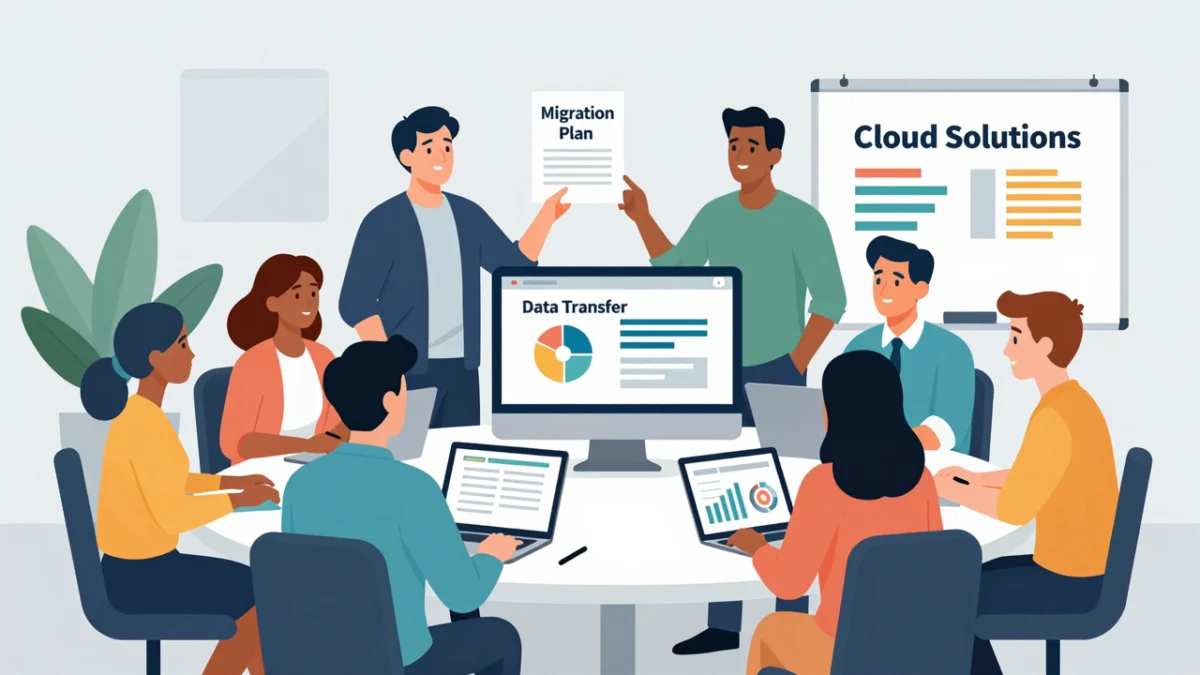
As global enterprises face increasing pressure to modernize their digital footprints, the implementation of a sophisticated application migration strategy has transitioned from a technical luxury to a fundamental business necessity. The shift from legacy, on-premises hardware to agile cloud environments represents a pivotal moment for organizations seeking to eliminate technical debt and enhance operational scalability. Recent industry data indicates that the global cloud migration market is projected to grow significantly over the next five years, driven by the need for remote work capabilities, data security, and cost-efficiency. However, the complexity of these transitions requires a structured approach that balances technical execution with overarching business objectives.

The Landscape of Modern Application Migration
The impetus for application migration often stems from the inherent limitations of aging infrastructure. Traditional on-premises systems frequently suffer from performance bottlenecks, high maintenance costs, and a lack of elasticity. In contrast, cloud-native architectures allow businesses to scale resources dynamically in response to real-time demand. This transition is not merely a "move and forget" operation; it is a holistic re-evaluation of how software serves the organization’s mission.
Industry analysts observe that successful migrations are characterized by a "business-first" mindset. Before a single line of code is moved, stakeholders must identify which applications are critical to revenue and which can be retired or replaced. This initial assessment phase is crucial for establishing the scope of the project and ensuring that the migration delivers a measurable return on investment (ROI).

The 7 Rs: A Comprehensive Decision Framework
To navigate the complexities of moving diverse application portfolios, IT leaders utilize the "7 Rs" framework. This taxonomy provides a standardized method for determining the most efficient path for each individual workload:
- Rehost (Lift and Shift): This involves moving applications to the cloud without making any changes to the code. It is often the fastest route to migration, suitable for legacy systems that need to be moved quickly to meet a data center exit deadline.
- Replatform (Lift and Reshape): This approach involves making minor optimizations to the application to take advantage of cloud capabilities without changing the core architecture. For example, moving a database to a managed service like AWS RDS or Azure SQL.
- Refactor: Organizations choose to rewrite parts of the application to better suit a cloud-native environment. This is often done to improve performance or add features that were impossible in the old environment.
- Repurchase: This involves moving from a perpetual license to a Software-as-a-Service (SaaS) model. An example would be moving from an on-premises CRM to a cloud-based solution like Salesforce.
- Rearchitect: This is the most complex approach, involving a complete overhaul of the application’s architecture, often moving from a monolithic structure to microservices.
- Retain: Some applications may not be ready for the cloud due to compliance, security, or performance reasons. These are kept in their current environment for the time being.
- Retire: During the assessment phase, many organizations discover applications that are no longer in use. Retiring these systems immediately reduces the attack surface and saves on maintenance costs.
A Chronology of the Migration Process
A successful application migration follows a rigorous timeline, typically divided into four distinct phases:

Phase I: Discovery and Assessment (Months 1-2)
The process begins with a comprehensive inventory of the existing application portfolio. Engineers use automated discovery tools to map dependencies—understanding how one application interacts with another and with underlying databases. During this period, the organization establishes its baseline Key Performance Indicators (KPIs), including current uptime, latency, and operational costs.
Phase II: Strategy and Planning (Months 3-4)
Using the 7 Rs framework, each application is assigned a migration path. Architects design the "landing zone" in the cloud, ensuring that the network, security, and governance protocols are in place. This phase also involves selecting the migration tools, such as AWS Application Migration Service or Azure Migrate, and finalizing the budget.

Phase III: Execution and Testing (Months 5-10)
The migration is typically conducted in "waves." Low-risk, non-critical applications are moved first to test the process. Techniques such as Blue-Green deployments—where two identical environments run simultaneously—are used to minimize downtime. Canary releases may also be employed, where updates are rolled out to a small subset of users before a full-scale launch.
Phase IV: Optimization and Governance (Ongoing)
Once the applications are in the cloud, the focus shifts to post-migration optimization. This includes rightsizing instances to avoid over-provisioning and implementing automated scaling.

Supporting Data and Economic Implications
The financial shift from a Capital Expenditure (CapEx) model to an Operational Expenditure (OpEx) model is a primary driver of migration. According to recent surveys of Chief Information Officers (CIOs), organizations that successfully migrate to the cloud report an average of 20% to 30% reduction in IT operational costs within the first two years. Furthermore, the ability to deploy features faster increases "business agility," a metric that, while harder to quantify, is often cited as the most significant long-term benefit.
However, the cost of failure is high. Research suggests that nearly 38% of migration projects exceed their initial budgets, often due to unforeseen "hidden dependencies" or a lack of skilled personnel. This underscores the importance of the discovery phase and the need for specialized migration expertise.

Security, Compliance, and Risk Management
One of the most significant concerns for enterprises is maintaining data integrity and security during the transition. Modern migration strategies incorporate "Security by Design." This involves encrypting data at rest and in transit using protocols like AES-256 and TLS 1.3.
Furthermore, compliance with international standards such as GDPR (General Data Protection Regulation), HIPAA (Health Insurance Portability and Accountability Act), and SOC2 (System and Organization Controls) must be verified at every step. Cloud providers offer "Shared Responsibility Models," where the provider secures the infrastructure, but the customer remains responsible for securing the data and applications they place within that infrastructure.

Industry Reactions and Expert Analysis
Industry leaders emphasize that the human element is as critical as the technical one. "Migration is not just an IT project; it’s a cultural shift," notes a prominent enterprise architect from a leading global consultancy. "If the end-users are not engaged and the staff is not trained on the new systems, the technical success of the move will be overshadowed by a lack of adoption."
Analysts also point toward the rising trend of "Multi-Cloud" strategies, where organizations spread their workloads across different providers like AWS, Microsoft Azure, and Google Cloud Platform. This prevents vendor lock-in and allows businesses to utilize the specific strengths of each provider, though it adds a layer of complexity to the migration planning process.

Post-Migration Optimization: The Path to Peak Performance
The conclusion of the migration wave does not signal the end of the project. Post-migration optimization is essential to ensure the new environment remains efficient. Application Performance Management (APM) tools, such as Dynatrace or New Relic, are deployed to monitor user experience and system health in real-time.
Continuous improvement cycles allow teams to identify bottlenecks that may not have been apparent during testing. By leveraging automated scaling and serverless architectures, companies can further reduce costs, paying only for the exact amount of compute power they consume at any given millisecond.

Broader Impact and Future Outlook
As we move further into the decade, the integration of Artificial Intelligence (AI) and Machine Learning (ML) into migration tools is expected to streamline the discovery and refactoring phases. AI-driven analytics can predict potential migration failures before they occur and suggest the optimal "R" for each application based on historical data.
In summary, a robust application migration strategy is the cornerstone of modern digital transformation. By meticulously evaluating the application portfolio, adhering to the 7 Rs framework, and maintaining a relentless focus on security and optimization, organizations can transition from rigid legacy systems to fluid, innovation-ready cloud environments. This strategic shift not only protects the business against the obsolescence of hardware but also positions it to leverage the next generation of digital advancements.
