

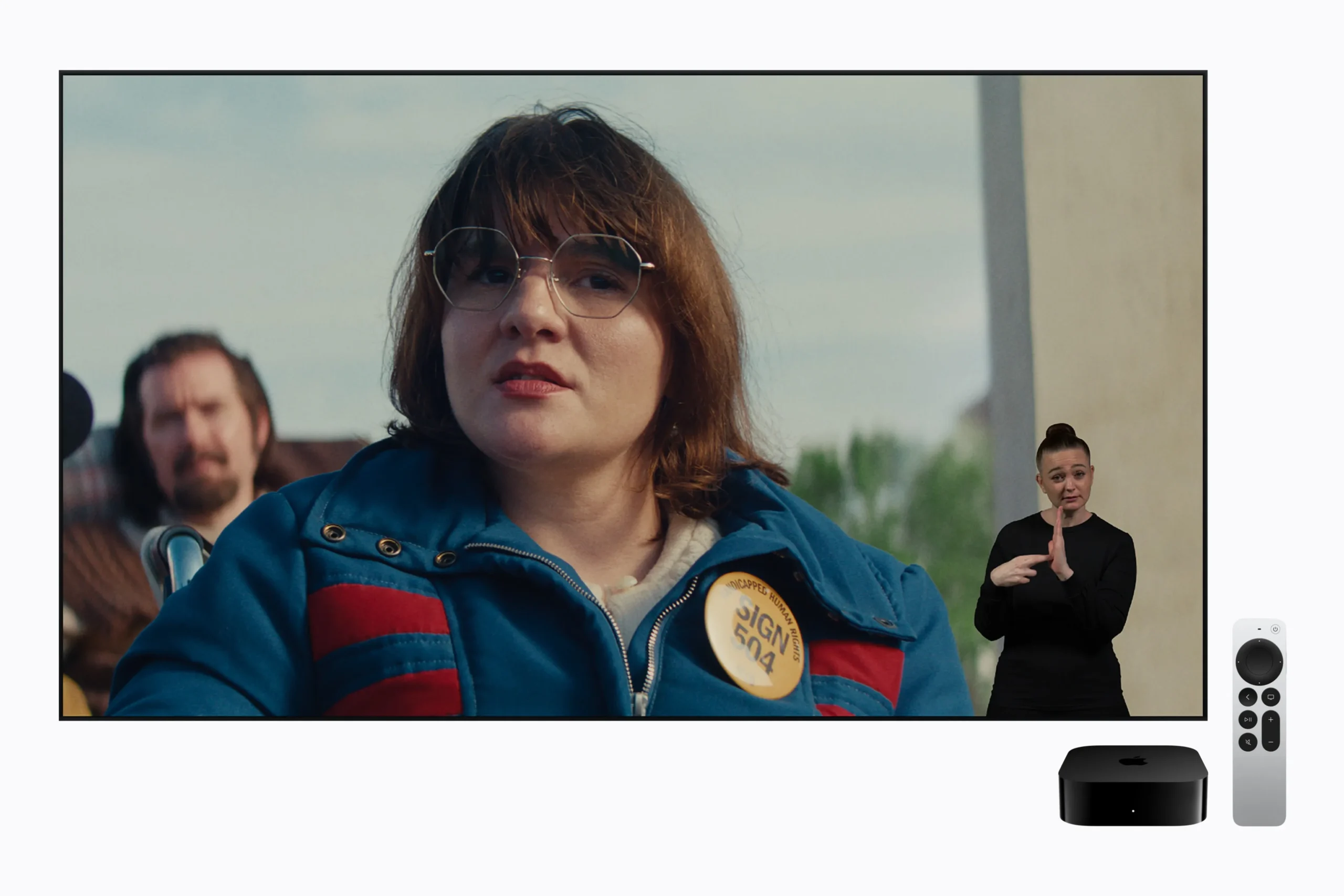
Apple TV is set to transform the entertainment experience for Deaf audiences with the launch of a new, deeply integrated Sign Language Interpretation feature, the company officially announced on Tuesday. This pioneering initiative, which makes content significantly more accessible, will debut this Friday, April 19, with the release of "Being Heumann," a compelling biopic chronicling the life of disability rights activist Judy Heumann. The feature is designed to seamlessly blend human sign language interpretation directly into the viewing experience, departing from the conventional method of providing separate, dedicated versions of content.
The Genesis of Inclusivity: A Look at the Need and Apple’s Legacy
The introduction of this sign language interpretation feature by Apple TV marks a significant milestone in the ongoing quest for universal accessibility in digital entertainment. For decades, the Deaf community has faced substantial barriers to fully engaging with mainstream media. While closed captions have become a standard offering, they often fall short of providing a complete and culturally nuanced experience for individuals whose primary language is American Sign Language (ASL), British Sign Language (BSL), or other national sign languages. Sign languages are distinct, visual-gestural languages with their own grammar, syntax, and cultural context, offering a richer and more immediate understanding than text-based captions for many Deaf viewers.
According to the World Health Organization (WHO), over 5% of the world’s population – or 430 million people – have disabling hearing loss. In the United States alone, the National Institute on Deafness and Other Communication Disorders (NIDCD) estimates that approximately 2 to 4 per 1,000 children are born with a detectable level of hearing loss in one or both ears, and about 1 million Americans are functionally deaf. These figures underscore a substantial global audience whose access to and enjoyment of digital content has historically been limited. The demand for sign language interpretation in media has been a consistent call from disability advocates and organizations worldwide, including the National Association of the Deaf (NAD) in the U.S. and the British Deaf Association (BDA) in the UK, who have long campaigned for greater linguistic access.
Apple’s move builds upon a well-established legacy of prioritizing accessibility across its entire ecosystem. For years, the Cupertino-based tech giant has integrated a wide array of features designed to empower users with disabilities. From VoiceOver for the visually impaired and Switch Control for those with limited mobility to Live Captions and Magnifier, Apple has consistently positioned accessibility as a core design principle rather than an afterthought. This commitment is evident in the annual updates to iOS, macOS, watchOS, and tvOS, which frequently introduce new tools to make technology more inclusive. The launch of sign language interpretation for Apple TV+ is a natural extension of this philosophy, demonstrating a deeper understanding of the diverse communication needs within its global user base. It also aligns with the spirit of legislation like the Americans with Disabilities Act (ADA) in the U.S. and similar accessibility laws internationally, which aim to ensure equal access to public accommodations and services, increasingly including digital platforms.
Feature Rollout and Technical Sophistication
The phased rollout of Apple TV’s new feature will commence this Friday, April 19, with "Being Heumann." Immediately following, American Sign Language (ASL) and British Sign Language (BSL) interpretations will be made available for Apple’s acclaimed movie "F1." Later this year, additional high-profile titles are slated to receive the interpretation treatment, including "Way of the Warrior Kid" and "Greyhound." This initial selection of titles, spanning documentaries and action films, signals a broad commitment to making diverse genres accessible.
What truly distinguishes Apple’s approach is its innovative technical implementation. Unlike some platforms that might offer a completely separate, pre-recorded version of a film with an interpreter superimposed, Apple has engineered its sign language support as an integrated setting. This functionality operates much like enabling or disabling closed captions or selecting an alternative audio track. When activated, a human interpreter appears dynamically in the bottom right corner of the screen, seamlessly translating the spoken dialogue, sound effects, and musical cues into signs. This integration ensures that the sign language version is not perceived as a "special" or "alternative" product but rather as an intrinsic part of the main content, enhancing the viewing experience without fragmenting the audience.
Crucially, Apple has underscored its commitment to authenticity by partnering with a dedicated group of Directors of Artistic Sign Language (DASLs). These experts play a vital role in ensuring that the interpretation for each film accurately reflects the tone, nuances, and artistic integrity of the original production. This meticulous attention to detail guarantees that the signed performance enhances the storytelling, conveying emotions and characterizations effectively. Notably, the company has explicitly stated its decision to forego AI-generated interpreters. This stance reflects a deep understanding of the Deaf community’s feedback, which overwhelmingly indicates a preference for human interpreters. AI, while rapidly advancing, currently struggles to capture the full emotional depth, cultural nuances, and subtle expressiveness inherent in human sign language, making human interpretation indispensable for a truly immersive and authentic experience.
The feature is delivered through the latest software update, iOS 27.2, and can be activated via a new sign language option within the device’s Settings menu. Once enabled, a distinct button will appear on supported Apple Original titles within the Apple TV interface, clearly indicating the availability of sign language. Furthermore, these titles will be adorned with a dedicated sign language icon on their respective title pages, positioned alongside other accessibility features such as closed captions and audio descriptions. A new section under language options will also provide specific details on the available sign languages for each title, streamlining the user experience.
To further enhance discoverability, Apple TV will curate a dedicated editorial collection titled "Movies & Shows with American Sign Language." This centralized hub will allow users to easily browse and identify content that offers sign language interpretation. For those who prefer direct searching, keywords such as "with ASL" can be used to quickly surface supported titles, ensuring that users can effortlessly find the content they desire.
Industry Landscape and Market Impact
Apple’s integrated sign language interpretation feature enters a competitive streaming landscape where accessibility is increasingly a differentiator. While major platforms like Netflix, Disney+, and Amazon Prime Video offer robust closed captioning and audio description services, dedicated sign language interpretation is less common and often implemented differently. Some platforms might offer specific versions of content for sign language users, which can sometimes be perceived as a separate stream or a less integrated experience. By offering an on-demand, integrated overlay, Apple is potentially setting a new benchmark for how such features should be deployed, emphasizing user choice and seamless incorporation.
The global demographic data for Deaf and hard-of-hearing individuals represents a significant, often underserved market segment. The availability of high-quality sign language interpretation not only broadens the potential audience for Apple TV+ content but also reinforces the platform’s commitment to social responsibility and inclusive design. The decision to support both ASL and BSL from the outset is particularly impactful, addressing two of the most widely used sign languages in the Western world and acknowledging the distinct linguistic needs of these communities.
This initiative could also have a profound impact on the broader entertainment industry. As a leading tech and content provider, Apple’s move may inspire other streaming services and content creators to invest more heavily in similar integrated accessibility solutions. This could foster a virtuous cycle, leading to a wider availability of sign language interpreted content across the digital media ecosystem, ultimately benefiting millions of viewers worldwide. Moreover, the emphasis on human interpreters over AI could stimulate growth in the professional sign language interpretation sector, creating new opportunities for DASLs and interpreters within the entertainment industry.
Voices of Advocacy and Corporate Vision
The announcement has been met with anticipated enthusiasm from disability rights advocates and organizations within the Deaf community. While specific third-party statements are yet to emerge, the sentiment can be inferred from years of advocacy. Groups like the NAD and BDA would likely hail this as a "monumental step forward," "a long-awaited victory," and a testament to the power of persistent advocacy. For individuals like Judy Heumann, whose life story is central to the feature’s launch, this represents a tangible realization of the universal access she championed throughout her career.
Sarah Herrlinger, Apple’s senior director of Global Accessibility Policy and Initiatives, articulated the company’s vision in a statement about the launch, stating, "At Apple, we believe everyone should be able to enjoy great stories and entertainment. Bringing sign language interpretation to Apple TV is an exciting step forward in making the viewing experience more accessible and inclusive for Deaf audiences. Accessibility is a core value at Apple, and we’re proud to continue creating experiences that allow more people to enjoy the content they love." Herrlinger’s remarks underscore that this is not merely a technical update but a reflection of Apple’s foundational principles. It highlights the company’s understanding that true innovation extends beyond technological prowess to encompass social equity and universal design. This initiative reinforces the idea that access to culture and entertainment is a fundamental right, not a privilege.
Broader Implications and Future Outlook
The implications of Apple TV’s integrated sign language interpretation feature extend far beyond the immediate viewing experience. For Deaf audiences, it promises a level of immersion and engagement previously unattainable, moving beyond mere comprehension to true emotional connection with stories and characters. The ability to watch a film with a signed interpretation that is synchronized, artistically directed, and seamlessly integrated removes significant cognitive load and allows for a richer, more natural viewing experience.
From an industry perspective, this move sets a new bar for accessibility standards in streaming. The deliberate choice to use human DASLs and reject AI-generated interpretation sends a strong message about quality, authenticity, and respect for the Deaf community’s preferences. This could catalyze a broader industry discussion about the role of AI in accessibility versus the irreplaceable value of human linguistic and cultural expertise. It also highlights the potential for new creative roles within film and television production for sign language professionals.
Looking ahead, this feature could influence how content is produced and acquired for Apple TV+. It might encourage producers to consider sign language interpretation earlier in the production process, potentially leading to even more integrated and artistically aligned interpretations. The curated "Movies & Shows with American Sign Language" collection also paves the way for greater content discoverability and potentially encourages a wider range of diverse stories to be told and made accessible.
Ultimately, Apple’s latest accessibility innovation for Apple TV+ is more than just a new feature; it is a powerful statement about inclusivity, human connection, and the transformative power of technology when applied with thoughtful design and a deep understanding of user needs. By making premium entertainment truly accessible to the Deaf community, Apple is not only enhancing its own platform but also contributing to a more equitable and universally enjoyable digital world. This move solidifies Apple’s position as a leader in accessibility innovation and sets a commendable precedent for the entire streaming industry.
