

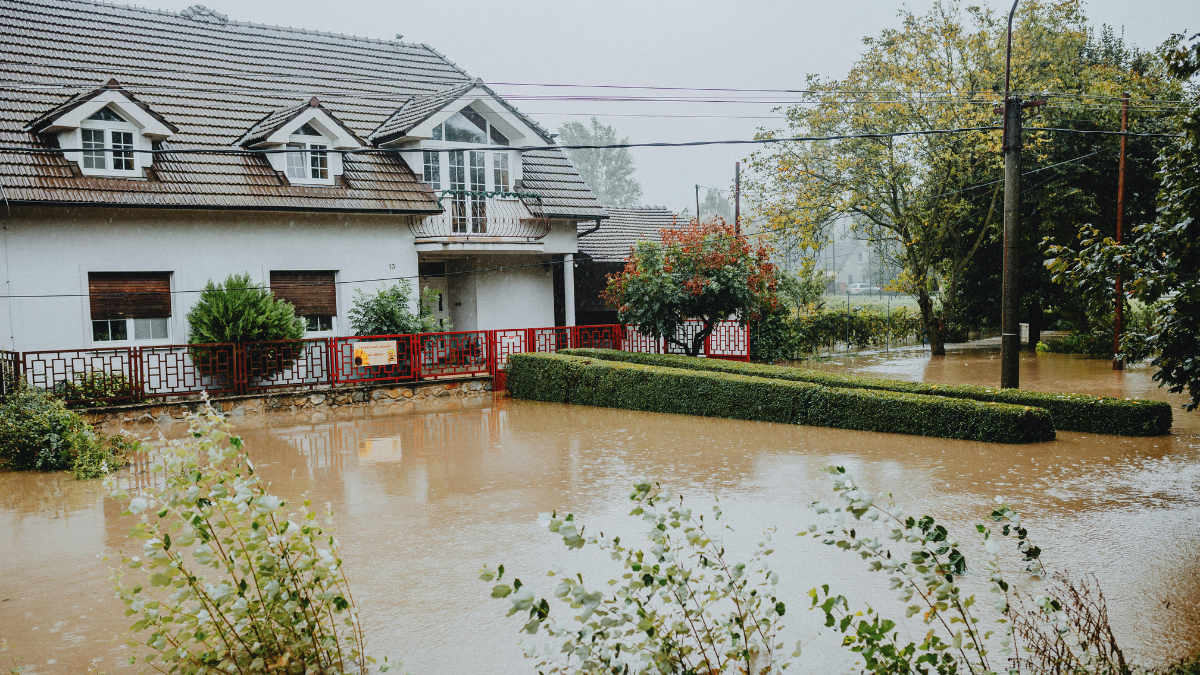
The intensifying frequency of extreme weather events, exacerbated by the recurring El Niño phenomenon, has catalyzed a significant paradigm shift in how the United States approaches flood risk management. Historically viewed as a localized concern for coastal residents or those living along major riverbanks, flooding has transformed into a pervasive national threat. Today, the dialogue surrounding property protection is no longer confined to traditional flood zones. Instead, catastrophic inundation is increasingly driven by localized, high-intensity rainfall events—often referred to as pluvial flooding—which can strike any geographic location regardless of its proximity to a body of water. As these environmental risks evolve, the insurance industry is witnessing a notable migration of homeowners toward private flood insurance as a viable, and often more flexible, alternative to the long-standing National Flood Insurance Program (NFIP).
The emergence of the private flood insurance market represents a critical development in the broader financial landscape of the U.S. housing market. For decades, the NFIP, managed by the Federal Emergency Management Agency (FEMA), was the primary, if not the only, option for homeowners seeking protection against rising waters. However, as the limitations of federal coverage become more apparent in the face of modern climate challenges, the private sector has stepped in, backed by global capital markets and sophisticated data modeling. This transition is particularly relevant for real estate professionals, who must now navigate a more complex array of coverage options to ensure their clients’ most significant investments remain protected.
The Historical Context and the Rise of Pluvial Flooding
To understand the current surge in private flood insurance interest, one must examine the historical trajectory of flood risk in the United States. The National Flood Insurance Program was established by Congress in 1968, a time when private insurers largely viewed flood risk as "uninsurable" due to the potential for correlated losses across vast areas. For fifty years, the NFIP served as the bedrock of disaster recovery, providing a safety net that the private market was unwilling to offer.
However, the nature of flooding has changed. Traditionally, flood risk was categorized by "fluvial" events (river overflows) or "coastal" events (storm surges). While these remain significant threats, the last decade has seen a rise in "pluvial" flooding—flash floods caused by extreme precipitation that overwhelms local drainage systems. According to data from the National Oceanic and Atmospheric Administration (NOAA), 2023 saw several "billion-dollar disasters" where the primary driver was severe convective storms and inland flooding.
A critical data point from FEMA indicates that approximately 25% of all NFIP claims now originate from areas outside of "Special Flood Hazard Areas" (SFHAs), or high-risk zones. This statistic underscores a sobering reality: the traditional "100-year floodplain" maps, which many real estate agents and homeowners rely on, are often lagging indicators of actual risk. As climate patterns shift, regions once considered "low-risk" are finding themselves underwater, driving a sudden and urgent demand for insurance products that can be tailored to these new realities.
Distinguishing Between Federal and Private Structures
The fundamental distinction between an NFIP policy and a private flood insurance policy lies in the source of capital and the method of risk assessment. The NFIP is a federal program where the ultimate financial backstop is the United States taxpayer. While this ensures that coverage is available to almost anyone in a participating community, it also means the program is subject to legislative changes and a "one-size-fits-all" approach to coverage limits. Currently, NFIP policies are capped at $250,000 for residential building coverage and $100,000 for personal property (contents).
In contrast, private flood insurance is fueled by independent insurance companies that leverage global capital markets. These companies use advanced hydraulic modeling and satellite imagery to assess risk on a property-by-property basis, rather than relying solely on generalized FEMA maps. This precision allows private insurers to offer more competitive pricing for some homes while providing significantly higher coverage limits that far exceed the federal caps. For homeowners with high-value properties, the $250,000 NFIP limit is often insufficient, making private insurance a necessity rather than a luxury.
Furthermore, the private market is characterized by a disciplined approach to risk selection. Because private insurers do not have a taxpayer backstop, they must ensure their programs are actuarially sound and sustainable. This has led to the development of customizable policies that can cater to specific niches, such as high-net-worth individuals, renters, or those with unique property features like finished basements.
The Synergy of Federal and Private Coverage
One of the most misunderstood aspects of the current insurance market is the relationship between the NFIP and private policies. They are not mutually exclusive; rather, they can work in tandem to provide a comprehensive safety net. For instance, a homeowner might maintain a base NFIP policy to satisfy certain mortgage requirements but supplement it with a "private excess" policy. This excess coverage triggers once the federal limits are exhausted, ensuring that a total loss of a $1 million home does not result in a $750,000 financial deficit for the owner.
Additionally, private policies often fill the "coverage gaps" inherent in the NFIP. Standard federal policies typically offer limited protection for items located in basements and do not cover "loss of use" (the cost of temporary housing while a home is being repaired). Private insurers have recognized these gaps as opportunities, offering enhancements that cover basement contents, pool clean-up expenses, and even business interruption for small commercial properties. This flexibility allows insurance agents to craft bespoke solutions that align with the specific lifestyle and financial exposure of the client.
Data-Driven Analysis of Market Implications
The growth of the private flood insurance market is also a response to the financial strain on the NFIP. As of 2024, the NFIP remains billions of dollars in debt to the U.S. Treasury, largely due to catastrophic losses from hurricanes like Katrina, Sandy, and Harvey. In response, FEMA implemented "Risk Rating 2.0," a new pricing methodology designed to make federal premiums more reflective of actual risk. While this move was intended to stabilize the program, it resulted in premium increases for many policyholders.
This shift in federal pricing has narrowed the price gap between the NFIP and private insurers. In many cases, homeowners are finding that private policies are not only more comprehensive but also more affordable than their federal counterparts. Industry analysts note that the private flood market has grown from roughly $400 million in total written premiums in 2016 to over $1 billion today, a trend that is expected to accelerate as more states pass "diligent effort" laws that make it easier for agents to offer private options.
The Role of Real Estate Professionals in Risk Mitigation
For real estate agents, the evolving flood landscape necessitates a more proactive approach to client education. The "is it in a flood zone?" question is no longer sufficient. Agents are increasingly expected to facilitate conversations about the potential for flooding, regardless of the map’s color-coding.
John Dickson, President and CEO of Aon Edge, emphasizes that the home is typically a family’s most valuable investment. Protecting that investment requires an understanding that "wherever it rains, it can flood." By guiding clients toward both federal and private options, agents help ensure that a natural disaster does not become a financial one. This involves encouraging clients to look beyond the mandatory purchase requirements of lenders and consider the actual cost of replacement in the event of a catastrophic inundation.
Broader Societal and Economic Impact
The implications of this shift extend beyond individual homeowners. On a macro level, the expansion of the private flood insurance market helps to diversify the concentration of risk. When more private capital enters the market, the financial burden on the federal government—and by extension, the taxpayer—is reduced. This creates a more resilient economic ecosystem that is better equipped to handle the financial shocks of large-scale climate events.
However, the transition also presents challenges. Private insurers have the ability to "cherry-pick" the best risks, potentially leaving the NFIP with a pool of only the most flood-prone properties. This "adverse selection" could further strain the federal program’s finances. Policymakers are currently grappling with how to balance the growth of the private market with the need to maintain a viable federal safety net for those in the highest-risk areas who may not be able to find affordable private coverage.
Conclusion: A New Standard for Property Protection
As the 2024 hurricane and storm seasons approach, the trend toward private flood insurance serves as a barometer for the changing climate and the financial response to it. The traditional reliance on a single, federal solution is giving way to a multi-tiered approach that values data precision, capital flexibility, and customized protection.
For the modern homeowner and the real estate professionals who advise them, the message is clear: the environment is changing, and the tools used to mitigate its risks must change accordingly. Understanding the nuances between the NFIP and the private market is no longer a niche requirement for coastal residents; it is a fundamental component of responsible property ownership in the 21st century. As rainfall-driven flooding becomes the new normal, the ability to access global capital through private insurance offers a critical pathway toward long-term community and financial resilience.
