

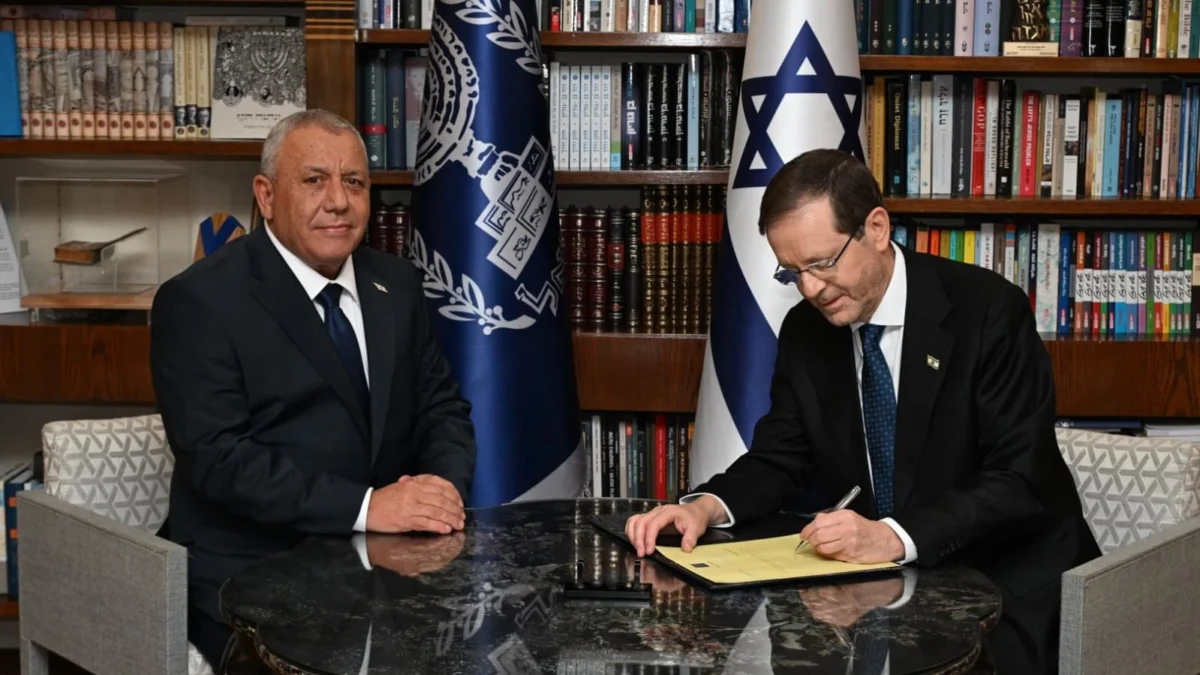
Following a parliamentary election on October 27th that failed to yield a clear victor, Israeli President Isaac Herzog tasked Gadi Eisenkot with the formation of a new government on Sunday. The ceremony, held in Jerusalem, was underscored by President Herzog’s acknowledgement of "immense challenges" facing the nation. These challenges, he articulated, include the persistent threat from Iran, the complex implementation of a peace plan for the Gaza Strip, and the contentious issue of military conscription. Furthermore, Israel must navigate the potential for sanctions and diplomatic pressures, alongside adapting to "a new political landscape" in the United States. "The State of Israel needs a stable government capable of meeting these demands in the long term," Herzog emphasized.
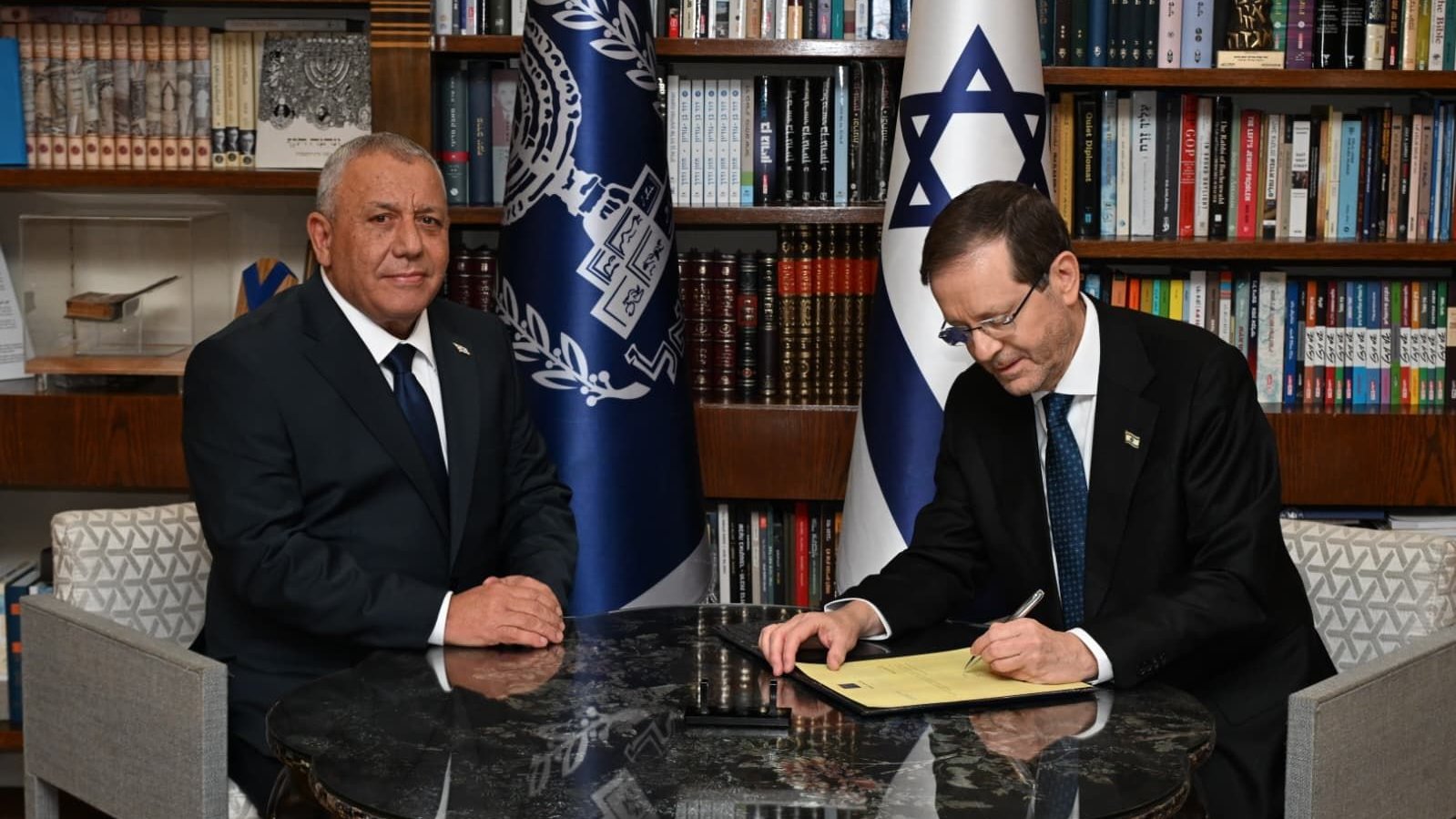
Gadi Eisenkot now has a 28-day window to assemble a coalition, a period that President Herzog may extend by up to 14 days. This mandate follows two days of consultations where the President met with all parliamentary factions. A significant majority of 67 out of the 120 elected Knesset members recommended Eisenkot as the next prime minister. In contrast, only 46 members expressed support for the incumbent, Benjamin Netanyahu. The ultra-Orthodox party United Torah Judaism (UTJ), holding seven seats, abstained from making a recommendation.
Should Eisenkot fail to forge a coalition within the allotted time, President Herzog is expected to then task Benjamin Netanyahu with the responsibility. Despite the considerable number of recommendations for Eisenkot, securing a stable parliamentary majority is anticipated to be a formidable undertaking. Eisenkot himself acknowledged the gravity of the situation upon receiving the mandate, stating, "We are on the verge of a point of no return for the State of Israel. This will require creative and unconventional political steps."

Opposition and Government Camps Lack a Clear Majority
According to the preliminary election results, Benjamin Netanyahu’s existing governing bloc holds a lead with 53 seats. This bloc comprises the Likud party, which emerged as the largest single party with 27 mandates, alongside the ultra-Orthodox parties Shas (six seats) and UTJ (seven). The far-right settler parties, Religious Zionism led by Bezalel Smotrich and Otzma Yehudit led by Itamar Ben-Gvir, together contribute 13 seats to this bloc.
In stark contrast, Eisenkot’s opposition bloc garnered only 48 mandates. This bloc is composed of four parties united primarily by their objective to oust Netanyahu. The "Yashar" (meaning "straightforward") party advocates for moderate, security-oriented policies, aims to introduce universal military conscription, and seeks to establish a commission of inquiry into the October 7, 2023 Hamas attack. Yashar secured 21 seats, making it the second-largest party. The "B’Yachad" alliance, led by Naftali Bennett and Yair Lapid, holds twelve seats, while Avigdor Lieberman’s secular party, Yisrael Beitenu, has seven seats. The left wing of the opposition is represented by the "HaDemokratim" party, led by Yair Golan, with eight seats.

Eisenkot has 28 days to form a coalition. Photo: Haim Zach / GPO
### The Crucial Role of Arab Parties and the Conscription Dilemma
Eisenkot’s initial mandate to form a government is largely attributed to the potential support from Arab parties. The Ra’am and HaReshima HaMeshutefet (Joint List) parties collectively hold 19 seats and have indicated their primary objective is to prevent another Netanyahu term. This parliamentary arithmetic is what provided Eisenkot with the 67 recommendations, exceeding the 61 seats required for a governing majority.
However, the path to coalition building is fraught with ideological divisions, particularly concerning the issue of military conscription and the definition of Hamas. The ultra-Orthodox parties, Shas and UTJ, fundamentally oppose mandatory military service for religious reasons. Simultaneously, the Arab parties, during consultations with President Herzog, refused to classify Hamas as a terrorist organization. Mansour Abbas, the leader of Ra’am, generally considered more moderate than the Joint List and a participant in the 2021 government, while calling for the disarmament of Hamas, stopped short of labeling the group a terrorist entity, citing security concerns for himself and his family.
These deeply entrenched positions create significant obstacles. Only 48 Knesset members are currently willing to officially join a government led by Eisenkot under his stated conditions. Michael Rimmel, the head of the Konrad Adenauer Foundation’s office in Israel, observed, “Somewhere, the opposition must now make compromises. And every step will cost them their political credibility.” This leaves Eisenkot with three primary avenues for coalition formation.
### Option 1: Coalition with Arab Parties
One possibility is for Eisenkot to significantly moderate his conditions to accommodate the Arab parties. Rimmel deems this scenario “almost impossible” due to the stark divergence in security policy interests between Eisenkot, a former military chief, and the Arab representatives. A more plausible arrangement, he suggests, would be the tacit support or “duldung” (tolerance) of the Arab parties, rather than direct coalition membership. Rimmel posed a rhetorical question highlighting the challenge: “How would they make a joint decision in the face of a threat from Iran, Lebanon, the West Bank, or Gaza?” Within the opposition bloc, only the HaDemokratim party has publicly expressed readiness for such a coalition.
### Option 2: Government with the Ultra-Orthodox
A second option involves forming a government supported or tolerated by the ultra-Orthodox parties. This alliance was considered highly improbable before the elections. UTJ’s abstention during the consultations with the President is interpreted by Rimmel as a potential signal of the party distancing itself from Netanyahu, a long-standing ally since 2009.
Channel 12 reported that a source within the Council of Torah Sages indicated that Shas would not oppose a joint government with Eisenkot if the spiritual leader of UTJ agreed. However, Netanyahu is reportedly exerting considerable pressure on the ultra-Orthodox factions to thwart this potential alliance.
From the opposition camp, only Avigdor Lieberman has openly voiced opposition to collaborating with the ultra-Orthodox parties. On Friday, he declared his willingness to form a coalition, even accepting “painful compromises” on the issue of military conscription. He stressed the necessity of forming a 61-seat majority “without the Joint List and Ra’am.” Lieberman has consistently campaigned against exemptions from military service for the ultra-Orthodox. Having been a Member of the Knesset almost continuously since 1999, he has previously served as Foreign Minister, Defense Minister, and Finance Minister.
Mathematically, this configuration could yield a majority: Eisenkot’s bloc (48 seats), UTJ (7 seats), and the tolerated support of Shas (6 seats) would sum to 61 seats. Rimmel considers this option realistic, though he cautions that such a government might be short-lived. He anticipates a potential collapse by late March of the following year, coinciding with the deadline for budget approval. Divergent views on subsidies and conscription between the ultra-Orthodox parties and the opposition bloc could lead to deadlock. Failure to pass a joint budget would automatically dissolve the government under Israeli Basic Law, triggering new elections. Rimmel suggests that in such a scenario, Netanyahu’s prospects for re-election would become “extremely good.”
### Option 3: Unity Government with Netanyahu
The third possibility is a unity government that includes Benjamin Netanyahu. Under this arrangement, the leaders of the two largest factions, Likud and Yashar, would alternate in the role of prime minister. Netanyahu publicly advocated for this solution on Saturday in a video message, but crucially, only with the inclusion of all his previous allies. He warned that a government with Arab support would “destroy Israel from within,” drawing parallels to unrest in European cities like Paris and Brussels, and predicting such chaos would spread to Israeli cities. “With such a government, Israel will simply not survive,” he declared.
Rimmel interprets Netanyahu’s video message as an indication that Netanyahu believes Eisenkot could form a coalition without him. However, the opposition bloc has consistently ruled out collaboration with Netanyahu, citing mistrust and referencing the 2020 experience where Benny Gantz’s unity government with Netanyahu dissolved over budget disputes before Gantz could assume the premiership.
### First Test of Strength on Tuesday
According to Rimmel, the true extent of Eisenkot’s political leverage will become apparent on Tuesday during the Knesset’s inaugural session. The opposition has signaled its intent to oust the current Speaker of Parliament, Amir Ohana, a close confidant of Netanyahu, and install former Prime Minister Yair Lapid in his place.
Netanyahu would likely reject such an outcome. “It will become clear here who sets the political tone after the election, Eisenkot or Netanyahu,” Rimmel stated. “We are currently witnessing the final phase of Netanyahu’s era, but not the end of his political career.”
The complex political calculus, coupled with deep ideological divides, suggests that the path to forming a stable government in Israel remains exceptionally challenging. The coming weeks will be critical in determining whether Eisenkot can navigate these obstacles or if the nation will be propelled towards yet another election.
