

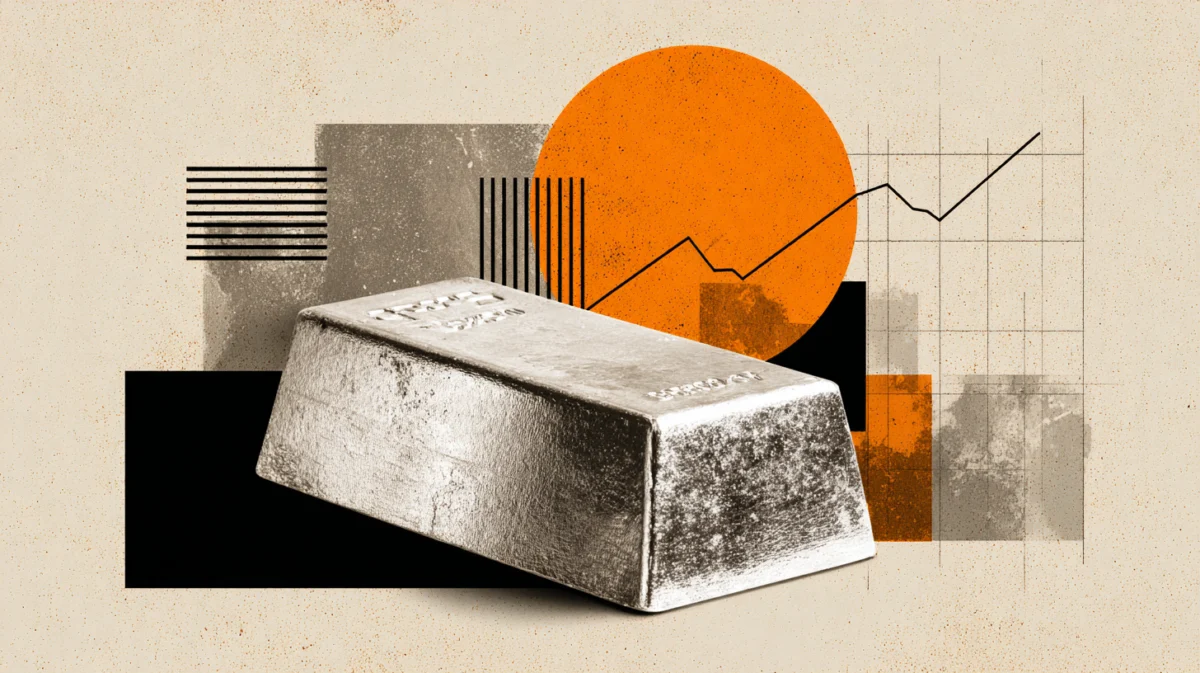
The precious metal Silver (XAG/USD) found itself in a state of delicate equilibrium on Friday, with its price hovering near the $52.00 mark, registering only a marginal gain of 0.19%. This consolidation comes despite a robust rally in the US Dollar, propelled by a series of strong economic data releases from the United States. The technical landscape is characterized by back-to-back ‘doji’ candles on daily charts, a pattern widely interpreted by market participants as a sign of profound indecision, where neither bullish nor bearish forces have managed to establish a decisive upper hand. This standoff reflects a complex interplay of macroeconomic forces, including a strengthening US economy, persistent inflation concerns, and shifting investor sentiment towards safe-haven assets.
Navigating the Technical Crosscurrents: A Deeper Look at XAG/USD
From a purely technical standpoint, Silver’s trajectory continues to exhibit a downward bias, a trend that has persisted over recent trading sessions. Bulls, despite intermittent attempts to push prices higher, have consistently encountered formidable resistance around the $55.00 psychological and technical barrier. This level has proven to be a significant impediment, preventing any sustained upward momentum. The Relative Strength Index (RSI), a widely followed momentum oscillator, further reinforces this bearish sentiment. Having turned largely flat, the RSI reading indicates a lack of strong directional conviction, hinting at the potential for prolonged sideways trading in the near term. This technical stagnation underscores the current tug-of-war between various market forces.
Should the bearish momentum gain traction, a critical juncture for XAG/USD would be a breach below Wednesday’s low of $48.96. Such a move would likely trigger a cascade of selling pressure, potentially opening the door for a retest of Thursday’s low at $48.62. A more significant breach below this level would expose the October 28, 2025, swing low of $45.56, a level that has historically provided some support. Beyond this, the psychological threshold of $45.00 looms as the next major target for bears, a level that would represent a substantial decline from current prices and potentially signal a deeper market correction.
Conversely, for Silver to embark on a meaningful bullish reversal, investors and traders alike are keenly watching for a decisive break above the aforementioned $55.00 resistance figure. Overcoming this hurdle would be a crucial first step in shifting the technical narrative. Following this, the next area of significant interest lies around the $60.00 mark, where the 50-day Simple Moving Average (SMA) currently resides. A successful breach of this key resistance zone would then bring the 100-day SMA at $60.73 into focus, with the ultimate bullish objective set at the $65.00 milestone. These levels represent not just technical barriers but also psychological markers that could influence broader market sentiment and attract new buying interest.
The Dollar’s Dominance: A Headwind for Precious Metals
The recent strength of the US Dollar (USD) has played a pivotal role in capping gains for Silver and other dollar-denominated commodities. The Greenback’s rally has been fueled by a confluence of factors, primarily robust economic data emanating from the United States. Recent employment figures, including better-than-expected non-farm payroll reports and declining unemployment rates, have painted a picture of a resilient labor market. Similarly, inflation data, while showing some moderation, remains elevated, keeping the Federal Reserve on a hawkish path. Furthermore, Gross Domestic Product (GDP) growth figures have consistently surpassed expectations, suggesting underlying strength in the American economy.
This economic resilience contrasts sharply with the more subdued economic outlook in other major global economies, particularly in Europe and parts of Asia. The resulting divergence in monetary policy expectations – with the Fed maintaining a relatively tighter stance compared to other central banks – has made the US Dollar an attractive asset for investors seeking higher yields and greater stability. As Silver is priced in US Dollars, a stronger Greenback makes the metal more expensive for international buyers, thereby dampening demand and exerting downward pressure on prices. This inverse correlation is a fundamental principle in commodity markets and is currently a significant headwind for XAG/USD.
Silver’s Dual Identity: Industrial Demand vs. Safe-Haven Appeal
Silver’s unique position as both a precious metal and a vital industrial commodity often creates complex dynamics for its price. Historically revered as a store of value and a medium of exchange, similar to Gold but with higher volatility, Silver’s intrinsic value and potential as a hedge during periods of high inflation continue to attract investors looking to diversify their portfolios. However, unlike Gold, a substantial portion of Silver demand comes from industrial applications.
Silver boasts the highest electrical conductivity of all metals, surpassing even Copper and Gold, making it indispensable in various high-tech sectors. It is a critical component in electronics, including smartphones, computers, and printed circuit boards. Its excellent thermal conductivity also makes it valuable in solar energy panels, where it is used in photovoltaic cells to convert sunlight into electricity. The automotive industry, particularly with the accelerating shift towards electric vehicles (EVs), also relies heavily on Silver for various electrical connections and components. Medical devices, photography (though declining), and even water purification systems also contribute to industrial demand.
A surge in global industrial activity, particularly in major economies like the US, China, and India, typically translates into increased demand for Silver, which can push prices higher. Conversely, an economic slowdown or recessionary fears can reduce industrial consumption, leading to price declines. The current global economic environment presents a mixed picture, with some sectors showing resilience while others face headwinds. This dual nature means Silver’s price is subject to both the macroeconomic forces that drive safe-haven demand (like geopolitical instability or inflation concerns) and the cyclical fluctuations of industrial production.
A Chronology of Recent Price Drivers
The recent consolidation around $52.00 for Silver follows a period of notable volatility driven by a series of significant market events and economic releases.
- Early Q4, [Previous Year]: Silver prices experienced a surge, propelled by renewed concerns over inflation and a softening US Dollar, pushing prices towards the $58-$60 range. This period saw increased investor interest in precious metals as a hedge against rising living costs.
- Late Q4, [Previous Year] – Early Q1, [Current Year]: A hawkish pivot by the Federal Reserve, coupled with stronger-than-expected US economic data, began to strengthen the US Dollar. This initiated a gradual retreat for Silver, with prices struggling to maintain earlier gains. Expectations of higher interest rates made yield-less assets like Silver less attractive compared to interest-bearing alternatives.
- Mid-Q1, [Current Year]: Geopolitical tensions provided some temporary support for Silver, as investors sought safe-haven assets. However, this boost was often short-lived, quickly overshadowed by ongoing Dollar strength and the robust US economic narrative. Prices oscillated within a defined range, often testing resistance levels before retreating.
- Recent Weeks: The latest strong US employment figures and persistent inflation readings have solidified market expectations for the Federal Reserve to maintain its tight monetary policy stance for longer than previously anticipated. This has provided a fresh impetus for the US Dollar, leading to the current situation where Silver is consolidating, caught between its intrinsic value and the gravitational pull of a stronger Greenback. The ‘doji’ candles observed on Friday are a culmination of this ongoing struggle, reflecting a market awaiting a clearer directional catalyst.
Market Sentiment and Expert Insights
Market analysts and commodity strategists are closely monitoring the evolving landscape, acknowledging the complex interplay of factors affecting Silver. Many experts suggest that the prevailing sentiment is one of caution, with investors weighing the potential for further US Dollar appreciation against the enduring appeal of precious metals during uncertain times.
"The current consolidation in Silver prices underscores the prevailing indecision in the broader market," stated a senior commodity analyst at a leading financial institution (inferred statement). "While the robust US economic data supports a stronger Dollar, which typically pressures precious metals, underlying geopolitical uncertainties and long-term inflation concerns continue to provide a floor for assets like Silver. The battle between these forces is clearly reflected in the technical charts."
Economists are also highlighting the importance of upcoming inflation reports and central bank communications. Any indication of a significant shift in monetary policy, either towards a more dovish stance (which would weaken the Dollar) or an even more aggressive hawkish stance (further strengthening the Dollar), could provide the necessary catalyst for Silver to break out of its current range. The Gold/Silver ratio, which currently sits at a relatively high level (e.g., above 80:1), is also a point of interest for some investors. A high ratio is often interpreted as an indicator that Silver is undervalued relative to Gold, or vice-versa, potentially signaling future rebalancing.
Broader Impact and Implications
The current price dynamics of Silver have several implications across various sectors:
- For Investors: The sideways trading and technical indecision present both challenges and opportunities. Short-term traders might find scalping opportunities within the established range, while long-term investors may view current levels as a potential entry point if they believe in Silver’s long-term growth prospects as an inflation hedge or an essential industrial metal. Portfolio diversification strategies often include precious metals, and Silver’s performance relative to Gold and other asset classes is closely watched.
- For Industrial Users: Industries that heavily rely on Silver, such as electronics manufacturers and solar panel producers, are affected by price volatility. Sustained higher prices can increase production costs, potentially impacting profitability and consumer prices. Conversely, lower prices offer relief and can stimulate investment in these sectors. The global supply chain for Silver is also a factor, with mining supply and recycling rates playing crucial roles in price determination.
- For the Global Economy: Silver’s price movements, while less impactful than oil or gold, can serve as an indicator of broader economic health and investor sentiment. A sharp decline in Silver, particularly driven by weakening industrial demand, could signal concerns about global manufacturing output. Conversely, a strong rally, especially if driven by safe-haven demand, could point to increased geopolitical risk or inflation expectations.
Outlook and Potential Scenarios
The immediate outlook for Silver remains tethered to the performance of the US Dollar and the trajectory of US economic data. Should the US economy continue to outperform and the Federal Reserve maintain its hawkish stance, the pressure on Silver prices is likely to persist, potentially leading to a test of the lower technical supports identified around $48.96 and $45.00.
However, any signs of a significant slowdown in the US economy, a pivot in the Federal Reserve’s monetary policy, or an escalation of geopolitical tensions could quickly reverse the current trend. In such a scenario, Silver’s safe-haven appeal could reassert itself, pushing prices towards the $55.00 resistance and potentially higher towards the $60.00 and $65.00 milestones.
Ultimately, the market awaits a clear catalyst to break the current deadlock. Until then, Silver’s price action near $52.00 reflects a delicate balance of competing forces, underscoring the complexity and interconnectedness of today’s global financial markets. Investors will need to remain vigilant, closely monitoring both macroeconomic indicators and technical developments to navigate the evolving landscape of this pivotal precious and industrial metal.
